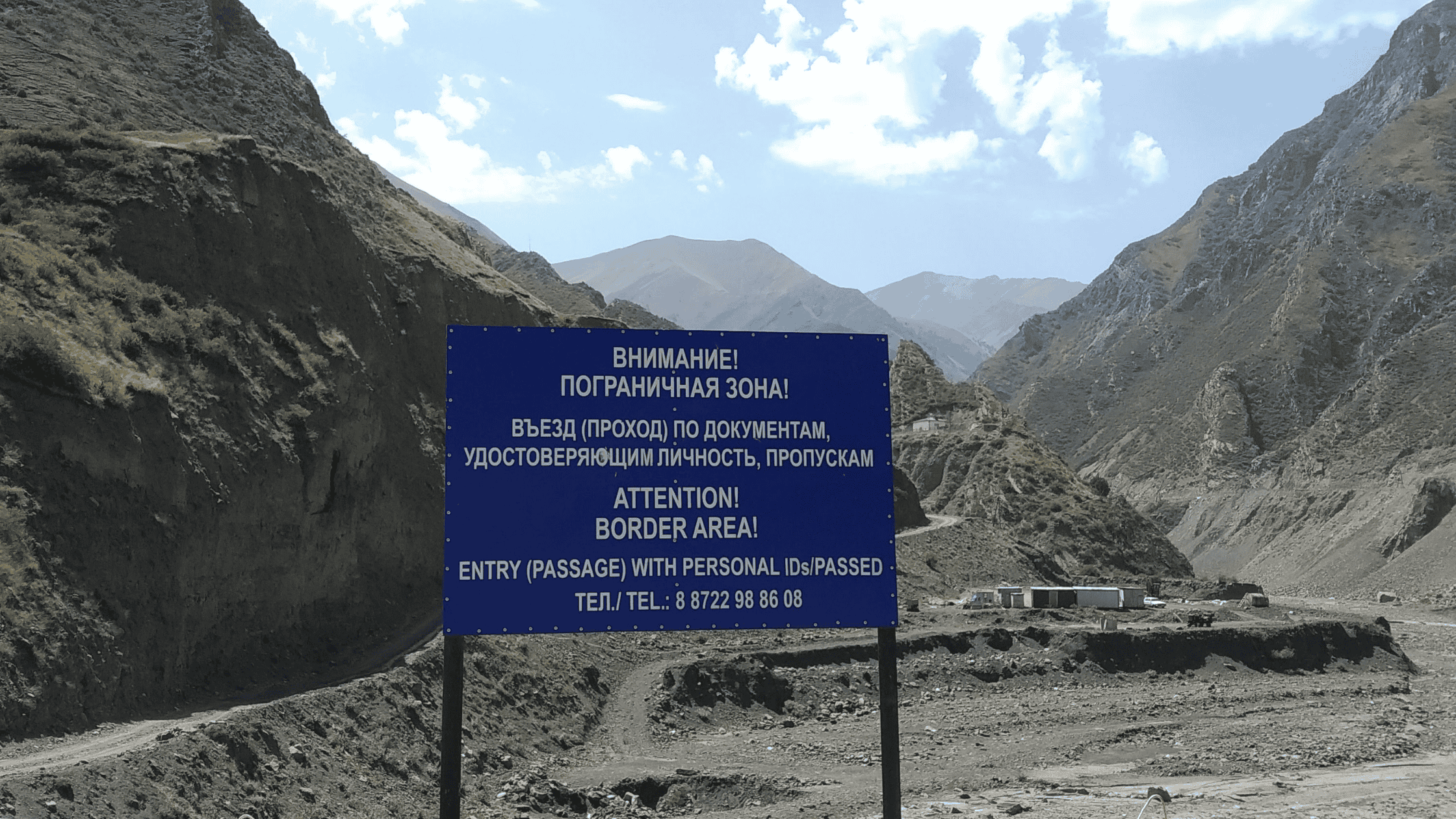
When people ask me why I started learning Russian, the answer actually goes back to high school.
I was 15 when I chose Russian as an optional subject for the French baccalauréat, mostly because I wanted to join a school trip to Moscow. Our teacher, Irina, was a lovely Russian woman from Siberia. I still remember her long black coat and curly blonde hair. At the time, the language felt completely mysterious to me – a different alphabet, unfamiliar sounds, impossible grammar…
Years later, after travelling across much of the former Soviet Union – from Transnistria to the Pamir Mountains, from Moscow to Ashgabat – I decided to seriously come back to the language using Duolingo a few months ago.
I’ve now reached level 45 in the Russian course, the maximum level currently available, and in this article I want to answer one simple question: is Duolingo actually good enough to learn Russian?
Why I learned Russian, and why I kept going
I’m learning Russian for one very simple reason: travel.
What started as a teenage fascination with Moscow slowly turned into something much bigger over the years. Long before I seriously came back to the language with Duolingo, I had already spent years travelling across parts of the post-Soviet world – not just the “classic” destinations like Russia, Uzbekistan, Armenia or Georgia, but also places much farther off the usual tourist trail, like Kazakhstan, Kyrgyzstan and Tajikistan.
I’ve travelled through lesser-known countries such as Belarus, Azerbaijan and Moldova, the hard-to-enter Turkmenistan but also through breakaway and partially recognized territories like Nagorno-Karabakh (before 2023), Abkhazia and Pridnestrovie (Transnistria).
And throughout all of these journeys, Russian was there, essential, useful, always present in the background.
Recently, I was listening to a podcast with Amélie Nothomb (the famous Belgian writer) in which she spoke about her deep love for the Japanese language. It made me wonder whether I felt the same way about Russian. And honestly… I don’t think I do. That’s probably why I still struggle with it.
I love travelling across the ex-Soviet republics, and Russian has become an incredibly useful language for me because of that. But I’ve never found it particularly beautiful or poetic. For me, Russian is a language that opens doors to places, conversations and experiences I deeply care about.
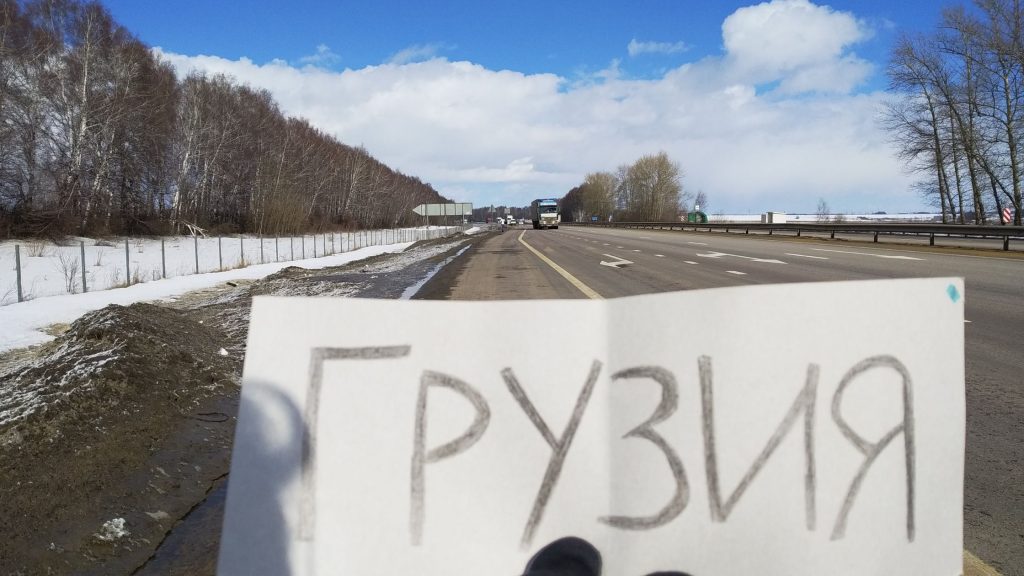 Hitchhiking my way from Moscow to “Gruzya” Georgia
 Room for rent sign in Abkhazia
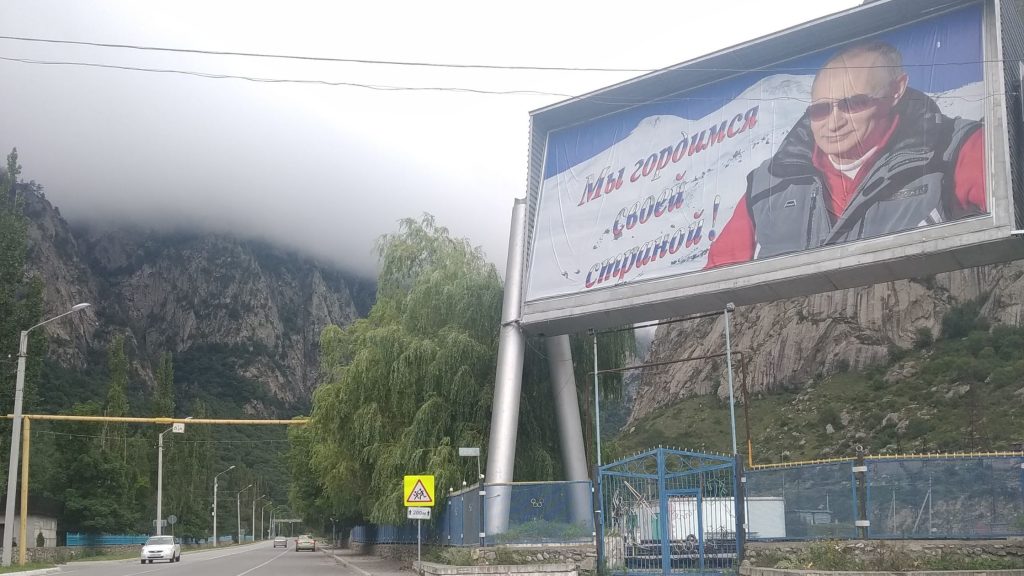 “We are proud of our country” – Putin. Tyrnauz, Kabardino-Balkaria
- Hitchhiking my way from Moscow to “Gruzya” Georgia
- Room for rent sign written in Russian in Abkhazia
- “We are proud of our country” – Putin. Tyrnauz, Kabardino-Balkaria
My experience with Duolingo Russian (Level 45)
Ironically, I had Duolingo on my phone for years before I seriously started using it. For the longest time, I barely made it past level 10. Every time I opened the app, I felt like I was endlessly repeating the same words over and over again. I found it annoying.
After my trip in autumn 2025, though, I decided to give it another real chance. This time, instead of treating Duolingo as something I should do, I simply added it to my daily routine. Every morning, before breakfast, instead of doom-scrolling Instagram, I would spend about 20 minutes doing Russian exercises while still lying in bed.
Somehow, that tiny habit completely changed everything. I haven’t missed a single day in almost 170 days, and eventually managed to finish all 45 levels of the Russian course.
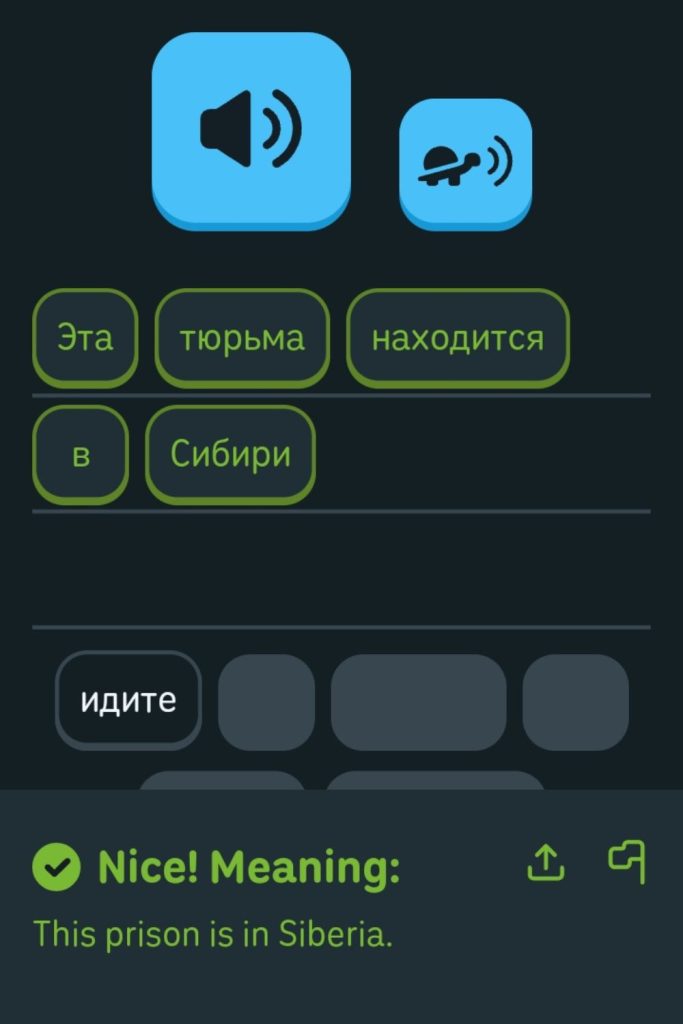
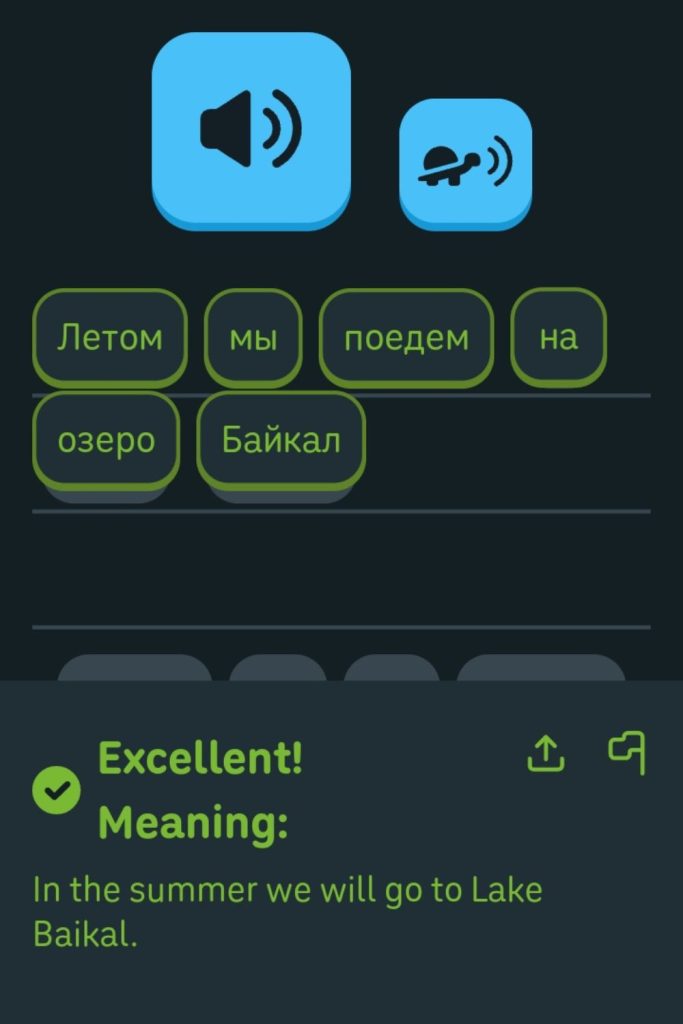
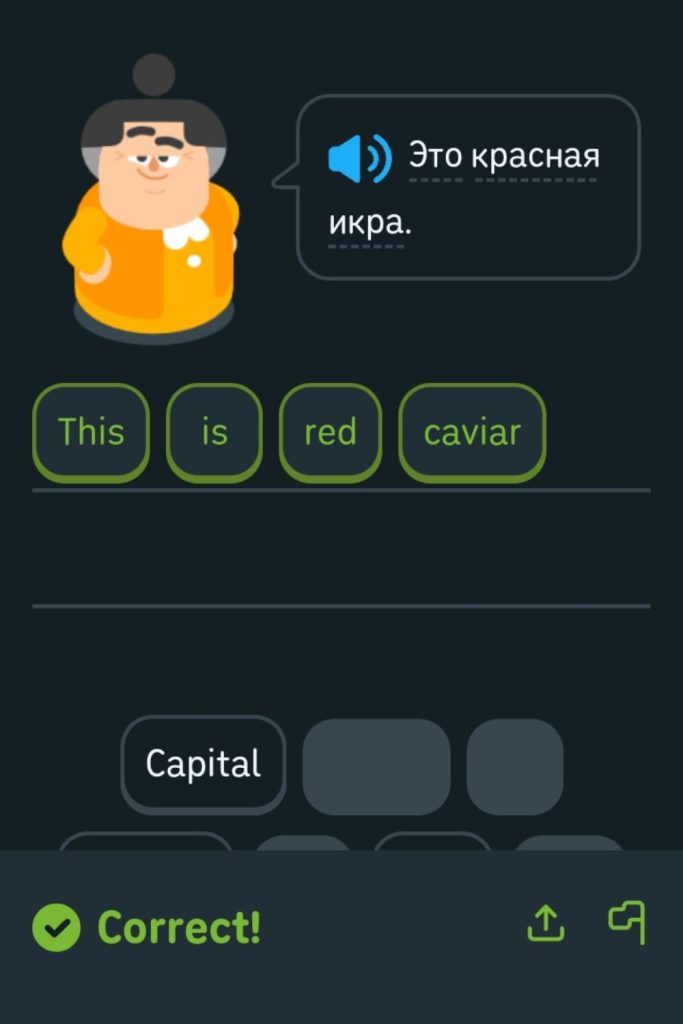
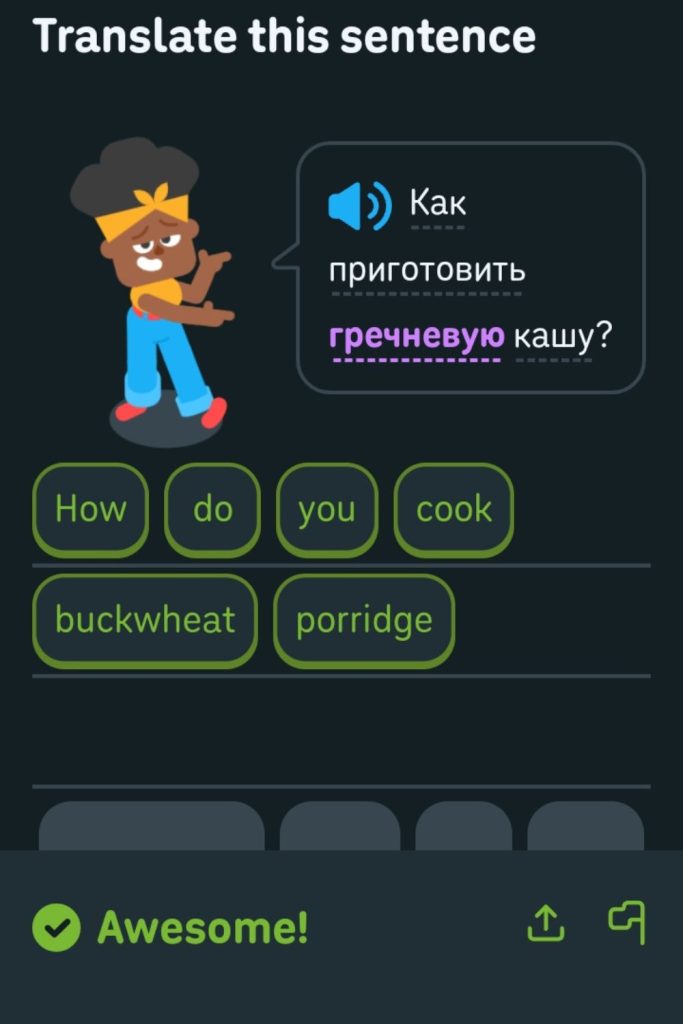
Now you’re wondering how long it took to complete Duolingo Russian? Honestly, that depends entirely on how much time you spend on it each day. If you practice for 20 minutes daily instead of 5, you’ll obviously move through the course much faster.
I also have to admit that the “game” aspect of Duolingo worked surprisingly well on me, especially at the beginning. The daily reminders, the desperate face of the owl whenever you skip a lesson feels a bit like taking care of a Tamagotchi (da, I’m a millennial).
But after a few weeks, I no longer needed the reminders or the motivation tricks. It simply became part of my morning routine, something I did automatically before getting out of bed.
What level can you actually reach with Duolingo Russian?
People often wonder what level you can realistically reach after finishing Duolingo Russian.
My honest answer? Probably around A2 only, definitely not fluency.
The app is very good for building vocabulary and reading skills. After finishing the course, you can comfortably read menus, signs, hotel messages, train schedules and simple texts in Russian. Reading is by far the area where you can improve the most.
Listening is much harder, it’s always the same voices on the app. In real life, if people speak slowly, depending on the topic of course, you can usually understand the general idea, but real spoken Russian between native speakers feels extremely fast and difficult with only Duolingo-level Russian.
As for speaking, the app makes it way too easy to skip, so I did almost every time. I can manage basic travel situations: ordering food, booking accommodation, asking questions, having simple conversations. But my grammar is very shaky to say the least.
And that’s probably Duolingo Russian’s biggest weakness: it gives you exposure to grammar, but never real understanding of it.
Still, the app gave me something incredibly valuable: familiarity. Russian no longer feels completely foreign or intimidating to me, and when travelling across the post-Soviet world, that already makes a huge difference.
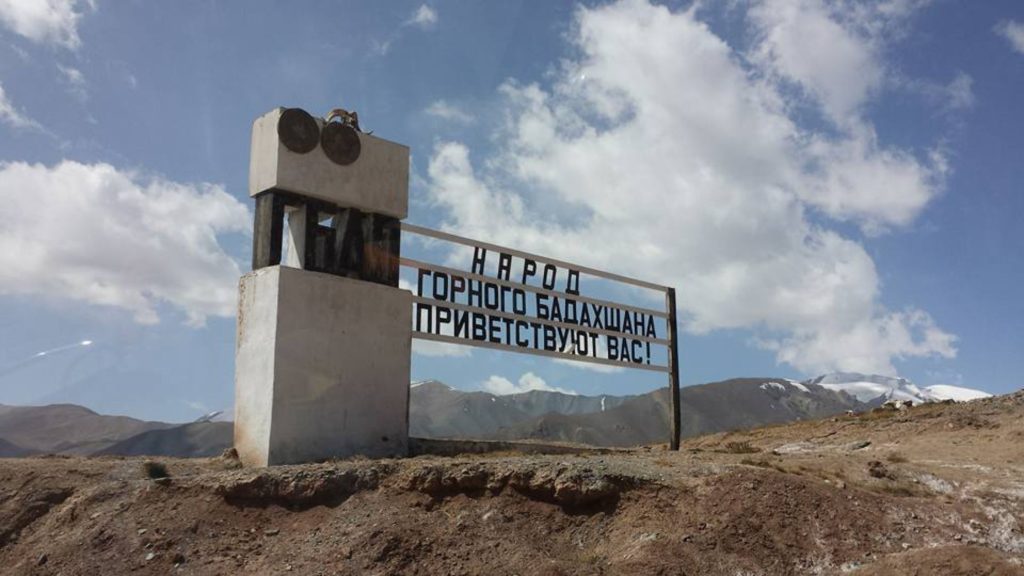 Welcome sign in Gorno-Badakhshan, Pamir Highway, Tajikistan
What Duolingo Russian does well & what it does NOT teach you
For all its flaws, I genuinely think Duolingo is a great starting point for Russian beginners.
First of all, it makes learning the Cyrillic alphabet much less intimidating. At the beginning, Russian can feel almost unreadable, but after a week of daily practice, reading slowly starts becoming surprisingly natural.
The app is also very effective for building vocabulary through repetition. Sometimes too effective — I don’t think I’ll ever forget the Russian words for “milk” or “horse” now. More importantly, Duolingo helped me create a daily habit. I think that’s probably the app’s greatest strength. Even 15 or 20 minutes every day adds up over time, especially with a language as difficult as Russian.
And psychologically, it makes the language feel approachable. Russian will stop feeling like this impossible mysterious code.
That said, Duolingo alone is definitely not enough if your goal is to speak Russian comfortably.
The app gives zero grammar explanation, which is a real problem for any language you want to learn. Cases, verb aspects and motion verbs can quickly become confusing if you don’t study them elsewhere.
It also doesn’t prepare you very well for real spoken Russian. Native speakers talk much faster, shorten words and use slang in ways that feel very different from the slow, clear sentences in the app. Duolingo actually teaches the words blyn or tcho near the very end levels.
And while Duolingo helps with recognition and basic sentence building, it doesn’t really teach you how to speak naturally or confidently in conversation. Also, some sentences are very odd and out of place in my opinion.
For me, Duolingo worked best as a foundation, but definitely not as a complete method.
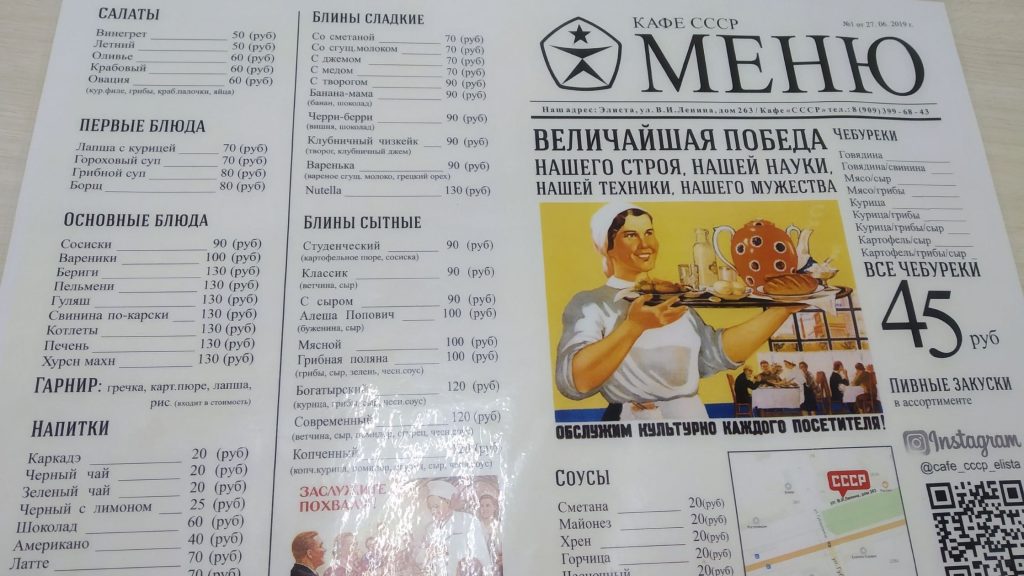 Menu in a Soviet theme café
Is Duolingo enough to learn Russian? (My honest opinion)
Nyet, nyet, absolutely nyet. But I think Duolingo Russian is still worth using as long as you understand what it can and cannot do.
If you’re a complete beginner, or someone learning Russian for travel, I think it’s genuinely good. It helps you become familiar with the alphabet, build a basic vocabulary and slowly stop being intimidated by the language. Even knowing a little Russian can make a huge difference when travelling across parts of the former Soviet world.
But if your goal is fluency, Duolingo alone is definitely not enough.
At some point, you’ll need grammar explanations, real listening practice and actual conversations with native speakers. Unless you’re a speaker of another Slavic language, Russian is simply too complex to fully learn through short app exercises alone.
Still, I don’t regret spending all those months on Duolingo at all. More than anything, it gave me consistency. And with language learning, consistency is probably more important than intensity. Doing 20 minutes every morning for months taught me far more than occasional bursts of motivation ever did.
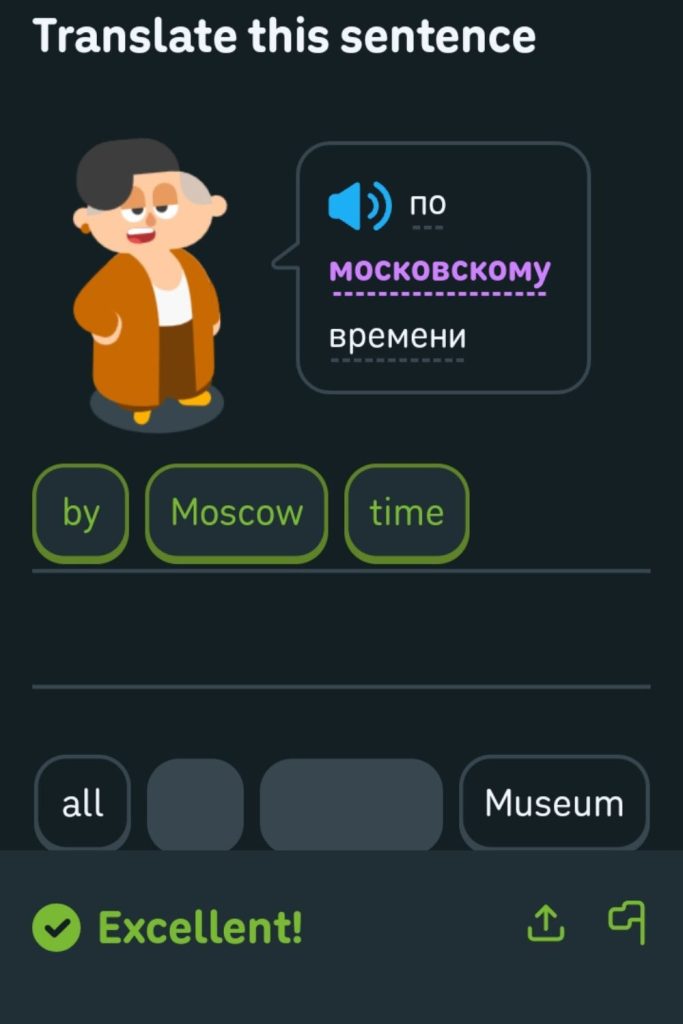 Useful stuff
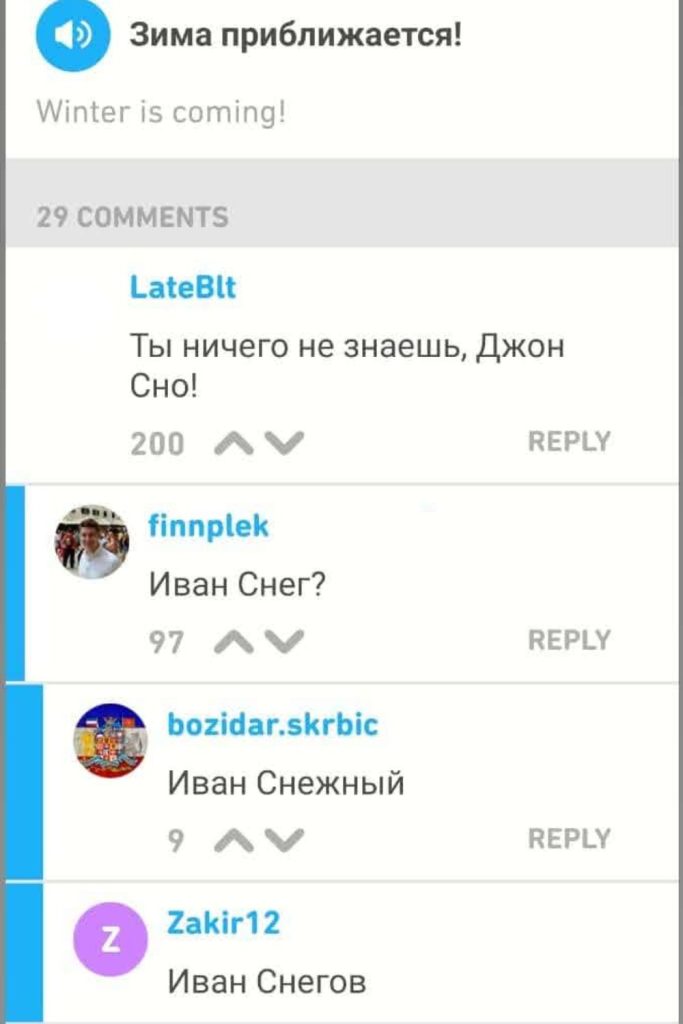 Before the big Duolingo update, the comments were hilarious !
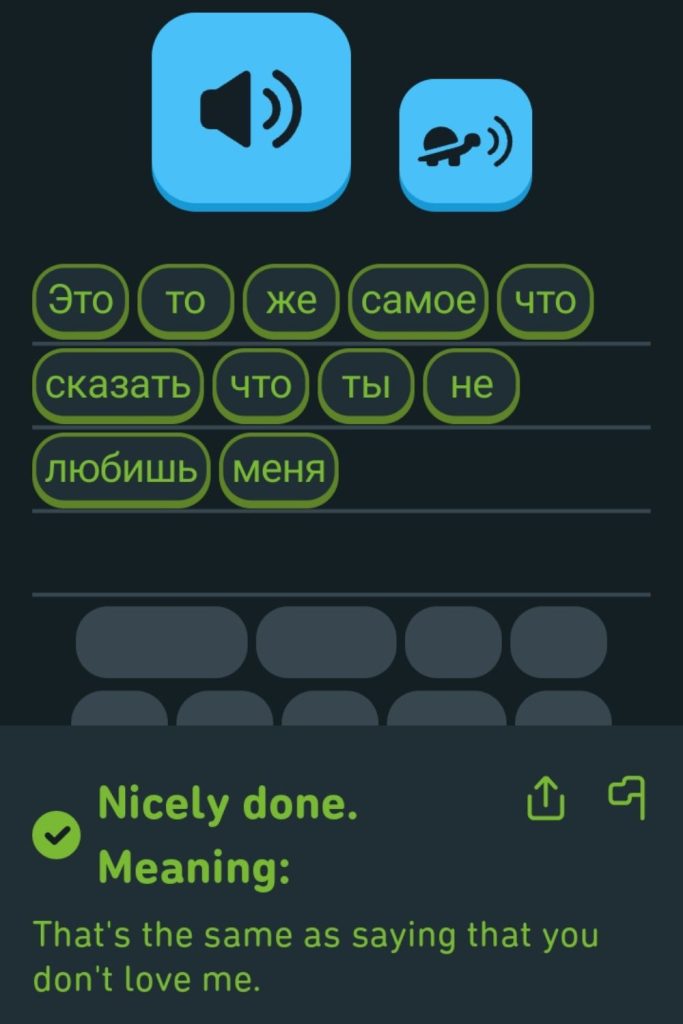 I mean … okay!
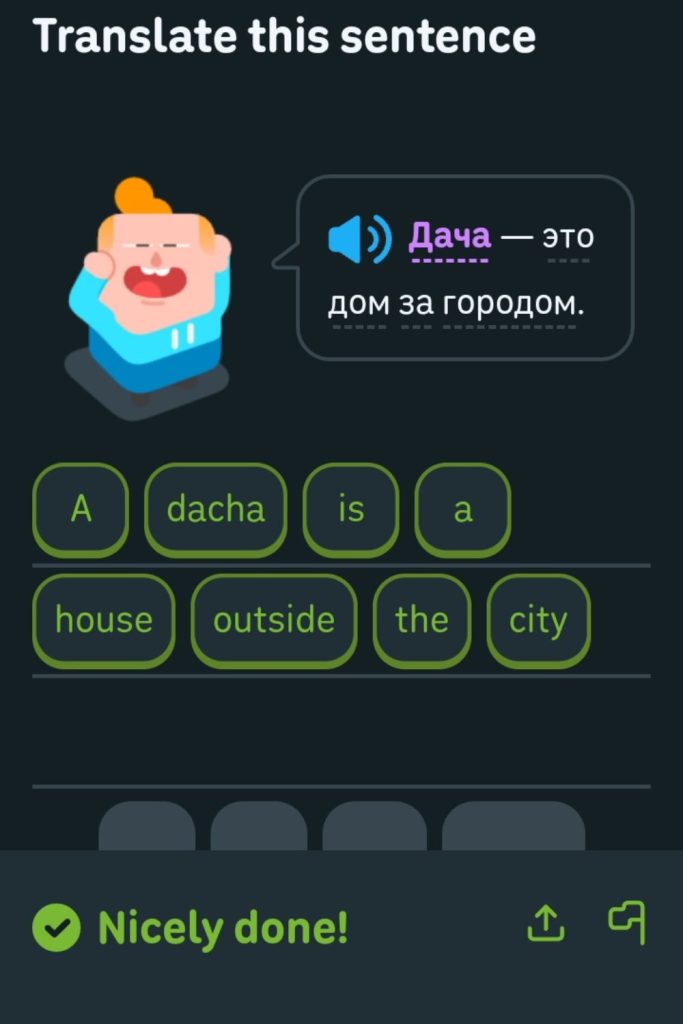 Cultural vocabulary worth knowing
- Useful stuff
- Before the big Duolingo update, the comments were hilarious !
- I mean … okay!
- Cultural vocabulary worth knowing
What I’m using alongside Duolingo Russian
I should probably start this section with an important disclaimer: I’m an eternal procrastinator.
I’ve always struggled with studying languages at home with textbooks and strict routines. I learned English while driving across the Australian outback and later pouring pints in an East London pub – not by sitting in classrooms memorizing grammar tables.
As useful as Duolingo can be, you quickly realize you need other resources alongside it, especially for grammar, listening and immersion. Luckily for me, I travel every year to Russia or another Russian-speaking country, so sooner or later I’m forced to practice anyway because the babushkas rarely speak English.
Still, I do make some effort when I’m not travelling. So if, like me, you’re a bit lazy with language learning, here are a few things that genuinely helped me. It’s in no particular order, except maybe from the laziest method to the slightly less lazy one.
Russian music I actually listen to
Music has probably been the easiest way for me to stay connected to Russian outside of occasional study sessions.
It’s basically passive learning. At some point, if you keep replaying the same songs you like, you’ll eventually want to look up the lyrics to sing along – which is honestly my very lazy way of learning random vocabulary.
And even when you don’t understand the words, music helps you get familiar with the sounds and rhythm of Russian in a much more natural way than textbook audio ever could.
I’ve put together a Spotify playlist of 60 Russian-speaking songs I listen to. It’s extremely eclectic and makes absolutely no sense stylistically. It jumps from nostalgic 2000s pop to Caucasian party songs and questionable Russian rap with sometimes objectively terrible songs, but my philosophy is simple: bad lyrics are still good vocabulary.
Instagram, YouTube & passive immersion
My second main “study resource” is honestly Instagram and YouTube.
I follow Russian travel pages, photographers, influencers and local creators, mostly because it keeps the language present in my daily life without feeling like actual studying. At this point, 90% of my feed is in Russian (it’s my private account). As a bonus, I often discover inspiration for future trips.
The same goes for YouTube. Watching interviews, vlogs or travel videos helped me get more used to hearing natural spoken Russian, even when I understood almost nothing at first.
I think passive exposure is incredibly important. Even recognizing just a few words here and there slowly builds familiarity over time.
A few Russian-speaking creators I enjoy following:
• Instagram: Matushka_nina, Roman Kokorin, Inspirator.travel
• YouTube: YaroslavaRussian, Vkusivshina, hochudomoj
One thing I still don’t really practice enough is speaking. Most – okay, all – of my conversation practice happens while travelling, but if you don’t regularly visit Russian-speaking countries, platforms like italki or Preply are probably one of the easiest ways to practice with native speakers.
Books & study resources
The main structured resource I’ve used alongside Duolingo is the book Le Russe from the Assimil method.
I own the French version obviously, but Assimil also offers Russian courses from English, Italian and German.
What I like about it is that:
1. the grammar explanations are simple and well done as far as I’ve seen,
2. the lessons are short enough not to scare away chronically lazy people like me.
There’s really no comparison with Duolingo: Assimil focuses on grammar explanations and natural dialogues, which becomes essential once you move beyond Cyrillic alphabet level.
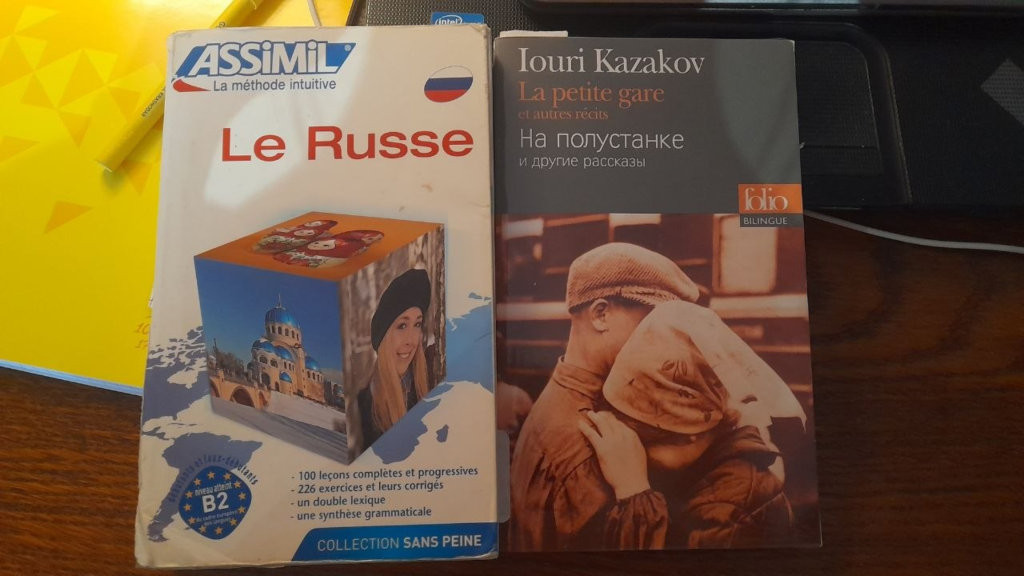
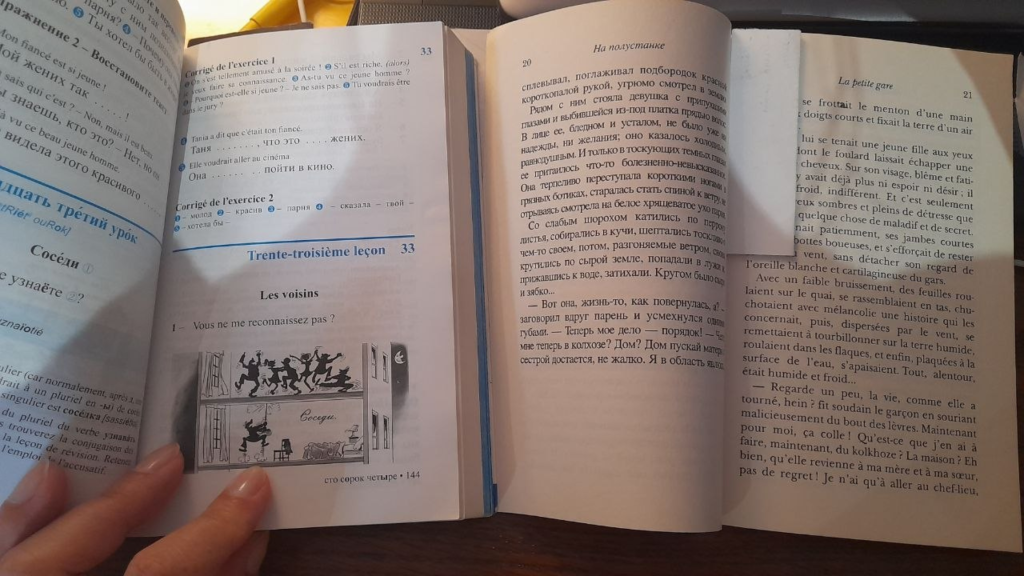
I also really like bilingual book editions. In France, we have the Folio bilingue collection. Reading texts with French and Russian side by side feels much less intimidating than diving straight into Russian literature (which, sorry, I’m not a huge fan of), and it’s a good way to slowly build reading confidence.
Final verdict: is Duolingo Russian worth it?
Yes, absolutely, but it’s obviously not enough to make you fluent. I think Duolingo Russian is one of the easiest and least intimidating ways to start learning the language, especially if your goal is travel rather than academic perfection.
Don’t hesitate to share your Russian language learning experience in the comments !
 Chatting with friendly locals in Konye-Urgench, Turkmenistan
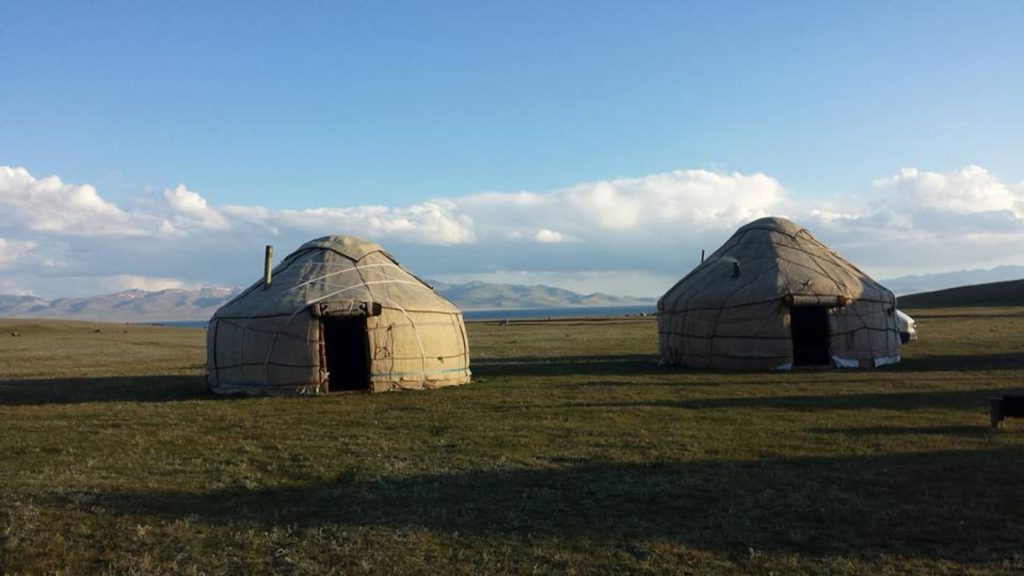 I stayed in a yurt camp near Issyk-Kul Lake in Kyrgyzstan. The mom of the family was so happy to chat about life and her children with me. She told me tourists almost never speak Russian, and since she doesn’t speak English, she usually can’t communicate with them.
 Russian is incredibly useful when bargaining prices in touristy Khiva, Uzbekistan.
- Chatting with friendly locals in Konye-Urgench, Turkmenistan
- I stayed in a yurt camp near Issyk-Kul Lake in Kyrgyzstan. The mom of the family was so happy to chat about life and her children with me. She told me tourists almost never speak Russian, and since she doesn’t speak English, she usually can’t communicate with them.
- Russian is incredibly useful when bargaining prices in touristy Khiva, Uzbekistan.
FAQ about Duolingo Russian
📌 Want to explore the Russian-speaking world beyond Duolingo?
• My complete Moscow travel guide
• Travelling through Abkhazia, the breakaway Georgian region
• Crimea travel guide: everything you need to know about the peninsula
• What it’s really like travelling in Chechnya