Traveling to Belarus in 2026 isn’t as straightforward as booking a ticket to Paris or Rome, and that’s precisely why it’s one of the most intriguing destinations in Eastern Europe right now.
Despite being larger than many EU countries, Belarus still receives fewer than half a million foreign visitors per year, meaning you can often enjoy UNESCO-listed castles, vast primeval forests, and monumental Soviet-era cityscapes without crowds.
With updated visa rules, selective border openings, and a renewed push to attract foreign visitors despite ongoing sanctions, traveling to Belarus in 2026 is easier than it has been in years, yet it remains one of Europe’s most off-the-beaten-path countries.
Even though I’ve spent the past decade exploring the far corners of the former Soviet Union, I knew very little about this country located somewhere between home and Russia, and it genuinely surprised me.
This Belarus travel guide for 2026, based on my last September trip, covers the essential things you need to know: visas and entry rules, borders, safety, sanctions, internet access, transport, costs, accommodation, food, and what traveling in Belarus really looks like on the ground, without clichés or panic headlines.
Last updated 3 June 2026
TL;DR: Belarus travel 2026
• Visa: most travelers need one; EU citizens exempt until end 2026.
• Money: Belarusian rouble (1€ ≃ 3,40BYN); bring cash, foreign Visa/Mastercard still work in some ATMs but might stop due to sanctions.
• Transport: trains & buses are reliable; Minsk metro runs from 5:30-00:40 (2 BYN per token).
• Safety: very safe, including for solo female travelers.
• Top sights: Minsk, Mir & Nesvizh castles, Brest Fortress, Belovezhskaya Pushcha.
• Daily budget: ~40-50 €/day for mid-range travel.
• SIM & Internet: MTS shop at Minsk station (price for a month); Free Wi-Fi in the metro.
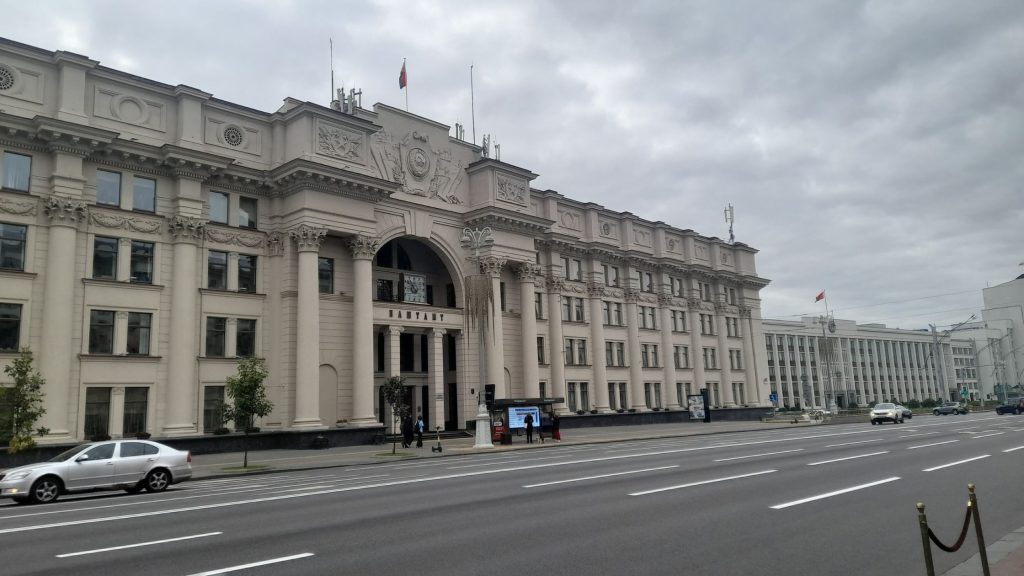 Central post office on Independence Avenue, Minsk
Why travel to Belarus in 2026? (beyond Western clichés)
I refuse to reduce Belarus to the usual Western clichés, same way I do with Russia. The country is far more complex, and frankly far more interesting, than the default “last dictatorship in Europe” tagline. It also happens to be one of the least-visited countries in Europe, which already says a lot about the kind of uncommon journey you can expect here.
Traveling to Belarus in 2026 means stepping into a place where Soviet architecture coexists with Orthodox monasteries. Minsk isn’t some gloomy post-Soviet relic; it’s super safe, impeccably clean, and built on a monumental scale that makes you feel tiny in the best possible way.
If you’re into Soviet architecture, history, nature or just curious about places people rarely talk about, Belarus might be exactly your kind of destination. And yes, it’s also surprisingly enjoyable for solo travelers, thanks to reliable public transport and a general feeling of safety, which, to be honest, I actually was expecting.
Despite remaining very much off the beaten path, Belarus offers that rare mix of accessible travel logistics and genuine cultural discovery, the kind of place where you can still arrive with zero expectations and leave with stories that don’t sound like anyone else’s.
Is Belarus safe to visit? (Including solo female travel)
The short answer is yes. Belarus is very safe for tourists: crime is extremely low, public spaces are orderly, and public transport is super reliable. During my stay, I never felt uneasy walking around, taking the metro, or hopping on a train, even early in the morning or late at night.
Russia feels safe, but Belarus somehow feels next level. Maybe it’s the super wide streets, the calm, or just the overall vibe, but I rarely felt this comfortable anywhere else. Even the border officers I met were genuinely nice and relaxed, no stress, no weird tension.
Safety considerations:
• Political context: protests are rare but closely monitored, so common sense is not to take part. Avoid photographing government buildings or sensitive sites.
• Police presence: I barely saw any police during my stay, but always carry your passport.
• Border regions: areas near Ukraine and the Chernobyl exclusion zone are best avoided.
• Official travel advice: many Western governments, including the UK and France, officially advise against travel to Belarus due to risks of arrest if you participate in protests (again, why would you?) or because of proximity to Ukraine’s ongoing conflict. In reality, as long as you stick to normal tourist activities, you’re very unlikely to encounter trouble.
Disclaimer: this blog reflects my personal experience in Belarus and is not intended to override your country’s travel advisories. I take no responsibility for your travel decisions.
Solo female travel in Belarus: my honest insights
Yes, it’s safe. I felt completely comfortable walking alone in Minsk at night, using the metro, dining by myself, and taking a taxi early in the morning. People mind their own business; nobody bothers you. I’d easily recommend Belarus as a top off the beaten track destination in Europe for solo female travelers.
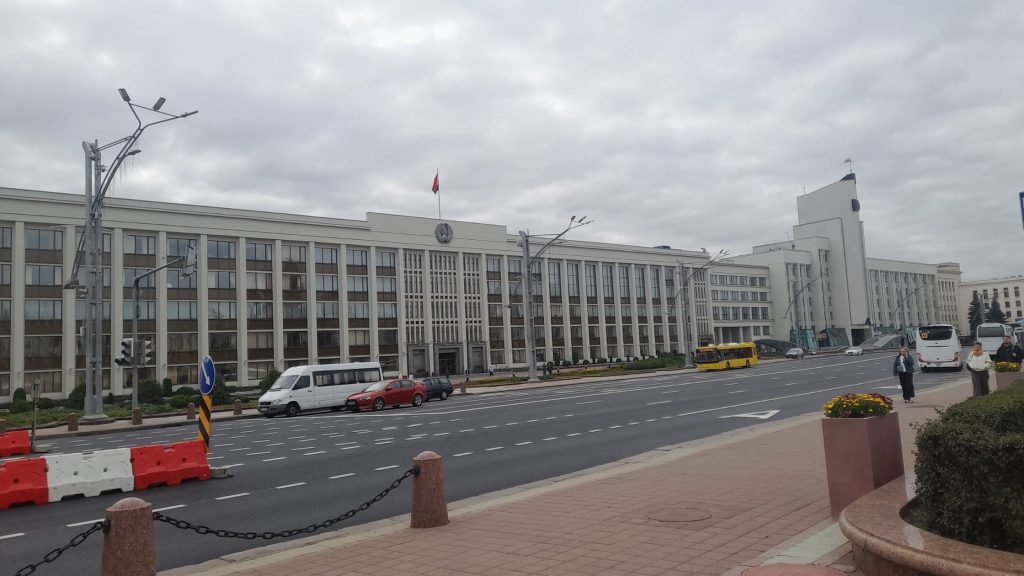 The Minsk city council building
Belarus political situation in 2026: sanctions, internet & media restrictions
Is Belarus a dictatorship? Understanding the political context
Belarus is often labeled as “Europe’s last dictatorship“. The country is tightly controlled politically, Alexander Lukashenko has been president of Belarus since 1994, now serving his seventh term. Protests are rare, heavily monitored, and can result in detention if you participate.
Also, the government does exert strong control over the media, so local news is mostly state-run: According to Reporters Without Borders, Belarus ranks 166 out of 180 countries for press freedom. It does explain why Western travelers sometimes perceive Belarus as “mysterious” or off the radar, we just don’t know much about it.
For tourists sticking to normal travel activities, the political situation is largely background noise. Just exercise common sense: avoid photographing government buildings or military installations, and don’t start political debates with strangers.
That said, this doesn’t affect your day-to-day experience as a visitor, in fact, you will feel safer here than in most Western countries.
Sanctions & impact on travel (cards, flights, booking sites)
Even if most Westerners have barely heard about it, Belarus has faced a complex and evolving set of international sanctions over the past few years, and as a visitor, you might notice their impact on everyday travel.
Sanctions were tightened in 2020 following the controversial presidential election, then again in 2021 due to ongoing political repression and Belarus’s role in a migratory crisis affecting the EU (Brussels accuses Minsk to send migrants on purpose).
The European Union also banned the Belarusian national airline from flying over EU airspace after a forced Ryanair flight diversion to Minsk. Financial sanctions include restrictions on certain Belarusian banks, limits on transactions, and the disconnection of several banks from the SWIFT system.
More recently, sanctions have increased because of Belarus’s involvement in the Russia-Ukraine conflict.
For travelers, this can translate into:
• Card payments: Visa and Mastercard transactions are not always reliable.
• Booking platforms: Booking.com, Airbnb and the common international booking platform don’t work. See here for details.
• Flights: air connectivity is limited. See here for details.
• Land border crossings: currently, crossings with neighboring european countries is limited to the Brest-Terespol border with Poland and Paternieki-Grigorovshchina with Latvia. Must double check here for the latest border updates.
Which bank cards work in Belarus ?
• Mir: Russian bank cards are accepted everywhere. Expect commissions for payments or withdrawals (90₽ each time with my T-Bank card).
• Visa & Mastercard: some ATMs still accept foreign cards, but don’t rely on them.
• UnionPay: only a few banks accept them.
The official currency is the Belarusian rouble (BYN). Russian roubles are not accepted, though some ATMs dispense them alongside Belarusian roubles: E.g. the Sberbank ATMs inside Minsk train station.
Important: I visited Belarus just before the EU adopted its 19th package of sanctions mid-October 2025, so I strongly recommend bringing enough cash (euros, USD, or BYN) in case ATMs stopped accepting foreign cards.
Where to exchange money in Minsk
You can easily exchange euros, US dollars, or Russian roubles in Minsk at of the many banks and currency exchange offices belong to them.
They are widely available across the city and easy to locate on Yandex Maps.
If you’re arriving by train, I recommend using the exchange office inside Minsk-Passazhirsky train station. It opens super early, at 6:30AM.
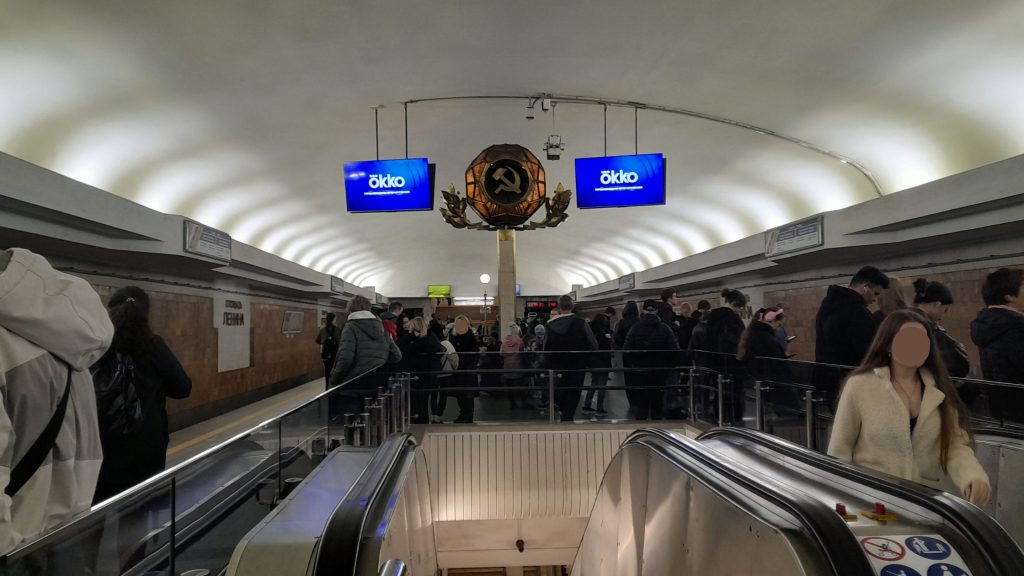 Lenin metro station, Minsk
Internet, VPNs & access to Western platforms
Don’t expect a “Great Firewall” like in China, it’s not that extreme, but the digital space in Belarus is monitored and some websites can be inaccessible without a VPN. My VPN.ac (I highly recommend it and by the way it also works reliably in Russia), was on the whole time and I actually don’t remember if social media such as Facebook and Instagram work without it.
Navigation: use Yandex Maps instead of Google Maps, especially in Minsk for public transport routes (buses, metro and to order a taxi).
Speaking of navigation, the Minsk metro has free Wi-Fi, and unlike Moscow’s, you don’t need a local phone number to log in, anyone can connect.
Belarusian SIM card for foreigners: where to buy it + price
I bought my Belarusian SIM card the day I arrived, at the MTS (MTC) store inside Minsk train station (open 7:30AM-4:30PM). Belarus has a very specific rule for foreign tourists: we can buy a SIM card that works inside Belarus only. I tested it, it loses all phone signal as soon as you cross the border, including into Russia.
I bought the “unlimited guest plan” for 40 BYN, paid in cash, and ended up paying 50 BYN because the payment machine the cashier used “doesn’t give change“. Not even one hour in Minsk and I felt slightly ripped off. Worth mentioning, the same plan for locals is much cheaper.
This “guest plan” came with unlimited 4G data and worked perfectly everywhere I went.
Tip: if you’re only staying in Minsk, I honestly wouldn’t bother buying a SIM card, the metro has reliable free Wi-Fi, and hotels, cafés and restaurants seem well covered to.
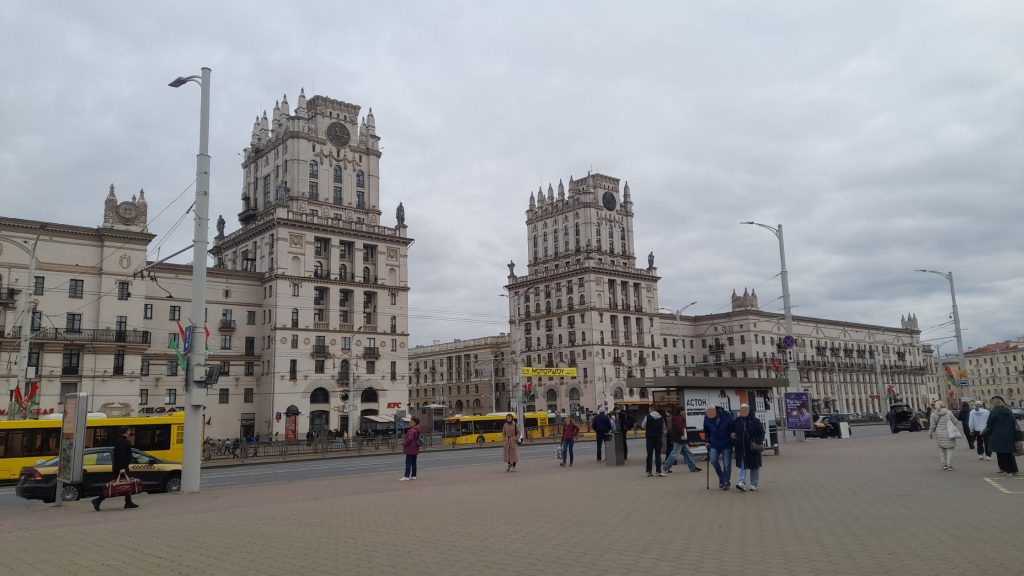 The Gates of Minsk
Visa and entry requirements to Belarus in 2026
Who needs a visa to enter Belarus?
Most travelers do need a visa to enter Belarus in 2026. Visa-free entry only applies to a handful of countries (mostly CIS states or nations with specific agreements).
But here’s the good news: Belarus now offers an e-Visa to 60+ nationalities, including the UK, Canada, Australia, New Zealand, and Japan.
EU passport holders are temporarily exempt from a visa until the end of 2026. This exemption was reintroduced to boost tourism, and honestly, I’m happy they extended it one more year!
How the Belarus e-Visa works
• Valid for stays up to 30 days
• Entry allowed through all open international checkpoints (road + airports)
• Issued only through the official portal “E-Pasluga“
• Must apply at least 7 calendar days before arrival
• Travel insurance covering Belarus is mandatory
• Visa fees: 35-60€ depending on nationality + 6€ online service fee
Important: the mutual visa recognition between Russia and Belarus does NOT apply to e-Visas. Meaning:
• You cannot enter Belarus with a Belarusian e-Visa and continue to Russia
• You cannot enter Russia with a Russian e-Visa and continue to Belarus
This applies to all entry methods: road, rail, or air. If you’re planning a Belarus + Russia trip, you must have a consular visa (the physical sticker in the passport).
My experience
I entered Belarus by train from Kaliningrad, which technically re-enters the EU through Lithuania, then crosses into Belarus. I had a Russian tourist visa in my passport, which made onward travel to Moscow easy.
There are border checkpoints on the railroad, I was delivered a Belarusian migration card when entering from Lithuania. Read all the details on how I took the Kaliningrad – Minsk train here.
Travel insurance for Belarus (mandatory)
A travel insurance is mandatory to enter Belarus. You may be asked to show proof at the border or when applying for a visa, and traveling without valid coverage can result in entry refusal.
Your insurance must:
• Be valid in Belarus
• Cover medical expenses (minimum 10 000€ or equivalent)
• Be valid for the entire duration of your stay
Many standard European travel insurance policies no longer cover Belarus due to sanctions, so double-check the country list carefully before traveling. If your policy doesn’t explicitly mention Belarus, assume it’s not valid.
I strongly recommend arranging your insurance before arrival, rather than relying on border or airport options (there’s a counter at Minsk airport and I’ve seen an office (unsure if it was for vehicles though) at the Brest border), which are usually basic and overpriced.
If you’re entering visa-free, a travel insurance is still required. Border officials don’t always ask, but when they do, there’s no workaround, better have it printed or easily accessible on your phone.
The Belarus migration card explained
The Belarusian migration card is a small but important document every foreign visitor receives when entering Belarus. It works exactly like the Russian migration card.
It’s mandatory, and you must not lose it. If you do, you must report it as soon as possible.
The card is a simple white form divided into two identical parts: one half stays with border control, and the other half is given to you. Keep it until you leave the country.
 My Russian visa & Belarusian migration card
Registration in Belarus: when and how it works
If you’re staying in Belarus for more than 10 calendar days, you must register your stay (within 10 days of your arrival) with the local authorities. This applies to all foreign nationals, regardless of nationality or visa type.
Hotels and hostels take care of the registration automatically and for free. Just ask for the slip when you check in, they’re used to it.
You can also register online for free through the official E-Pasluga portal (you must be logged in).
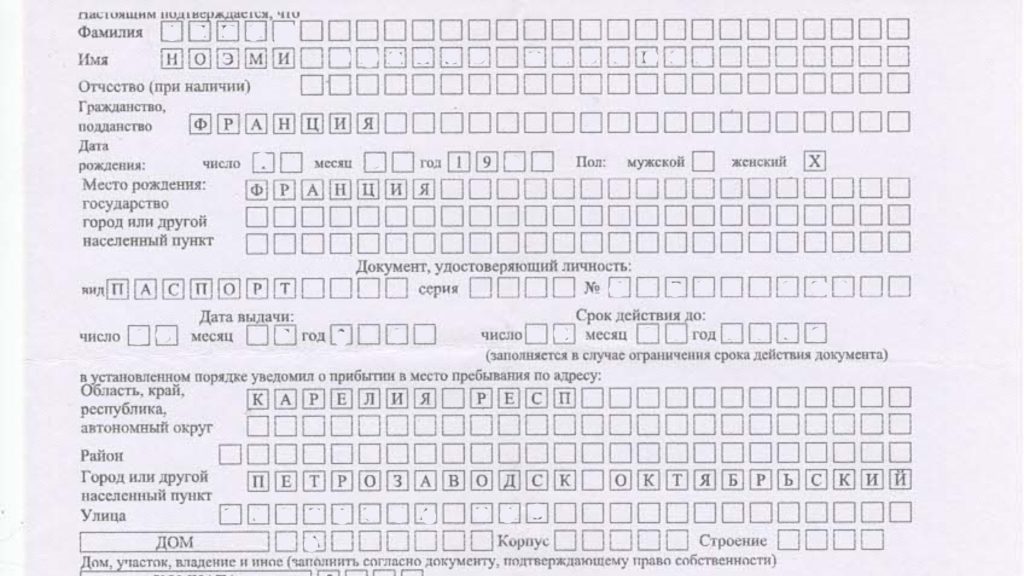 Example of a registration document. This is a Russian one, I can’t find the one I had in Belarus, but they all look very similar. You get the idea.
How to get to Belarus in 2026: flights, trains from Russia & land border crossings
To enter Belarus in 2026, you need to factor in ongoing sanctions and frequently changing land border policies with neighboring EU countries, which can be revised with little notice.
Just a few days before my overland trip, I learned that the Terespol-Brest border had been shut on the Polish side, forcing me to change plans at the last minute. Below is a full, up-to-date overview of every realistic way to enter Belarus right now.
Flying to Belarus: which airlines still operate?
Belarus is no longer connected to Europe by direct flights, so the only airports with regular links to Minsk (MSQ) and regional airports are in Russia, Turkey, Armenia, Uzbekistan, Azerbaijan, and a few Gulf countries.
The main airlines flying to Minsk in 2026:
• Belavia: the national airline. Flights from Moscow (VKO, DME), St Petersburg, Kaliningrad, Yerevan, Istanbul, Dubai, Tashkent, Baku, Almaty
• Aeroflot & Rossiya: several Moscow-Minsk flights daily
• Turkish Airlines: Istanbul-Minsk
• FlyDubai: Dubai-Minsk
• Uzbekistan Airways: Tashkent-Minsk
• Azerbaijan Airlines: Baku-Minsk
Tip: Istanbul is currently the most practical international hub for Western travelers. You can buy a ticket to Belarus with a foreign bank card (Visa/Mastercard) on Trip.com.
Fun fact: due to international sanctions, Belarus isn’t allowed to buy or important airplanes nor spare parts, and is banned from the European airspace.
However, Belavia, the national and only carrier in Belarus, managed to smuggle three airbus A330-200 (ex Emirates plane) via a secret deal with third-party buyer in Gambia. Those planes are flying to and from Moscow, Istanbul and Dubai.
You cannot buy a plane ticket directly on Belavia‘s website with a foreign bank card, but you can do it on Trip.com. Double check on the Minsk arrival/departure airport board for timetable of these A320-200 planes.
Entering Belarus by land: which border crossings are open now ?
Crossing into Belarus by land from the European Union has become highly unpredictable over the past few years. Border checkpoints with Poland, Lithuania, and Latvia have been repeatedly closed or restricted, sometimes with very little notice, mostly for political/security reasons.
As a result, land travel to Belarus in 2026 requires flexibility and last-minute verification, especially if you are relying on buses.
How to check border status reliably
sThe most reliable source is the official Belarusian State Border website, which shows real-time checkpoint status (you must click on each individual checkpoints for details):
🟢 Green = checkpoint open
🔴 Red = checkpoint closed
Practical reality for travelers
• International trains between the EU and Belarus remain suspended
• Buses are currently the main way to cross by land
• Bus routes may be cancelled without notice if a checkpoint closes
• Some companies continue selling tickets via closed borders, always double-check the actual crossing used
For this reason, the Poland-Belarus border via Terespol-Brest remains the most reliable land entry point for most travelers coming from the EU.
I cover the Terespol-Brest crossing in detail (buses, delays, schedules, and first-hand experience) in this dedicated post.
Current land border situation (EU ⇄ Belarus)
As of early June 2026, the reality on the ground is:
🟢 Poland ⇄ Belarus : four checkpoints are open but Terespol-Brest remains the most reliable one.
🟢 Latvia ⇄ Belarus : one checkpoint is open (Paternieki-Grigorovshchina), with limited capacity.
🟢 Lithuania ⇄ Belarus: two passenger checkpoints are currently open.
Because these conditions can change literally overnight, you should always recheck border status 24-48 hours before departure, even if you already hold a valid ticket.
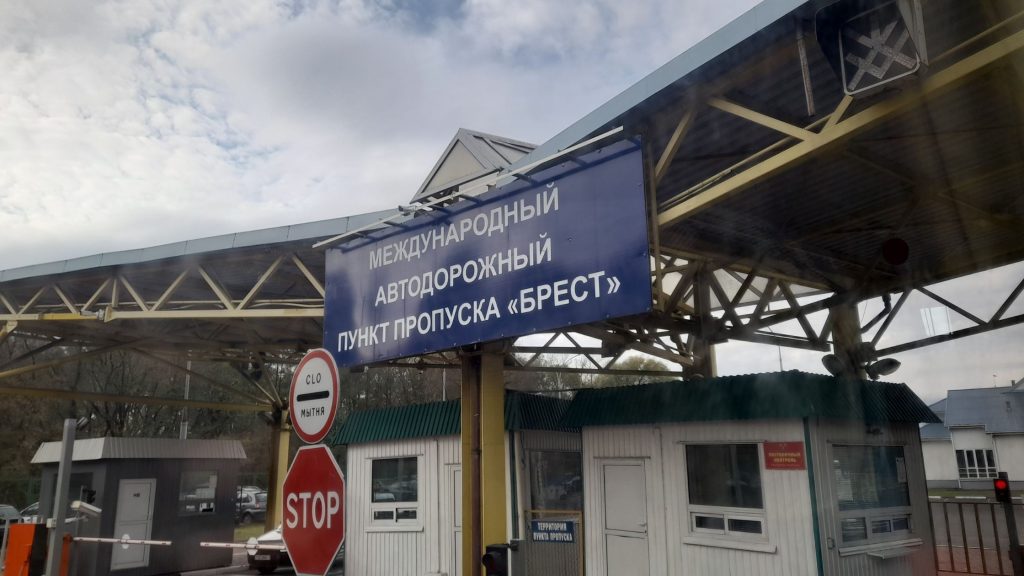 Terespol – Brest border checkpoint
Is the Belarus-Ukraine border open now ?
No, the Belarus-Ukraine border is fully closed in 2026.
There are no open border checkpoints between Belarus and Ukraine for tourists, private vehicles, buses, or pedestrians. The closure is linked to the ongoing conflict, and there is no announced reopening date.
If you need to travel to Ukraine, you must route via Poland. Plenty of buses (including FlixBus) run daily from Warsaw to major Ukrainian cities under Kyiv’s control. Read my dedicated post if you wish to go to Donetsk.
Train routes with Russia
Traveling between Belarus and Russia by train is straightforward in 2026, with dozens of daily services connecting Minsk, Moscow, St. Petersburg, Smolensk, and even Kaliningrad and Sochi. These routes are operated by both Belarusian Railways and Russian Railways (RZD), offering everything from basic sleeper berths to modern high-speed services (Lastochka).
• Kaliningrad – Minsk trains
There are three daily trains linking Kaliningrad to Minsk, often as part of longer routes to Moscow or Adler (Sochi).
Departures from Kaliningrad Yuzhny Vokzal are typically around:
– 12:55PM, train №030Ч Yantar
– 5:52PM, train №360Н
– 8:35PM, train №148Н
The journey takes 10 to 12 hours, depending on stops and border controls (Russia → Lithuania (EU) → Belarus).
• Moscow, St Petersburg & Sochi trains
From Minsk, you can reach Russia via:
– Minsk – Moscow (overnight sleeper + Lastochka fast-speed trains)
– Minsk – St Petersburg (sleeper trains only)
– Minsk – Moscow → Sochi/Adler (long-haul route with access to the Black Sea coast)
For online booking recommendations, see below.
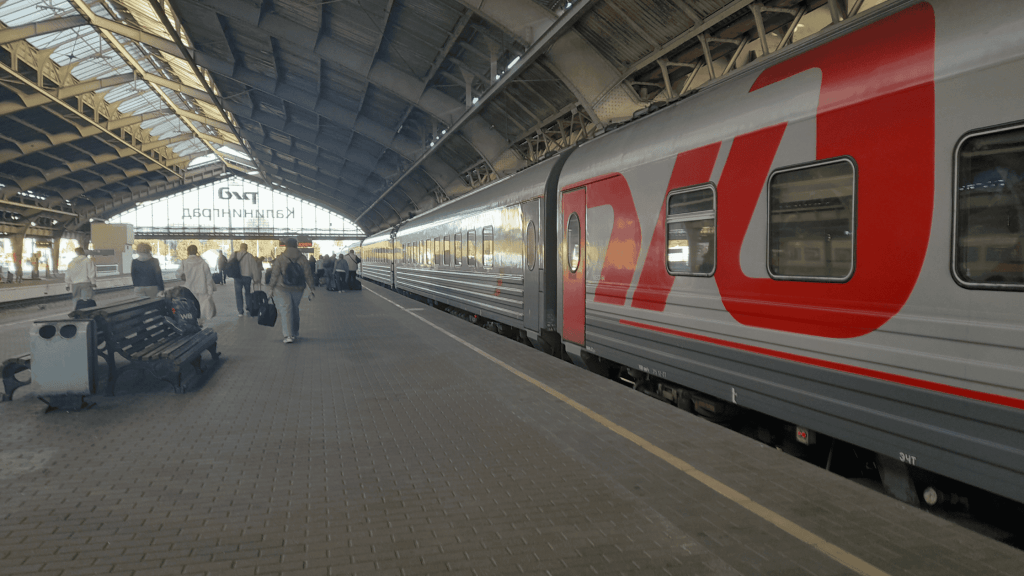 Train from Kaliningrad to Minsk
📌 Read my post: How to take the train from Kaliningrad to Minsk for all the details (transit, border checks, ticket booking, and practical tips).
Do you go through border control on Russia-Belarus trains? (Must-read!)
There are no physical border checkpoints on the Belarus-Russia rail crossing, but that doesn’t mean the border doesn’t exist. The train doesn’t stop at any immigration facility, but passports and visas are checked in Smolensk in either direction, typically by military or security officers.
They know (trust me) when a foreigner is on board, and if you don’t have the correct visa, you will simply be denied entry and sent back on the next train. Russia isn’t Europe when it comes to immigration.
• Belarusian e-Visas are NOT valid to continue into Russia
• Russian e-Visas are NOT valid to continue into Belarus
For a Belarus + Russia train travel, you must have a consular visa sticker in your passport for either Belarus or Russia. They have a mutual recognition of their visas (not e-Visas!) since 2025.
Speaking from experience, I was checked every single time:
1st time: stopped in Smolensk as I was exiting the station, coming from Minsk on a Lastochka train.
2nd time: woken up at 2:00AM in Smolensk train station, on my way from Moscow to Brest, the female soldier actually woke up the wrong dude on the opposite bunk first… poor him.
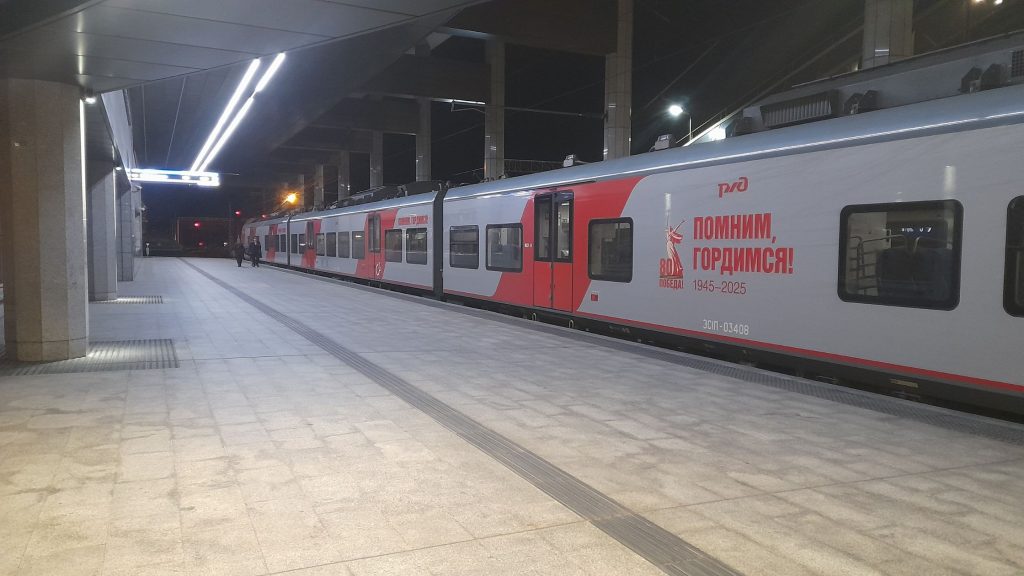 My Lastochka high-speed train from Minsk Passazhirsky to Moscow.
Getting around Belarus: Trains, buses, marshrutkas
Belarus is an easy country to navigate thanks to its compact size and reliable public transport system. While long-distance trains connect major cities like Minsk, Brest, Grodna or Vitsyebsk (Vitebsk), buses and marshrutkas (shared minibuses) cover smaller towns and rural destinations. You can book your tickets directly at the bus station or on Tutu.ru (works with a foreign Visa/Mastercard).
For taxis, use Yandex Maps or Yandex Go, you can pay cash directly to the driver.
 Brest bus station
Booking train tickets to and within Belarus in 2026
You can book train tickets to Belarus online, but payment options depend on the platform and your bank card:
• RussianTrain.com, works with foreign Visa and Mastercard and is the easiest option for international travelers.
• RZD (VPN may be needed to access the website), the official Russian railway website, but payment requires a Russian bank card.
• Belaruskaya Tchygunka (беларуская чыгунка), the national Belarusian railway website. I’m not sure you can pay with a foreign bank card anymore, it may no longer work in 2026. Plus the website is in Belarusian/Russian only and quite old-looking.
• Of course you can buy directly at the station and pay cash.
Note 1: Tutu.ru is not an option for train tickets with foreign cards. Visa/Mastercard payments only work for bus tickets, not trains.
Note 2: The tickets are not cheap (compared to faraway corners of Russia where I usually travel), especially between Belarus & Russia.
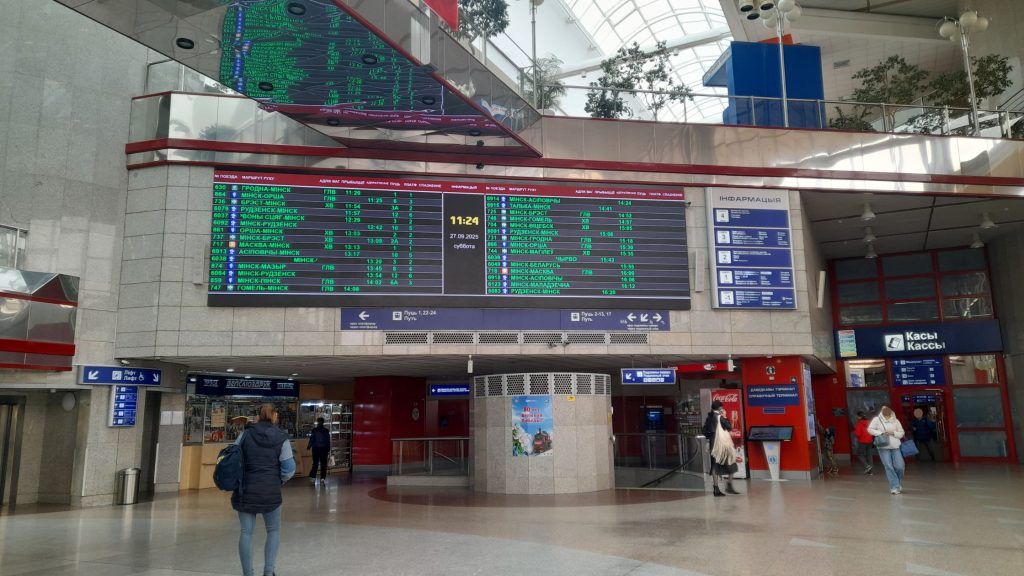 Departure hall inside Minsk railway station
I share the behind the scenes of my travels (real-time stories, messy bits etc) on Telegram

Where to stay in Belarus
Best areas to stay in Minsk
In my opinion, Belarus does not offer the same value for accommodation as Russia, especially if you’re used to the good mid-range hotels for 30-40€ a night. The market here feels much more limited:
• Business hotels that are surprisingly expensive for what they offer
• Soviet-era hotels that are charming to some, outdated to others
• Hostels that aren’t always as budget-friendly as expected
There are fewer modern, mid-range options, and overall the price-to-quality ratio can feel inconsistent.
Most tourists choose to base themselves in Minsk and take day trips or overnight trips to Brest, Grodna, or Vitsyebsk (Vitebsk), but hotels and guesthouses can be found all around the country, just expect a narrower selection.
• Niamiga (Niemiga/Nemiga) area: historic + practical base
Perfect for first-time visitors. You’re within walking distance of the Old Town, the riverside promenade, cafés, museums, and the main metro lines. Nemiga is lively and convenient, great for sightseeing.
• Kastrychnitskaya (Oktyabrskaya in Russian), the creative district: street art and nightlife
Former industrial warehouses turned into bars, galleries, coworking spaces, and cafés. The closest thing Minsk has to a “hipster quarter.” Trendy but relaxed, and ideal if you want nightlife within walking distance.
• Independence avenue/Praspekt Nezalezhnastsi: central & classic Minsk
Wide boulevards, Stalinist architecture and direct metro access. Good area if you prefer a “big city” feel close to major museums and government buildings.
Recommended hostel & hotels
I stayed at Urban Hostel in Minsk. I booked a 4-bed shared room and ended up sharing it with only one very friendly Muscovite lady (priviet if you’re reading this!). It was clean, well located, and good value for money. I would happily stay there again. Worth mentioning: everyone spoke English, and there’s a coffee shop onsite, which is always a plus.
For mid-range accommodation, I also spotted U Fontana Hotel (from ~65€), conveniently located near several metro stations and close to the State Museum of the History of the Great Patriotic War.
If you’re after something more upscale, Zalkind Hotel sounds like a very nice option (from ~150€). It’s a boutique hotel set in a 19th-century merchant family house on Revolution Street, near Niamiga metro station.
Where to book hotels in Belarus in 2026?
Because of sanctions, most international hotel booking platforms no longer operate in Belarus in 2026: no Expedia, no Booking.com, no Airbnb, and no major Western comparison sites.
Ostrovok is the best alternative to book hotels or private flats in Belarus in 2026.
Before you book:
As of June 2026, Ostrovok accepts Mastercard payments only. Visa cards are not currently supported.
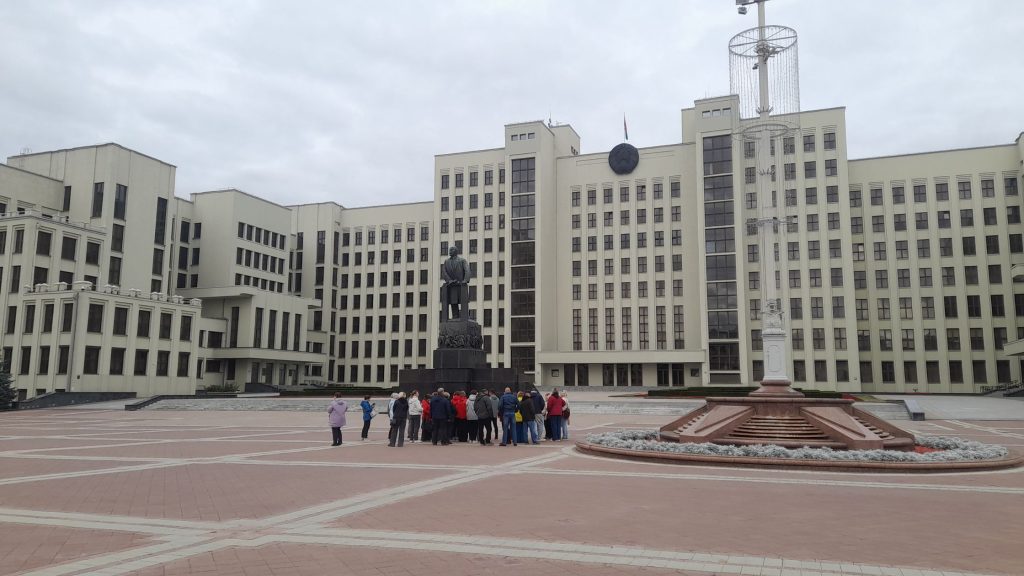 Statue of Lenin Independence Square in front of House of Government, Minsk
Food in Belarus: must-try traditional dishes & what to eat
Belarusian cuisine is simple, filling, and heavily based on potatoes, meat, mushrooms, and dairy. Some dishes may sound familiar if you know Russian or Ukrainian food, and that’s true: the three Slavic cuisines share many similarities, so there’s no point arguing over who invented borscht.
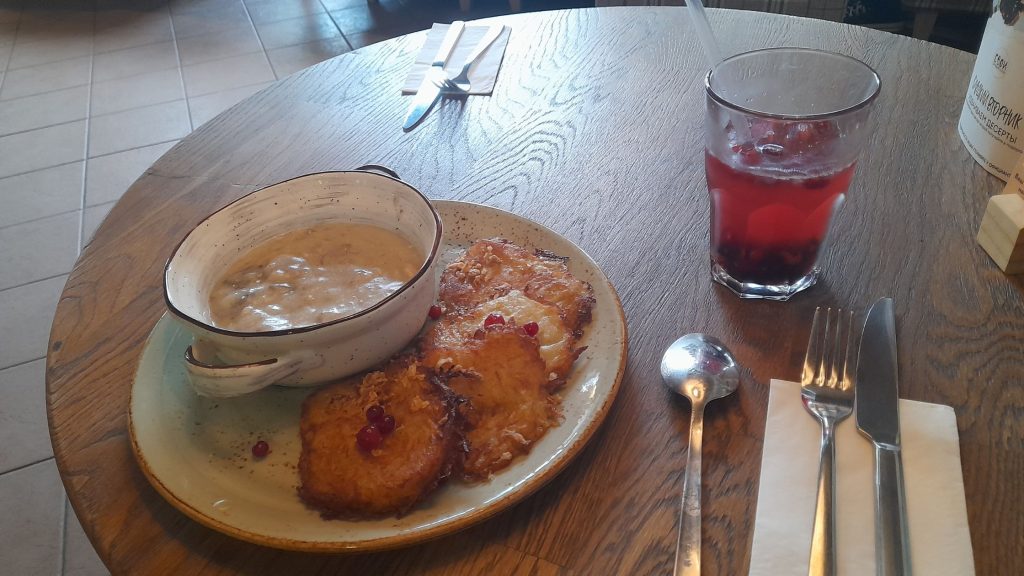 Belarusian draniki and machanka
📌 Restaurant I recommend in Minsk
Svoi, located right on Nezalezhnastsi Avenue is a nice, friendly option with English-speaking staff and tasty food. I had originally planned to eat at a popular traditional Belarusian restaurant nearby, but it was full (a Saturday lunchtime), so I walked randomly into this one instead, and it turned out to be a very good last-minute choice.
Food prices in Belarus: what does a meal cost?
Eating out in Belarus is very affordable. Here’s what you can expect in 2026:
| Type of Meal | Approx price (BYN) | Approx price (€) |
| Coffee + pastry (in a cheap coffee shop like cofix) | 9 BYN | 2€65 |
| Cheap lunch in a stolovaya (soup + main dish + kompot) | 10 to 15 BYN | 3 to 4€50 |
| Lunch in a mid-range restaurant (draniki + machanka + dessert + non alcoholic drink) | 45 BYN | 13€ |
| Dinner in nicer restaurant (starter + main + dessert + alcoholic drink) | 100 to 180 BYN | 30 to 50€ |
| A shot of Nastoyka vodka | 5 to 10 BYN | 1.50 to 3€ |
Eating out in Belarus is very affordable. Here’s what you can expect in 2026:
| Type of meal | Approx price (BYN) | Approx price (€) |
| Coffee + pastry (in a cheap coffee shop like cofix) | 9 BYN | 2€65 |
| Cheap lunch in a stolovaya (soup + main dish + kompot) | 10 to 15 BYN | 3 to 4€50 |
| Lunch in a mid-range restaurant (draniki + machanka + dessert + non alcoholic drink) | 45 BYN | 13€ |
| Dinner in nicer restaurant (starter + main + dessert + alcoholic drink) | 100 to 180 BYN | 30 to 50€ |
| A shot of Nastoyka vodka | 5 to 10 BYN | 1.50 to 3€ |
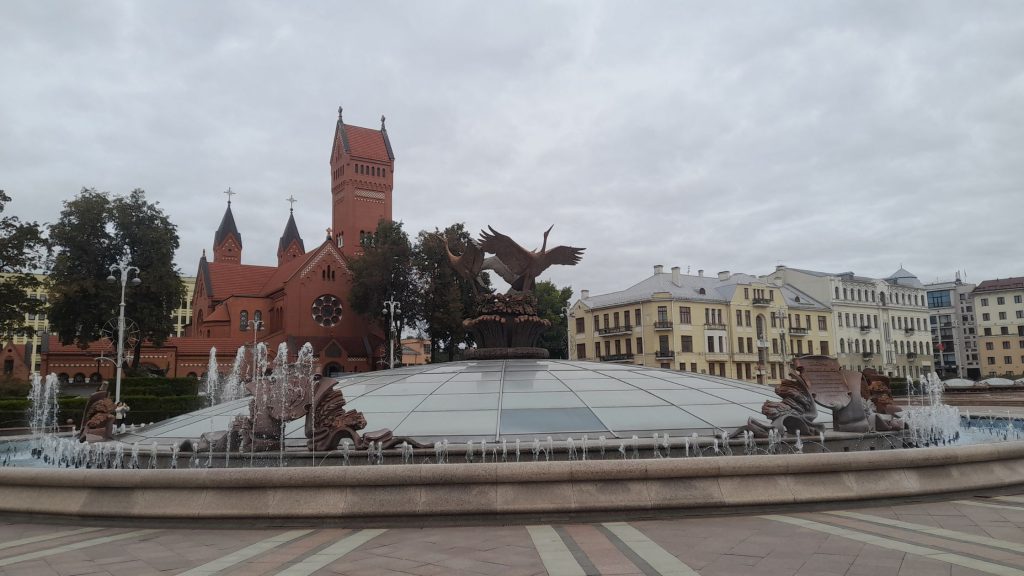 Church of Saints Simon and Helena on Independence Square, Minsk
Best time to visit Belarus: Weather, seasons & events
Belarus experiences a moderate continental climate, meaning cold winters and warm summers.
• Spring (April-May): Mild temperatures, blossoming parks, fewer tourists, perfect for city walks and countryside excursions.
• Summer (June-August): Warmest months, 20-25°C on average. Ideal for exploring lakes, forests, and outdoor festivals. Expect more tourists in Minsk and popular spots.
• Autumn (September-October): Cooler, crisp air and beautiful autumn colours. I managed to catch a cold/running nose late September, it was cold and rather windy in Minsk.
• Winter (November-March): Cold, humid, below 0°C, with snow. Perfect if you enjoy winter sports or cozy indoor experiences, but dress warmly!
Key events & festivals
• Kupalle (late June): Traditional midsummer celebration with bonfires, folk dances, and local rituals.
• Slavianski Bazaar in Vitsyebsk (Vitebsk – July): International music festival drawing artists from across Eastern Europe.
• Christmas & New Year: Belarusian cities sparkle with markets, lights, and festive vibes. Belarus is a country of multiple Christian traditions and officially celebrates Christmas twice:
– 25 December, Christmas for Catholics, following the Gregorian calendar
– 7 January, Orthodox Christmas, following the Julian calendar
In short, late spring and early autumn are the best times to visit for mild weather and fewer crowds (not that it’s overcrowded anyway), while summer offers the liveliest festivals. I’d recommend to avoid going early December, anything eastern Europe/western Russia is gloomy, cold and just depressing in my opinion.
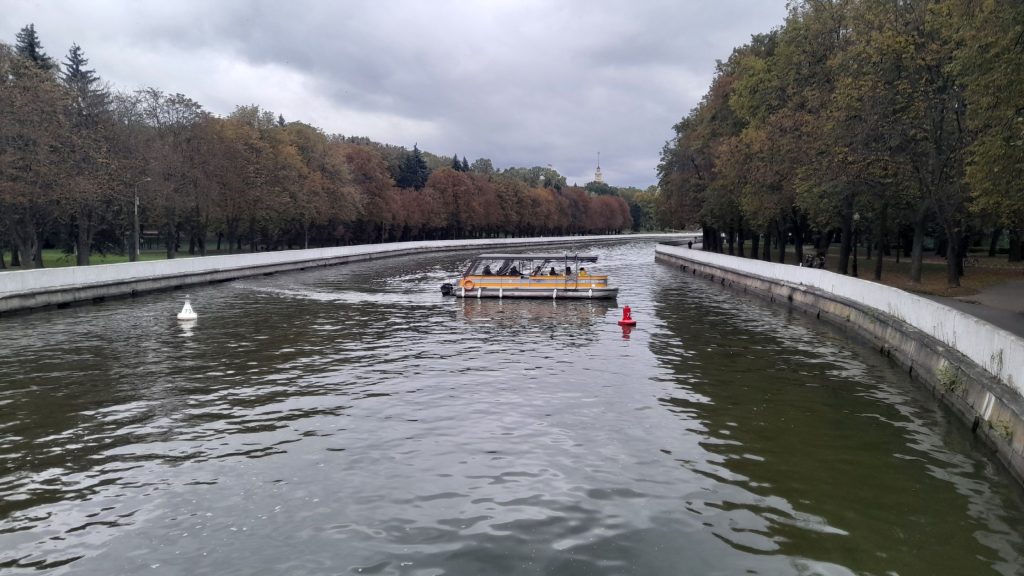 Svislach river cruise, Minsk
Belarusian culture: languages, religions and traditions
Languages
Belarus has two official languages, Belarusian and Russian, but Russian is the dominant everyday language. Belarusian still appears on signage, cultural institutions, historical plaques, and government buildings, but most conversations, menus (as far as I’ve seen) etc. are in Russian.
Some Russians jokingly say that Belarusian is “childlike Russian” because some words look like simplified or phonetic versions of Russian. It’s humor based on similarity, not reality. Belarusian is a distinct language with its own grammar, vocabulary, and historical development.
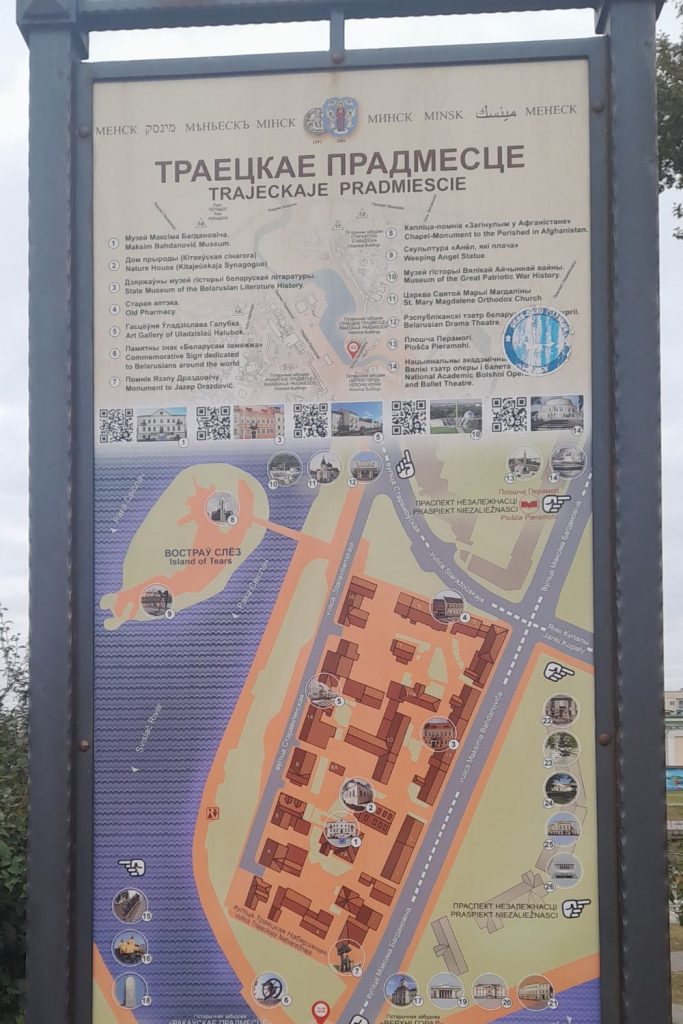
If you speak Russian, navigating Belarus is very easy. I also found that most young people speak decent English, especially in Minsk, while the older generation generally does not.
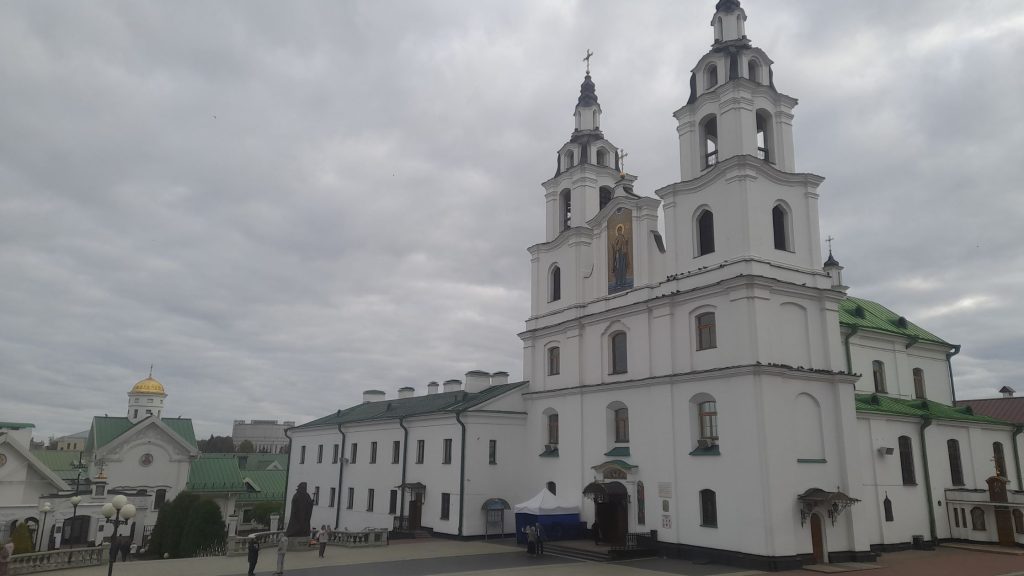 The Holy Spirit cathedral, Minsk
What are Belarusians like?
Having spent a fair amount of time traveling across the former Soviet Union and Russia, I’ve met quite a few Belarusians. I find always them calm, not loud, not showy, polite and kind behind a quiet first impression. It’s hard to define, but their mannerisms and outlook feel subtly different from Slavic Russians: familiar, but distinct (if that makes sense).
Best places to visit in Belarus (cities, castles & National Park)
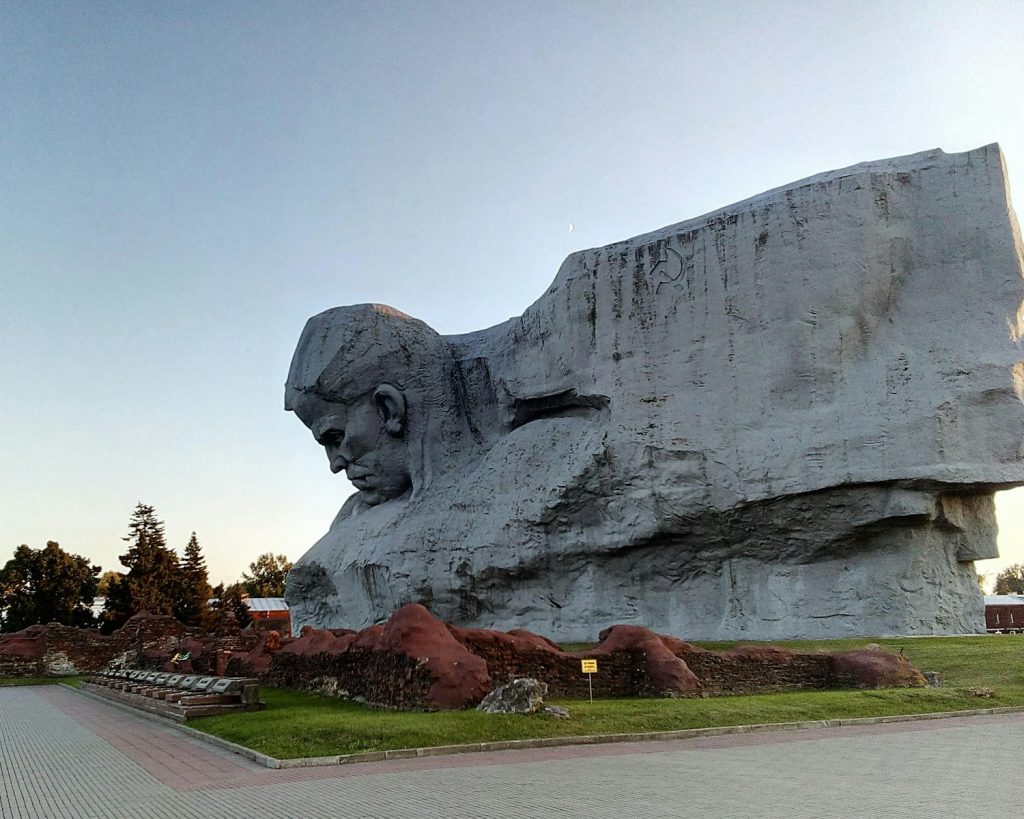 Soviet memorial, Brest
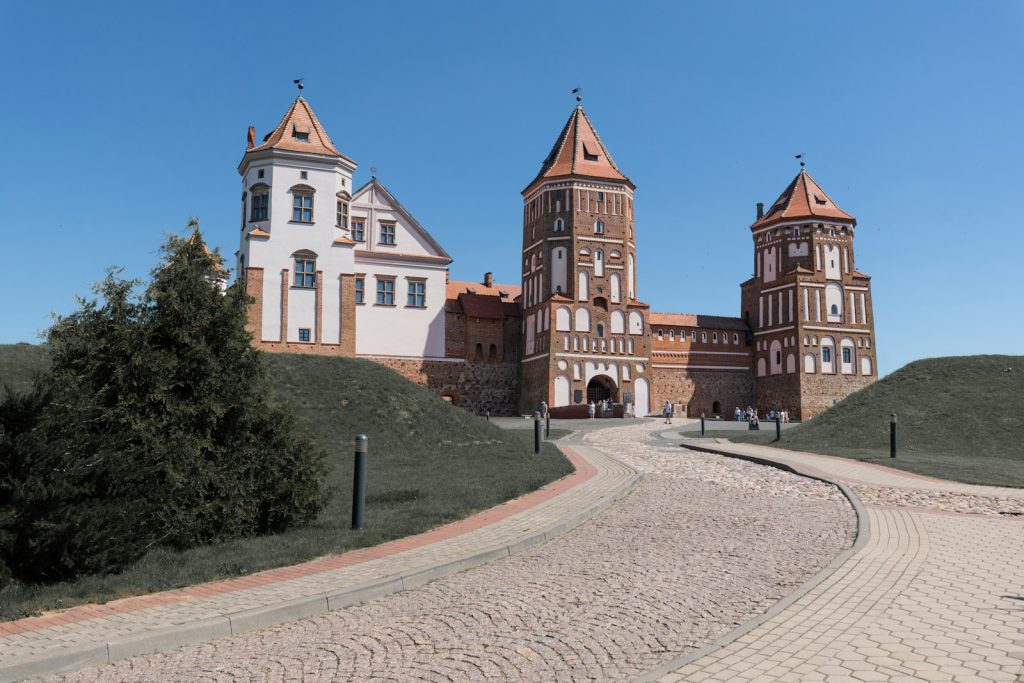 Mir castle
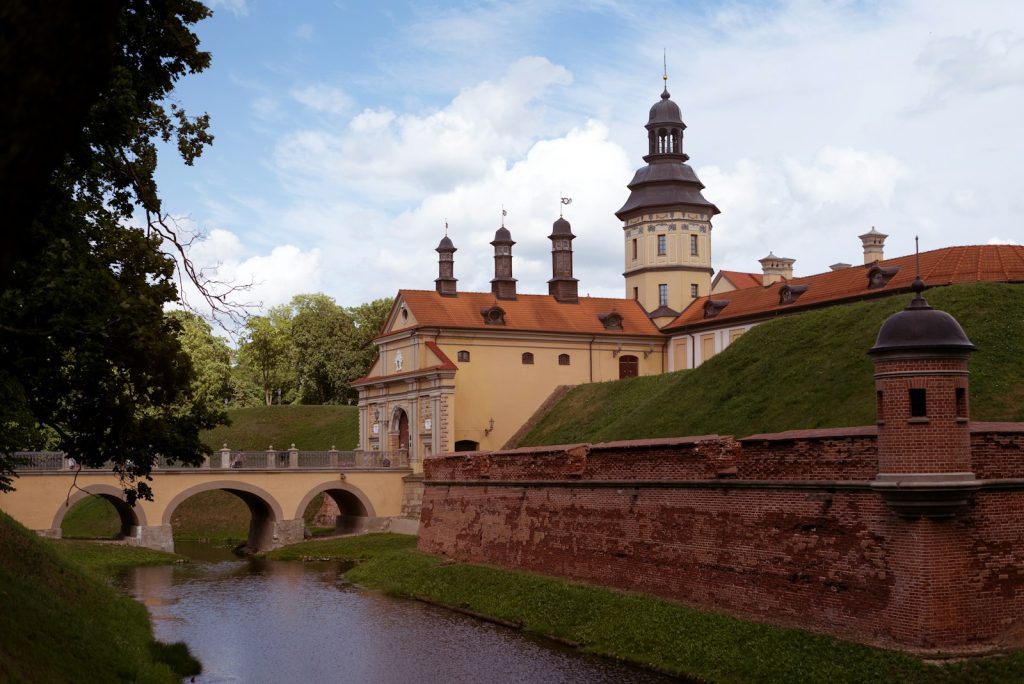 Niasvij (Nesvizh) castle
Suggested 4-5 day itinerary (entering from Poland)
This itinerary assumes you enter Belarus from Poland via the Terespol-Brest border, currently the most practical land route for European travelers.
• Day 1: Brest
Arrival from Poland → Brest Fortress Memorial, city center walk, cafés along Sovetskaya Street.
• Day 2: Brest → Minsk
Morning train or bus to Minsk (≈4 hours). Afternoon walk along Independence Avenue, Trinity Suburb, first impressions of the capital.
• Day 3: Minsk
Independence Square, WWII Museum, local cafés, parks, and Soviet-era architecture.
• Day 4: Mir & Niasvij (Nesvizh) Castles (UNESCO sites)
Day trip from Minsk to Mir and Nesvizh. Return to Minsk in the evening.
• Day 5: Grodna or Vitsyebsk (Vitebsk)
– Grodna if exiting toward Poland or Lithuania (make sure the border is open!)
– Vitsyebsk if continuing toward Russia (be sure to have the right visa!)
Return to Minsk or onward travel.
I chose to keep it short but you could spend a whole month roaming around Belarus, hiking and slow traveling without getting bored.
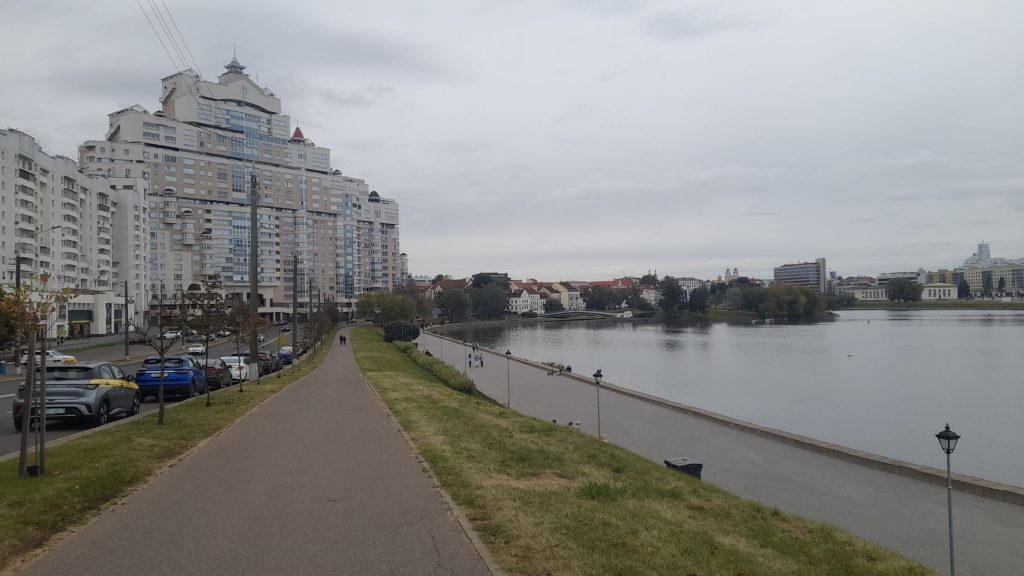 Along the Svislach river, Minsk
Final thoughts: would I return to Belarus?
Absolutely! Belarus isn’t for every traveler, it’s off the beaten path and less touristic than the Baltics or Western Russia, and that’s probably why I like it. But for those curious about post-Soviet culture, history, and untouched landscapes, it’s a rewarding destination.
I’m already thinking about going back next year, would love to visit Belovezhskaya Pushcha to (finally!) see the European bisons, and the Braslav lakes region.
If you’ve traveled in Belarus before, and have recommendations, I’d genuinely love to hear them. I’m always looking for those quiet, hidden corners that almost never make it into guidebooks.
FAQ about traveling in Belarus in 2026
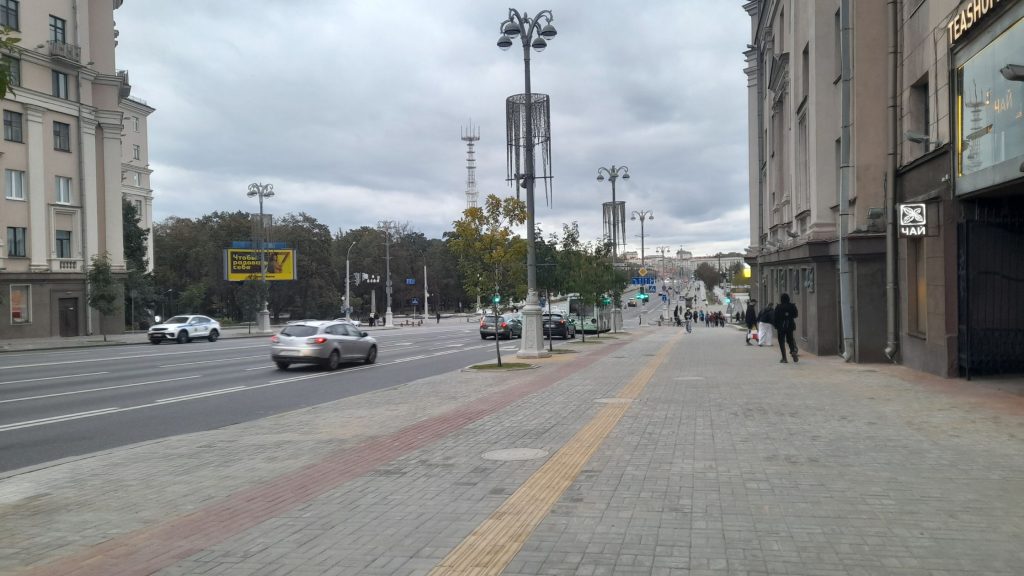 Independence Avenue, Minsk
📌 Also worth reading about Belarus
• Kaliningrad-Minsk train journey: what to expect in 2026
• Crossing the Poland-Belarus border via Terespol-Brest in 2026