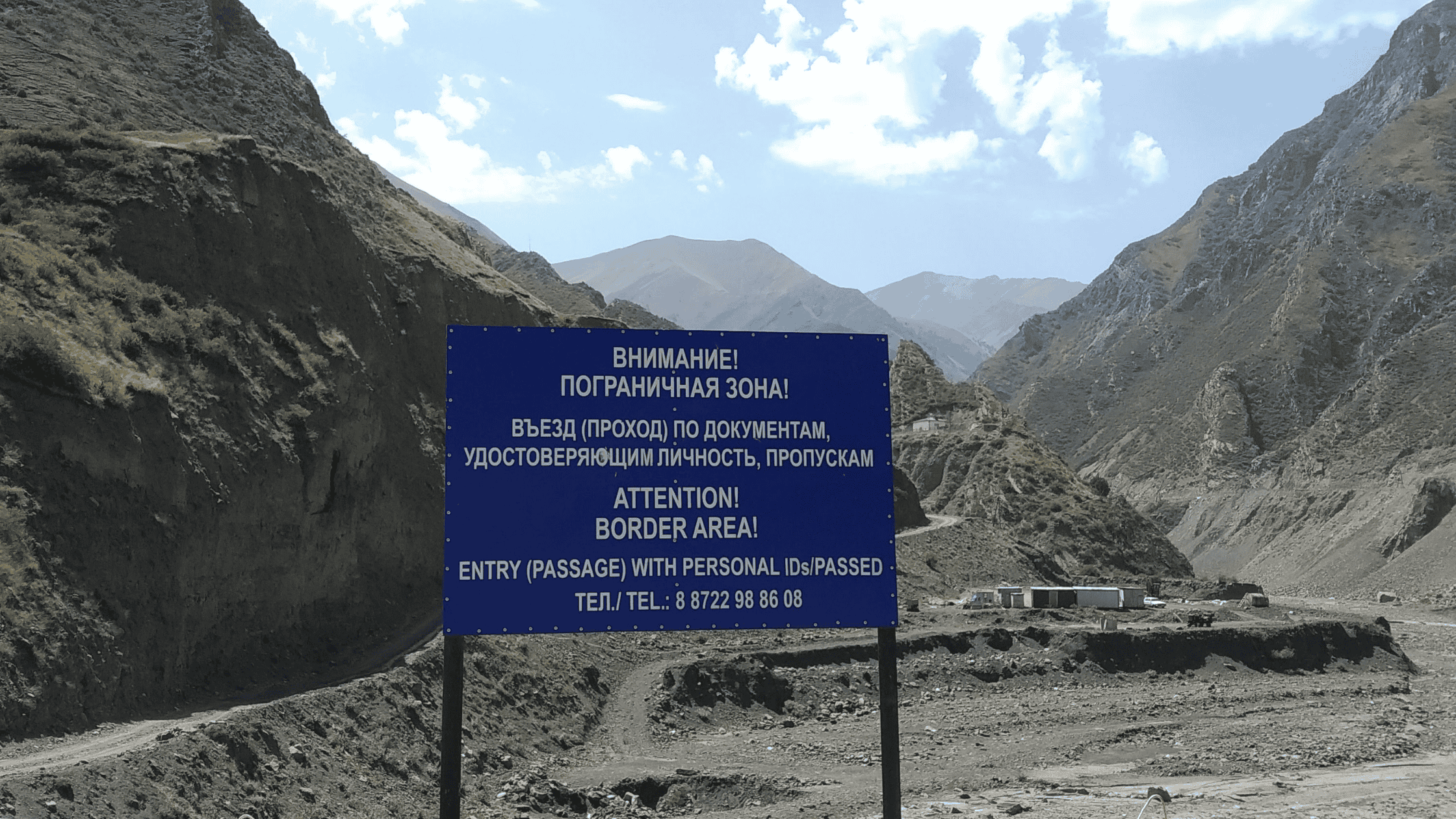
Traveling to Abkhazia in 2026: a complete guide to exploring this little-known territory
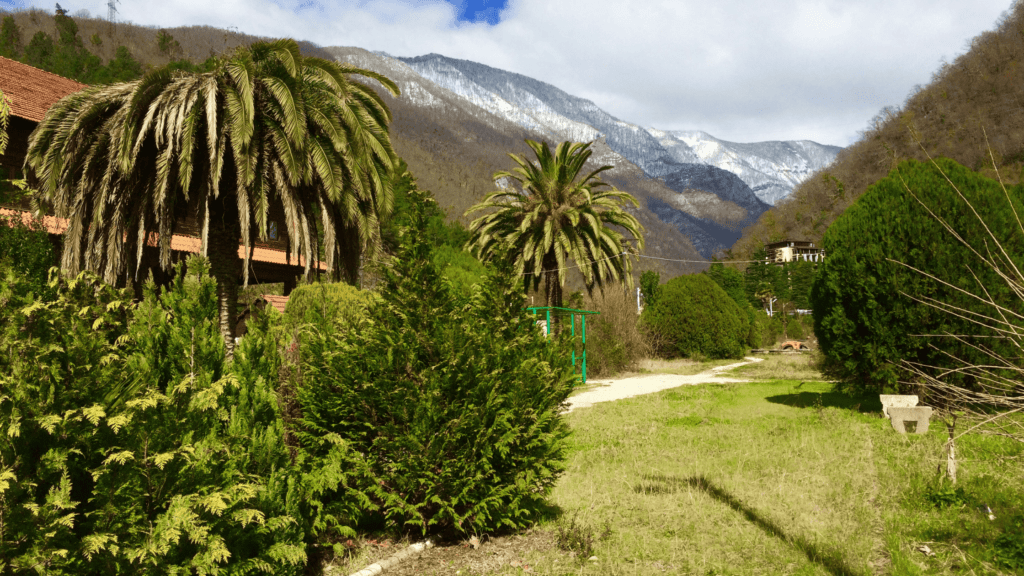
Abkhazia is a de facto state, self-proclaimed independent from Georgia in 1993. Located on the shores of the Black Sea, between palm trees and high peaks of the Caucasus, this region offers spectacular landscapes and a complex history. Once a Soviet Riviera popular with leaders like Stalin, today Abkhazia fascinates with its post-Soviet heritage and the scars of the 1992-1993 war.
In this guide based on my travel experiences in Abkhazia, find out everything you need to know : visa procedures, border crossings, security, and practical tips for exploring this small off the beaten track country.
Travel guide updated on 27 May 2026 with information verified with other travelers, Abkhazian banks etc. All information on visa, borders and security is up-to-date.

Abkhazia Political Status (2026):
Most countries (incl. France, US, UK) consider Abkhazia part of Georgia.
Entering via Russia is illegal under Georgian law and may lead to future entry bans.
🔗 France Diplomacy ·
🔗 UK Gov ·
🔗 US State Dept. ·
🔗 Georgian MFA
Abkhazia at a glance (Quick FAQ)
Where is Abkhazia ?
Abkhazia is located in the Caucasus, on the eastern coast of the Black Sea, northwest of Georgia. It shares a border with Russia to the north (Psou checkpost near Sochi).
Is it safe to travel to Abkhazia?
Traveling to Abkhazia is generally safe, but there are some precautions to take, especially given regional (geo)political tensions. I give you more details in the “Security” section.
Is Abkhazia a country?
Officially, the international community considers Abkhazia to be part of Georgia. However, it has functioned as an independent state since 1993, recognized only by a few countries and almost-states such as Russia, Nicaragua, South Ossetia or Pridnestrovie/Transnistria.
Capital: Sukhum (in Abkhazian “Ақуа”, in Georgian “Sukhumi”, in Russian “Сухум”)
Population: About 240 000 inhabitants
Is a visa required?
Yes, a visa is required. Abkhazia has its own immigration rules, separate from those of Georgia. Unlike Georgia where most nationals of Western countries can stay up to 365 days without a visa, Abkhazia imposes specific formalities. Details just below.
Visa for Abkhazia: how to obtain it, official contacts, processing times etc.
The letter of authorization to cross the Abkhazian border
To cross the border, you must first to apply for an “entry permit”, it’s a kind of laissez-passer, a clearance letter, call it what you want, but without it they won’t let you enter Abkhazia.
The application is very simple and free to make directly on the official Abkhazian government’s website. You should get a response within a week or two, or much more (like me, see below), by email (check your spam). The letter-permit is in Russian and simply states that you, a citizen of X country, is allowed to enter Abkhazia from date A to date B via Z border.
Pay attention to the border post you select, if it says Psou (Псоу – border with Russia) on your letter, they will not let you cross the Ingur(i) (Ингури) border from Georgia.
Print this letter in several copies for the Georgian border, they can keep copies, and one should be enough for the Russian border but you can never be too careful.
This entry permit is not a visa, nor does it mean that they will necessarily let you cross the border. If the officer is in a bad mood or your passport looks fishy, you’re in for a little interrogation. Be polite and answer questions, the border guards are just doing their job. Normally they should end up letting you enter.

In 2025 the administration had become much slower to reply. I applied in September 2025 to fly into Abkhazia from Moscow, I never got any answer despite three follow-up emails. I reapplied in early October (this time to cross via the Psou border near Sochi) and finally received my letter, but only weeks later, when my Russian visa was about to expire and I had already booked my train back north.
I was (still is) super dissapointed I couldn’t go. I got an expensive double entry Russian visa for that very purpose … My tip: apply at least 2-3 months in advance.
According to the feedback I‘ve received, no traveler seems to have succeeded in crossing the Ingour(i) border since the pandemic. Those who attempted to obtain a permit in 2023, 2024 and 2025 had their applications refused, with the justification that the border was closed. The others say they were rejected on the Georgian side and not on the Abkhazian side. It’s hard to know if this is just a systematic excuse for foreign tourists, but for now, entering Abkhazia via Georgia seems almost impossible.
2. Buy the visa
• If you come from Georgia, you have 3 days to buy your visa from the Abkhazian authorities, directly in Sukhum at the Ministry of Foreign Affairs (Address: 33 Sakharova Street – ул. Сахарова 33). You can pay it in cash but also by MIR card (Russian card if you have one).
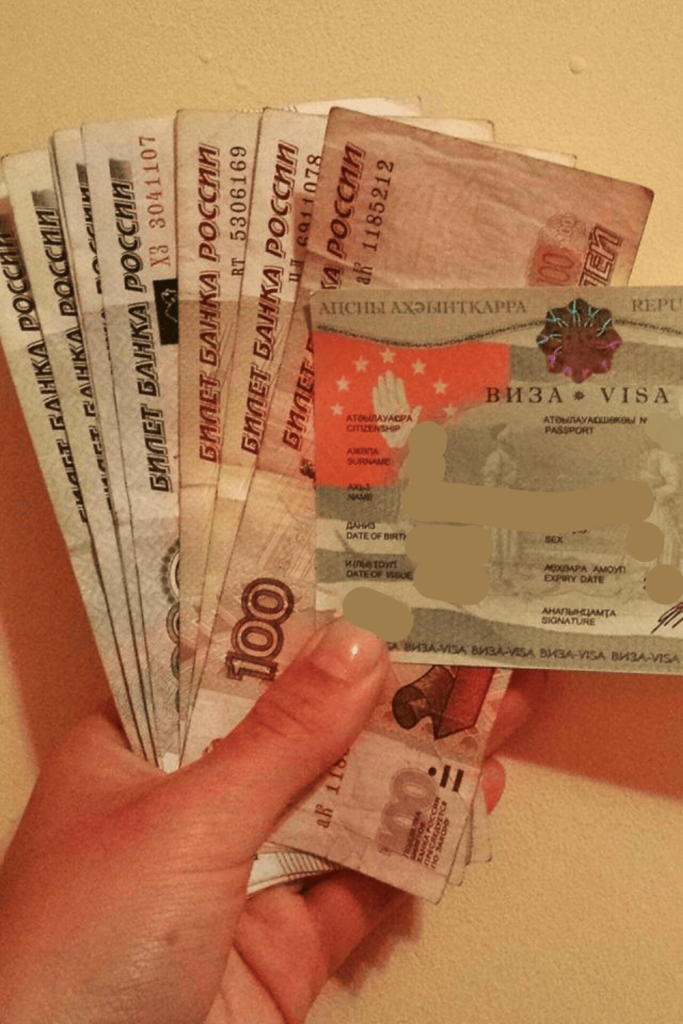
• If you are coming from Russia, you can buy your visa directly after the border crossing, on the right there is a small counter with a sign that says Visa – ВИЗА. An Abkhazian visa costs 350P (3€50 – 5€ depending on the Russian rouble rate) for one month. And for around 60€ you can even get a one-year visa.
The Abkhazian visa will not be affixed into your passport. Border guards keep it when leaving the country. (Rumor has it that the Abkhazian authorities started stamping passports recently)

How to get to Abkhazia: Georgia vs Russia
The only way to get to Abkhazia is by land, either via Georgia (legal) or via Russia (illegal from Georgia’s point of view).
From Georgia: Ingur(i) border
From Tbilisi, you have to reach the border town of Zugdidi by marshrutka or train (book in advance in season: Zugdidi = road to the Svaneti mountains = lots of tourists).
Then take a marshrutka or a taxi to the Abkhazian border, less than 10 km away.
Crossing the border is done in several stages:
1. Georgian checkpoint
2. Crossing the bridge on foot across the Ingur River (2 km – I took some sort of horse-drawn cart on the way back with young guys laughing their a** off at transporting a French girl. Fun!)
3. Abkhazian checkpoint
4. Russian checkpoint: control as rigorous as entering Russia, expect a lot of questions
Marshrutkas and shared taxis for the journey between the border and Gal (1st Abkhazian town from Georgia) – I was stuck sandwiched between three babushkas in the back of a Volga as old as its driver.
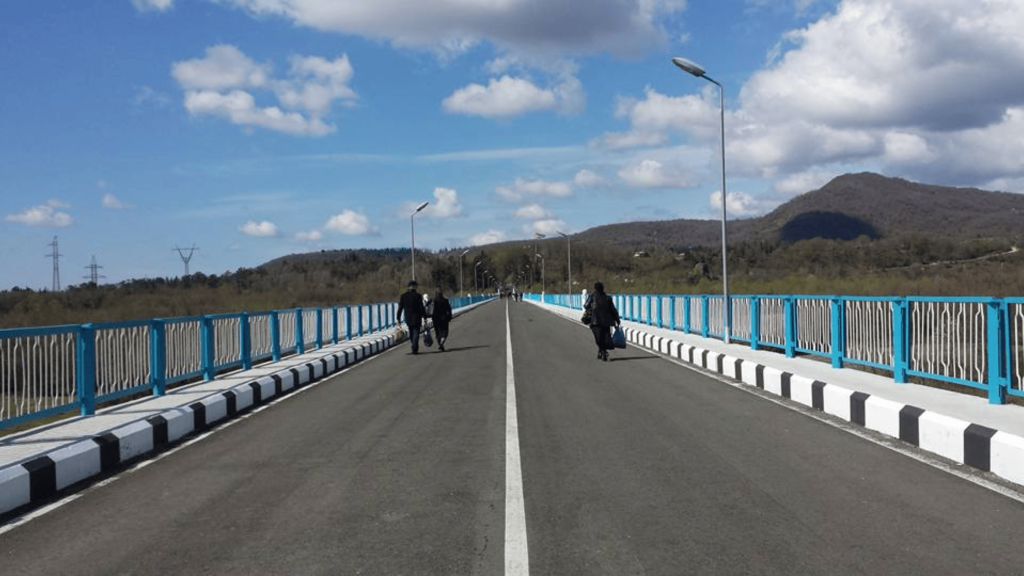
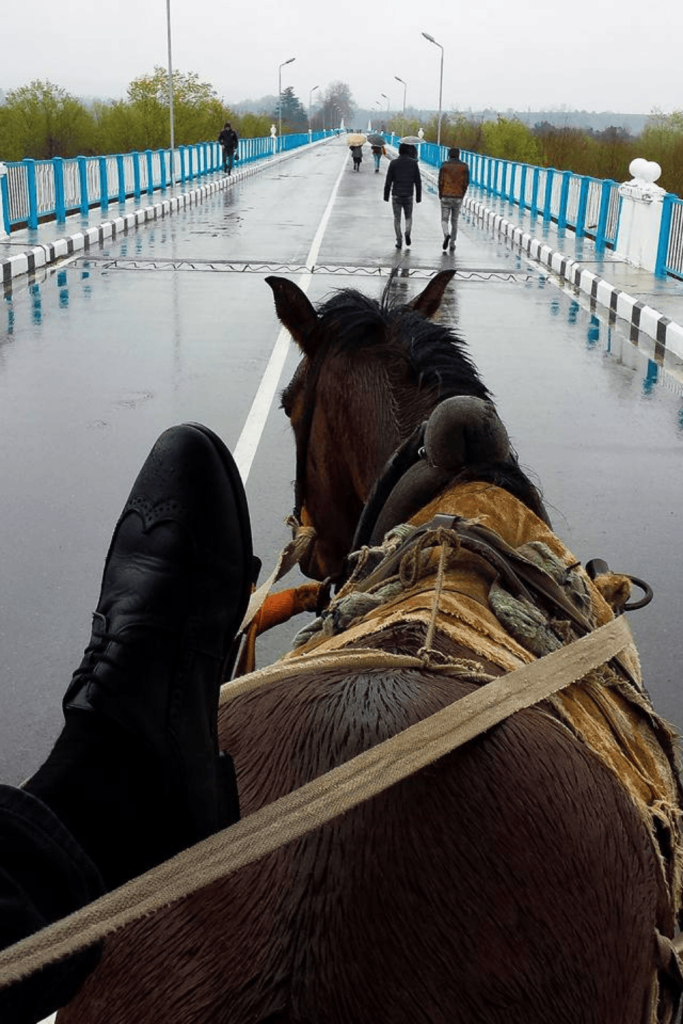
Important: If you enter Abkhazia via this border, you must exit through this one too. Georgian authorities do not stamp the passport when leaving Georgia to Abkhazia. If you have a valid Russian visa you should have no problem entering Russia but if you ever wish to return to Georgia you would never have left the country officially.
The border may close without notice and for an indefinite period of time.
Enter Georgia in 2026: With the new Georgian government of Mr. Kavelashvili (“pro-Russian” according to Europeans), entering Georgia is no longer automatically guaranteed for Western travelers. On travel forums, some have been refused entry without any clear explanation, sometimes because of Afghan stamps or other reasons not specified by the authorities.
From Russia: Psou border
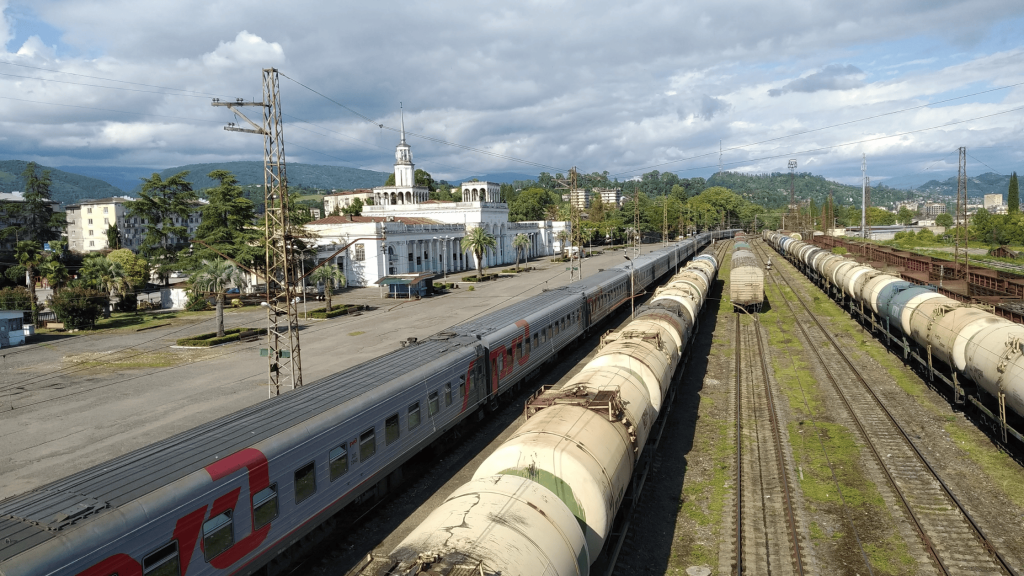
From Sochi you can very easily take a bus to the Psou border. Then cross on foot to take another bus or marshrutka towards Novy Afon, Gagra or Sukhum. There are also Moscow – Sukhum trains if you book the ticket early enough (on RussianTrain with a Visa/Mastercard).
Georgia considers this border and entry into Abkhazia through it to be illegal since it does not control it. You need a double entry Russian visa (eVisa is not valid there), you cannot continue to Georgia (unless you want to end up in prison). You must leave Abkhazia the way you came in, via Russia.

The Russians do not stamp the passport at the Abkhazian border, neither to enter nor to exit, but you will be registered as leaving the Russian Federation. A new migration card is issued upon return.
Reopening of Sukhum Airport
Abkhazia has once again an airport in 2026 following the reconstruction of Sukhum airport, financed by Russian private investors. Test flights have taken place in February 2025, and the airport has welcome its first commercial flights last May 2025, connecting Sukhum to several Russian cities, including Moscow at Sheremetyevo airport (from 13 000₽).
On the permit from the Abkhazian ministry, you must select “airport” as an entry point.
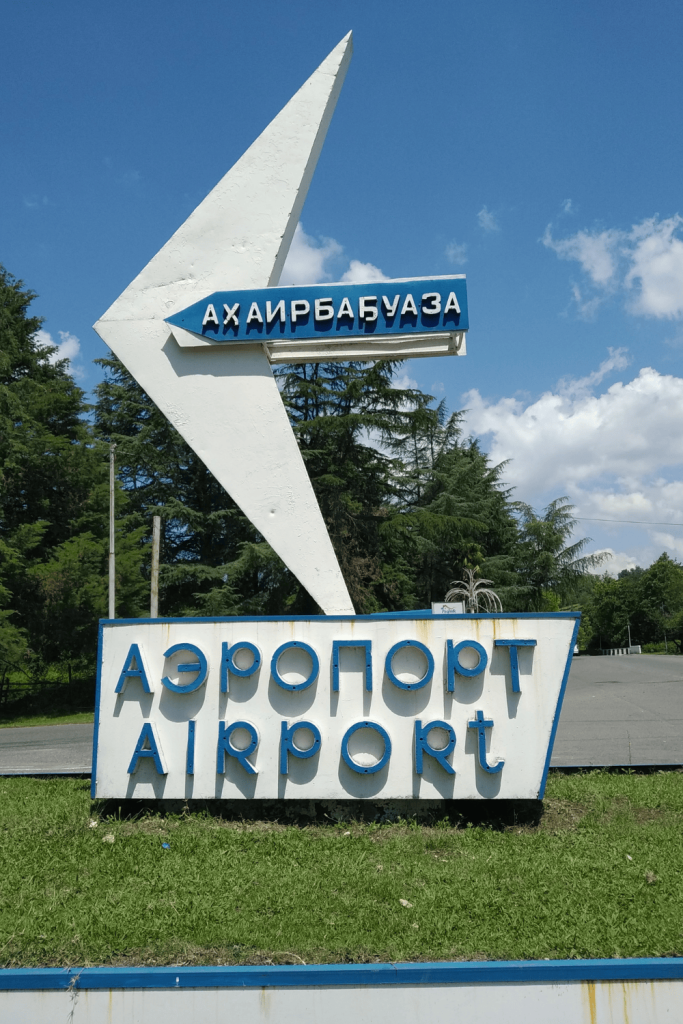
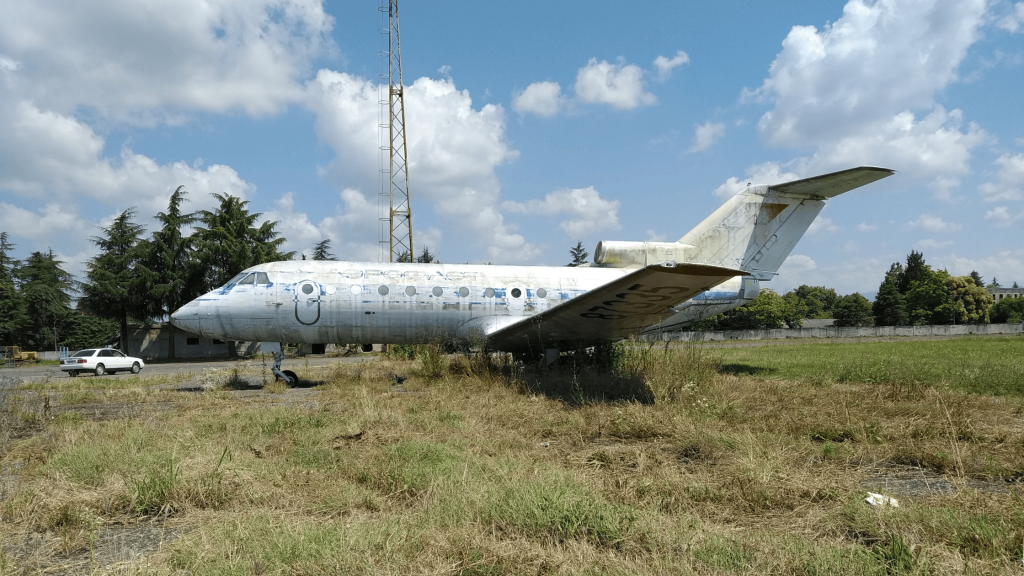
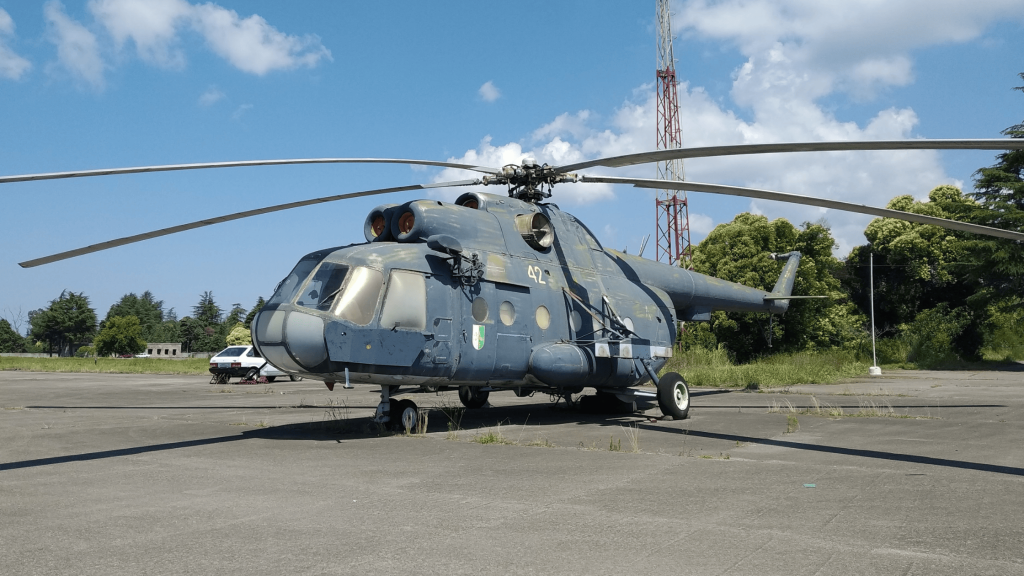
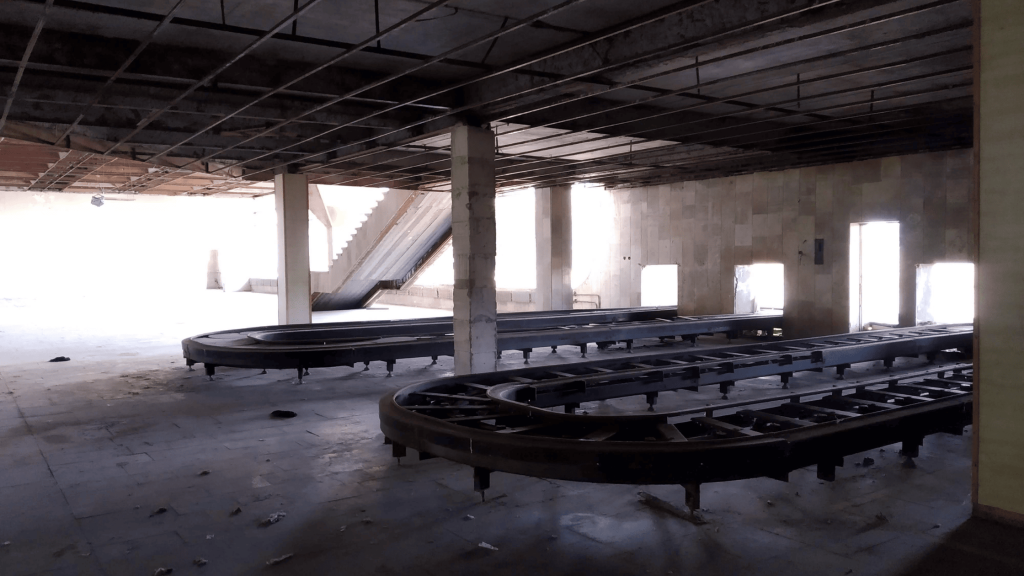
The airport in 2019
I share the behind the scenes of my travels (real-time stories, messy bits etc) on Telegram

Safety in Abkhazia: What you need to know
The perception of security in Abkhazia varies depending on whom you talk to. The Georgians will tell you that it is very dangerous, while the Russians will say that there is no problem at all. The reality is more nuanced.
• Local crime: The Gal region, close to the Georgian border, has a higher crime rate, the people there are predominantly Georgian, there is a high unemployment rate and discrimination compared to the rest of the Abkhazian population. Don’t go hanging around abandoned buildings alone and/or in the evening etc. Basic safety rules and common sense applies.
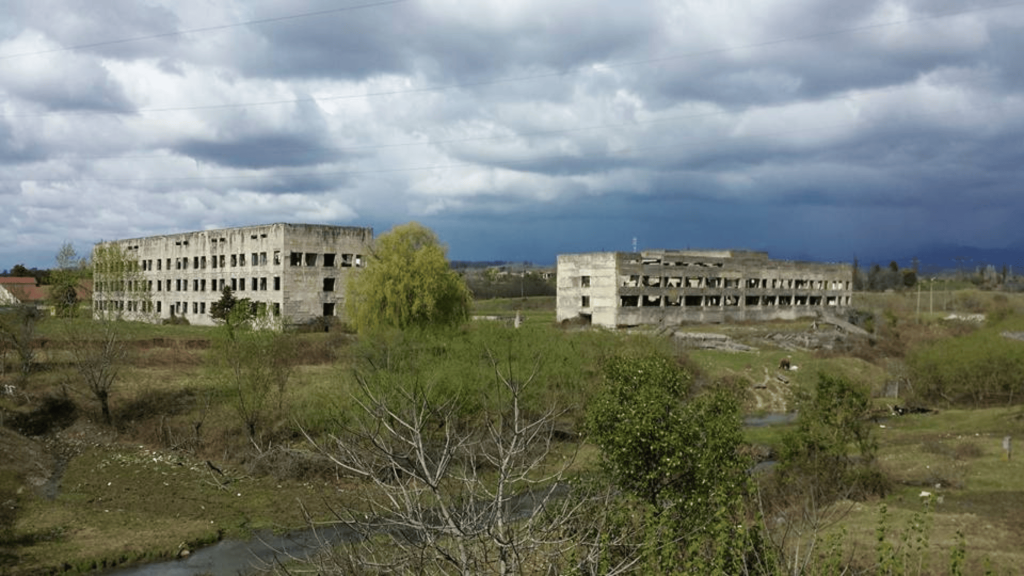
• Abandoned buildings and urbex: Abkhazia is full of buildings left abandoned since the war. They are interesting to explore but can be dangerous: lack of warning signs, risk of collapse. You enter at your own risk.
• Mines and explosives: The HALO Trust (NGO specialized in mine clearance) declared Abkhazia free of anti-personnel landmines in 2011, but there remain munitions abandoned or forgotten by people in some houses, gardens, fields and former military depots.
• Road traffic: Abkhazians tend to drive fast and a bit recklessly, so be careful when crossing the road. If you hitchhike, avoid cars without license plates.
• No diplomatic representation: Abkhazia is not recognized by the vast majority of the international community. If you have problems there, you will have to deal with them by yourself.
• Geopolitical tensions: A new military escalation between Georgia and Abkhazia (supported by Russia) is in my opinion very unlikely, Georgia will surely do everything not to frighten its millions of annual tourists. Please note: in the event of a conflict, the Ingur border would be closed, and travelers stranded in a territory without consular assistance.
• Solo female travelers: I went to Abkhazia twice, alone. Aside from hitchhiking which I don’t recommend (like in Georgia) if you’re not used to it, people were very nice, welcoming and hospitable. I never felt unsafe.
Practical tips for traveling to Abkhazia
Money and budget
• Money: The Russian rouble is used in Abkhazia. Do not try to pay with your Georgian laris or even have them changed anywhere else other than in Gal, where there is a Georgian minority. There are ATMs (and exchange offices in banks) in Sukhum and Gagra. Unfortunately in Abkhazia, Visa and Mastercards do not work. If you come from Georgia, exchange roubles directly at a currency exchange office in Tbilisi.
Abkhazia has its own currency, the Apsar (аҧсар), since 2008. In theory, it is legal tender in Abkhazia, but outside the region, it holds about as much value as the Transnistrian rouble or Monopoly money. In practice, it’s mainly used by collectors and as a souvenir for tourists.
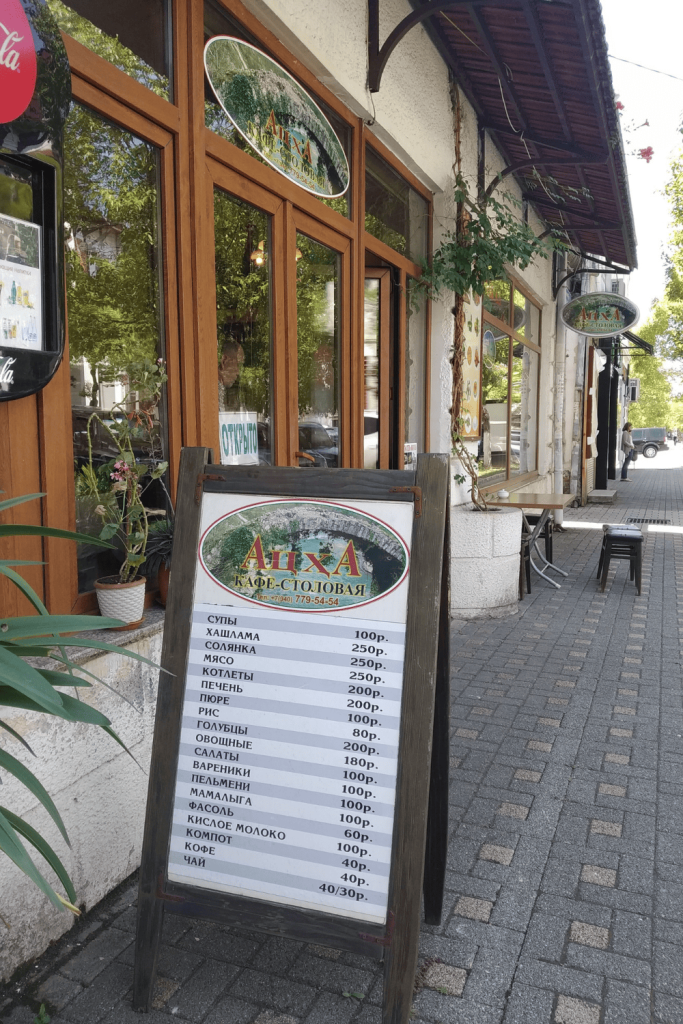
Avoid very banknotes (5000₽), some stores do not accept them. Excursions start from 600₽. Price in a cafe : between 600₽ and 1000₽. Prices are quite similar to those in Russia.
• Top up a MIR T-Bank card (ex-Tinkoff) in Abkhazia :
If you have a MIR card from T-Bank, you can top it up directly at Abkhazian Amra-Bank (Амра-Банк).
Which bank cards work in Abkhazia?
Only MIR cards work in Abkhazia in 2026 (Source: the National Bank of Abkhazia itself, which responded to my e-mail.).
MIR card: works
Foreign Visa and Mastercard: does not work
Visa and Mastercard issued in Russia: does not work
UnionPay card: does not work

Accommodation: hotels, guesthouses
There are a lot of Russian tourists in summer, so many rooms to rent from locals, and hundreds of hotels listed on Zenhotels (you can pay directly with a Visa or Mastercard), the alternative to Booking.com, Expedia, Kayak etc which do not work in Abkhazia. Note: some guesthouses do not appear during the low season.
If you are traveling out of season (from about October to April), look directly in the street for signs on the houses saying “sdayutsia komnaty – сдаются комнаты” or “sdayetsia komnata – сдается комната” which means room for rent in a local’s house. Prices vary from 6€ to 50€ per night.

I stayed at the Roza guesthouse in Sukhum, a family with very nice dogs and cats, RusAmra in Gragra, the owner is adorable and Guesthouse Polyana Chasha in Otchamtchira, a babushka and her super nice sons/grandsons. Else, there are also very nice hotels and boutique hotels in Sukhum or Gagra.
Local transportation
Marshrutkas run on the main roads of Abkhazia, but with fairly random schedules; Be careful that the driver does not overcharge you! It happened to me once. Ask the babushkas around you to avoid unpleasant surprises.
Hitchhiking works quite well, even on the backcountry roads.
In major cities like Sukhum and Gagra, there are no trams or metro systems, but a bus network. Search your route on Yandex maps for the correct bus number.
Taxi: Uber and Yandex taxi do not operate in Abkhazia. Instead, use Garuda (Гаруда) or A-taxi (А-такси), 2 apps available on Play Store or the App Store.
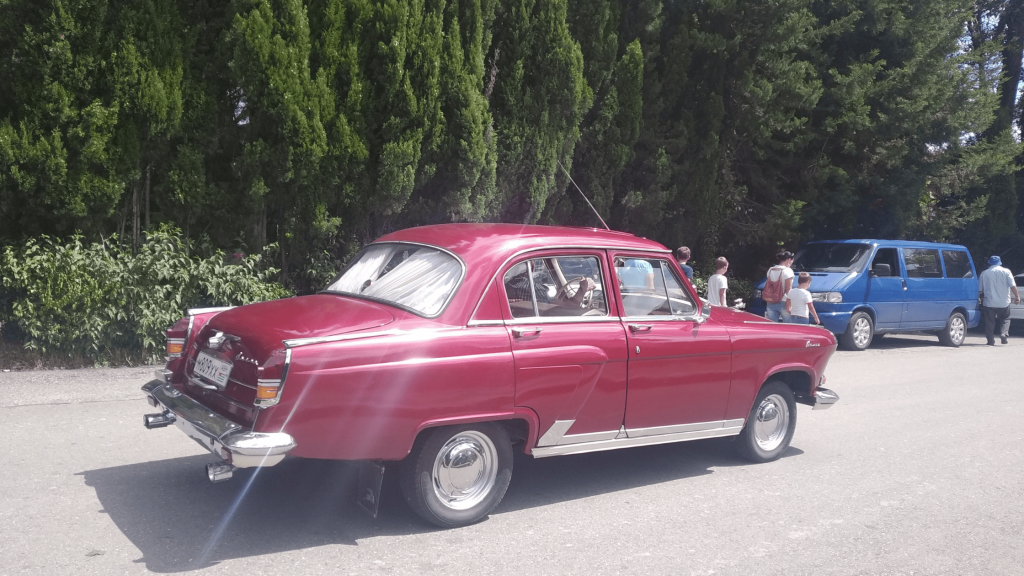
National cuisine: what to eat in Abkhazia

Tip: Go eat in “apatskha” also called “patskha” which are typical Abkhazian cafes but originally refer to a traditional kitchen in a separate building in the courtyard of a house. Patskha are made of wood and wicker (or something similar) without windows but with a fire in the center.
Abkhazian SIM card
Aquafon, the country’s main network and apparently a subsidiary of Russia’s Megafon, is the most popular option. Just after crossing the Russian border, there’s an Aquafon store on the left. You can also easily find their stores in major cities.
If you’re coming from Russia, your SIM card will work with roaming, just like a Georgian SIM card. The second operator, A-Mobile (a subsidiary of Beeline), is another option. However, prices are slightly higher than in Russia.
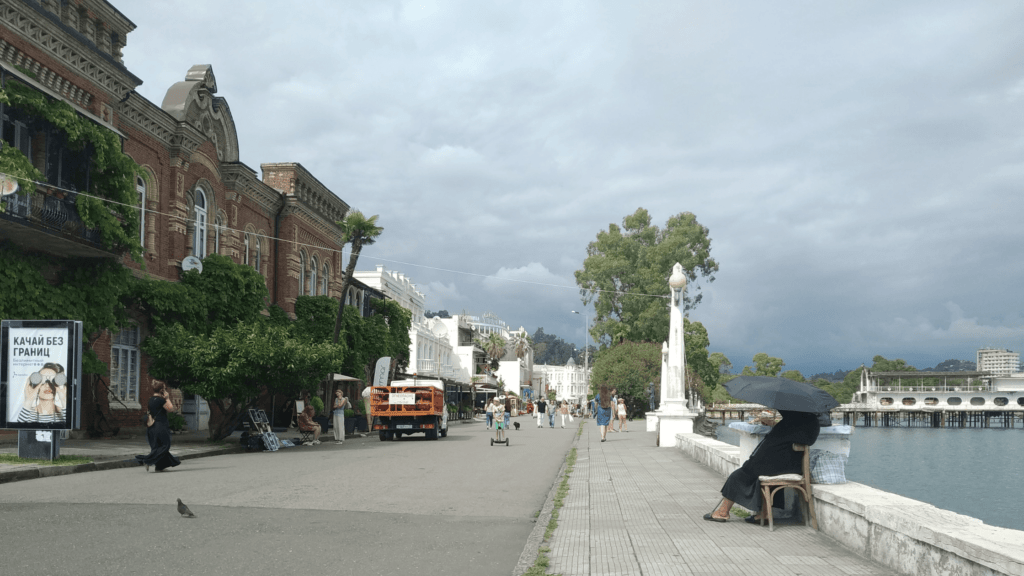
Abkhazian culture: languages, religions and traditions
• The Apsuara, the moral and ethical code of the Abkhaz: An oral code of conduct which follows traditional customs, values and principles such as respect for elders, honor, sense of duty, loyalty. Examples: if an old man enters a room, the younger ones must stand up; during a celebration, men and women sit separately.
If you speak Russian, out of respect, avoid using the familiar term “ты” with older people. You will also notice that many women dress in black. In Abkhazia, mourning follows a strict protocol: men wear black for about a month, while women often do so for a year or more. Some widows even choose to dress in black for the rest of their lives.
• Languages: Abkhaz and Russian are the official languages.
The Abkhazian language has been written over time with the Greek, Arabic and then Georgian alphabet, but since 1954 Cyrillic has been used. It is made up of 64 letters including 26 from the Russian alphabet. The language is very close to Circassian languages in general and especially to Abaza.

• Religions: Orthodox Christianity and Sunni Islam. There is also a very small Ashkenazi Jewish community and a synagogue in Sukhum.
• “Celebration” days:
May 21st, commemorations of the memory of the Caucasian War of 1864 and the mountain peoples forced into exile.
September 30th, celebration of the liberation of Abkhazia and the departure of the Georgian armed forces.
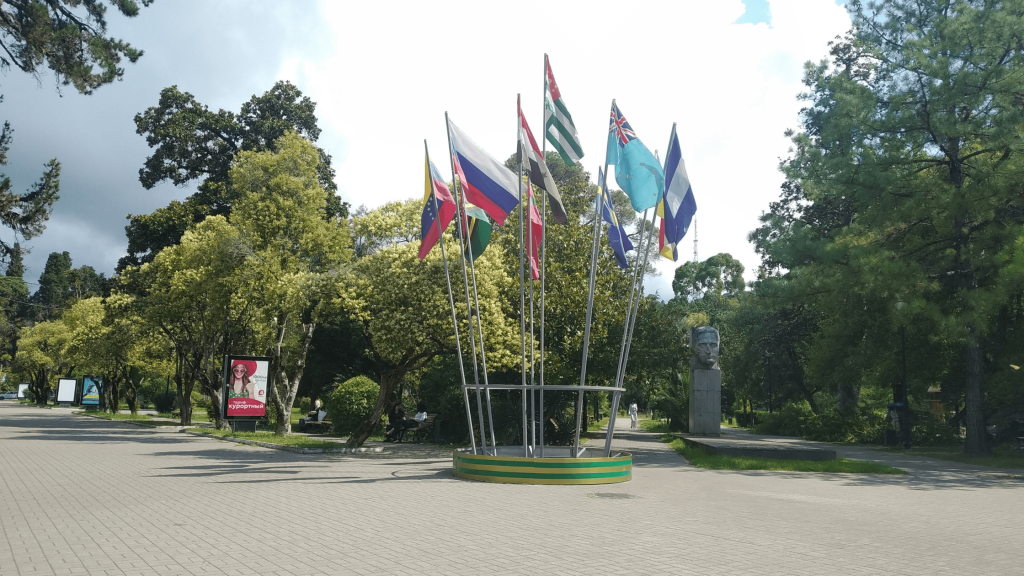
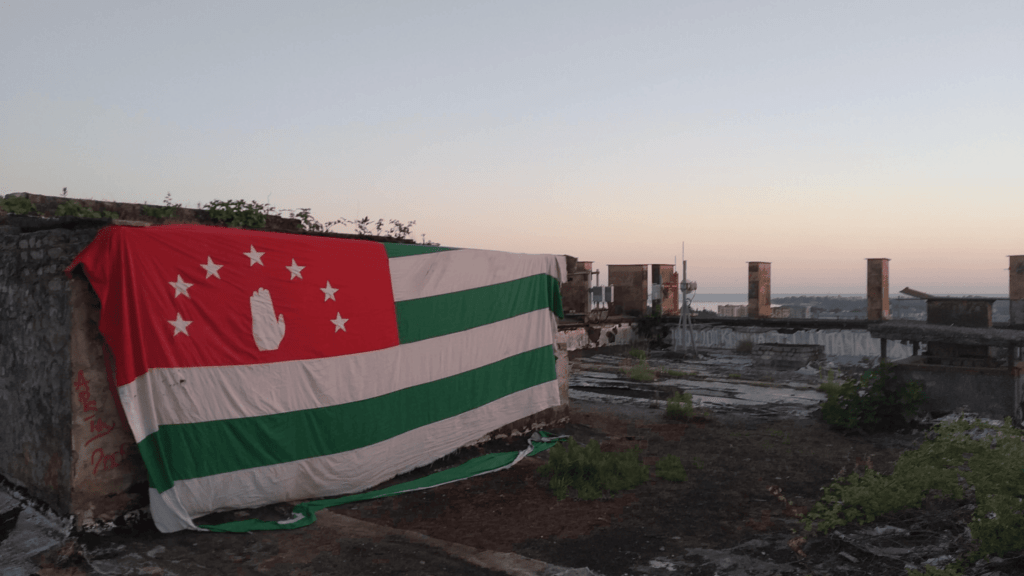
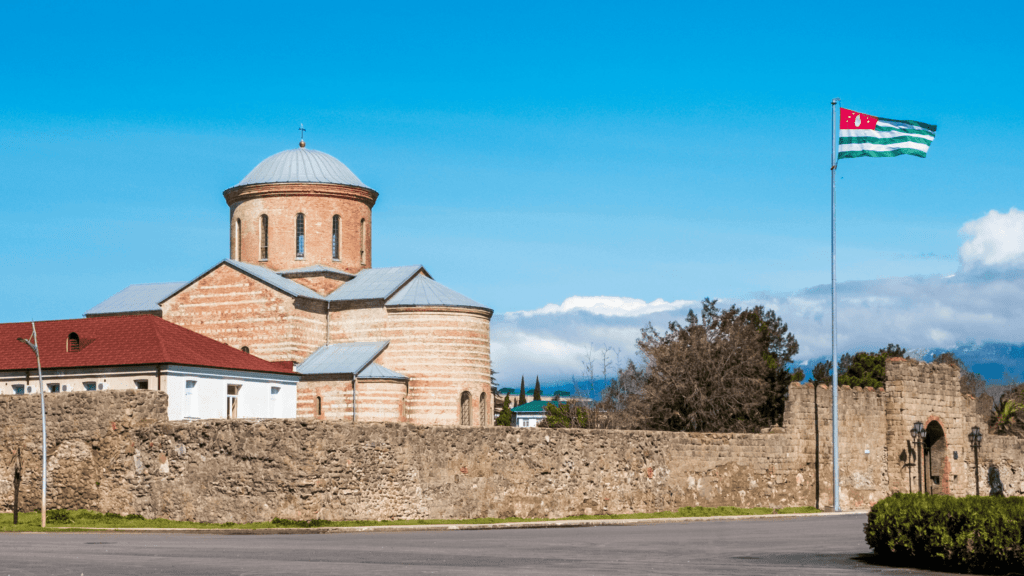
• Flag: Created in 1991, it has nothing to do with that of Georgia. The 7 green and white stripes represent the mountain republics of the Caucasus after the First World War: Dagestan, Chechnya-Ingushetia, Ossetia, Abkhazia, Kabardia, Adygea, Karachay-Balkaria
The colors are the coexistence of Islam and Christianity, the red rectangle with the open palm represents the emblem of the medieval Abkhazian kingdom. Note that this part is also the flag of the abazas of modern-day Karachay-Cherkessia.
Finally the 7 stars (yes, the number 7 is sacred) represent the 7 historical regions of the country: Abzhywa, Bzyp, Dal-Tsabal, Gumaa, Pskhuy-Aibga, Sadzen and Samurzaqan which more or less correspond to today’s regions with parts in Russian and Georgian territories.
Brief History of Abkhazia: From Colchis to independence
A region at the crossroads of civilizations
• Until the 6th century: Abkhazia was part of the Kingdom of Colchis.
• In the 9th century: the Byzantine Empire controlled the region, the kingdom of Abkhazia was created, united with the Georgian kingdom of Imeretia.
• 1810: It more or less united with the Russian Empire, which ended up completely controlling the region at the end of the conquest of the Caucasus.
• 1864: Repression of Abkhaz Muslims (60% of the population). Massive emigration to the Ottoman Empire, following the path of the Circassians of the Northern side of the Caucasus.
From that point, the versions differ: The Abkhazians will tell you that at this time the region was emptied of a large part of its population, Armenians and Russians settled in.
The Georgians claim that the Svans and Mingrelians have lived there since antiquity … There may be some truth to both perspectives.
From the Soviet period to the 1992-1993 war
• 1921: Abkhazia integrates the Transcaucasian Soviet Federative Socialist Republic or Transcaucasian “TSFSR” with Georgia, Armenia and Azerbaijan
• 1931: Attachment to Georgia by Stalin; Suppression of Abkhazian schools, the language was written with the Georgian alphabet.
• 1991: Referendum for the maintenance of the USSR, which was mainly supported in Abkhazia but boycotted by the Georgians.
• Early 1992: Ardzinba, the Abkhazian that was then president of the Supreme Soviet of Abkhazia, formed a National Guard exclusively composed of Abkhazians, some of whom had come from other regions of the USSR.
• Mid-1992: At the end of the First South Ossetian War, Tbilisi took full control of the Abkhazian issue. The deputies of Abkhazia reinstated the 1929 constitution, which declared Abkhazia independent and sovereign.
• August 1992: The war began with an initial offensive by the Georgians, followed by a brief ceasefire brokered by the Russians. The Abkhazian National Guard was supported by the Russian army, North Caucasian volunteers (including Chamyl Basaev, leader of the Chechen battalions), and Cossacks.
• July 1993: 1st agreement was concluded under the aegis of Moscow, followed by others until 1995, under the UN and the OSCE.
• 2008: After surviving 16 years alone, under international embargo, Abkhazia is recognized for the first time by Russia.
• Today: Frozen situation, with de facto independence not recognized by the majority of the international community.
2025 Abkhazia elections
The 2025 Abkhazian presidential elections were triggered by the resignation of President Aslan Bzhania in November 2024, following strong protests over a controversial deal that would have allowed Russian investors to buy real estate in Abkhazia.
Badra Gunba, acting president and the Moscow-backed candidate, won the election against Adgur Ardzinba.
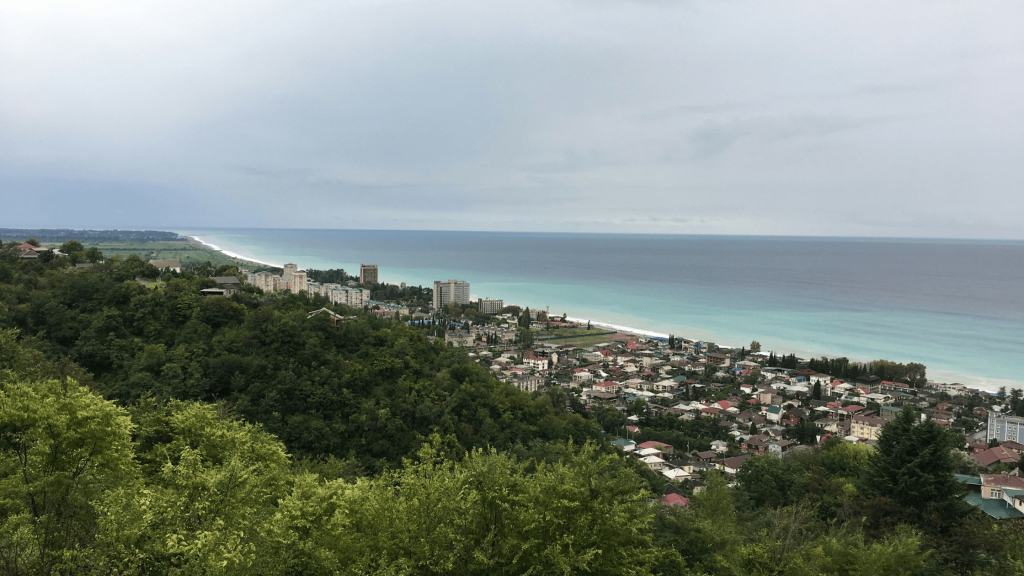
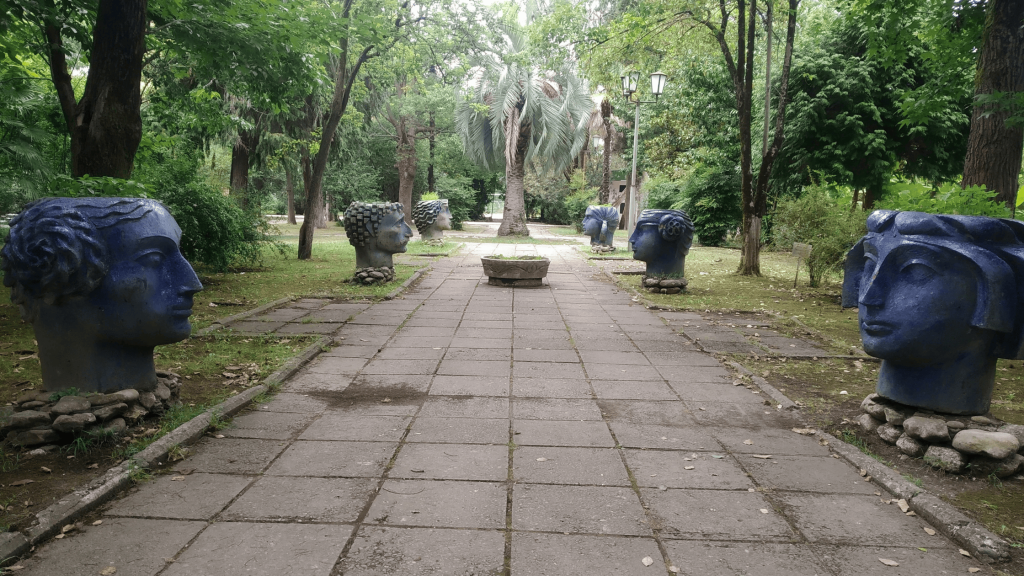
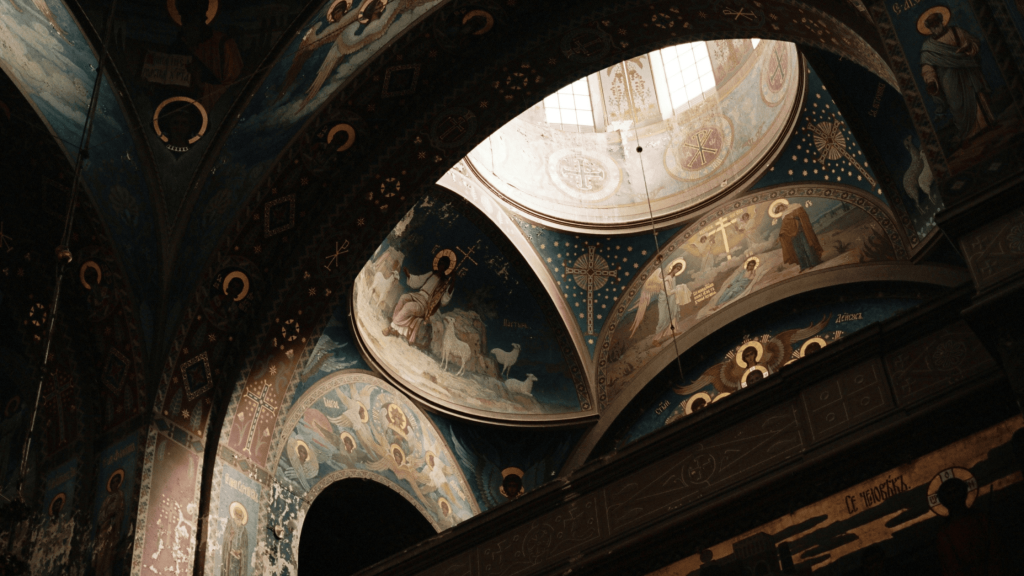
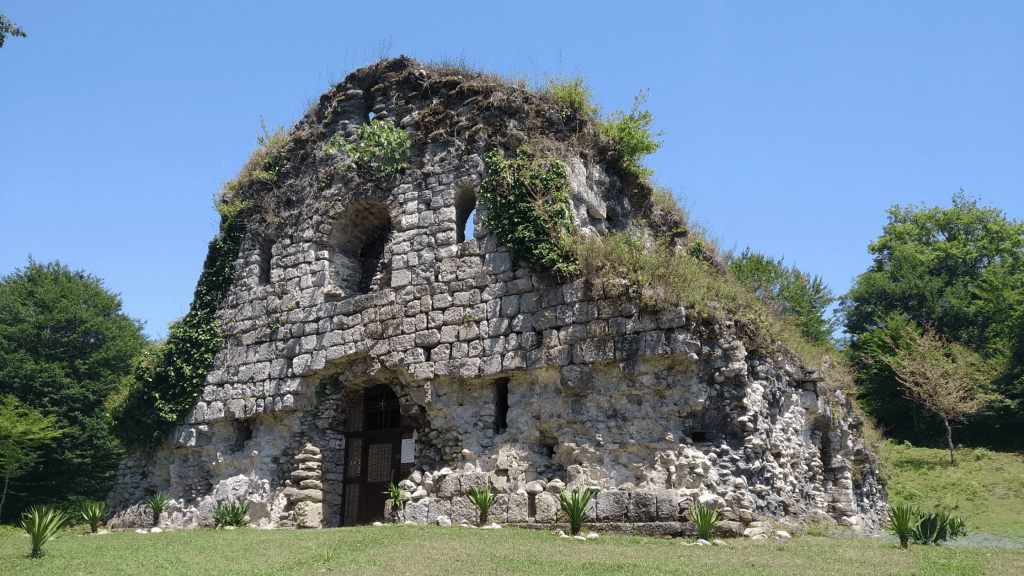
Best things to see and do in Abkhazia


Tips: good to know
Useful resources
Conclusion:
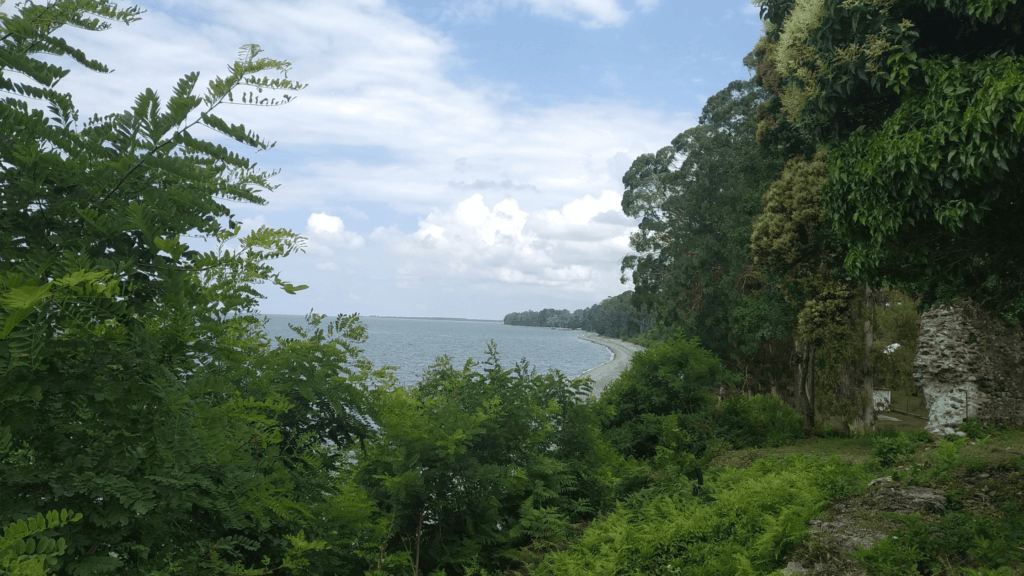
Since the 1992-1993 war, destroyed and abandoned houses can be found everywhere, with bullet holes in the walls, left in the same condition for 30 years due to a lack of money and international recognition. Traveling to Abkhazia is like discovering a small people in search of recognition and a piece of land at the heart of the great geopolitical game of the Caucasus, suspended in time.
I loved Abkhazia so much that I went there twice! (Might give another try this year). The nature there is lush green, with a wild side found only in other regions of the North Caucasus, along with national pride and ancient, well-established customs, visible if you take the time to notice them. In my opinion, Abkhazia is one of the most beautiful places in the Caucasus.
So, when is your trip to Abkhazia ?