When you spend several days on a Russian train, it’s impossible not to try the restaurant car.
Between the steaming tea served in a podstakannik (metal glass holder), a hot bowl of borsch, and mushroom-filled blini, eating on board is an experience in itself.
Having taken dozens of long-distance trains across Russia, including the legendary Trans-Siberian Railway, I’m sharing what train restaurant food is really like in 2026, how much it costs, and my insider tips for making the most of your meals on rails.
Last updated: 27 May 2026

What’s on the menu in Russian train restaurants
For years, restaurant cars had a bad reputation among Russians: high prices and notoriously bad food. Many passengers stopped going, and some trains even removed their dining cars completely.
But things have changed. Today, restaurant cars (ресторан-вагон) are available on most long-distance RZD trains. The atmosphere is sometimes a bit retro: white tablecloths, classic décor, and the waitresses, like all RZD staff, wear uniforms.
Typical dishes include:
• Borsch, beetroot soup with smetana (sour cream)
• Pelmeni, Siberian dumplings
• Blini, thin pancakes (sweet or savory)
• Black tea, served in the iconic metal podstakannik
• Kasha/porridge
You’ll also find “continental” breakfasts (omelets) and dishes from former Soviet republics, like Georgian Kharcho soup, very popular in Russia.
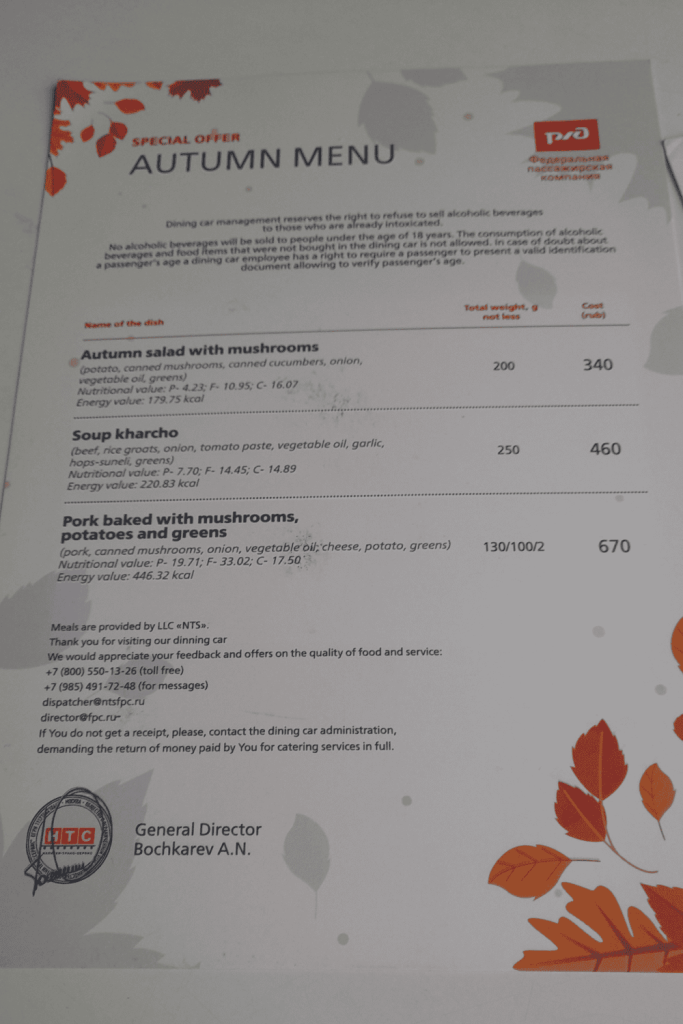
Menus change with the season; for example, an autumn menu was available last October. The selection also depends on the train: a Lastochka or Sapsan (fast trains) will have a different offer than a classic long-distance overnight sleeper.

How much does food cost on Russian trains?
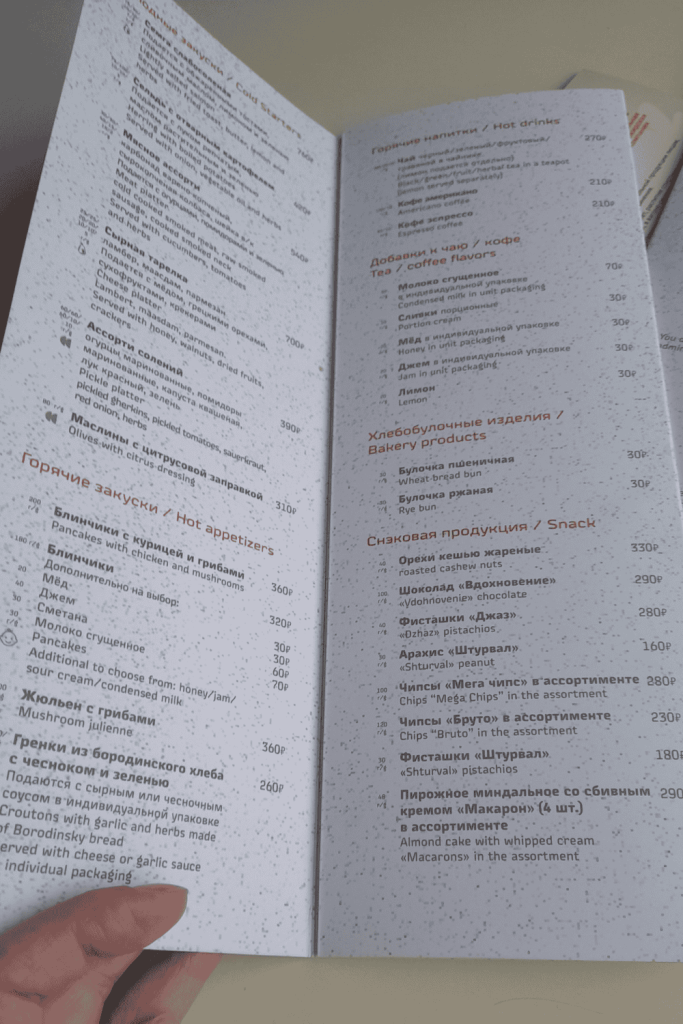
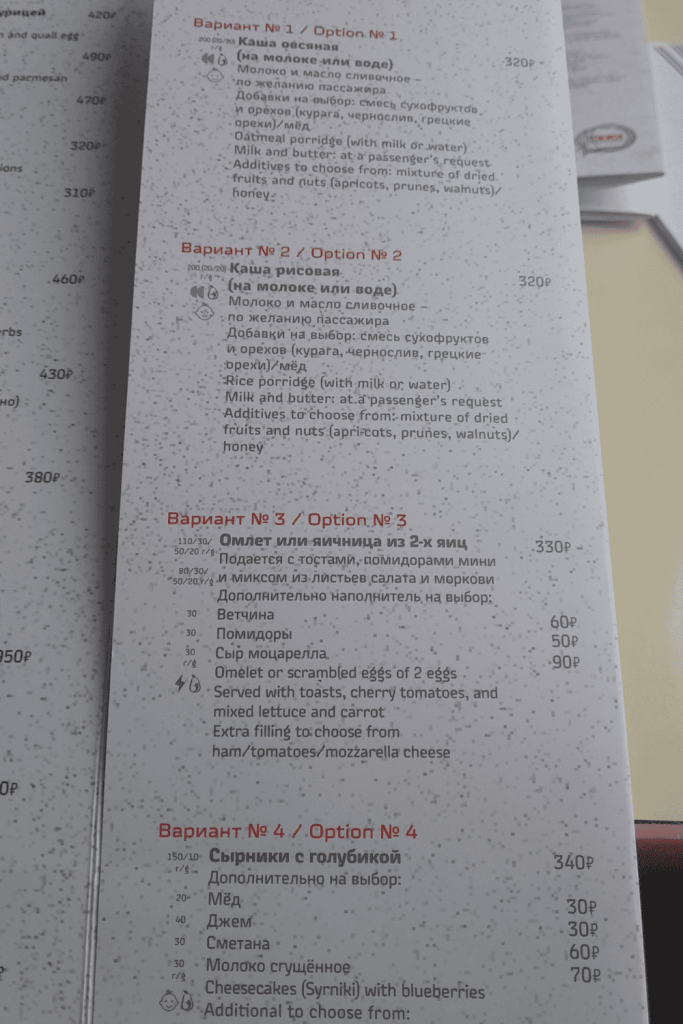
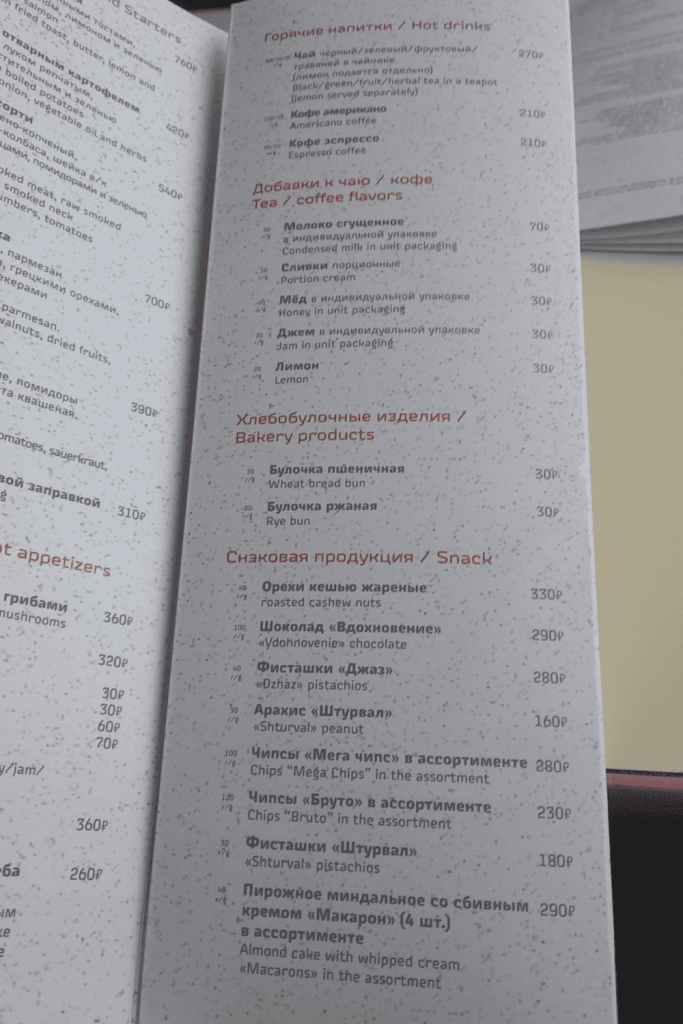
Here are a few prices from an October 2025 menu (1€ ≃ 94₽):
• Soup: 450-600₽
• Main course: 600-900₽
• Teapot (for several cups): 270₽
• Americano: 210₽ + cream 30₽
• Kasha/porridge: 320₽
• Omelet: 330₽ + cheese 90₽
• Autumn salad with potatoes and mushrooms: 340₽
• Sweet blini: 320₽ + jam 30₽ / smetana 60₽
A full meal (let’s say soup + main meal + coffee) costs around 1300-1500₽ (≃ 16€).
That’s pricier than a local café, but the experience and the scenery are worth it.
You can pay in cash or by card (Russian cards only). The terminal may stop working in remote areas with poor signal, so don’t worry if it takes a while.
Budget tip: Every provodnitsa (the attendant managing your carriage) sells snacks, instant noodles etc. Usually stored in her small cabin or near the samovar.
Can you bring your own food?
In the restaurant car, no. But in your own carriage, of course yes! And everyone does. Russians bring everything from black borodinski bread, hard boiled eggs, cucumbers, cheese, and sausages to home-baked pies. (The lovely smell of eggs and salami at 9AM is part of the experience 😄)
Each carriage has a samovar (hot water boiler) available for free, perfect for tea or instant soups.
If you don’t have a cup, order tea or coffee from your provodnitsa and keep the podstakannik for the rest of your trip.
Personally, I bring mostly my own food: instant kasha, tea, coffee, biscuits, fresh fruit, veggies that can be eaten raw, pirozhki, and whatever sweet bolotchki.

I share the behind the scenes of my travels (real-time stories, messy bits etc) on Telegram

My honest opinion after many trips
I’ve tried several restaurant cars over the years, on the Trans-Siberian, between Petrozavodsk and Murmansk, and recently on a trip to Krasnodar.
It’s much better than 10 years ago, though still on the expensive side. Restaurant cars are very clean, sometimes slightly retro, and the staff are usually friendly and professional.
Of course, the waitress probably won’t speak English, but menus are translated. The real joy is having lunch while the steppe or taiga rolls by, tea in hand, surrounded by this timeless atmosphere. It’s simple, authentic, and part of what makes train travel in Russia so special.

Practical tips for eating on Russian trains
• Check in advance if your train has a restaurant car. On RZD.ru (Russian bank cards only) or RussianTrain (Visa/Mastercard), look for the restaurant car icon when booking.
• Alcohol is strictly forbidden on board, except inside the restaurant car.
• For long journeys, bring your own food and snacks.
I always pack plenty (when I get bored, I eat 😄) plus a reusable cup for tea or coffee.
• For a sweet Russian-style breakfast (Russians usually go for savory): try sirniki (cottage cheese pancakes) with smetana and jam, and a cup of black tea. Can’t go wrong with that.
• Restaurant car opening hours: usually from 7AM until evening, but it can vary by train.