Krasnodar is a large city in southern Russia, located between the steppe, the Black Sea and the Caucasus, and often serves as a major transit hub between Crimea, Sochi and the rest of the country.
I’ve ended up there several times – sometimes just for one night, sometimes for a few days while traveling to Novorossiysk, Sochi, or more recently while returning from Kerch on my way to Rostov-on-Don
After passing through so many times, I eventually got to properly discover the city. I walked along the famous Krasnaya Street – the “Red Street”, which is actually surprisingly green – tested several hotels, used the local transport system… and realized that Krasnodar is much more pleasant than it first appears.
It’s a proper southern city: more relaxed, warmer, and honestly a bit more chaotic too.
There’s an interesting mix of imperial history, Kuban Cossack culture and lively local life… along with, it must be said, plenty of traffic jams. Krasnodar is also one of the gateways to the Caucasus and makes perfect sense as a stop if you’re exploring southern Russia.
I wouldn’t necessarily call it a must-see destination, but it’s an excellent stopover, especially if you’re traveling through southern Russia or heading toward Crimea.
In this guide, I’ll share everything I learned on the ground: things to do, where to stay (with personally tested hotels), how to get around, and a few good local addresses.
Last updated 13 May 2026

A bit of history: Krasnodar and the Kuban cossacks
Krasnodar was founded in 1793 as a Cossack fortress tasked with protecting the southern borders of the Russian Empire. Back then, the city was called Yekaterinodar, which literally means “Catherine’s Gift”, a direct reference to Empress Catherine II of Russia, who granted these lands to the Kuban Cossacks.
The city officially received town status in 1867 before being renamed Krasnodar during the Soviet era, a name that can be translated as “Red Gift”.
For several centuries, Krasnodar was an important center for the Kuban Cossacks, serving both as a military base and the heart of their organization. But after the Revolution, the Cossacks, associated with the Russian Empire, were heavily repressed.
Today, you obviously won’t see Cossacks riding horses through the streets anymore, but their legacy is still everywhere: in museums, local cuisine, and even traditional performances where people dance the kazachok.
Who are the Cossacks, really?
This is a question that comes up often, and there are many misconceptions about it. No, the Cossacks are not an ethnic group from the Caucasus, and they have nothing to do with the Kazakhs of Kazakhstan.
Originally, the Cossacks were communities living across the vast steppes of southern Russia and Ukraine. You’ll hear about the Don Cossacks, Terek Cossacks or Kuban Cossacks, names usually linked to major rivers.
They were known for their semi-nomadic lifestyle, fierce independence, and especially their military skills: horse riding, weapons handling, and organization into autonomous military communities. This explains their historical role in defending the borders of the Russian Empire.
Visually, they are often associated with the Caucasus because of their clothing and warrior culture. But in reality, they were mainly Slavic Orthodox Christian populations with a very distinct identity.

What exactly is the Kuban?
People often talk about the “Kuban Cossacks”, but what exactly is the Kuban?
Originally, the Kuban is the name of the river that flows through the entire region before emptying into the Sea of Azov. By extension, the name is also used for the surrounding region itself: a very fertile agricultural area often referred to as the “breadbasket of southern Russia”.
Administratively, Krasnodar is the capital of Krasnodar Krai, but locals unofficially refer to the region as Kubansky Krai.
How to get to Krasnodar (plane, train, bus) & how to get around
By plane
Krasnodar Pashkovsky Airport (KRR) reopened in September 2025 after a long closure due to its proximity to Ukraine. Domestic flights are available from many Russian cities including Moscow and Saint Petersburg, as well as some international flights to and from Turkey.
You can book tickets directly on Aviasales.com (not the .ru version) using a Visa or Mastercard.
By train
From Krasnodar-1 railway station, it’s possible to reach a large part of southern Russia quite easily.
• Several trains run daily, including modern Lastochka high-speed trains connecting Krasnodar to Sochi in just over 4 hours, continuing toward Estosadok / Krasnaya Polyana in the mountains. This is by far the easiest option if you’re heading toward the Black Sea coast.
• Another Lastochka connects Krasnodar with the port city of Novorossiysk in under 2h30, making it an excellent day trip or logical stop on a southern Russia itinerary.
• Traveling to or from Moscow requires a bit more patience: expect around 18 hours on fast double-decker trains (the dvukhetazhny trains) and more than a full day on slower trains.
• There are also daily trains to Crimea, especially toward Simferopol and Sevastopol, operated by the private company GrandTrain.
You can buy train tickets directly through RussianTrain using a Visa or Mastercard.
One important thing: trains get booked out very quickly, especially during the summer season. It’s much better to reserve in advance, otherwise you may not find anything convenient.
And to be completely honest, Krasnodar railway station is probably the shitt*est major station I’ve seen in Russia. It’s surprisingly small for a city of this size, with very limited seating and almost no decent food options. If you have a long layover, keep that in mind.
By bus: Krasnodar’s bus stations (important)
There are two main bus stations in Krasnodar:
– Bus station N°1 mainly serves southern destinations, especially the Black Sea coast and Crimea.
– Bus station N°2 is mostly used for northern routes, especially toward Rostov-on-Don.
• Bus station N°1: the most useful one
It’s located directly opposite Krasnodar-1 railway station, making transfers extremely convenient.
From here, you can reach destinations such as Anapa, Novorossiysk and Crimea. Long-distance buses depart from the back of the station, while marshrutka minibuses leave from the front.
• Bus station N°2: mainly for Rostov-on-Don
This station is located in the northern part of the city and can be reached by tram. Honestly, I wouldn’t recommend taking a bus or marshrutka to Rostov if you can avoid it, the train is much more comfortable.
You can book bus tickets directly on Tutu.ru using a Visa or Mastercard (for buses only, not trains), including routes toward Crimea.
Both bus stations are very typical of southern Russia: designed for warm weather, with little indoor space and very few seats. Most people wait outside under covered shelters.
If needed, the Wi-Fi works inside the stations (Beeline network). I received the login code directly on my French SIM card.
 Krasnodar bus station N°1
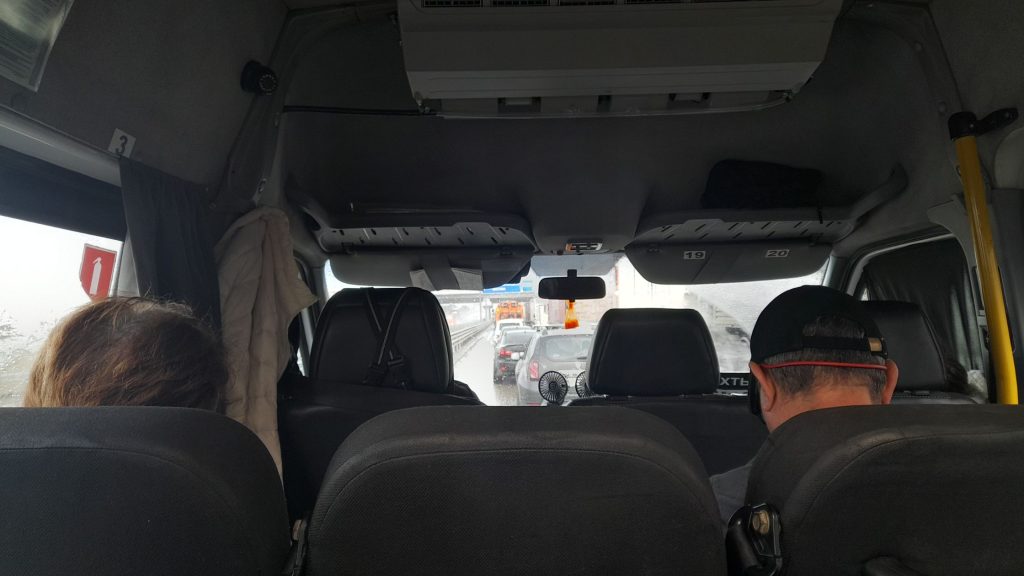 Over an hour stuck in traffic on the way out of Krasnodar
Getting around Krasnodar: Trams, buses & first impressions
Marshrutkas, buses, trams (50₽ per ride in October 2025) or simply walking around the city center – getting around Krasnodar is fairly easy. To find the right tram or bus number, routes and schedules, just use Yandex Maps.
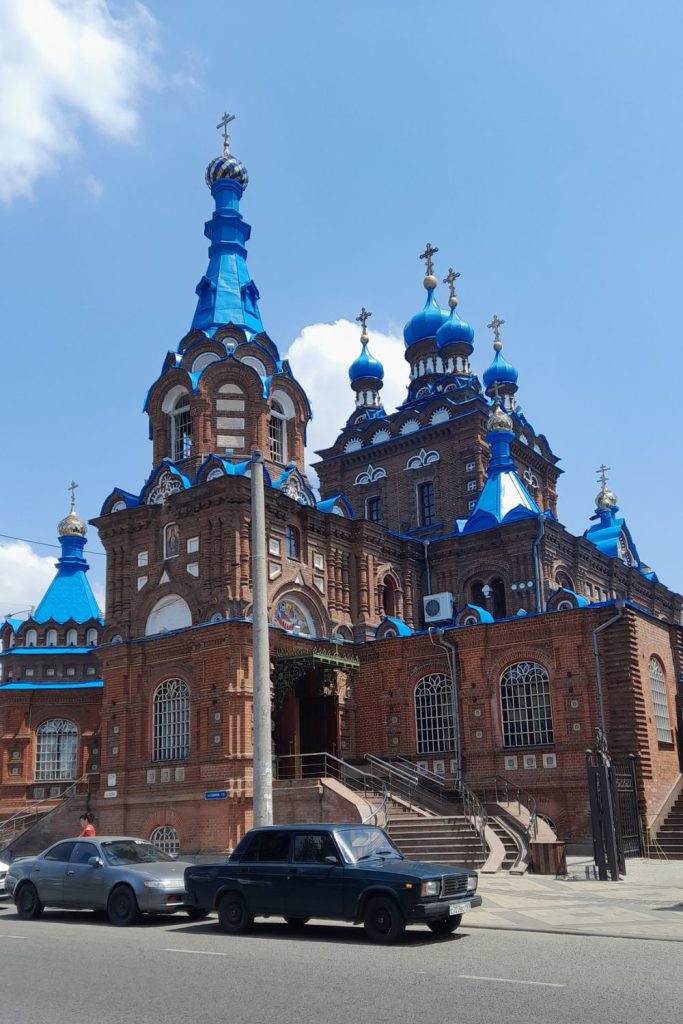 Church of Saint George the Victorious
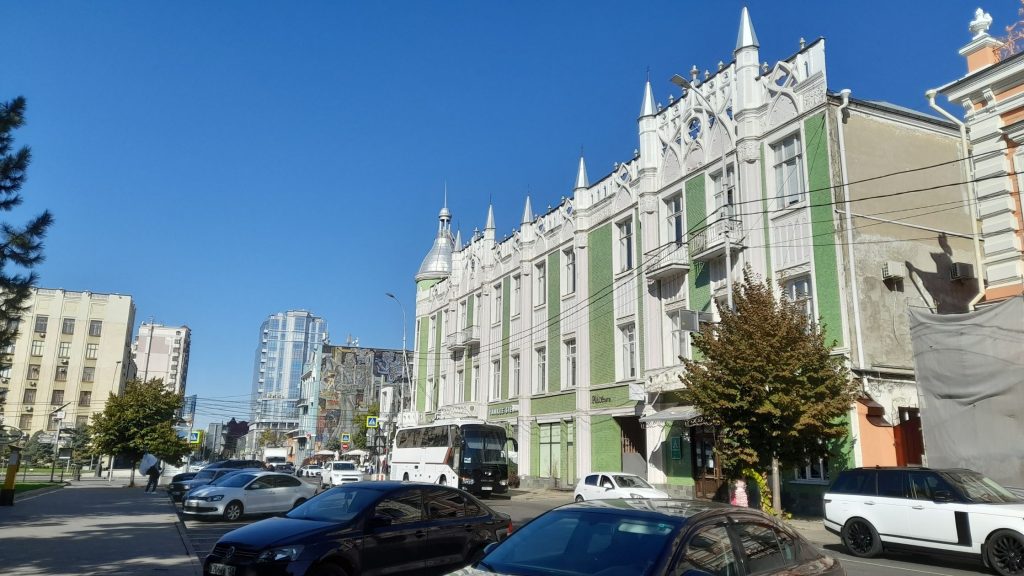 City center
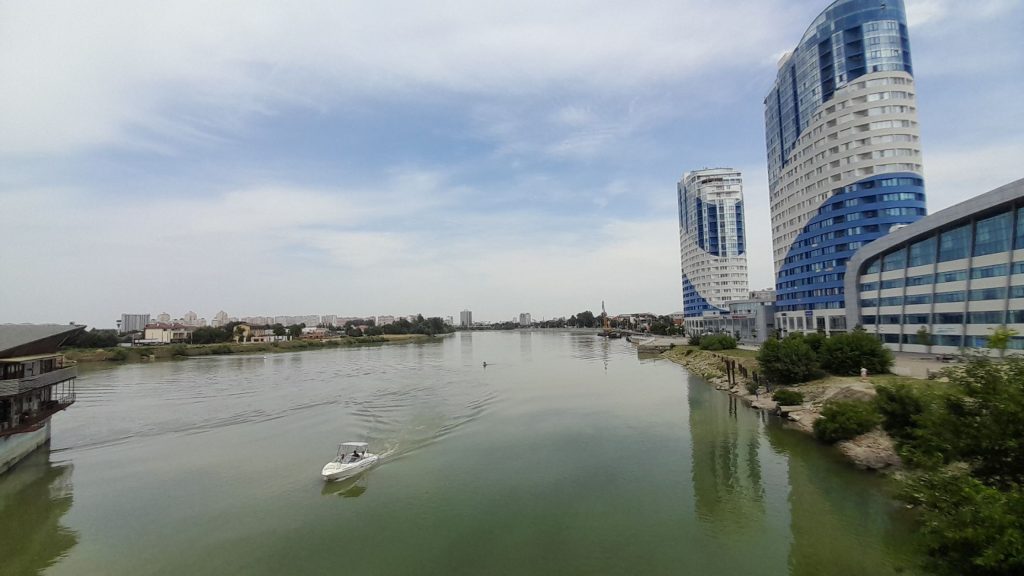 Kuban river
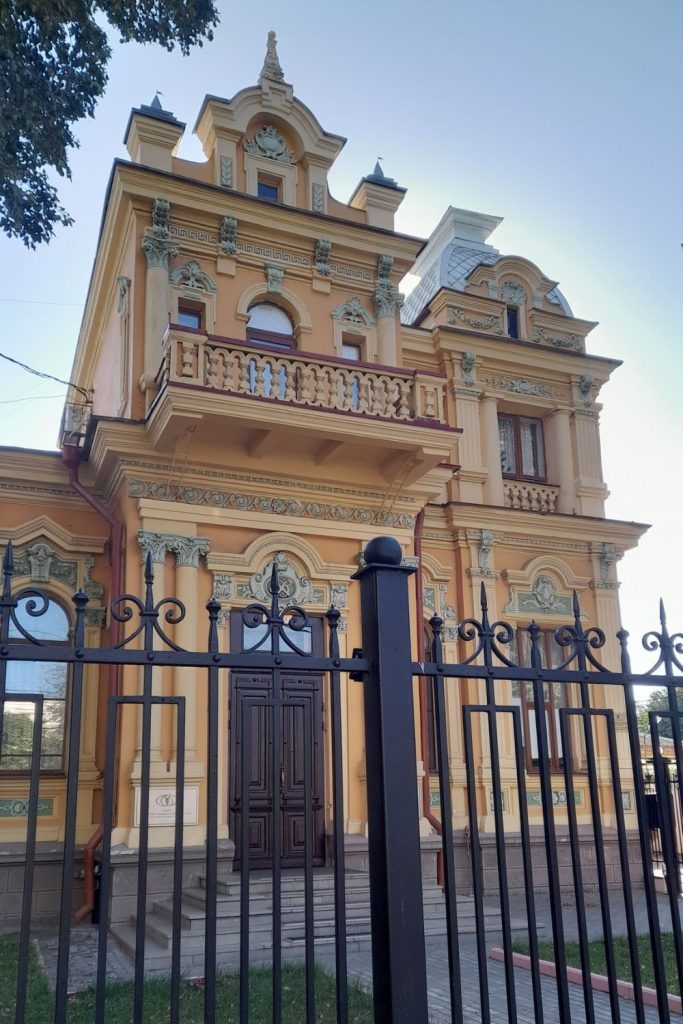 V. K. Rubejanski mansion
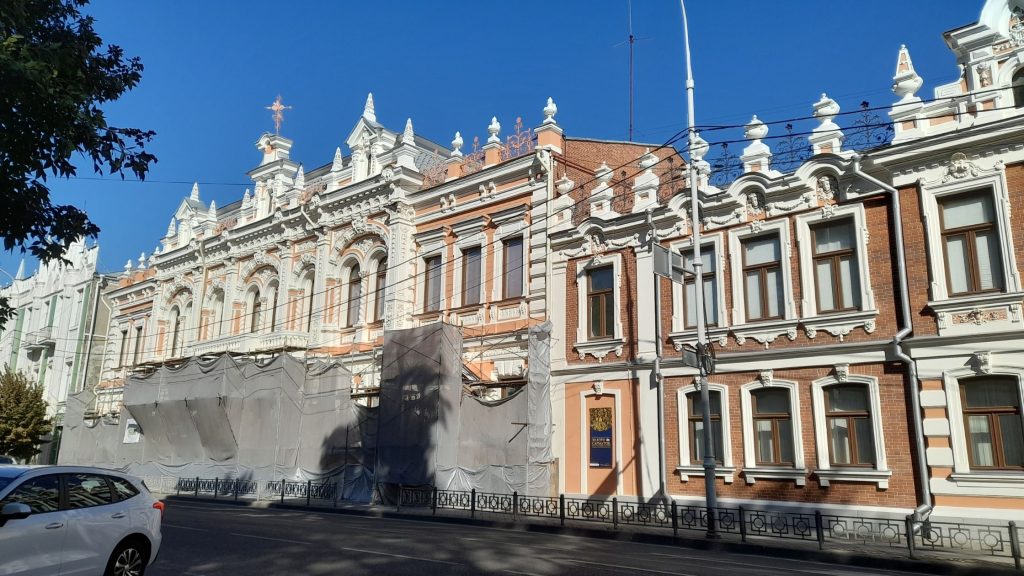 City center
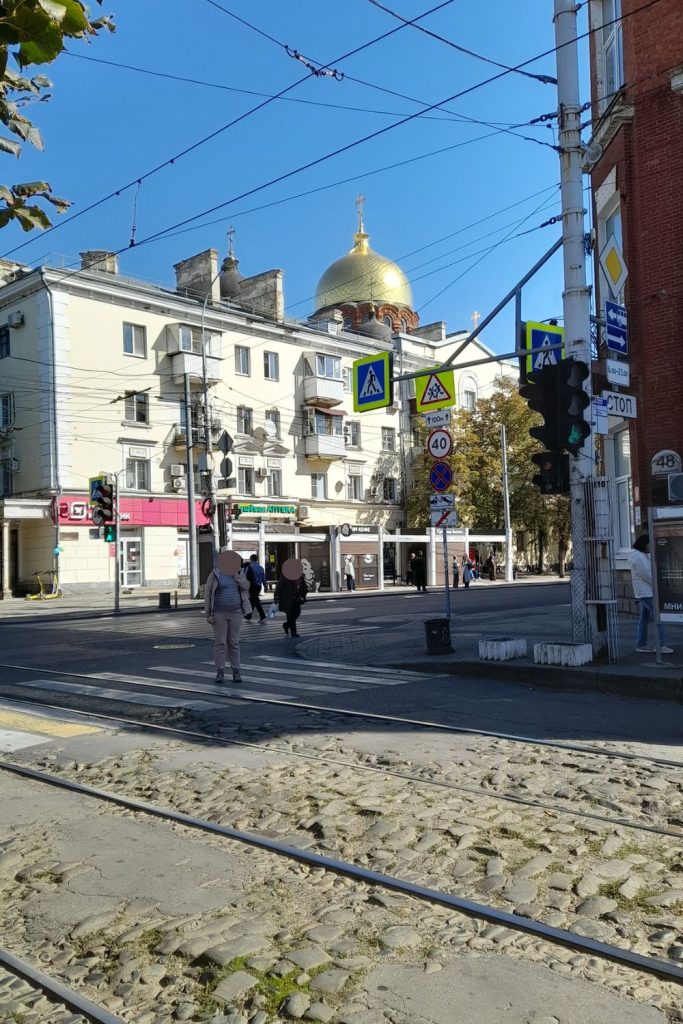 City center
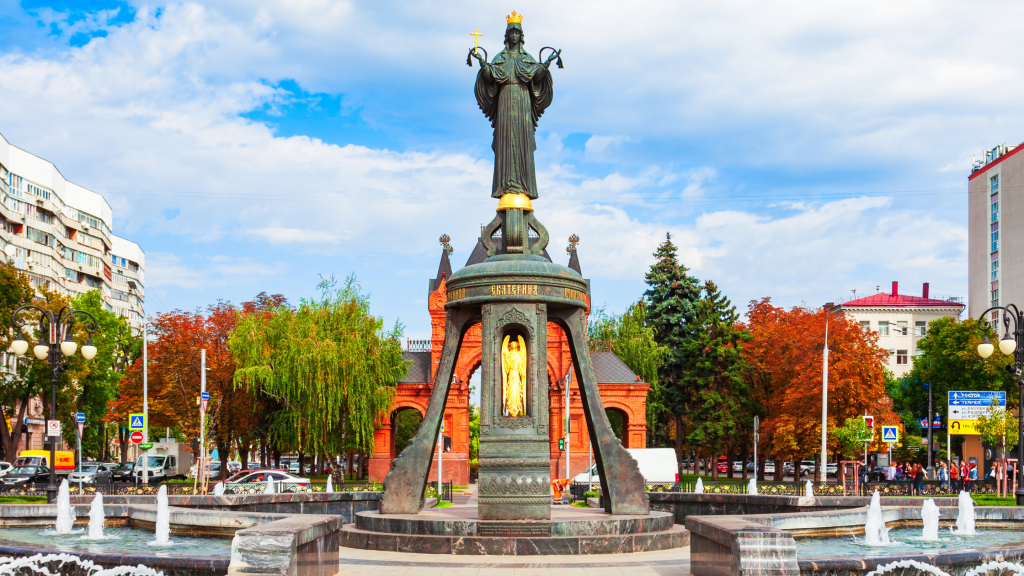 Saint Catherine monument
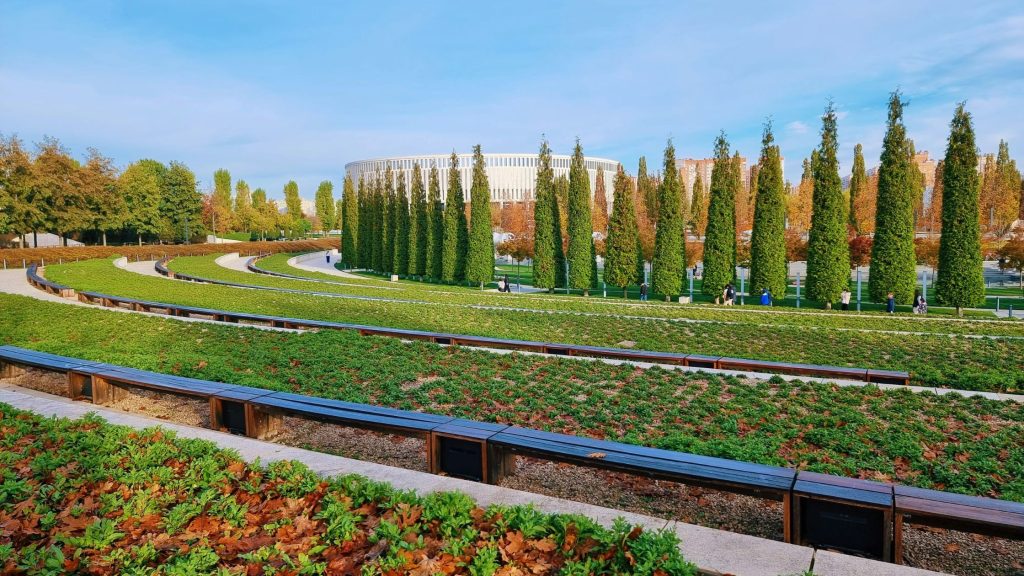 Krasnodar park
 Alexander’s thriumphal arch
Where to stay in Krasnodar: Hotels I tested (and my honest opinion)
Every time I pass through Krasnodar, I somehow end up staying in a different hotel. Not really by choice, but mostly because the city is a major transportation hub and I often arrive at the last minute, right in the middle of high season.
The result? I usually book whatever is left… and sometimes, there really isn’t much left.
Because Krasnodar is both an important transport hub and a fairly dynamic business city, the accommodation options are huge. There are literally thousands of places to stay: more than 1 500 properties are listed on Zenhotels alone, ranging from large international hotels to cheap hostels.
You can book and pay online on Zenhotels using a Visa or Mastercard. One important thing to know: if you are booking from Europe, you will usually need a VPN to access the website properly and complete the reservation.
Here are the hotels I personally tested during my different stays in Krasnodar.
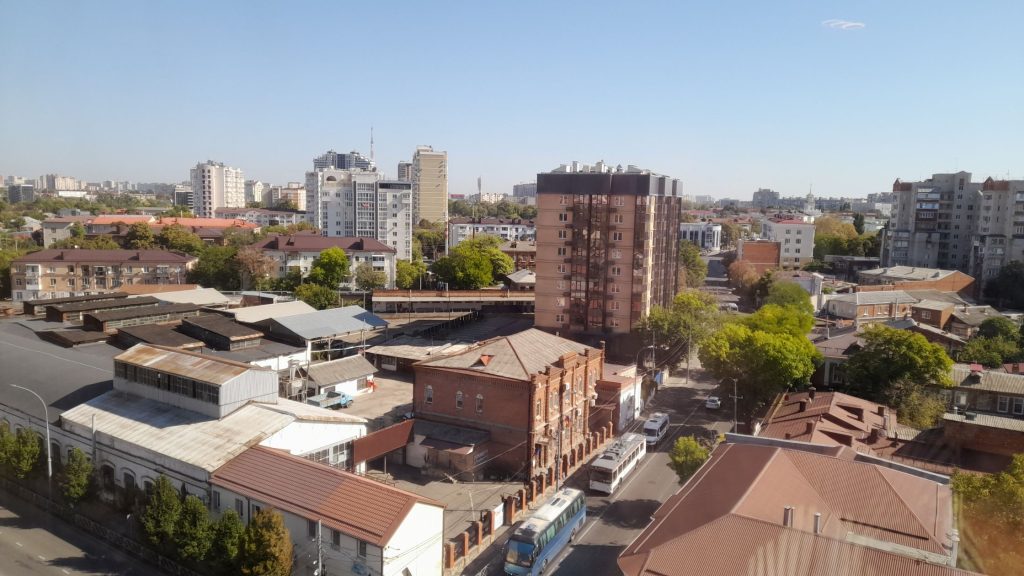
I stayed at the Marton Palace for 3 500₽ per night.
The double room was spacious, very clean and well equipped and a nice view over the city, making it convenient for a short stay. The staff was also genuinely friendly, although nobody spoke English.
The main downside is the noise. The hotel is located at the intersection of Suvorov and Mira streets, just a few steps away from Krasnodar’s main train and bus stations. Even from the 9th floor, I could clearly hear traffic and car horns at 6 AM. At first, I honestly thought the window was open… but nope.
Fine for one night, especially if you need to stay near the station, but definitely not ideal if you want to sleep in.
I stayed a few nights at Blabla Rooms Hostel, and it’s a decent option if you are looking for cheap accommodation in Krasnodar, especially close to the city center.
The hostel is located just a few meters away from Krasnaya Street and offers affordable private rooms as well as two shared kitchens. The slightly confusing part is the entrance. You have to enter from Kalinina Street, walk past a polite old security guard sitting downstairs, then go upstairs, the hostel itself is located on the first floor (which is the second floor for Russians).
My Favorite: Golden Tulip Krasnodar
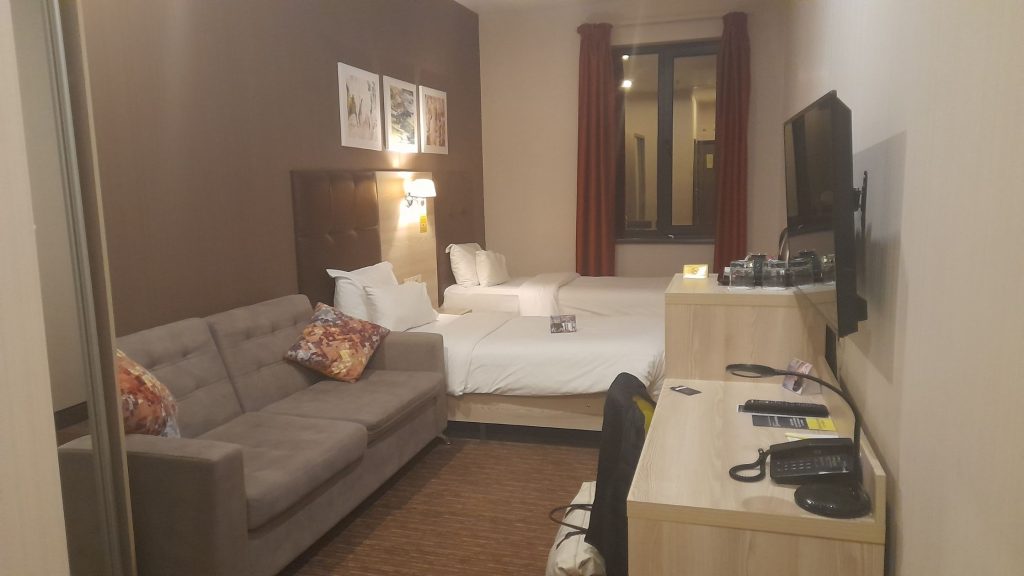
The Golden Tulip is by far the best hotel I tested in Krasnodar, and also the most expensive one.
For around 66€ per night, the comfort level is genuinely excellent: spotless room, comfortable bedding and a generally calm atmosphere… with one exception: a fire alarm randomly gone off at 6 AM for absolutely no reason (as you can see, I do not sleep much while travelling).
The location is also a major advantage. The hotel is about a 10-minute walk from Krasnodar’s main railway station, making it an excellent place to stay if you arrive late at night or leave early the next morning.
For a hotel of this quality, owned by a large international chain (the French Louvre Hotels Group, to be precise – what sanctions?), I expected at least some staff members to speak English… but niet, not at all. Still, the receptionist was very kind.
Important warning about flats in Krasnodar: Be careful if you book a flat on Zenhotels and arrive late at night. One time, I simply could not find the place I had booked. My bus from Crimea arrived very late, there was no phone number to contact the owner, nobody in the street, and no instructions whatsoever. I eventually had to find another place to sleep at 1 AM.
Since I’ll most likely return to Krasnodar again in the near future, I’ll probably add more hotels to this list over time. And if you have a good hotel recommendation in Krasnodar, feel free to leave it in the comments, I’m always looking for new places to test.
Where to eat in Krasnodar: Favorite café & good restaurants
Finding good places to eat in Krasnodar is far from difficult. The city is full of cafés, canteens and restaurants of all kinds, some with a strong Kuban and southern Russian influence. Here are a few places I tested and can genuinely recommend.
Kofeman (my favorite café in Krasnodar)
If you like good coffee, I can only recommend Kofeman. It’s a small and discreet café run by a lovely Armenian woman, located on Moskovskaya Street and accessible by tram.
The coffee is excellent, with different bean origins (Brazil, etc.). A simple, unpretentious place where everything is made with care.
Bread Stories (small local bakery-café chain)
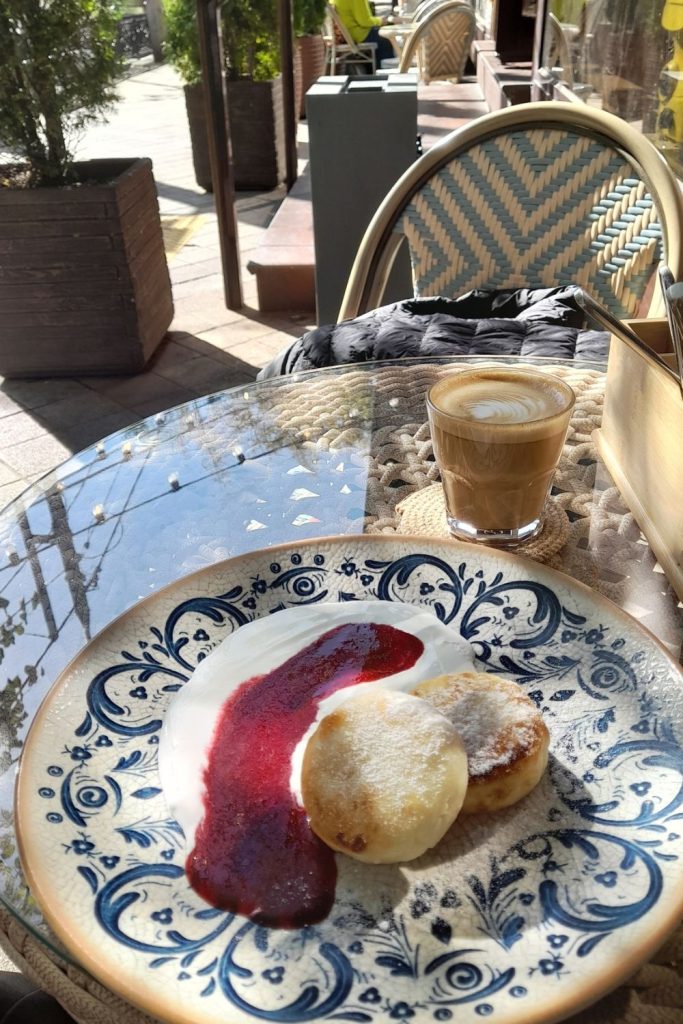
Khlebnyie Istorii is a small local bakery and café chain with several locations across Krasnodar. I tested the one on Krasnaya Street for breakfast on the terrace.
The location is really pleasant, and the food was good, although a bit expensive by local standards: syrniki with smetana and berry sauce + a flat white for 710₽. The service was, let’s say… very Russian: I was asked to pay while I was still eating – something that can happen if the waiter is finishing his shift.
Most of their cafés open from 8 AM, so if you are looking for where to have breakfast in Krasnodar, it’s a good option. They even serve a Kubansky zavtrak, basically a local southern Russian version of an English breakfast.
Other good restaurants in Krasnodar
For lunch or dinner, here are a few restaurants in Krasnodar that I enjoyed:
• Stan: ideal for discovering Cossack cuisine in a very traditional Cossack-style setting
• Ridna Khata: Kuban specialties and local atmosphere
• Ougli-Ougli (Угли-Угли = coal-coal): more modern, great for dinner
What to do in Krasnodar: 15 best places to visit
Here are the main places to visit in Krasnodar, between imperial heritage, Cossack history and modern urban parks. The city is relatively easy to explore on foot and by public transport, with many attractions concentrated around the center.
- Alexander’s thriumphal arch
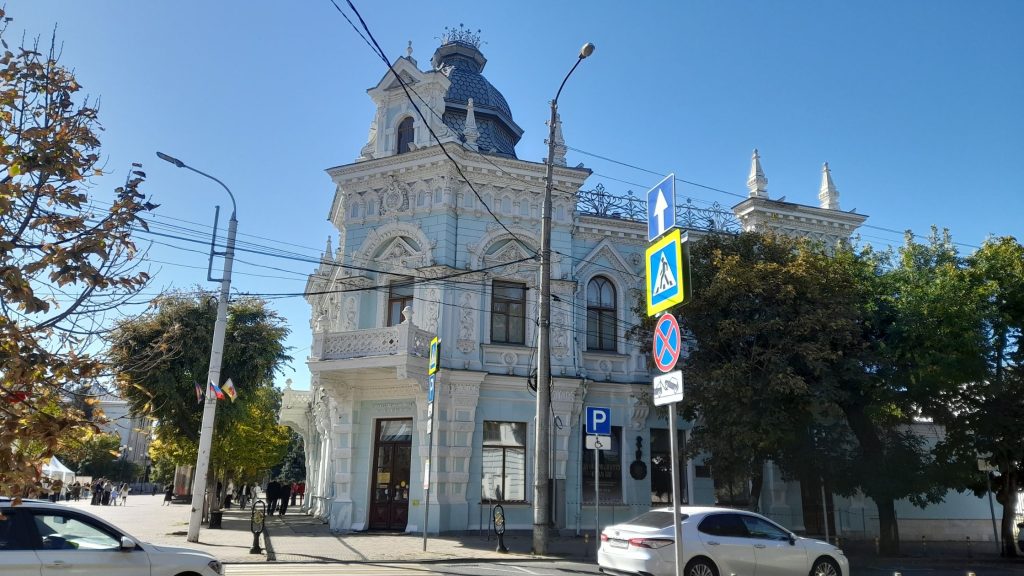 Shardanova house
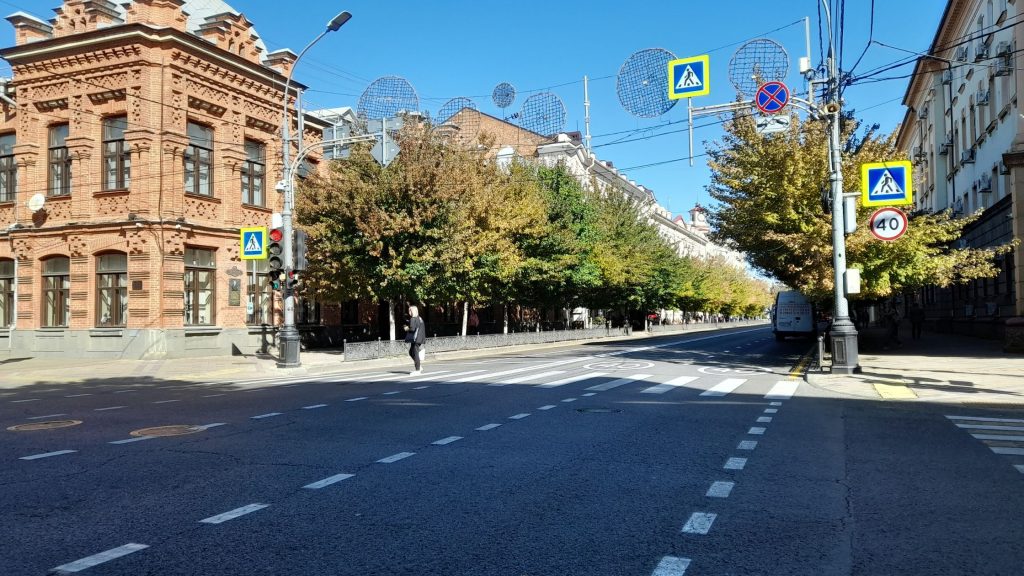 Krasnaya street
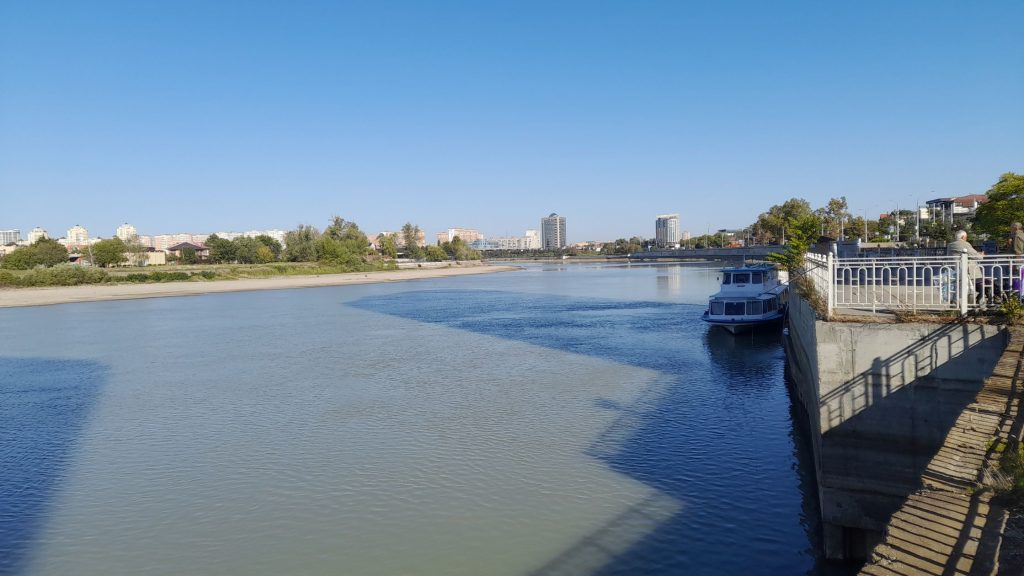 Kuban river embankment
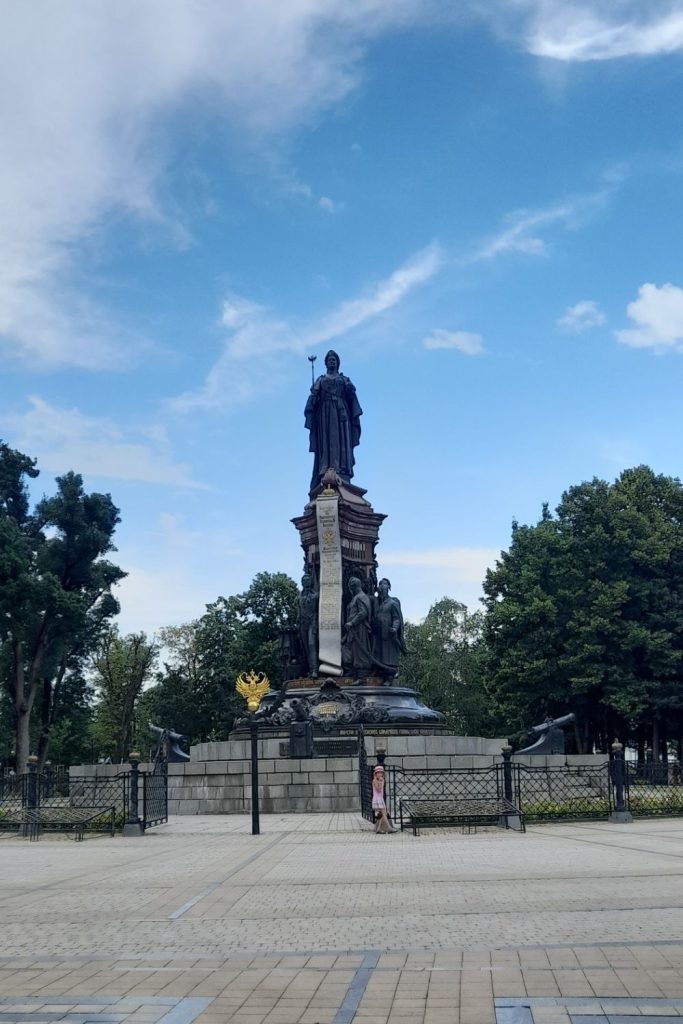 Catherine II monument
- Alexander’s thriumphal arch
- Shardanova house
- Krasnaya street
- Kuban river embankment
- Catherine II monument
Additional tips for visiting Krasnodar
1. The weather
It gets VERY hot in Krasnodar during summer. When I was there in late July and early August, temperatures were constantly between 35 and 40°C. Honestly, it was exhausting.
2. High season
As mentioned earlier, Krasnodar is a major transportation hub in southern Russia. Many travellers spend just one night here between trains, buses or flights. Because of this, I strongly recommend booking your transport and accommodation in advance during summer. The city can get very busy.
3. Border zone permit (Krasnodar Krai border zone)
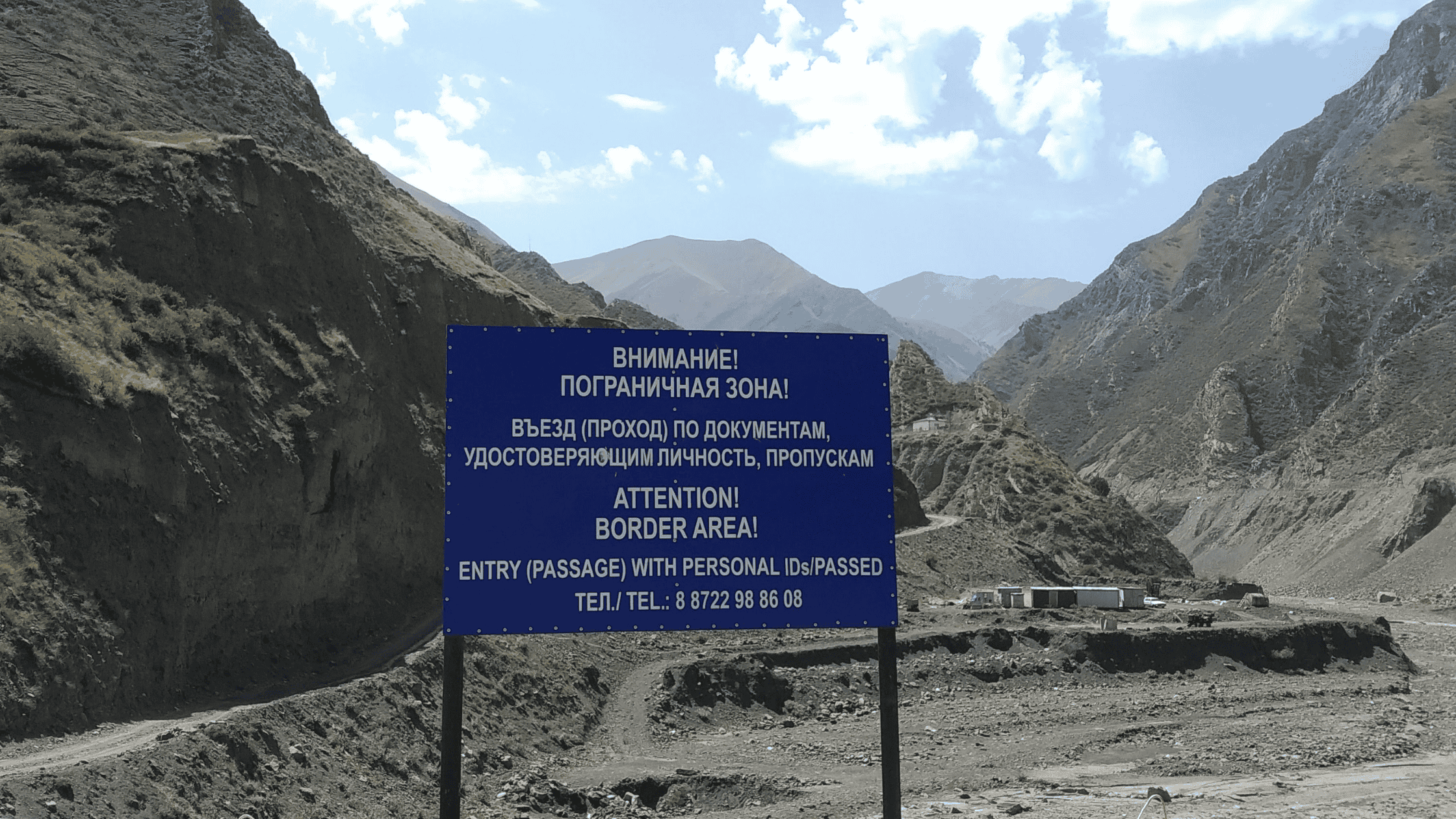
If you need to collect a border zone permit for certain hiking trails near the Abkhazian border, the entrance to the FSB office is located here. You need to ring the intercom. The woman who answered me did not speak English, but the young man who issued my permit did.
FAQ – Visiting Krasnodar in 2026
📌 Related articles about southern Russia
• How to get to Crimea from Russia: train, bus & the Kerch Bridge
• Novorossiysk: the Hero City of the USSR on the Black Sea
• 5 day trips from Sochi: mountains, villages & the Black Sea