
For years, Smolensk lingered in the back of my mind. As a French tourist who loves history, I dreamed of walking through this fortress city so tied to Napoleon’s 1812 campaign.
But border restrictions between Belarus and Russia meant Smolensk was never on my route. That changed with the recent mutual recognition of visas between Belarus and Russia, so on my last trip I boarded a train from Minsk to Moscow and finally made a 24-hour stop in Smolensk.
Last updated: 3 June 2026

TL;DR: Quick Smolensk travel guide
• Getting there: Direct train from Minsk (5h) or Moscow (4 hours 50 minutes) every one or two hours
• Where to stay: Pestrikov Hotel, charming restored 18th century building
• What to eat: lapun (local cottage-cheese syrniki/pancakes) and candied fruits
• Must-see: Assumption Cathedral & the fortress walls
Arrival in Smolensk: First impressions of Russia’s western fortress city
I arrived by train mid-morning. There’s no real border or checkpoint between Belarus and Russia anymore, just endless forest on both sides of the railway. My Lastochka train from Minsk didn’t even slow down, crossing at 130 km/h.
As I was about to exit the station, a young handsome soldier ran after me to check my passport and visa. He took a quick photo and “Vsio“, that was it. The only sign I had crossed a border.
A pedestrian bridge leads over the railway tracks down toward the Dniepr River, and the old town lies just across the water. Smolensk greeted me with grey skies, cold wind, and a GPS location completely off, placing me 50 kilometers away in Belarus, due to the ongoing Russian-Ukrainian conflict.
The city is old, even by Russian standards. Founded over a thousand years ago, it has been burnt and besieged by Poles, Lithuanians, and French… but always rebuilt, and somehow it still stands. With a population of around 330 000, Smolensk feels both significant and walkable.
From the station, I crossed the Dniepr and made my way to the Pestrikov Hotel, my base for the night. Too early for check-in, I dropped my bag at the reception. Housed in what was once an 18th century hospice, this beautiful red-brick building has been lovingly restored and sits right in the city center.
Walking between the station and the hotel gave a first glimpse into Smolensk’s faded grandeur: trolleybuses, pastel facades, traces of both Soviet grit and imperial charm,
 Train from Minsk
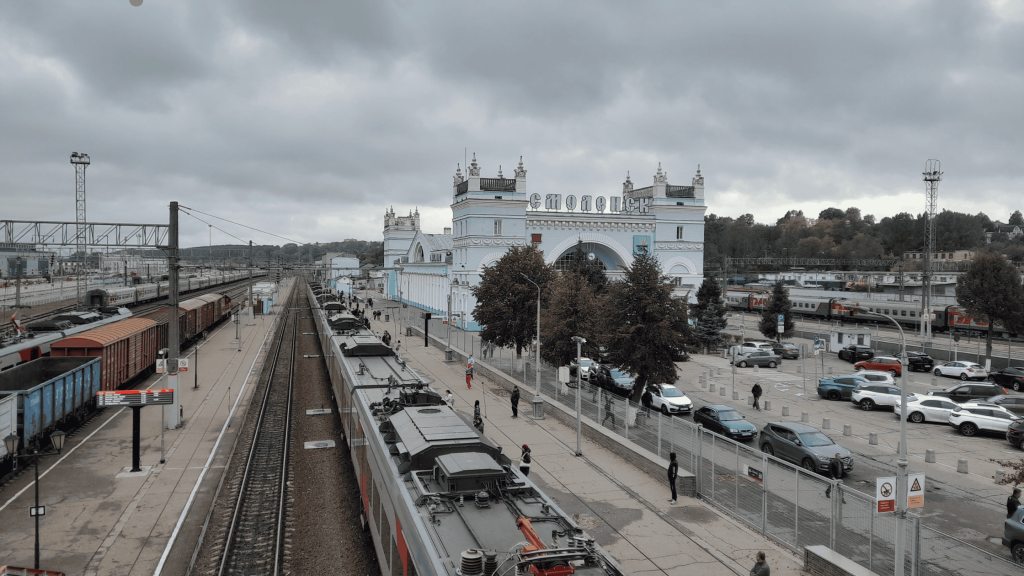 Smolensk train station
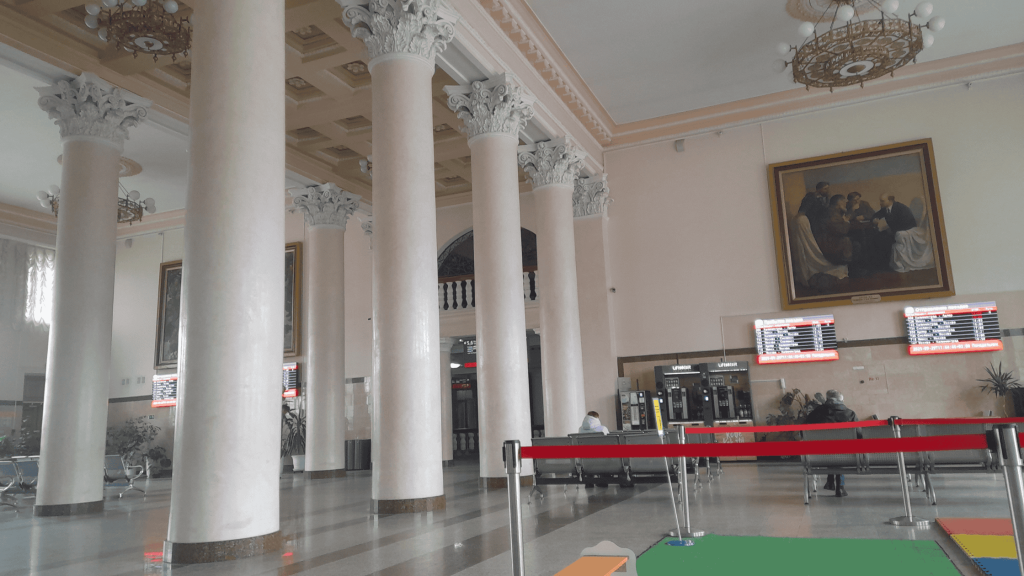 Pretty Soviet station – Yes, it’s Lenin on the painting
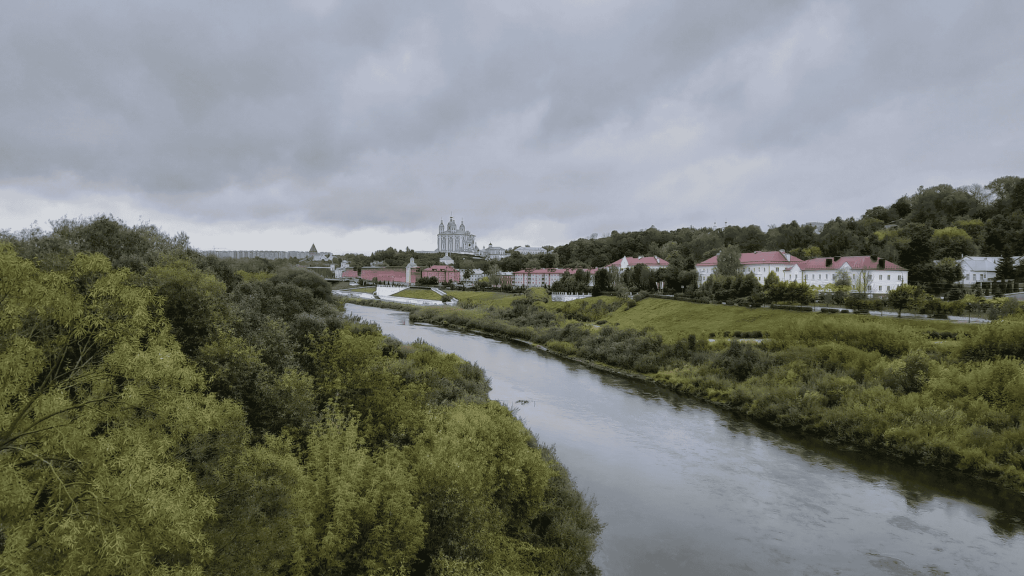 Dniepr river, goes all the way down to Kiev & beyond
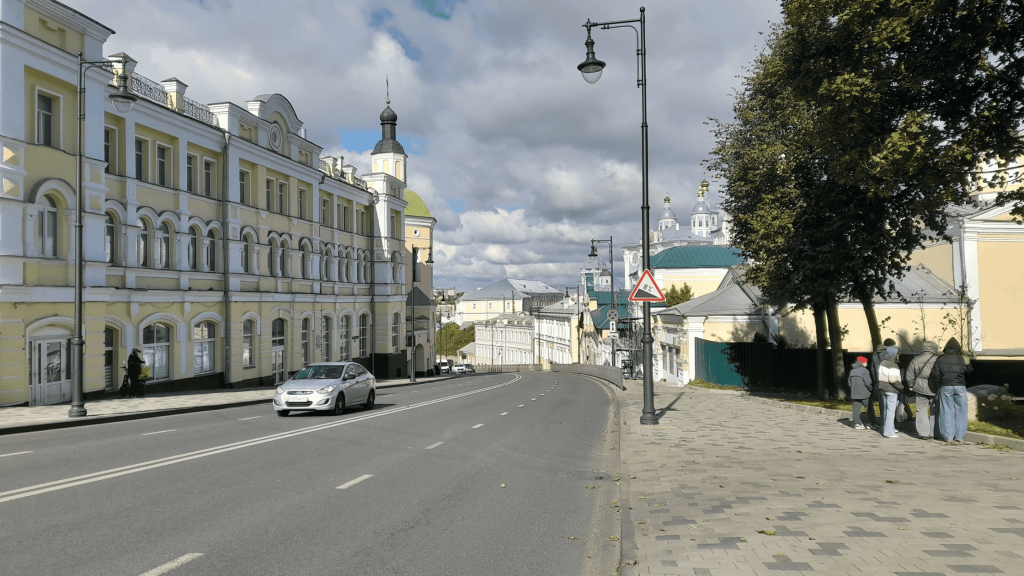 Bolshaya Sovietskaya street
I share the behind the scenes of my travels (real-time stories, messy bits etc) on Telegram

Walking in history: Fortress walls & the Assumption cathedral
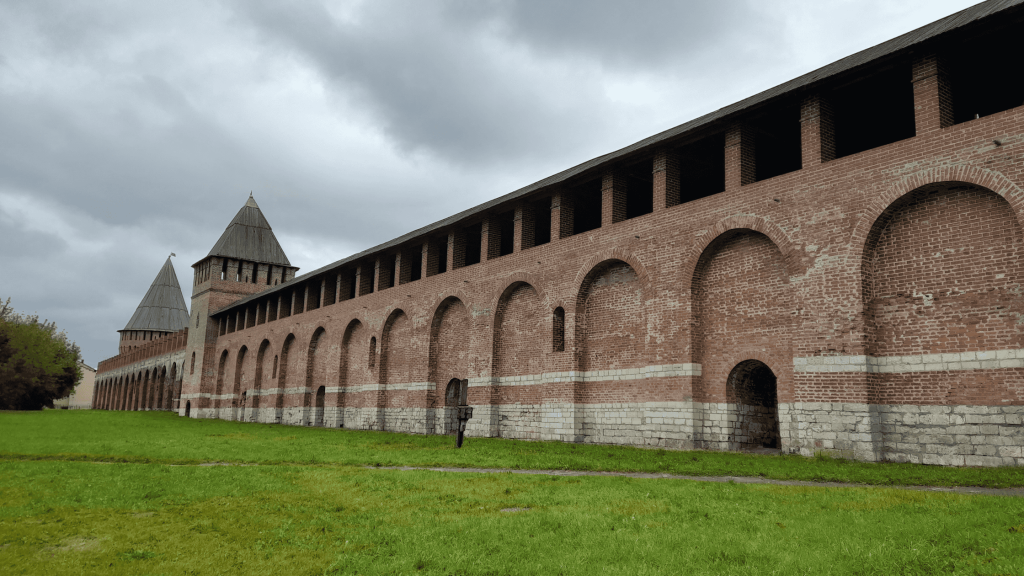
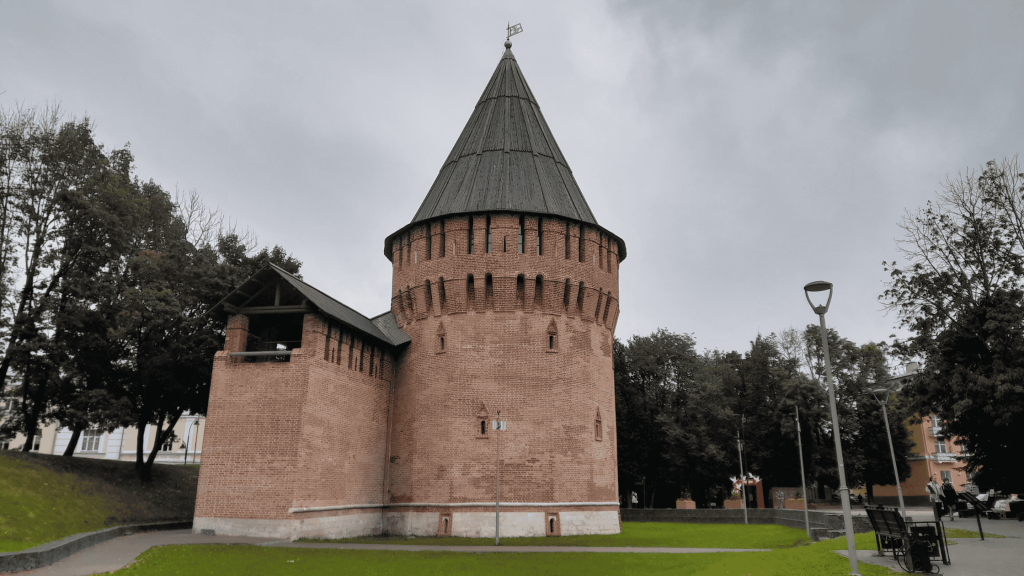
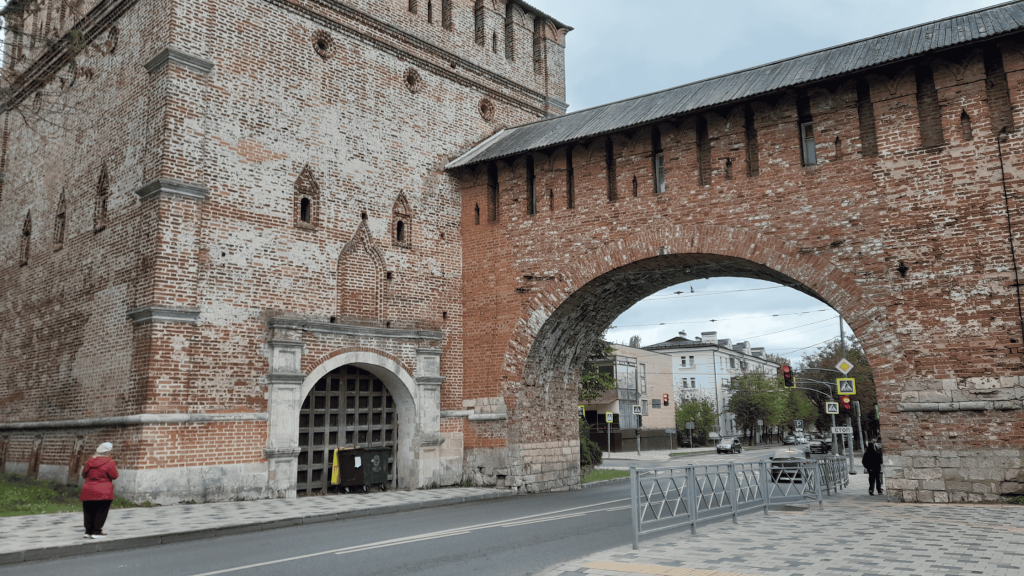
Smolensk is one of the oldest cities in Russia, and you can feel it under your feet. The 17th century fortress wall, once encircling the city with thirty-eight towers, is massive, stoic, and strikingly long. Only a handful of towers remain, yet the wall still dominates the landscape.
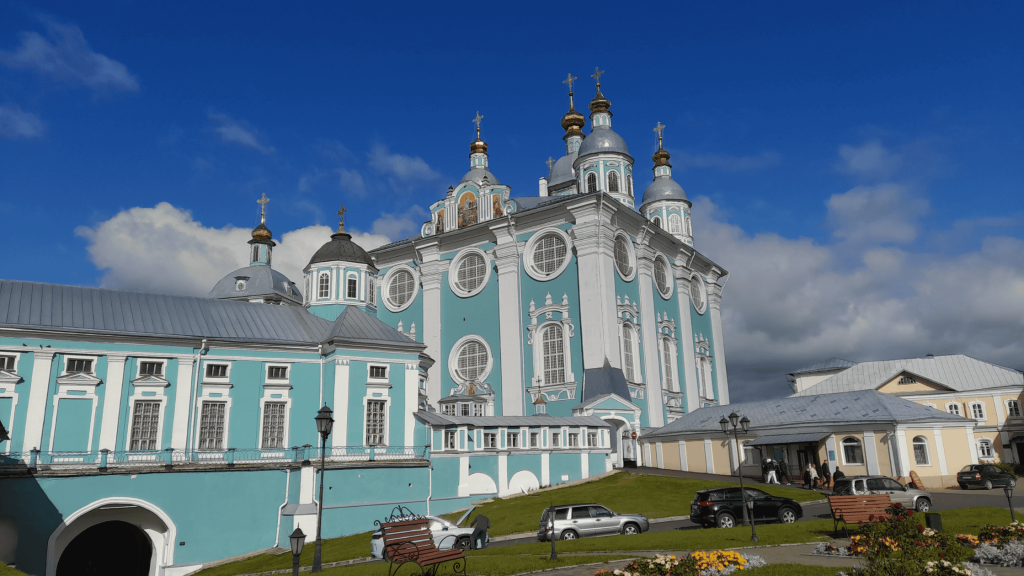
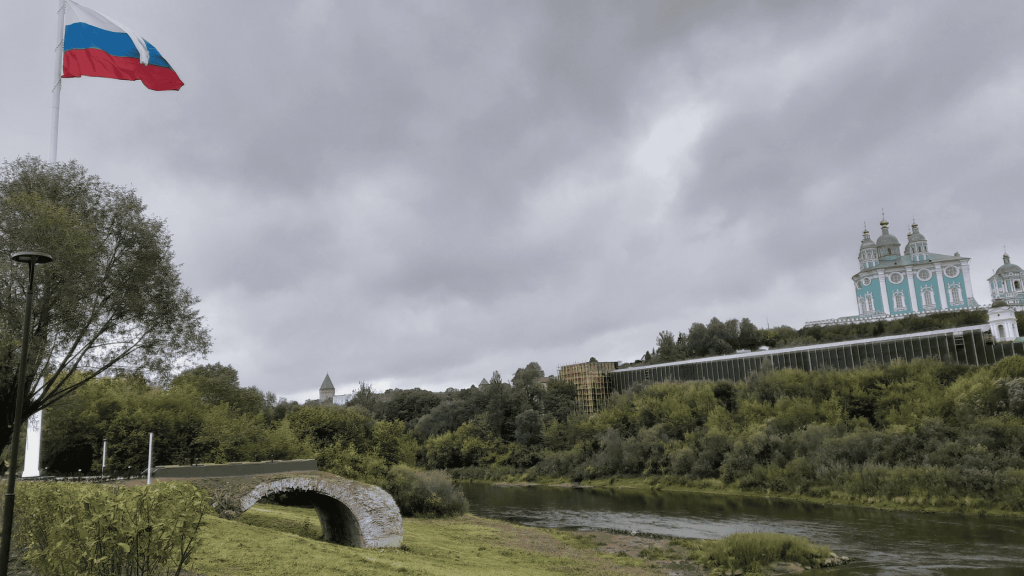
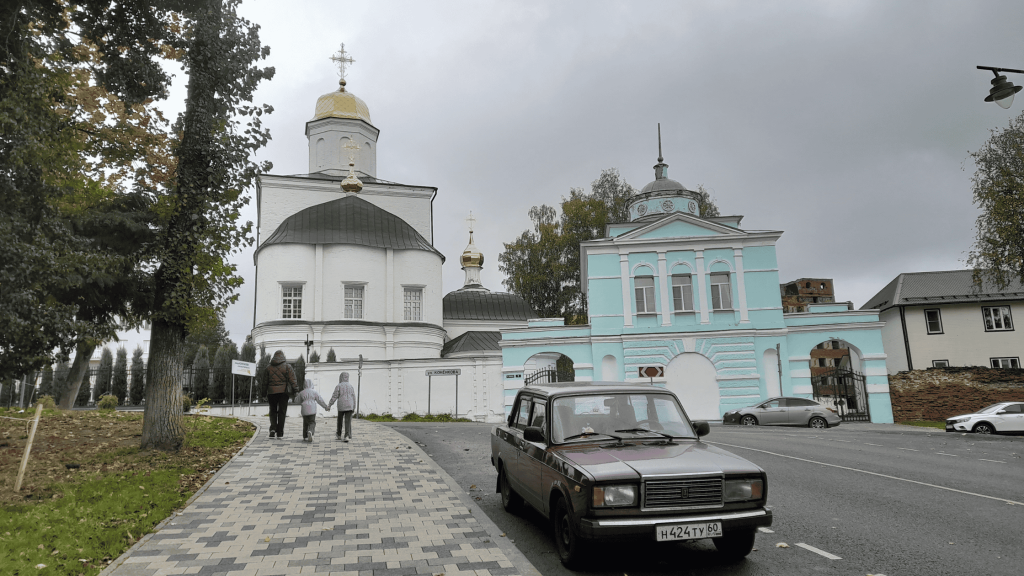
Just nearby stands the Assumption Cathedral, towering on a hill. It is visible from every corner of the city. It was under this very dome that the original icon of Our Lady of Smolensk, the miraculous Hodegetria, once resided. According to local lore, the icon was carried across Russia during Napoleon’s invasion to rally the troops. The original disappeared during the Soviet era, but a replica surfaced during the German occupation, now housed reverently in the cathedral.
It is said that Napoleon was so impressed by the cathedral that he ordered his soldiers not to loot or destroy it, and if they did they would be put to death.
The iconostase is truely one of the most impressive I’ve seen in Russia, no wonder Napoleon was impressed by the cathedral overall, it’s a masterpiece!
When I visited on a quiet Sunday, there were almost no tourists, just locals praying. Scarves and skirts are available at the entrance on the left if you’re not properly dressed.
Where to eat in Smolensk: Café recommendation and local specialties
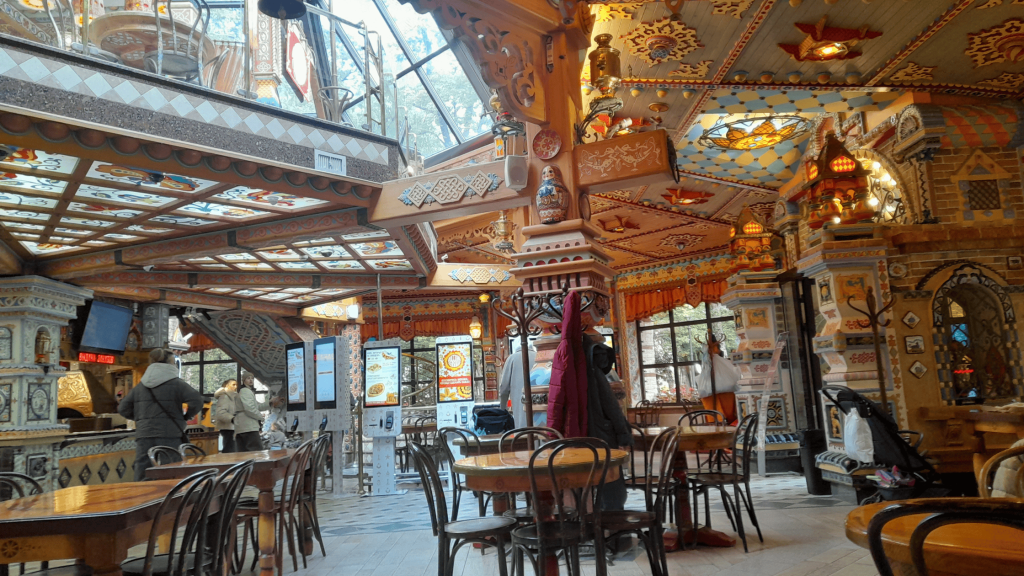
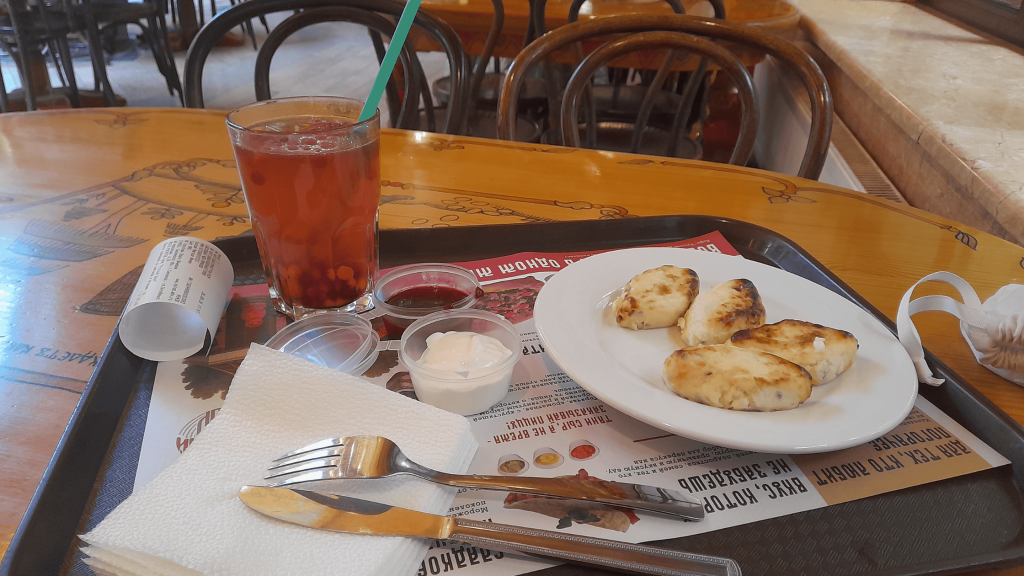
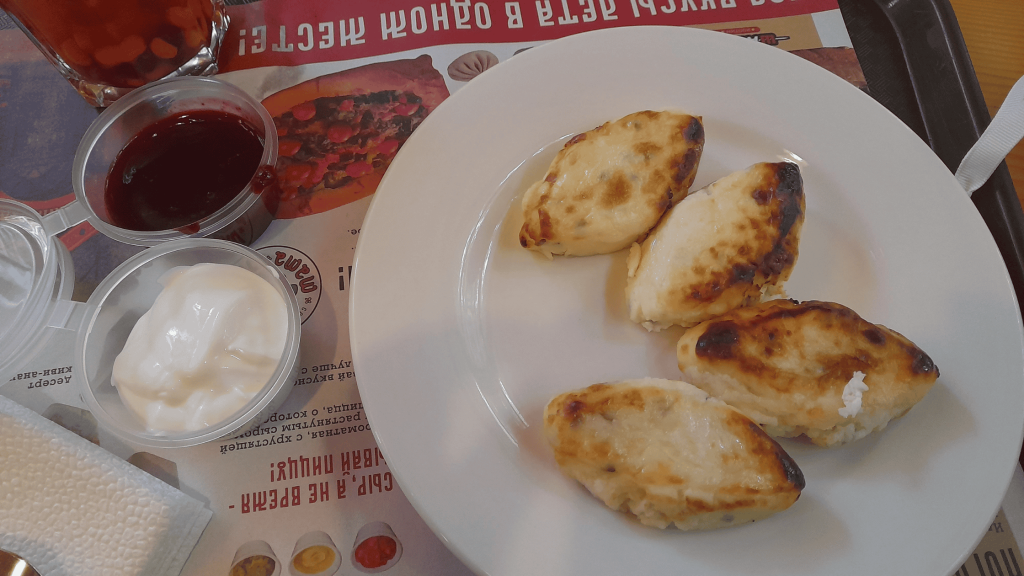
For lunch, I went to Russky Dvor to try a must-eat local dish called lapun, a Smolensk-style version of syrniki (cottage cheese pancakes). I had four of them, served with red fruit jam and smetana (sour cream), plus a steaming cup of oblepikha chai (sea buckthorn tea), all for 560₽ (~6€). The café is right in the middle of Sad (garden) Blonye, AKA Mikhail Glinka’s Park. The composer was born in the Smolensk region, and you can hear his music playing near his statue.
The café itself is worth a visit. Russky Dvor, meaning “Russian Yard” is cozy, filled with carved wood, folk décor from floor to ceiling, and fairy-tale details straight out of a Slavic storybook. You half-expect Baba Yaga to pop out of the kitchen ! Katyusha was playing when I arrived. It’s probably the most Russian-looking café I’ve ever stepped into. The staff were super friendly and patient with my bad Russian, which made the experience even more enjoyable.
And of course, you can’t leave Smolensk without tasting its famous candied fruits, a 19th century treat once served to Catherine the Great. These chewy slices of apple, cherry, and other fruits are preserved in sugar and sold in souvenir shops across the city. I highly recommend the cherry ones.
Afternoon walk: Past echoes and Napoleon’s shadow
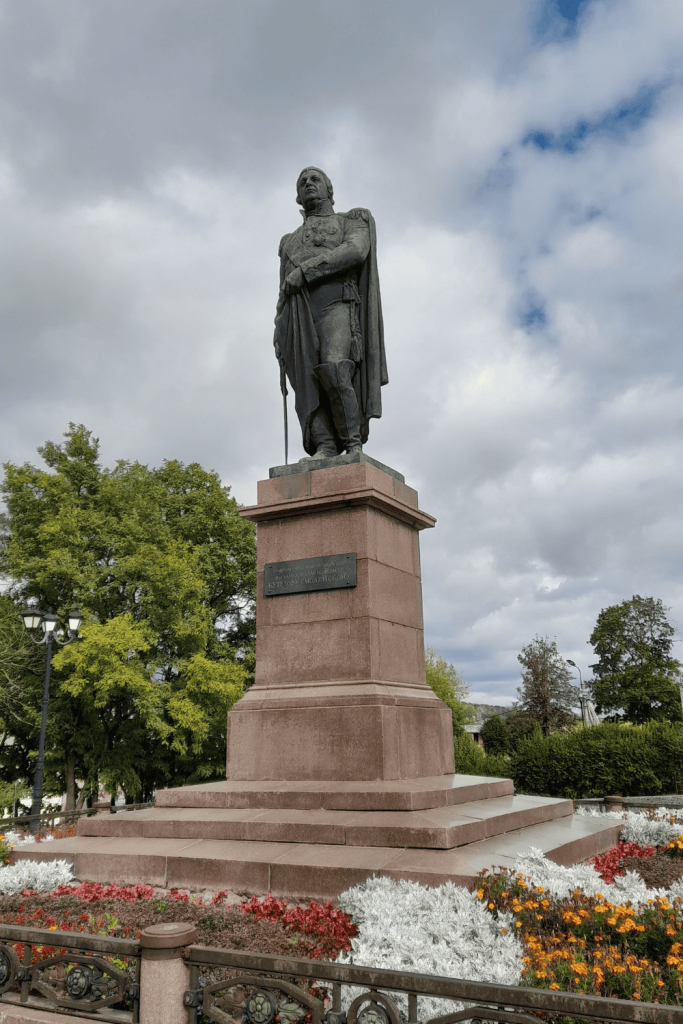
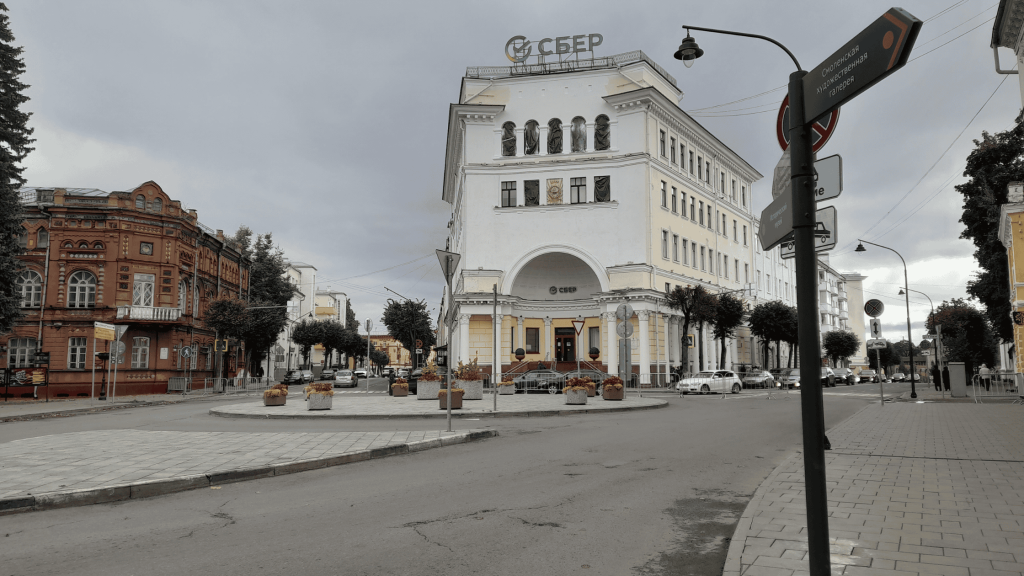
The best way to discover Smolensk is on foot. I wandered along the Dniepr River, up the old remains of a bridge standing beside a huge Russian flag, then along Bolshaya Sovietskaya street, lined with pastel pre-revolutionary buildings. A statue of Kutuzov proudly stands near the cathedral (it’s the general who patiently waited for Napoleon’s army to exhaust itself), before heading to the pedestrian Ulitsa Lenina.
Don’t miss the Convent of St. Mary Magdalene, a pretty spot just a short walk from Blonye Garden.
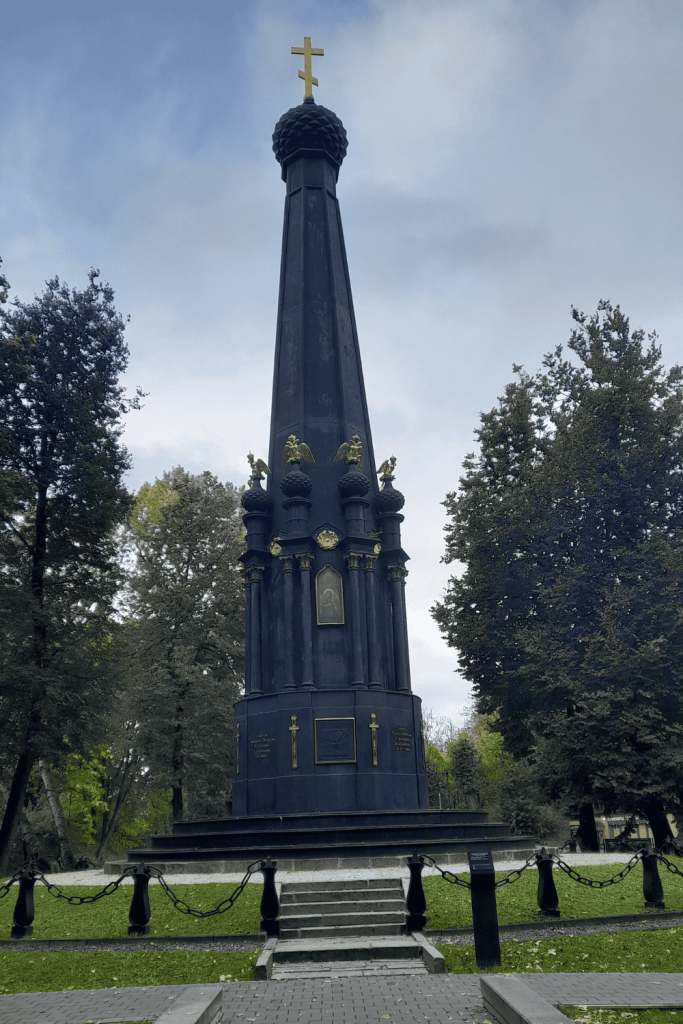
A bit of history: in 2019, a team of Russian & French archaeologists discovered the remains of General Gudin, one of Napoleon’s officers, right in the middle of Lopatinsky Garden. His remains were later returned to France and reburied with military honors at Les Invalides in Paris in 2021, a reminder that, despite the current diplomatic tensions, there will always be a link between France and Russia. Right in the middle of the garden stands the Monument to the Defenders of Smolensk (1812), before which locals still cross themselves as they pass by.
Staying the night in a historic building: Pestrikov Hotel review
My base in Smolensk was the Pestrikov Hotel, a beautifully restored red-brick building that once served as an 18th century hospice. Tucked right next to parts of the fortress wall and overlooking the Dniepr, it’s central, atmospheric, and perfect for a short stay.
I had a spacious, quiet room, finished to a high standard, the kind of place that feels both historic and comfortable. The breakfast at Lanin, the on-site restaurant (that’s also one of the best in the city apparently), was made-to-order à la carte and included with the room.
The staff were genuinely welcoming (no English spoken though), greeting guests with a glass of sparkling Château Tamagne. I’m French, so that immediately won me over.

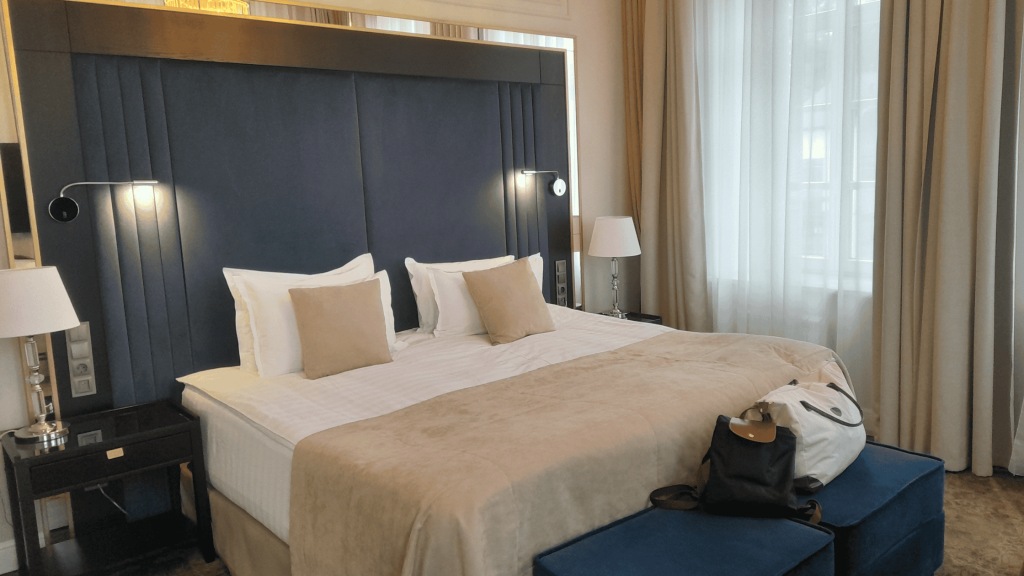
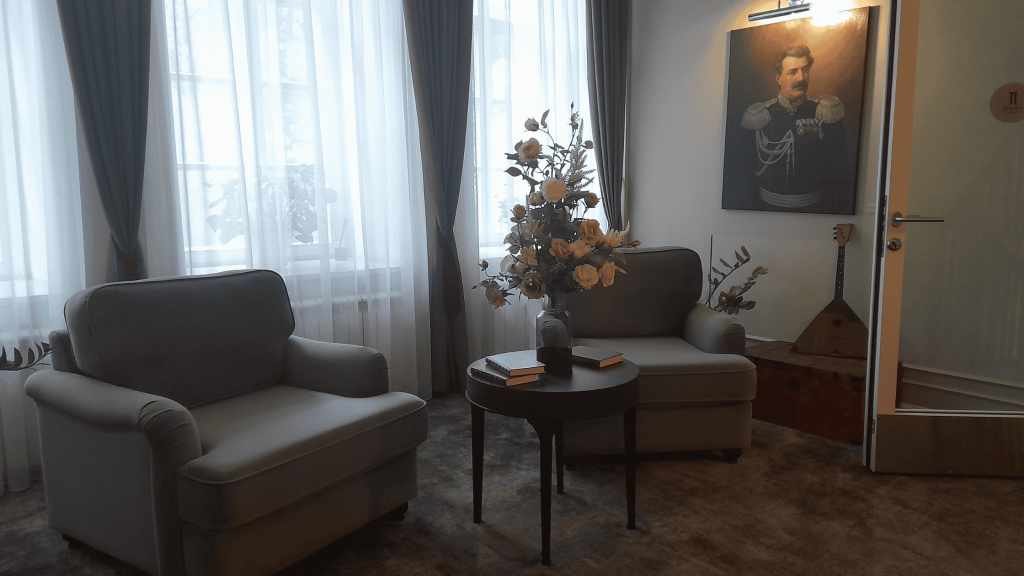
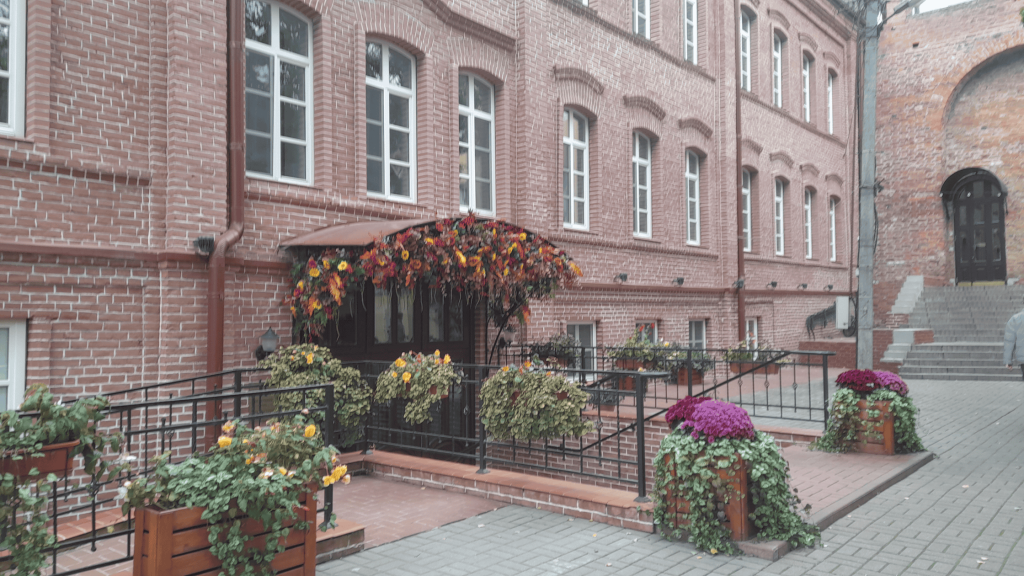
The hotel was surprisingly affordable. With an off-season discount, a business double room with breakfast came to 55€ (regular price 80€, still a very good deal). Between the combination of historical charm, comfort, and friendly service, it’s easily one of my top picks in Russia (yep!).
If you’re a traveler who values ambiance, practicality, and personal touches, the Pestrikov Hotel truly delivers. If you want to experience a historic stay in Smolensk, don’t look further.
Before you book:
As of June 2026, Ostrovok accepts Mastercard payments only. Visa cards are not currently supported.
My Smolensk itinerary map: Café, sights & hotel
Conclusion: Is Smolensk worth the stop?
Absolutely. Smolensk may not be buzzing with tourists or flashy Instagram reels, but that’s exactly why you should come. It’s richly historical. For travelers curious about the quieter corners of Russia, it offers a chance to go off the beaten track very close to Moscow, a perfect weekend trip from the capital.
PS: If you have more time than I did (+ the weather sucked, I had no SIM card, and my GPS was highly unreliable), check out the Teremok in Talashkino. Once owned by Princess Maria Tenisheva, an artist and patron of Russian folk art. The estate was a major artistic spot in the late 19th and early 20th centuries.


