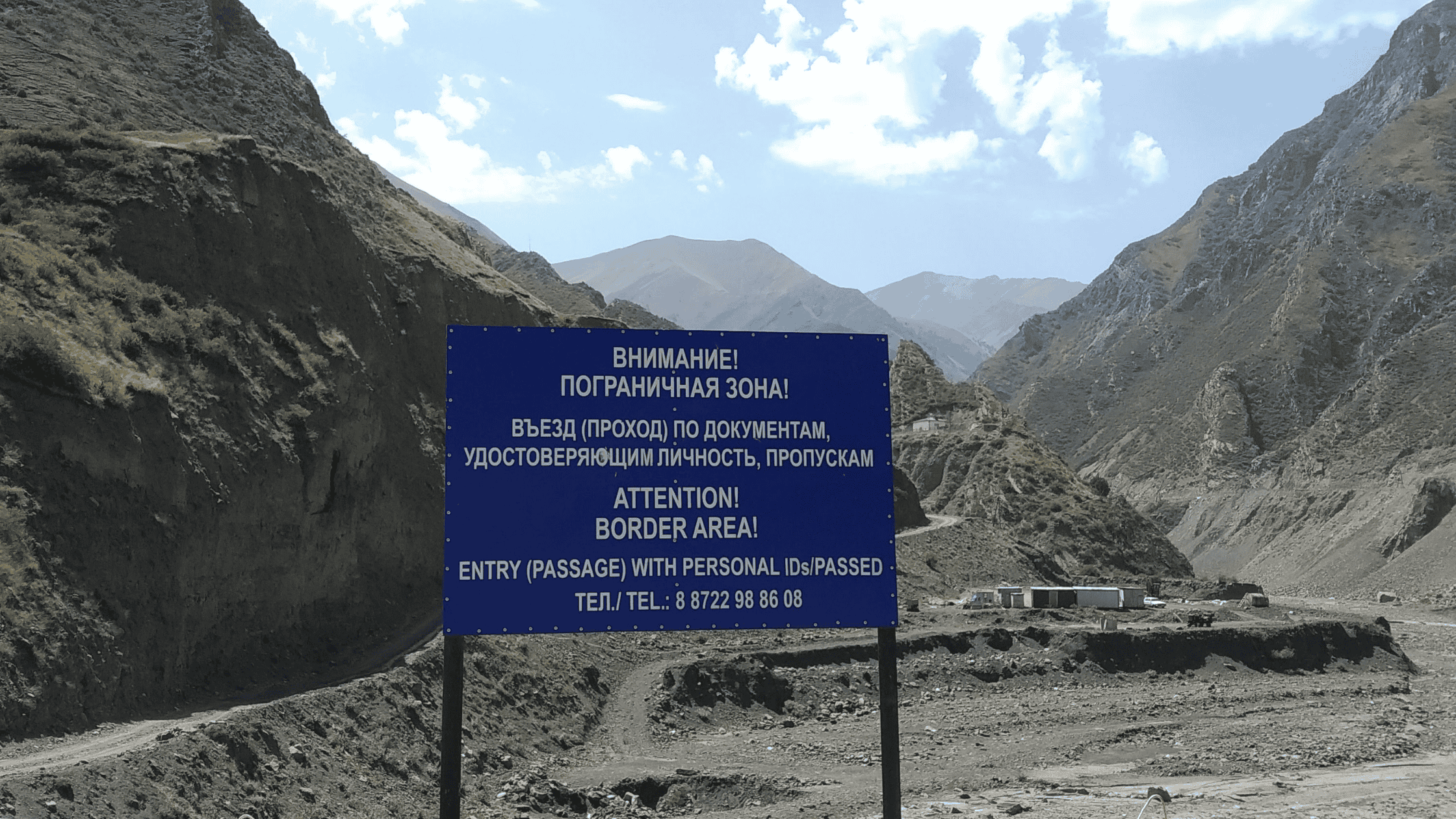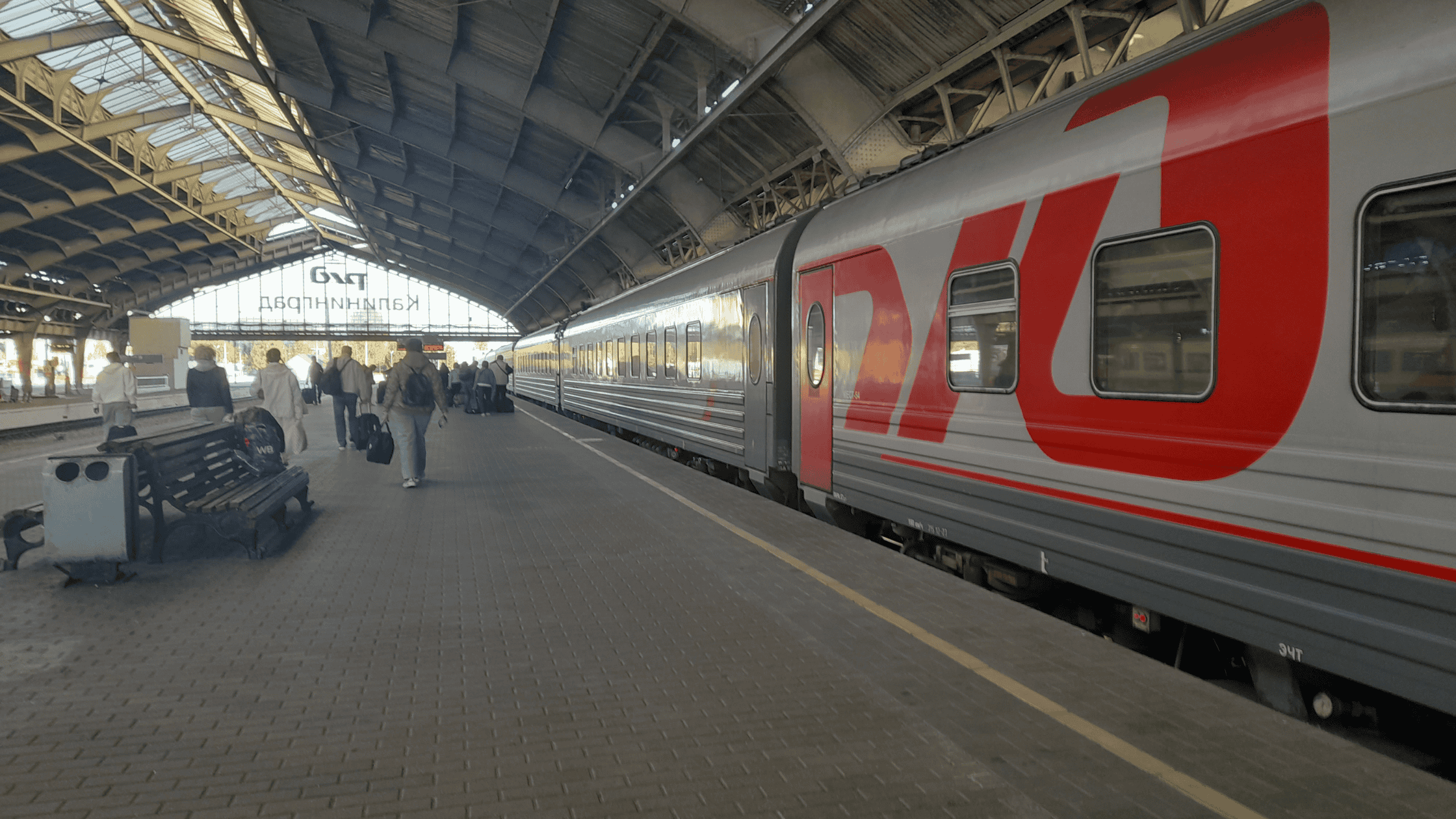
Travelling by train from Kaliningrad to Minsk isn’t just about getting from point A to point B, it’s about crossing one of Europe’s most complex frontiers, where history, politics and geography blend in fascinating ways. This route links Russia’s Baltic enclave with Belarus, cutting through Lithuania, a member of both the EU and NATO.
After a last-minute change of plans, I took this night train in September 2025, right through this rail corridor under diplomatic tension. The trip turned out to be both surreal and surprisingly moving: a mix of friendly Russian babushkas, endless passport checks, and that strange feeling of passing through three countries without leaving my top bunkbed.
Before boarding, though, there’s a lot to figure out: visas, tickets, timetables, border rules. In this guide, I’ll share my full experience taking the Kaliningrad-Minsk train in 2026, including updated prices, schedules, visa tips, and everything you need to know to prepare for this unusual rail journey across Eastern Europe.
Last updated: 27 May 2026

Practical information: Timetables, prices and visa rules
1. Train schedule and duration in 2026
In 2026, there are three daily trains running between Kaliningrad and Minsk, often as part of longer routes to Moscow or Adler (Sochi).
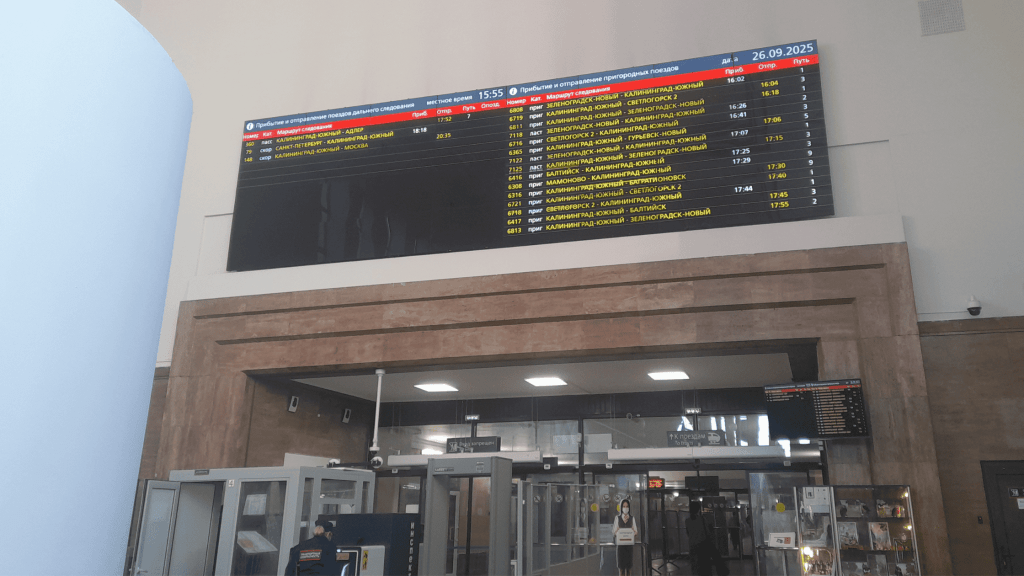
Departures from Kaliningrad South Station (Yuzhny Vokzal, next to the bus station) are:
• 12:55PM → train n°030Ч Yantar
• 5:52PM → train n°360Н (the one I took)
• 8:35PM → train n°148Н
The total journey usually takes 10 to 12 hours, depending on stops and border controls: Russian, Lithuanian, then Belarussian.

Tip: Even on a night train, don’t expect deep sleep. Border checks happen between 1:00-3:00 AM, especially at the Lithuania-Belarus border, lasting 45 to 60 minutes each, and you must remain awake to show your passport and migration documents.
2. Ticket prices and booking options
Tickets for the Kaliningrad-Minsk train can be purchased via :
• RZD, the official Russian Railways website, the one I used. It requires a Russian bank card.
• RussianTrain, to buy with a foreign Visa/Mastercard from abroad.
• Directly at the train station, in Kaliningrad, Moscow, or Minsk, depending on your route.
In 2026, a 3rd class sleeper (platskart) costs from 8 000 to 12 000₽ (~80 to 120€), depending on season and demand. My ticket was just over 8 000₽.
It’s very expensive for a 10 hours train ride in 3rd class in my opinion, but there are high demand.
Pro tip: Avoid last-minute bookings. These trains are almost always full, even off-season. The day before my departure, a Thursday in late September, only a few upper berths in 3rd class were left.
3. Departure and arrival stations
All Kaliningrad – Minsk trains leave from the main Yuzhni Vokzal (Южный вокзал- Southern station) of Kaliningrad. It’s located right next to the bus station.
The train makes short stops in Gvardeisk and Chernyakhovsk, before going to the Russian-Lithuanian border.
Arrival is in Minsk Passazhirsky, the central station in the heart of Belarus’ capital.
Must-know: In Minsk, only Belarusian roubles (BYN) are accepted, not Russian rubles. Not even for a coffee or the station’s toilets. ATMs and currency exchange offices are available at the station, but expect commissions if you use a foreign or Russian card. I got charged 90₽ commission with my Russian T-bank card on a Sberbank ATM.
Some ATMs still accept foreign Visa/Mastercards but reliability is uncertain due to the new package of sanctions. I highly recommend you to carry enough cash (Russian roubles, Euros or US Dollars) and change it on arrival if needed.
4. Visa and border formalities
This part is crucial: e-visas are not accepted for this route. Neither in Russia nor Belarus.
You need a traditional consular visa (sticker in your passport), issued at an embassy or consulate. Russia and Belarus recognize each other’s visas only if issued through official consular channels.
• Russian visa: allows travel from Kaliningrad to Minsk and onward in Russia.
• Belarusian visa: allows travel in the opposite direction, even starting from Moscow.
Either way, you need one or the other.
Borders crossed on this (my) train route:
• Exit Russia (passport stamp + migration card retrieval)
• Enter Lithuania (EU/NATO)
• Exit Lithuania
• Enter Belarus (passport stamp + new migration card issued)
Passengers do not leave the train; officials board at each border to check documents.
Interesting detail: Non-European passengers (so the majority on the train AKA Russian babushkas) must fill out a trilingual “form for affixing a visa” in Lithuanian, English, and French. The French inclusion remains a mystery to me, but it’s a real.
 My Russian visa & Belarussian migration card
I share the behind the scenes of my travels (real-time stories, messy bits etc) on Telegram

My experience on the Kaliningrad-Minsk night train
As mentioned earlier, I took the late afternoon train. Upon boarding, the provodnitsa immediately checked the validity of my visa.
• At the Russian border, the process lasted about 45 minutes. The border officer I encountered was extremely rude to me. She did not hide her disdain for French/Europeans She threw my passport on the table, then on the bunk bed, before coming back to snatch away the migration card she had forgotten to take.
Luckily, my three sympathetic babushkas whispered a reassuring “nie strachna” (“it’s nothing”) as the young provodnitsa gave me an apologetic look.
My advice: If this happens to you, say nothing. Stay calm and polite. Border guards have the final say on your visa’s validity! To be honest, this was the only time I’ve ever had an unpleasant experience at a Russian border; all my other encounters have been professional and courteous.
• A few minutes later, we reached the Lithuanian border. The officers boarded the train, checked passports and visa application forms.
For me, as a European passport holder, the process lasted barely one minute. Overall, this stop took about 1 hour 15 minutes. Same again when we exited Lithuania.
Note: The train doesn’t stop in Vilnius or anywhere else in Lithuania.
• Finally, around 1:00AM, we reached the Belarusian border. The officers here were very welcoming, which was a refreshing contrast after the Russian checkpoint. The Belarusian border check took around 45 minutes. One of the officers, a young man, spoke a few words of English. He stamped my Russian visa (not my passport), then asked me to fill out a Belarusian migration card myself (in Russia I never do it), as he seemed very unaccustomed to dealing with foreigners.
Incredible, but true: despite all these border checks, the train arrived in Minsk right on time!

Practical tips for the Kaliningrad-Minsk train journey
• At Kaliningrad station, there is a luggage storage service available, but payment is only accepted via Russian bank cards.
• Arriving in Minsk, everything is paid for in Belarussian roubles (BYN): toilets, coffee, luggage storage, etc. Russian roubles are not accepted, not even for small amounts.
• As mentioned earlier, due to the economic sanctions imposed on Russia and Belarus, international payments may stop functioning at any moment in Belarus. So, it’s best to bring cash (Russian roubles, euros, or dollars) to exchange once you arrive in Belarus. There is a currency exchange office at the Minsk station.
• If you’re traveling with a Russian bank card (like mine, T-Bank), expect about 90₽ in fees per withdrawal from a Belarussian ATM, and the same for payments in stores, restaurants, or cafés.
• To enter Belarus, you must have travel insurance. My Attollo Assistance policy covered both Russia and Belarus.

Continuing to Moscow from Minsk: Train connections between Russia & Belarus
From Minsk, it’s easy to continue your journey to Moscow. You can either take the same train that connects Kaliningrad to Moscow via Minsk, or board a Lastochka high-speed train, which takes about 7 hours.
There are also several Belarusian trains running daily to Russia.
The Russia-Belarus border is now almost invisible, with minimal controls for train passengers traveling between these two countries. I’m currently writing a full article about my train journey from Minsk to Smolensk, including all the practical details about crossing the Russia-Belarus border by train. Subscribe to my newsletter to be notified when it’s published!
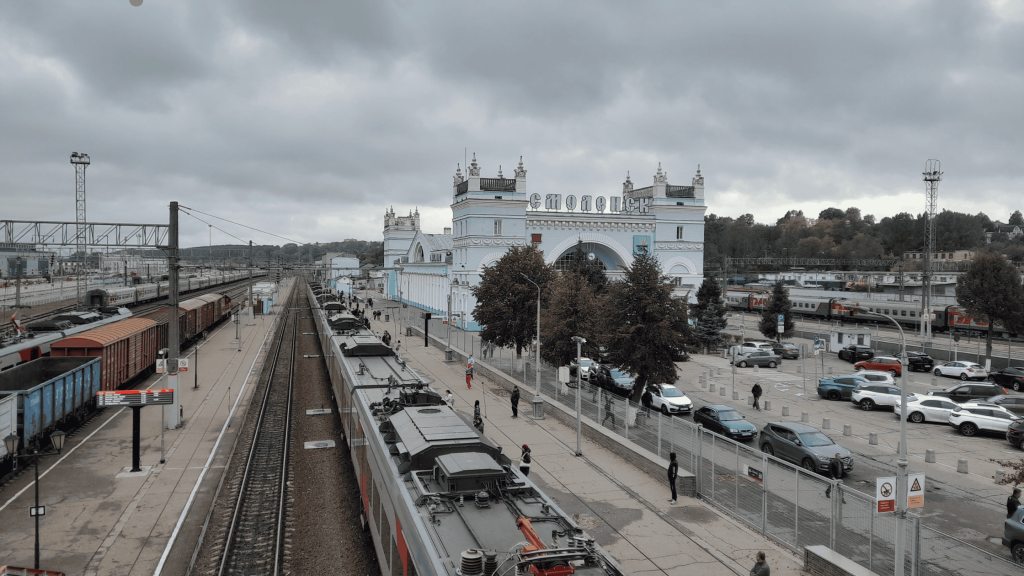 Smolensk train station
FAQ: Kaliningrad – Minsk train in 2026
 Kaliningrad train station
Conclusion
If you enjoy unique train journeys, this route is for you, as long as you’re well-prepared with the right visa.
Personally, I wouldn’t do it again 😅