Discover the Curonian Spit, a strip of sand on the shores of the Baltic Sea divided between Lithuania and Kaliningrad, in Russia and listed as a UNESCO World Heritage Site. In this comprehensive guide I share with you the best places to visit and practical tips for getting to its Russian part.
Article based on my experience of visiting the Curonian Spit by bus in mid-September 2024 from Kaliningrad. Prices are for information purposes only, they are subject to change.
* the Curonian Spit is called “Kurshskaya kossa” (Куршская коса) in Russian *
Last updated: 3 june 2026

Important : the Russian-Lithuanian border post on the Curonian Spit
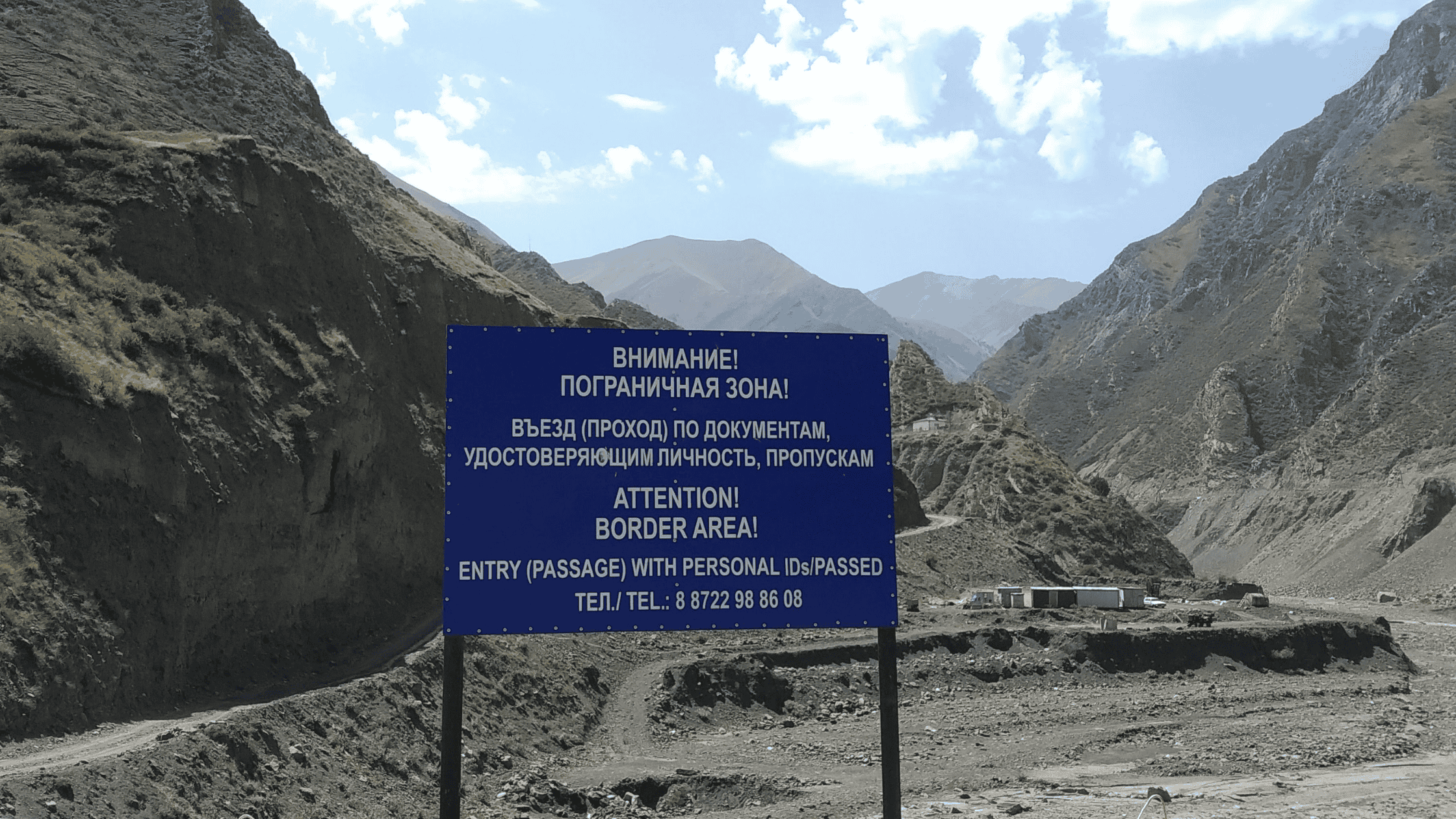
The Curonian Spit is divided between the municipality of Klaipeda in Lithuania and the Kaliningrad Oblast of Russia. The Morskoye – Nida border crossing between the two countries is closed until further notice. If you wish to cross the Russia-Lithuania border you will have to go through the Sovetsk – Panemunue border post for pedestrians or the Chernychevskoye – Kybartai border post with a vehicle (valid with an eVisa).
What is the Curonian Spit ?
History and geography of this unique strip of sand
The Curonian Spit is a strip of sandy land 98 kilometers long, stretching between Lithuania and the Russian exclave of Kaliningrad, and is between 400 meters and 4 kilometers wide. Separating the Curonian Lagoon from the Baltic Sea, this unique location is a natural area renowned for its spectacular dunes, dense forests and pristine beaches.
This strip of sand, formerly Prussian, then German and finally Russian, is an essential place to visit during a trip to Kaliningrad or Lithuania.
Why is the Curonian Spit listed as a UNESCO heritage site ?
Added in 2000 on the UNESCO World Heritage List, the Curonian Spit is recognized for its exceptional ecosystem. Human efforts (since the 19th century) to preserve this fragile ecological balance make it a model of sustainable management. This site combines natural beauty and cultural heritage, it attracts thousands of visitors each year. It’s divided into the Curonian Spit National Park of Lithuania and the Kurshskaya Kossa National Park of the Russian Federation. View the UNESCO’s page about the Curonian Spit.
How to go to the Curonian Spit from Kaliningrad?
Necessary formalities and visas for travelers
The Kaliningrad Oblast is part of the Russian Federation and is subject to the same immigration rules as the rest of the country. Most of us need a visa. Holders of European passports can apply for a Russian eVisa and can for example take a bus through the Mamonovo-Gronowo border with Poland from Gdańsk.

The bus via Zelenogradsk
To reach the Curonian Spit on the Kaliningrad side, regular buses 210 depart every day from the seaside resort of Zelenogradsk. You will have to take a bus (or a train) from the city of Kaliningrad to Zelenogradsk then another towards the Curonian Spit.
Bus 210 serves the main stops along the only road that crosses the isthmus to the village of Morskoye (sometimes written Morskoe), the last stop before the Lithuanian border. These stops include the entrance of the national park, the villages of Lesnoy, Rybatchy and Morskoye, as well as most of the places of interest mentioned below.
In high season (summer), a direct bus connects Kaliningrad bus station to the Curonian Spit two or three times a day. However, for more flexibility, I really recommend bus line 210 from Zelenogradsk. They run all year round and cross the isthmus back and forth.
Zelenogradsk does not have a bus station per se but an “Avtostantsia” in front of the train station. Bus 210 leaves from the side of the sort of covered hall approximately every 40 or 50 minutes: 6:40AM, 7:25AM, 8:01AM, 8:55AM, 9:40AM, 10:50AM, 11:30AM etc.
Pay directly to the driver either by cash or with a Russian bank card if you own one.
Note: There is currently no ferry connection between Klaipeda, Lithuania and the Russian villages on the Curonian Spit.


I share the behind the scenes of my travels (real-time stories, messy bits etc) on Telegram

Best places to visit around the Curonian Spit
Among the must-sees to discover on the Curonian Spit, there are several small hiking trails called “eco-trails”, which allow you to fully enjoy the most interesting landscapes of the isthmus, between sand dunes, dancing forest and breathtaking views of the lagoon & the Baltic Sea.
These trails are marked, partially equipped with wooden paths and observatories. Signs also mark the trails to learn more about the local fauna and flora, but most of them are in Russian only – with the exception of those reminding you not to go off the trails or to throw rubbish, which are in English for some reason.
The following places are listed in a particular order, from the most north near Morskoye/the Lithuanian border down towards Zelenogradsk (except the last one, off the public transport route). I recommend this route if you travel by bus. All bus stops and eco-trails are visible on Yandex Maps (forget Google Maps, completely useless in Kaliningrad).
1. Vissota Efa – “Efa Height”
Высота Эфа – Located near Morskoye, the Orekhovaya dune is one of the highest in Europe, reaching 62 meters and is best known as the “Efa Height” named after Franz Epha, a pioneer in the stabilization of shifting dunes in the 19th century.
A 2.4 km eco-trail leads along its southwest slope, between mobile dunes and dunes fixed by vegetation. The route is punctuated by three observation platforms with panoramas of the Curonian Lagoon, the surrounding forest and the village of Morskoye.
I was there before 7:30 in the morning and had the whole place to myself.


2. Beach opposite Vissota Efa
Coming back from Efa Height, cross the road to reach the pretty beach located on the Baltic Sea side. There are also a few cafes.

3. The dancing forest
Танцующий лес – Located 4 km north of Rybatchy, this pine forest planted in the 1960’s on Dune Krugloy (= round), is famous with its trees with twisted trunks, the origin of which remains unexplained. The 1.2 km eco-trail crosses the dancing forest but in my opinion it is more interesting in theory than in reality. The area where the trunks were the most twisted was unfortunately partially destroyed by a forest fire a few years ago.


4. Vissota Müller – “Müller Height”
Высота Мюллера – Located north of Rybatchy on the Baltic side, Vissota Müller is the highest point of the Bolotnaya dune, which offers a great panorama of the Baltic Sea, the Curonian Lagoon and Lake Chaika. The eco-trail of approximately 2 km crosses varied landscapes: old forests, young plantations and wetlands. It leads to a 44 meters high observation platform. The dune is named after Ludwig Müller, a forest keeper from Königsberg, known for developing a planting method to stabilize shifting dunes.


5. The royal forest
Королевский бор – The 2.9 km eco-trail of the royal forest crosses forests of century-old conifers and introduced species such as the giant cedar. The path also joins the banks of the Curonian Lagoon. Part of the route follows the old postal road, which connected East Prussia with Russia for more than 150 years.


6. Bonus : Ozera Lebed – Swan lake
Озеро Лебедь – Swan lake is located between the village of Morskoye and the Lithuanian border. Unfortunately the bus does not go further than the village but you can either reach the lake’s observation point via the coast from Morskoye (about 4 km) or from the main road (official route of the 3 km eco-trail) . For conservation reasons, it is forbidden to reach the shore of the lake and especially not to swim there.

Best time to visit the Curonian Spit
The best seasons to enjoy beaches and hikes
Summer (June to August) is ideal for enjoying the beaches and the sun. Spring and autumn offer pleasant temperatures for hiking and fewer tourists. The weather was really nice in mid-September when I went there.
Tips on climate and touristy seasons
• Winter (approximately December to February) is quiet but cold.
• Avoid weekends if you can, especially in July and August (even in September), it’s crowded!
 Curonian Spit beach on the Baltic Sea side, 22°C in mid-September
 Curonian Spit beach on the Baltic Sea side in winter. Source: https://travel.yandex.ru/journal/chem-zanyatsya-na-kurshskoy-kose-zimoy-ekotropy-ekskursii-i-progulki-u-morya/
 Curonian Spit on the lagoon side in winter. Source: https://travel.yandex.ru/journal/chem-zanyatsya-na-kurshskoy-kose-zimoy-ekotropy-ekskursii-i-progulki-u-morya/
- Curonian Spit beach on the Baltic Sea side, 22°C in mid-September
- Curonian Spit beach on the Baltic Sea side in winter. Source: https://travel.yandex.ru/journal/chem-zanyatsya-na-kurshskoy-kose-zimoy-ekotropy-ekskursii-i-progulki-u-morya/
- Curonian Spit on the lagoon side in winter. Source: https://travel.yandex.ru/journal/chem-zanyatsya-na-kurshskoy-kose-zimoy-ekotropy-ekskursii-i-progulki-u-morya/
Practical tips for travelers
Where to buy your entrance ticket to the Curonian National Park?
You can either buy it directly online on the official website if you have a Russian bank card, or on site at the park’s entrance. My bus with only few local babushkas (i.e. not tourists) did not stop since the ticket office was closed at 7AM.
The price of the entrance ticket to the Curonian Spit National Park is 300₽ per person (for pedestrian/no vehicule).
Accessibility of the Curonian Spit National Park to wheelchair users
Some of the eco-trails mentioned above are set-up and accessible to accompanied wheelchair users : the royal forest (partially up to the lagoon observation point), the dancing forest (wooden paths) and Vissota Efa is accessible to the first observatories.
Phone network on the Curonian Spit
I got 4G everywhere, including in the middle of the forest with my Russian YOTA SIM card (from Megafon).
Where to stay : accommodation on the Curonian Spit and in Kaliningrad
To visit the Curonian Spit, it’s best in my opinion to sleep either in Zelenogradsk or in one of the 3 villages on the isthmus itself : Lesnoy, Ribatchy or Morskoye. Be careful there is more demand than accommodation available in high season. Remember to book in advance in the villages.
You can book and pay online for any hotel in Kaliningrad (or Russia in general) on Ostrovok.
Before you book:
As of June 2026, Ostrovok accepts Mastercard payments only. Visa cards are not currently supported.
Tips for avoiding crowds
The Curonian Spit is one of the most visited places in Kaliningrad, for tourists and locals alike. In summer and on weekends when the weather is not yet too cold there is a risk of being crowded no matter what day you go.
I still advise you to go there as early as possible. I took the first bus at 6:40AM from Zelenograsdk in September : solo breakfast in front of the sand dunes and the calm only disturbed by the birds singing. It was great!
Some rules to follow when visiting the Curonian Spit
• The areas where the dunes are accessible are designed so that no one can walk around freely and destroy the local fauna and flora. Do not leave the marked trails to protect the ecosystem.
• It is forbidden to make a fire in the park or leave rubbish (even though it is marked everywhere, it’s not obvious to everyone apparently).
• It’s forbidden to pick flowers or mushrooms.