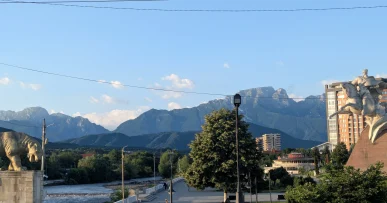
Dagestan is tucked away in the North Caucasus, between the Caspian Sea and the foothills of the Greater Caucasus Mountains, right on the border with Azerbaijan. Long overlooked and well off the beaten tourist track, this region captivates with its cultural richness, unparalleled ethnic diversity in Russia, and the legendary hospitality of its people.
In this comprehensive travel guide to Dagestan in 2026, I’ll take you through cliffside villages, the bazaars of Derbent, and ancient traditions that make this land feel like a world of its own.
If you’re wondering how to travel to Dagestan in 2026, where to go, and what to expect, you’re in the right place.
Locals will often tell you, “This is the Caucasus, not Russia.”
And it won’t take long before you understand exactly what they mean.
Last updated 28 May 2026
Warning: Heavy rain have led to flooding over the last weeks in Dagestan

General information about Dagestan
Where is Dagestan located?
Dagestan is a republic in the North Caucasus region of southern Russia. It shares borders with Azerbaijan to the south, Georgia to the west, Chechnya and Kalmykia to the north, and the Caspian Sea to the east.
Its capital city, Makhachkala, has a population of around 620 000. While it’s not the oldest city in the region (that title belongs to Derbent), Makhachkala is today the administrative, economic, and cultural center of the republic.
Is Dagestan a country?
No, Dagestan is not an independent country, even if locals will often say: “This is the Caucasus, not Russia.” Officially, Dagestan is an autonomous republic within the Russian Federation. It has its own local government and enjoys a certain degree of administrative autonomy.
What’s the best time to visit Dagestan?
Dagestan has a continental climate: summers can be hot along the coast (temperatures reaching up to 40°C in Makhachkala or Derbent), while winters are cold, especially in the mountains.
So when is the best time to go? In my opinion, the ideal travel window is from late April to early July, when the valleys and highlands are at their greenest, a stunning time for hiking, exploring, and enjoying nature.
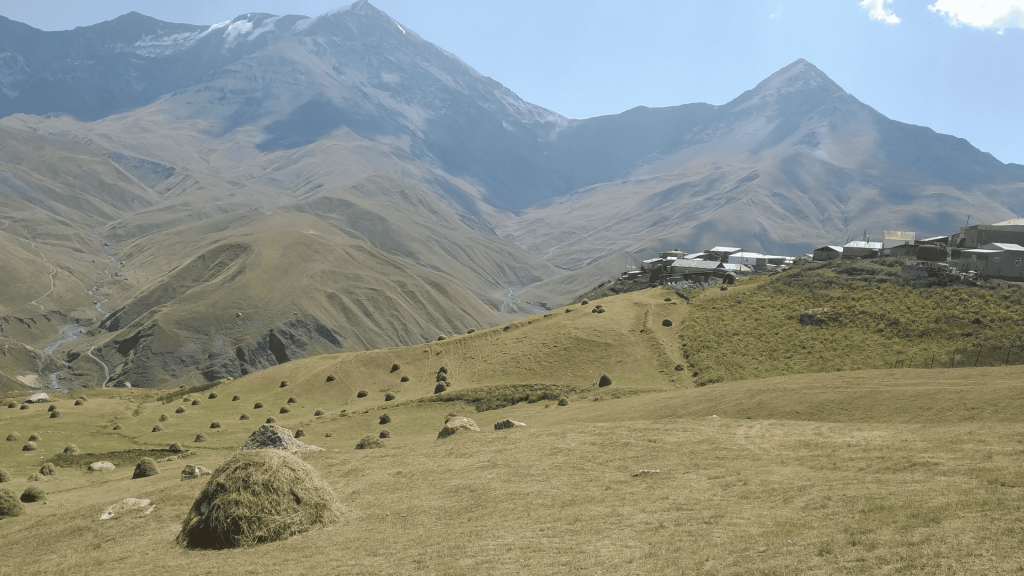 Kurush, highest village in Europe
Languages and ethnic diversity in Dagestan
Dagestan is by far the most ethnically and linguistically diverse region in Russia, and arguably in the entire Caucasus. There’s no such thing as a singular “Dagestani people.” Instead, the republic is home to over 30 officially recognized ethnic groups and around 40 distinct languages still actively spoken, some of which are unique to a single village or valley.
The best-known ethnic groups include the Avars, Dargins, and Lezgins. Each of them maintains their own language, traditions, and identity. Russian is the lingua franca that ties everyone together, coexisting alongside this intricate linguistic mosaic in everyday life.
This extraordinary diversity stems from Dagestan’s mountainous geography, which has historically encouraged cultural isolation, and from centuries of layered influences: Persian, Arab, Turkic, and Russian. It’s what makes the region so culturally complex: you can hear a different language spoken just a few kilometers away.
What languages are spoken in Dagestan?
While there are dozens of languages across the republic, they can be grouped into three main linguistic families (of course, I’m no linguist).
• Northeast Caucasian (Nakh-Daghestanian) languages
This is the dominant family in the region and includes:
– The Avars, the largest group, and their many subgroups (Andis, Botlikhs, Godoberis, Tindis, Karatins, Akhvakhs, Didoys, Bezhitas, Hinukhs, etc.).
– The Dargins, mostly living in central Dagestan (including subgroups like Kaitags and Kubachins).
– The Lezgins, concentrated in the south near the border with Azerbaijan.
– Other groups like the Laks, Tabasarans, Rutuls, Aguls, and Tsakhurs.
Each group speaks its own distinct language, often with dialects that are mutually unintelligible. Two villages just a few kilometers apart might speak entirely different languages.
• Turkic languages
These are spoken by groups such as the Kumyks (who live in the northern plains), Azeris, Nogais, and a small number of Turkmens.
• Iranian languages
This includes the Tats and the Mountain Jews, communities with deep historical roots around Derbent.
• Other ethnic groups
You’ll also find Akkintsy Chechens, Tsez, Archi people, Slavs, and Armenians, each adding to the republic’s mosaic.
Since the 1950s, Russian has become the primary language for education, media, and administration. Before that, things were more varied. Avars and Dargins, for instance, used to communicate in Kumyk (not to be confused with Kalmyk, spoken in Kalmykia).
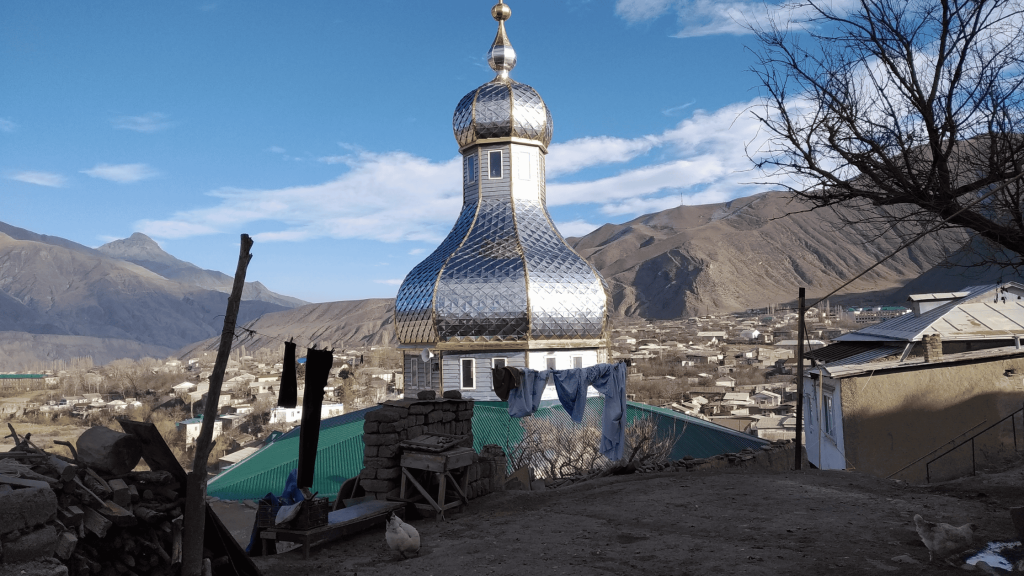 Akhty, Lezgin village
Do you need a visa to travel to Dagestan?
Since Dagestan is a republic within the Russian Federation, you will need a valid Russian visa or an e-Visa to enter. The e-Visa is valid at Makhachkala’s airport, which is the main entry point into the region by air.
There is no special visa or permit required specifically for Dagestan. Once you’ve entered Russia, you’re generally free to travel throughout the North Caucasus, including Dagestan, except for certain restricted areas along the borders.
Check out my in-depth visa guides for 2026:
• How to get a Russian Visa in 2026
• Russian e-Visa explained: What you need to know + my tips
Is it safe to travel to Dagestan in 2026?
When you mention you’re heading to Dagestan, some people in Moscow might jokingly say, “You’ll be dead within five minutes of landing in Makhachkala.” Spoiler alert: that’s far from the truth. In reality, the people of Dagestan, Avars, Rutuls, Lezgins, Dargins, and others, are among the most warm-hearted and welcoming I’ve met anywhere in Russia.
That said, Dagestan is still a sensitive region under closer security scrutiny than most other Russian republics. The area has a complex history with radical groups, past terrorist incidents, and some degree of local tension toward Moscow in certain areas.
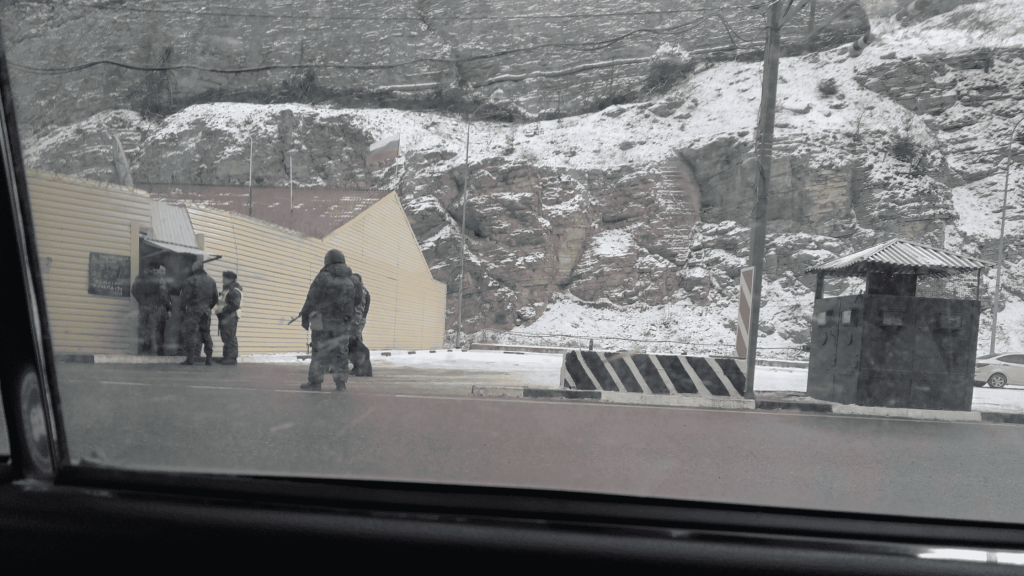
You’ll likely notice a heavy police and military presence, especially in Makhachkala, parts of the south, and on routes toward Chechnya (a military base).
This can feel intimidating at first, especially if you’re not used to traveling in politically sensitive areas – but it doesn’t mean the region is unstable or at war.
Frankly, if Dagestan were truly as dangerous as some Western travel sites (like Lonely Planet or Wikitravel) claim, Russian authorities wouldn’t allow travelers in.
From my experience as a solo foreign tourist, I never once felt unsafe. I never encountered so-called “radicals” in the mountain villages, and any border permits I needed were always handled without issues.
If seeing guns and uniforms makes you uncomfortable, Dagestan might not be the destination for you.
But trust me, it becomes part of the landscape pretty quickly!
Disclaimer :
This blog reflects my personal travel experience and is not intended as a replacement for official foreign travel advisories. Please refer to your country’s Ministry of Foreign Affairs for up-to-date guidance. I am not responsible for your personal travel decisions.
While traveling through Dagestan, you’ll likely come across several military or police checkpoints. They’re common at the entrances and exits of Makhachkala (some heavily armed dudes near roundabouts), on the roads to Chechnya, and at key mountain junctions.
These checkpoints usually stop vehicles that appear suspicious.
Foreigners and local civilians are typically not required to register or show documents unless specifically asked.
The only time I was asked to register at a major checkpoint in the entire North Caucasus was in Kabardino-Balkaria, on the way to Vladikavkaz. Never in Dagestan.
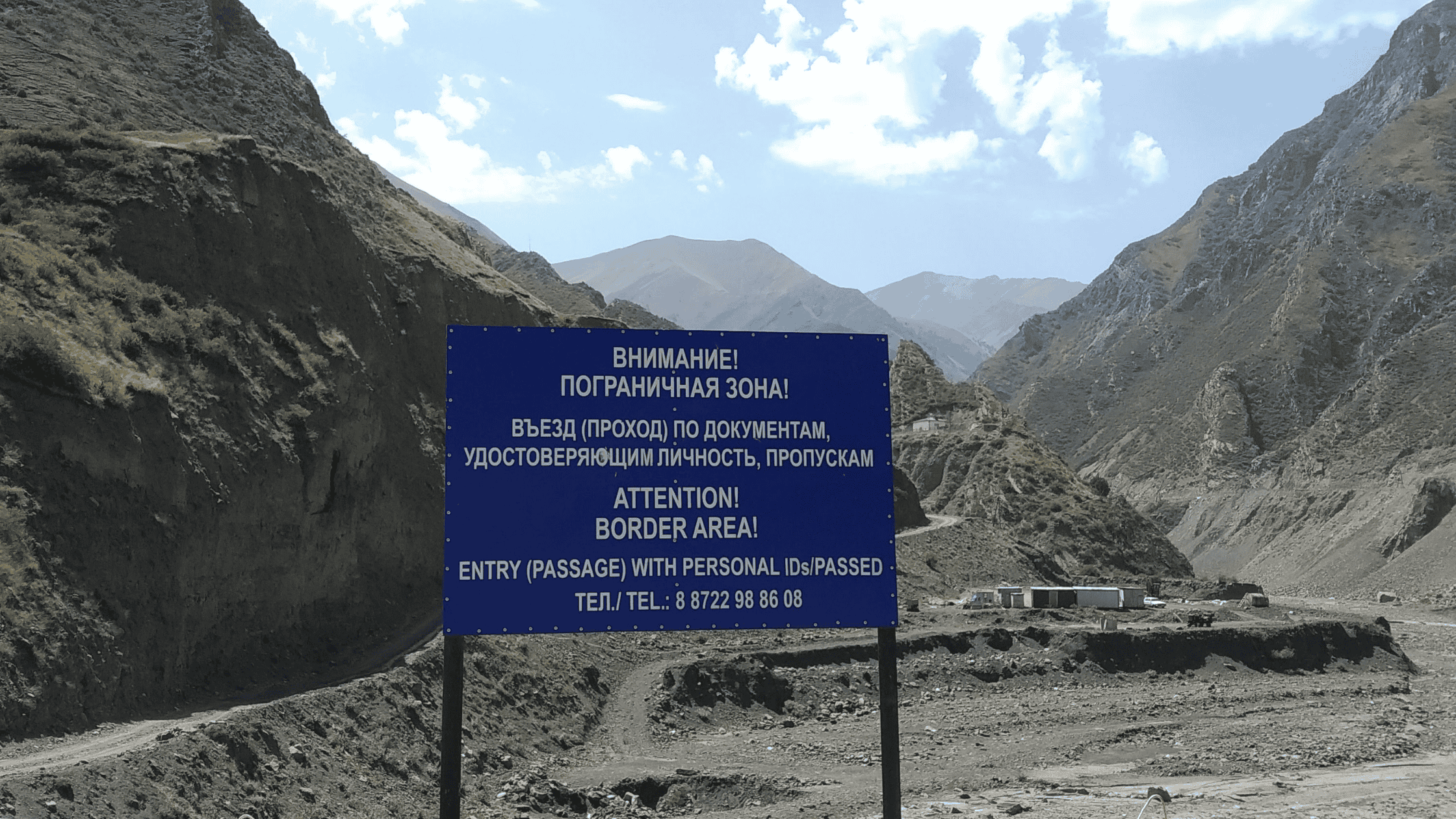
Some areas near the Azerbaijani and Georgian borders, especially south of the Samur River, require a special FSB border zone permit. More info down below.
Yes, absolutely. The first time I went, I was with a Russian female friend from Moscow. I’ve since returned alone several times and have always been treated with respect, in cities and remote villages alike.
If you’re a white woman (“regular” like me) who dresses modestly (pants or long dress, nothing extreme), you’ll likely blend in just fine. You don’t need to wear a headscarf unless entering a mosque. In fact, half of Dagestani women I saw didn’t wear one.
That said, the local culture is very different from the rest of Russia. I wouldn’t recommend Dagestan to an 18-year-old solo female tourist with no previous experience in Muslim-majority regions or places with limited infrastructure.
Dagestan isn’t Moscow, you’ll need to learn the local customs and respect the social codes. But once you adapt, it’s incredibly rewarding.
“You are going to get kidnapped”
That’s a “joke” I’ve heard a few times (nervous laughter or real concern, who knows?).
No, I was not kidnapped.
However, it’s true that “bride kidnapping” (yes, seriously) still occurs in some regions of the Caucasus, both in the north and south (including Georgia).
What does that mean?
A young woman is “abducted” and pressured into marriage. While some cases are consensual, many are not. Often, the woman ends up accepting the marriage out of fear of shaming her family.
Dagestan, like the rest of the North Caucasus, is not an LGBT-friendly destination.
Even as a straight couple, it’s best to avoid public displays of affection, that’s just not part of the local culture.
Dagestan and the North Caucasus in general is a conservative region and strongly attached to traditional values.
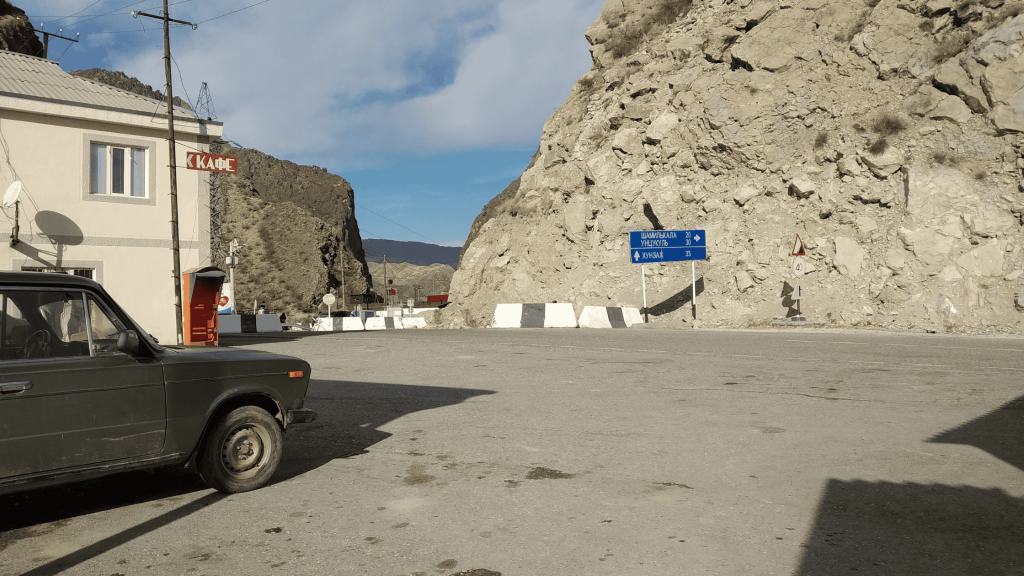 Checkpoint on a mountain road
Religion and local customs in Dagestan
Islam and traditional beliefs
Dagestan is predominantly Sunni Muslim (around 80%), but you’ll also find Shia communities in Derbent, Armenian Orthodox Christians, and an old Jewish community known as the Mountain Jews.
In some remote areas, pre-Islamic customs still survive. In the south, I once saw Muslim drivers stop at a small roadside altar to leave a few coins and say a prayer before continuing.
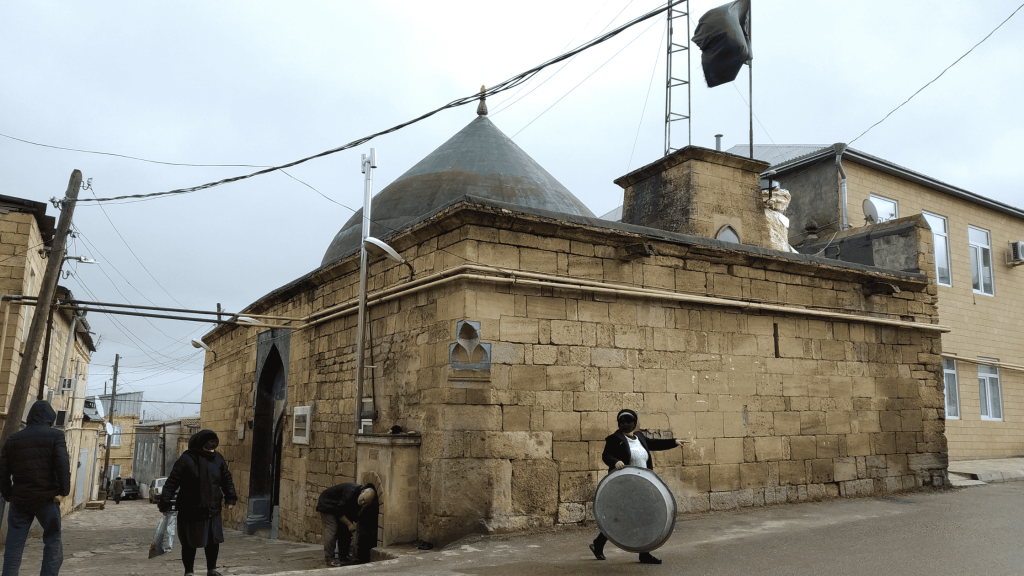 Kyrkhlyar Shia Mosque, Derbent
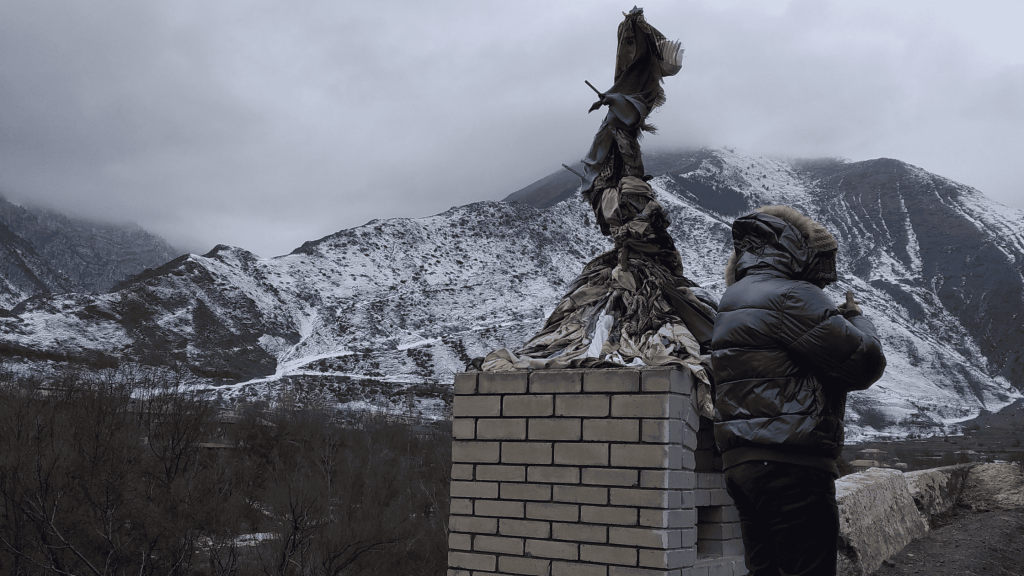 Shrine along a mountain road
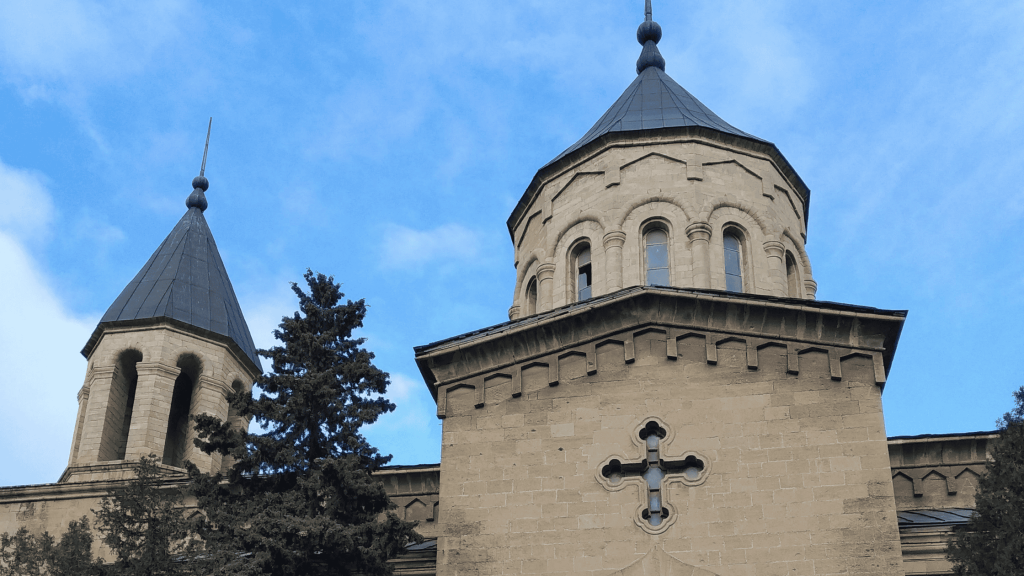 Armenian church, Derbent
Can you drink alcohol in Dagestan? Cognac, beer & local realities
Unlike neighboring Chechnya, alcohol is not banned in Dagestan. You’ll find beer, classic Russian spirits, and even local cognac from Derbent, which is a point of regional pride, often served during celebrations and weddings.
That said, drinking is not a public or casual affair. Alcohol is usually shared in private settings, among friends or at festive meals. Even at a wedding of a devout Muslim couple, there will still be alcohol for guests who drink.
I remember an old man, holding a glass of vodka, laughing as he said:
“We’re Muslims… but we grew up in the Soviet Union!”
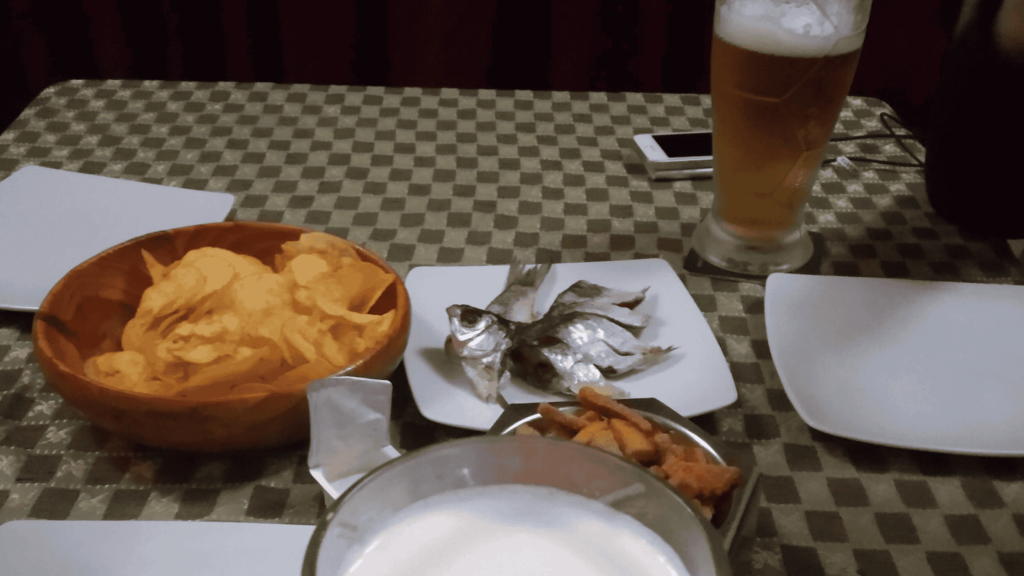 Beer and snacks with Dargin friends
Dress code in Dagestan: What should you wear?
There’s no strict dress code in Dagestan, but it’s important to dress with cultural respect and awareness. This is a Muslim-majority republic, and while it doesn’t feel rigid, it’s still quite conservative.
For men, don’t wear shorts, simple as that. For women, there’s no need to wear a headscarf (except inside mosques), but you should avoid mini-skirts or revealing tops obviously. Save those for Moscow.
Lastly, tattoos are generally not accepted, especially for women. If you have visible tattoos, it’s a good idea to cover them up as much as possible.
Key words to understand Dagestani culture
Dagestan is a world apart, a different Russia, with its own codes, mountainous architecture, and unique traditions. To truly grasp this region, there are a few key words that capture the essence of local life and identity. Here are three of them:
The word aul refers to a traditional fortified village found throughout the Caucasus. But in Dagestan, it takes on a character all its own. Perched on cliffsides and often invisible from afar, auls were built to withstand harsh terrain, weather, and invaders. Houses are made of stone and stacked closely together.
Each aul has its own unique identity, often tied to a specific ethnic group, language, and local craft tradition. Some, like Kubachi or Gamsutl’, are famous for their artisanship or mysterious abandonment.
Others, more hidden, are only discovered on foot during a hike.
If you’re into off-the-beaten-path villages and authentic mountain culture, exploring auls is a must in Dagestan.

The Lezginka is more than just a dance, it’s a symbol of pride, identity, and raw energy in the Caucasus. Named after the Lezgins, one of the region’s many ethnic groups, the Lezginka is performed across the North and South Caucasus: among Avars, Dargins, Chechens, Ossetians, and more. The term Lezginka is now used generically for the style.
It’s a mesmerizing display: the man dances with fiery precision and pride, spinning rapidly and stomping the ground, arms cutting through the air. The woman, graceful and poised, seems to float beside him. It’s fast and intense.
Pro tip: If you’re invited to a local celebration or Dagestani wedding, expect to see Lezginka danced – don’t miss it.
Traditionally, the Godekan was the village council, a group of respected elders who maintained order and cohesion within the community. At its head was often an Aksakal, literally “white beard”, an elder revered for his wisdom and moral authority.
The Godekan had a key role in:
• resolving local disputes (customary justice);
• managing the social and economic life of the village;
• passing down rules, values, and oral traditions.
Today, you’ll still see groups of older men gathered in village squares, chatting and informally discussing local affairs. While the formal power of the Godekan has faded, it remains a powerful symbol of traditional social organization in Dagestan.
Fun fact: Some cafés in Dagestani cities are named Godekan, a nod to this deep-rooted institution.
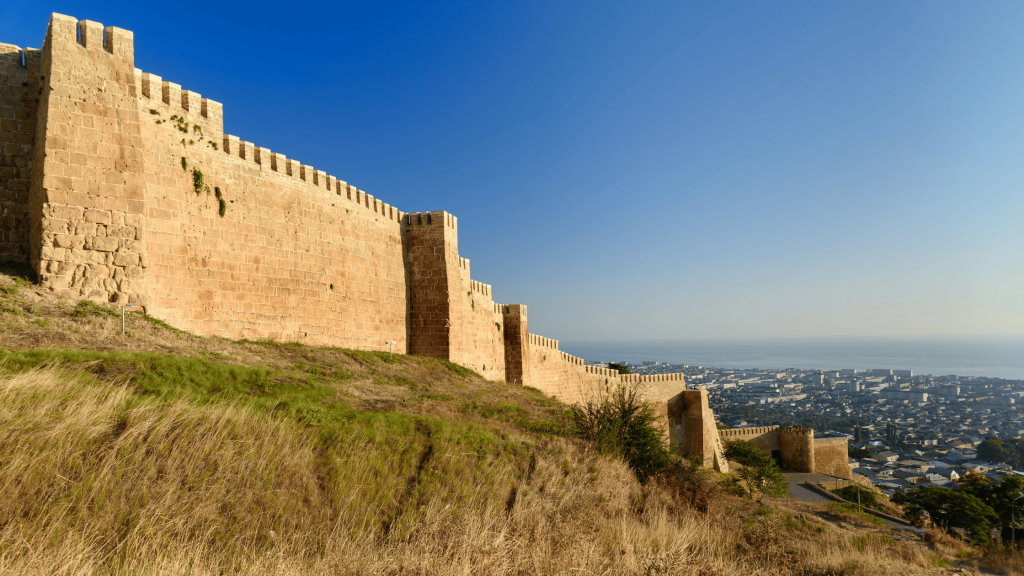 Naryn-Kala fortress, Derbent
Dagestan cuisine: mountain tradition meets hospitality
Like the region itself, Dagestani cuisine is a rich cultural patchwork. Each ethnic group, Avars, Lezgins, Dargins, Laks and others, has its own traditional recipes. But one thing is constant: hospitality, which here is expressed above all through food.
Whether you’re in the mountains or the city, don’t be surprised if someone invites you to eat. Say yes. Refusing is considered rude. And if you’re a woman being invited by men (which happened to me many times), don’t offer to pay, it’s seen as disrespectful to the host’s role.
Must-try Dagestani dishes
Here are a few specialties you’re bound to come across while traveling in Dagestan:
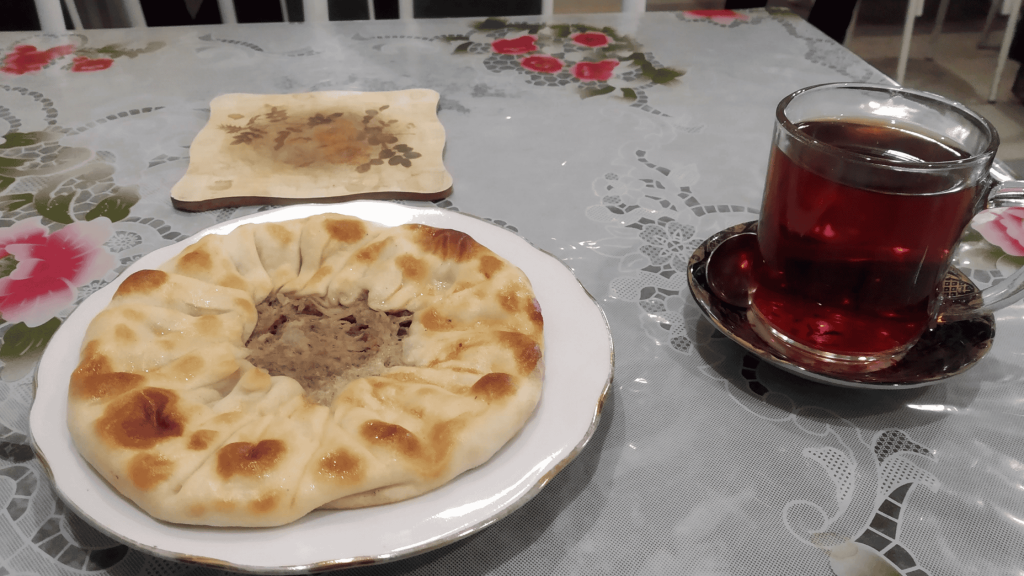
• Khinkal: The most iconic Dagestani dish. These are boiled dough pieces served with meat (usually beef or lamb). Each ethnic group has its own version. Do not confuse it with Georgian khinkali, they’re completely different!
• Chudu: A pan-fried flatbread stuffed with various fillings, then stacked and brushed with butter. Common fillings include cheese, herbs, or pumpkin. The Avar version, botishal, is made with mashed potatoes and cheese.
• Kurze: Small steamed dumplings similar to manti, known for their distinctive braided seam. Fillings range from meat to potatoes or cheese.
• Kyachi: A meat pie with a braided edge. Traditionally made with lamb, but beef versions are common too.
• Burchak-shurpa: A hearty lamb soup with vegetables and noodles. It’s Dagestan’s twist on the Central Asian shurpa, rich and flavorful.
• Sushenoye myaso: Literally “dried meat”, often lamb or beef, cured naturally in mountain air.
 Avar khinkal cooking lesson. According to the chef, I had to wear my scarf the Avar way 😉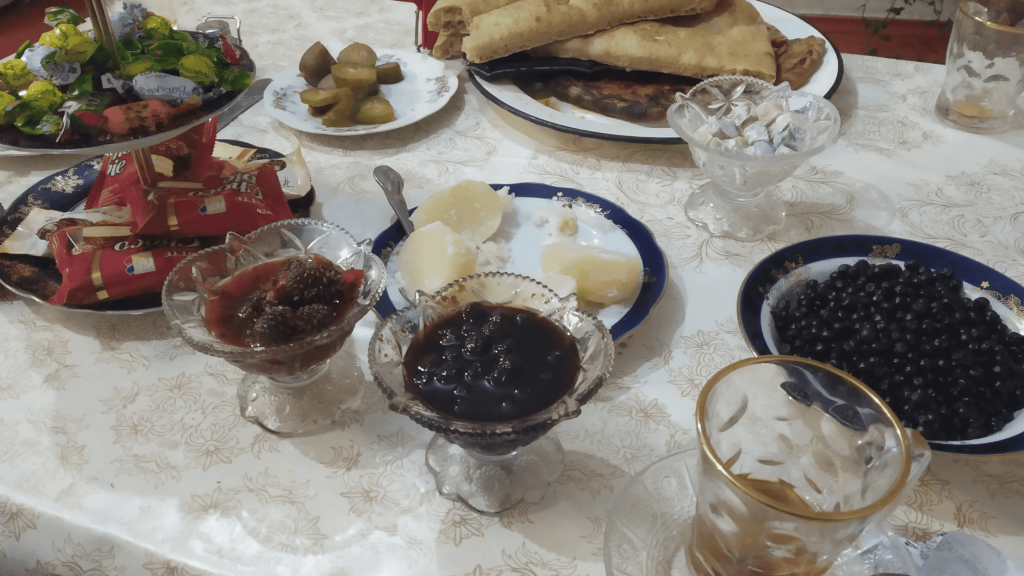
• Bakhukh: A dense, sweet treat made from roasted flour, butter, and honey. Think halva, but Dagestani style. Often made for religious or family celebrations.
• Urbech: A thick, energy-packed paste made from ground flaxseeds, sunflower seeds, and apricot kernels.
• Apricot kasha (porridge): A sweet porridge made with fresh or dried apricots (or juice when out of the season). A small well is made in the center and filled with urbech just before serving. It’s absolutely delicious.
Extra sweets & local drinks
• Pine cone jam: Unusual texture, but surprisingly tasty!
• Local fruit juices, Especially apricot juice, 100% pure, and widely available in local shops.
• Derbent Cognac: A regional pride and a must-try for spirits lovers.
I share the behind the scenes of my travels (real-time stories, messy bits etc) on Telegram

Getting to Dagestan and getting around
Flights to Makhachkala: From Moscow or Dubai?
Direct international flights to Makhachkala (as of 2026):
– Dubai → Makhachkala: FlyDubai (from 190-210€)
– Tashkent → Makhachkala: Uzbekistan Airways
– Istanbul → Makhachkala: Aeroflot
– Sharm El-Sheikh → Makhachkala: Red Wings
– Medina → Makhachkala: Jazeera Airways
Due to EU sanctions, European based booking platforms no longer sell flights to Makhachkala (and Russia in general). I recommend Aviasales (the .com version, not .ru), which redirects to international flight booking agencies such as Turkey-based Unfly and UAE-based City Travel or Onetwotrip. At the time of update (May 2026), these platforms accept foreign Visa and Mastercard payments.
Depending on where you’re flying from, there aren’t flights every day. In my opinion, the best option is still to fly Istanbul → Grozny (operated by UTair; from 190-210€), and then continue to Makhachkala by bus or train.
• Domestic flights: Moscow to Makhachkala
There are direct daily flights from Moscow to Makhachkala (Aeroflot, UTair, etc.), just under 3 hours, starting from 130€. From Saint Petersburg, expect around 170€ one-way.
Trains, marshrutkas & hitchhiking in Dagestan
• By train from Moscow
The train journey from Moscow to Derbent is about 1 700 km or 42 hours. You can book tickets via RussianTrain, which offers an English interface and accepts international cards.
• By marshrutkas (minibuses)
Marshrutkas (shared minibuses common across the former USSR) are the main form of public transport between Dagestan’s towns and larger villages. Cheap and convenient, they usually leave when full, with no strict timetable.
For smaller or more remote mountain villages, you’ll often have to rely on shared taxis… if they exist. Some routes have just one marshrutka per day, and none on weekends . Ask around at bus stations or locals for the current schedule.
There are also long-distance buses/marshrutkas from Makhachkala or Derbent to cities like Grozny or Volgograd.
• Hitchhiking
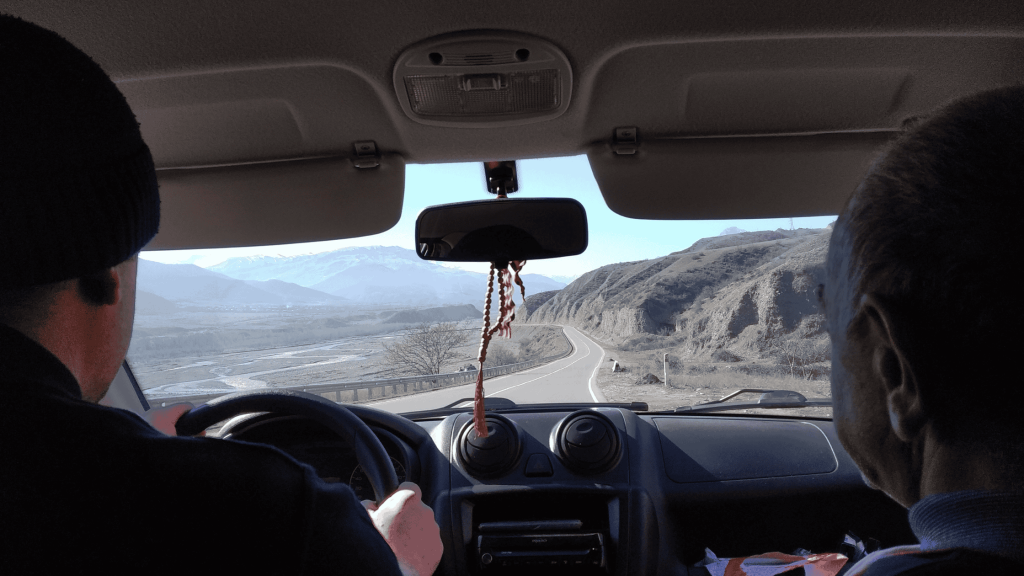
Hitchhiking works well in Dagestan, even in remote areas. It’s a good backup when no public transport is running (which is often).
From personal experience: people are kind and often stop quickly, especially in rural areas. But some young drivers seem to have got their driving licences from a cereal box.
Crossing the Russia-Azerbaijan border: what you need to know
Since the COVID pandemic, the land border from Russia to Azerbaijan has been closed to foreign nationals, while the crossing from Azerbaijan to Russia remains open. This means foreigners can enter Dagestan by land from Azerbaijan, but not the other way around. Note that the Russian e-Visa is not valid at this border, a regular visa is required.
Before 2020, daily minibuses ran directly between Derbent and Baku. I’m not sure if this service is still running, check at the bus station in Baku or in nearby Quba, which is closer to the border. Read all the details in my dedicated post.
A quick side trip: Khinalig, the roof of Azerbaijan
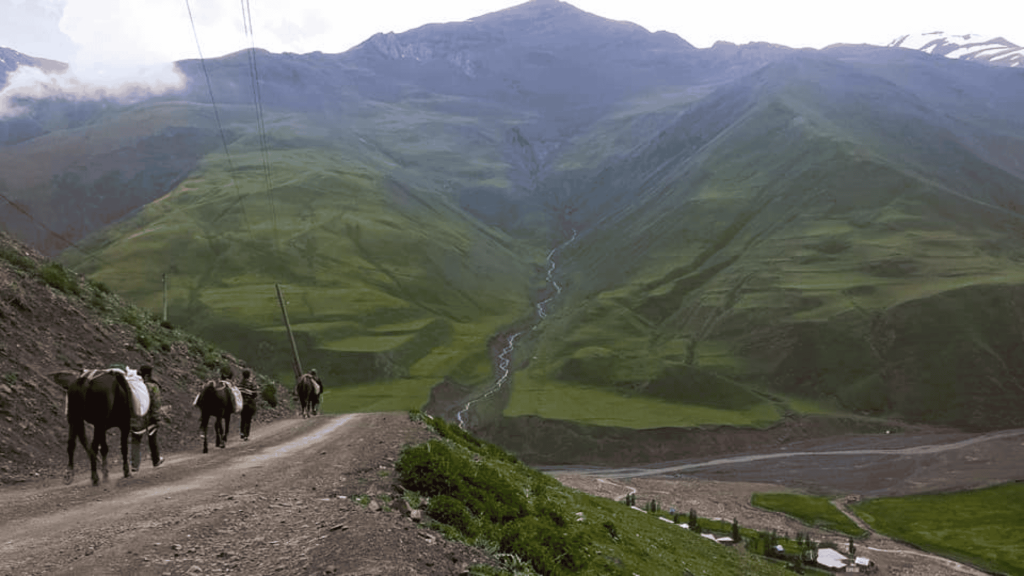
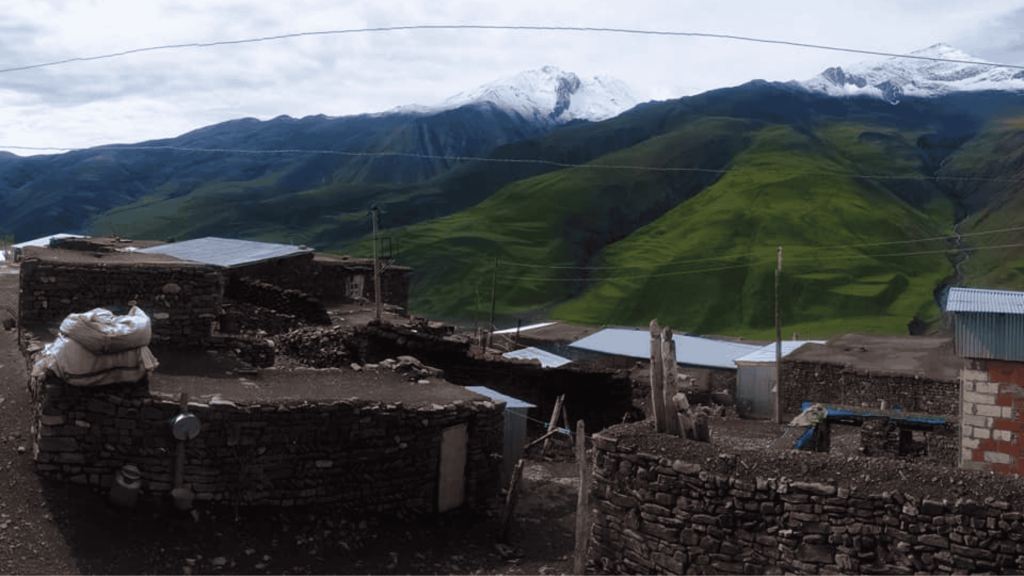
If you’re traveling on the Azerbaijani side of the Caucasus, don’t miss visiting Khinalig (Xınalıq), one of the most spectacular villages in the region, in my opinion. Perched at 2 180 meters in the Greater Caucasus, it’s the “roof of Azerbaijan.”
Khinalig is not just a village, it’s home to the Khinalugs, a small mountain community that speaks a unique language, considered a distinct branch of the Nakh-Dagestanian language family. That alone makes it worth the trip.
Declared a UNESCO World Heritage Site in 2023, the village has preserved a traditional way of life thanks to its isolation. Stone houses stack up on the mountainside, and locals still use kyziak – dried dung bricks – as fuel, just like in many rural parts of the Caucasus.
I stayed in Zaur’s guesthouse: simple but warm and welcoming. It’s a village frozen in time, surrounded by breathtaking landscapes.
If you can’t make it to Dagestan, northern Azerbaijan offers a fantastic alternative to discover the mountain cultures of the Caucasus. More info here
Payments: cash, Mir cards, and sanctions circumvention
Is a VPN necessary?
Yes. Since late 2024, even Telegram is blocked in parts of Dagestan and Chechnya by local authorities. Instagram, Facebook, WhatsApp and many Western websites are also inaccessible without a VPN. If you plan to stay connected, or use messaging apps and social media, a VPN is absolutely necessary. I use VPN.ac in Russia, there’s a convenient Russia-Netherlands double-hop available.
Currency exchange and cash
If you’re bringing euros or dollars, know that currency exchange in Dagestan, like in the entire North Caucasus, can be done at the street markets.
• In Derbent, you’ll spot men on both sides of this street holding stacks of cash. You really can’t miss them.
• In Kaspysk, go to Magomed Taguir (+7 986 982 11 11), who runs a tiny exchange office right in the middle of the market. It’s roughly here, a small street on the right when you come from the bus station.

Bank cards
Since international sanctions, foreign Visa and Mastercard cards no longer work in Dagestan, as throughout Russia. This means you can’t withdraw cash from ATMs using these cards.
If you have a Russian Mir card, it works normally everywhere in Russia, including Dagestan.
The simplest approach is to travel with enough cash (euros or dollars) and exchange it locally once you arrive.
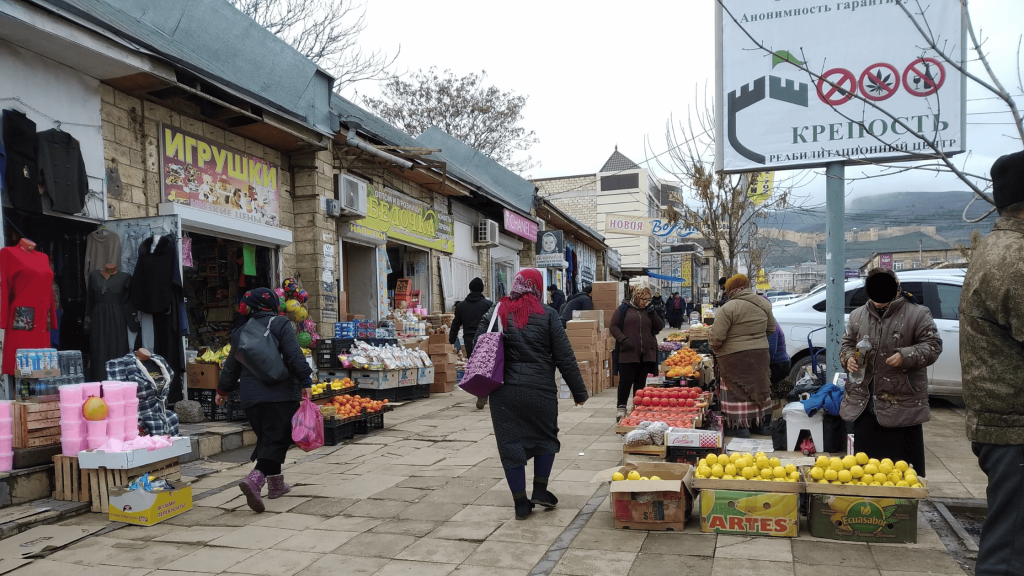 Verkhny Bazar, Derbent market
Accommodation in Dagestan: where to stay
In Makhachkala & Derbent: options for all budgets
In Makhachkala (the capital) and Derbent, you’ll easily find places to stay, from budget hotels to 4-star establishments. Hostels tend to open only in summer, so you might not see them listed on Ostrovok. You can use its international version, Zenhotels, to book and fully pay online with a foreign Visa or Mastercard. If you are browsing from Europe, you will need to use a VPN to see Russian accommodations.
Elsewhere in Dagestan: more limited choices
You’ll find small hotels or guesthouses in towns like:
• Buynaksk
• Gunib
• Kaspiysk, and other larger settlements.
Most of these are listed on Zenhotels, but not all. Try also searching on Yandex Maps, or simply ask around once you arrive.
Anecdote : In one small town, I asked the receptionist for a discount, because the room was overpriced for what it was (and the hallway smelled strongly of gas…). She called the owner, who, upon hearing I was French, simply said: “Then she stays for free!” I insisted on paying at least a little bit… but he wouldn’t hear of it.
Staying with locals: the real Dagestan
Hospitality is sacred here. If you can’t find a hotel or guesthouse, just ask around.
If you’re a man, you can ask to sleep at the village mosque.
And if you’re a woman traveling solo, don’t worry. You won’t be left to sleep outside.
I’ve stayed in many homes across Dagestan, completely spontaneously: a guy calls his mother, who calls her sister, who calls a neighbor… and just like that, there’s a room, and a host happy to welcome a foreign girl.
I was always received with incredible, disarming generosity.
A few personal recommendations
• Hotel Arbat, Derbent
A small, well-located hotel right in the center of Derbent. Very clean and run by lovely women. (Avoid the restaurant downstairs, though.)
• Etnohostel, Derbent
A small hostel in the old town, beautifully decorated with Dagestani antiques. There’s a shared kitchen and outdoor table, very pleasant and affordable. When I visited, it was only open during the summer.
• Gostinichnyy Complex Samour, Akhty
This riverside hotel-restaurant complex is located near Akhty, with scenic balcony views. The woman who runs it is very kind. The first time I stayed, I had no booking; the second time, I just called ahead.
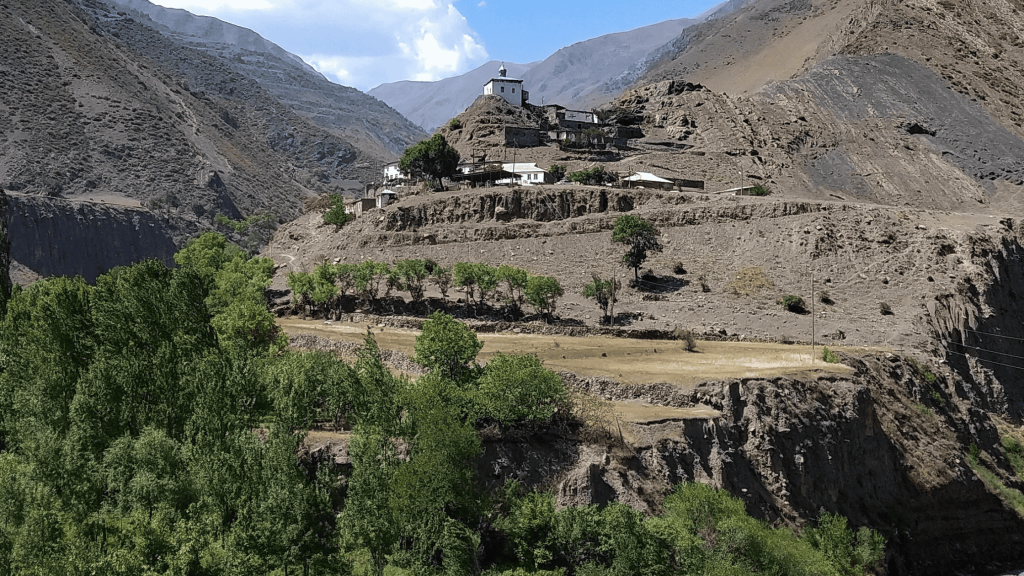 Midjakh
Do you need a permit to visit certain areas of Dagestan?
Some parts of southern Dagestan, particularly near the borders with Azerbaijan and Georgia, are designated border zones. These are security areas established by the FSB (Russia’s Federal Security Service) and require a special permit to visit.
It’s not always clear where the border zone actually begins, there are often no signs or checkpoints. Based on my research and conversations with locals, here’s what I’ve gathered:
• A permit is officially required past the village of Mishlesh (Мишлеш) in the Samur Valley.
• A permit is also required for travel beyond Akhty toward the village of Smugul (Смугул).
• The village of Kurush (Куруш), the highest village in Europe at 2 560 meters altitude – is in the border zone.
While there were no soldiers or visible checkpoints when I visited, the permit is still officially required.
• The road to Nizhniy Katrukh (Нижний Катрух) is accessible without a permit.
You need to apply for the permit at the FSB office in Kaspiysk, just south of Makhachkala.
📍 It’s located on Pogranichnaya Street (which literally means “Border Street”).
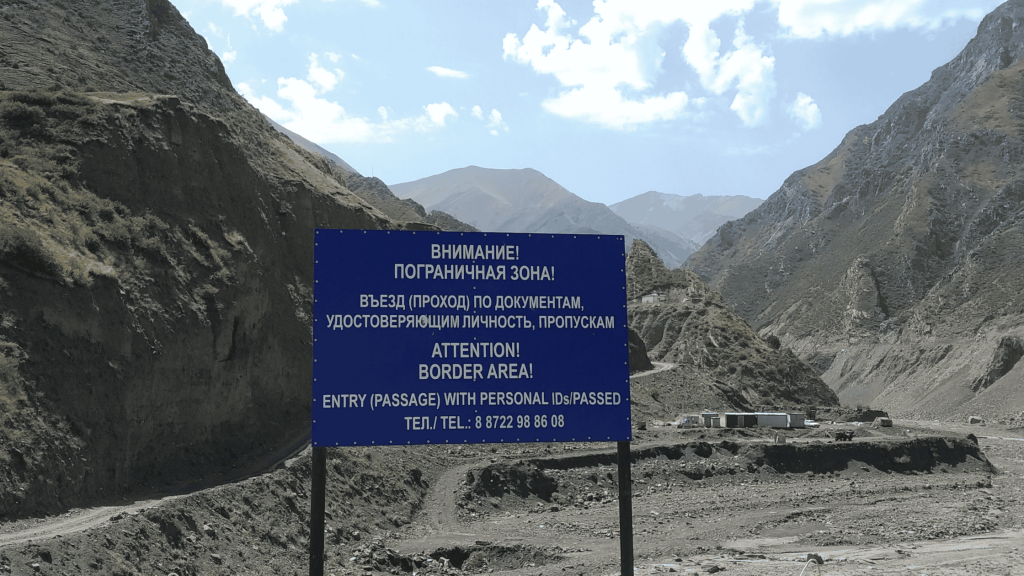
Tip: When I visited, the office was closed for lunch around midday. There’s a stolovaya (canteen) on the corner of Primorskaya Street where you can grab a bite surrounded by soldiers and FSB guys. (I only realized where I was when it came time to pay.)
📍 More practical info on how to apply for the permit here.
Important note: Some villages visible from the Samur River road are located on the Azerbaijani side of the border. These are strictly reserved for local residents. Even with an Azerbaijani visa and a Russian border permit, it’s not possible to visit them from Dagestan. Access is tightly controlled.
I’ve created a complete step-by-step guide to help you apply on your own (including a translation of the official form and a ready-to-send email template).
Get the guide for free by signing up below:
Top 10 places to visit in Dagestan
1. Derbent: The oldest city in Russia and a UNESCO World Heritage Site, Derbent is famous for its Sassanid-era fortress walls and the majestic Naryn-Kala citadel overlooking the Caspian Sea.
2. Sulaksky Canyon: One of the deepest canyons in Europe, with dramatic cliffs and stunning turquoise waters. It’s breathtaking whether you admire it from the top or explore it from the bottom.
3. Gamsutl’: An abandoned village perched on a narrow mountain ridge. It’s one of the most iconic (and famous among tourists) auls in the region.
4. Gunib: A historic mountain village known as the last stronghold of Imam Shamil, leader of the 19th century Caucasian resistance. Surrounded by magnificent landscapes.
5. Kubachi: A traditional artisan village famed for its silversmiths and engravers, with stone houses and narrow alleyways steeped in history.
6. Khunzakh Canyon: A tall canyon crowned by the spectacular Tobot Waterfall, especially dramatic in spring and early summer.
7. Lake Kezenoy-Am: Straddling the border with Chechnya, this alpine lake at 1 800 meters altitude offers postcard-worthy turquoise waters and peaceful surroundings.
8. Goor and Kakhib: Two ancient fortified mountain villages, known for their stone watchtowers clinging to sheer cliffs, reminiscent of medieval times.
9. Akhty: A charming village with natural hot springs, stone bridges, and lush river valleys. A perfect place to relax and take in Dagestan’s therapeutic side.
10. Kurush: Officially the highest permanently inhabited village in Europe at 2 560 meters, Kurush offers breathtaking 360° views over the Caucasus range.
 Chokh
Chokh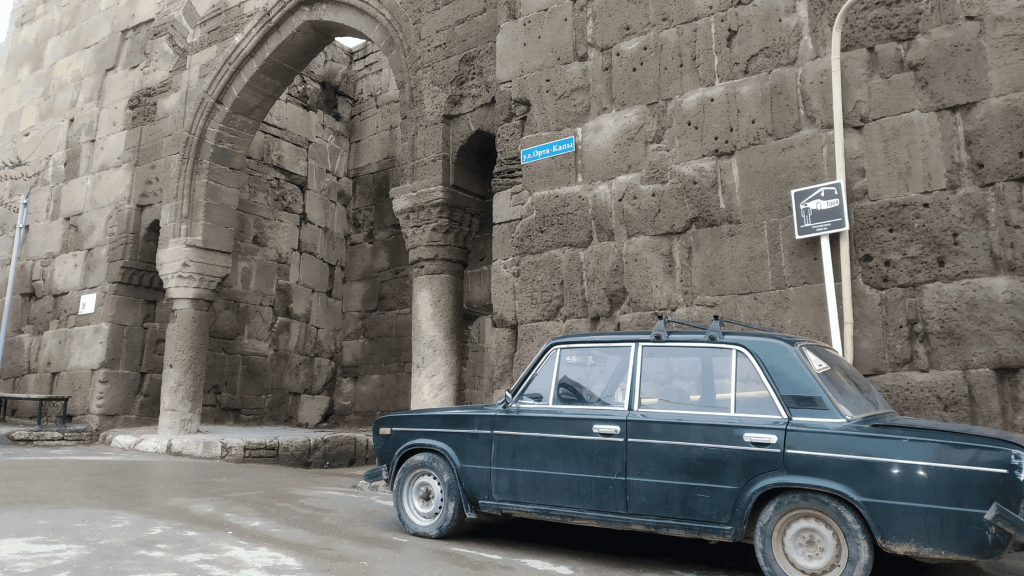 Derbent’s citadel
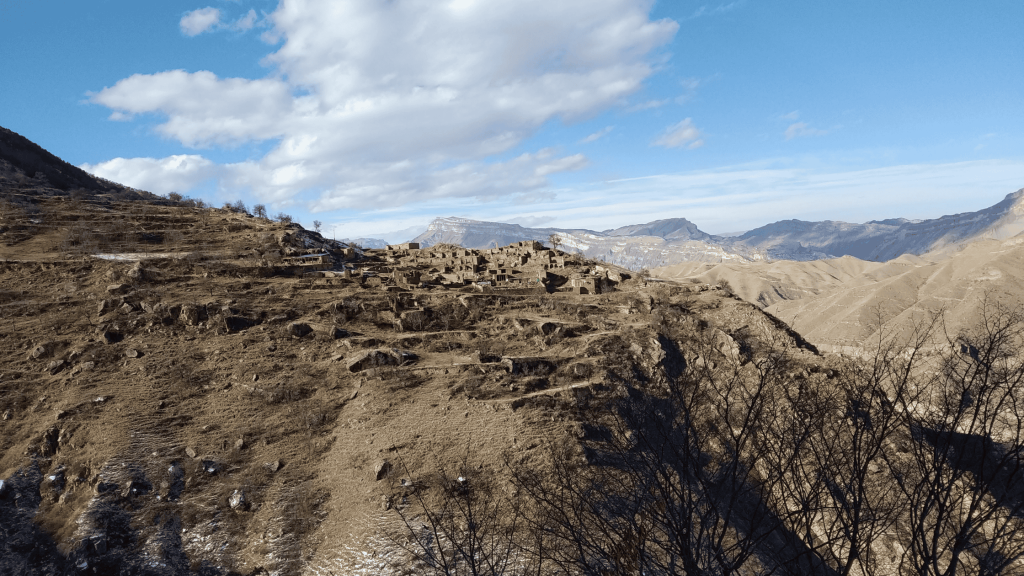 Gamsutl’
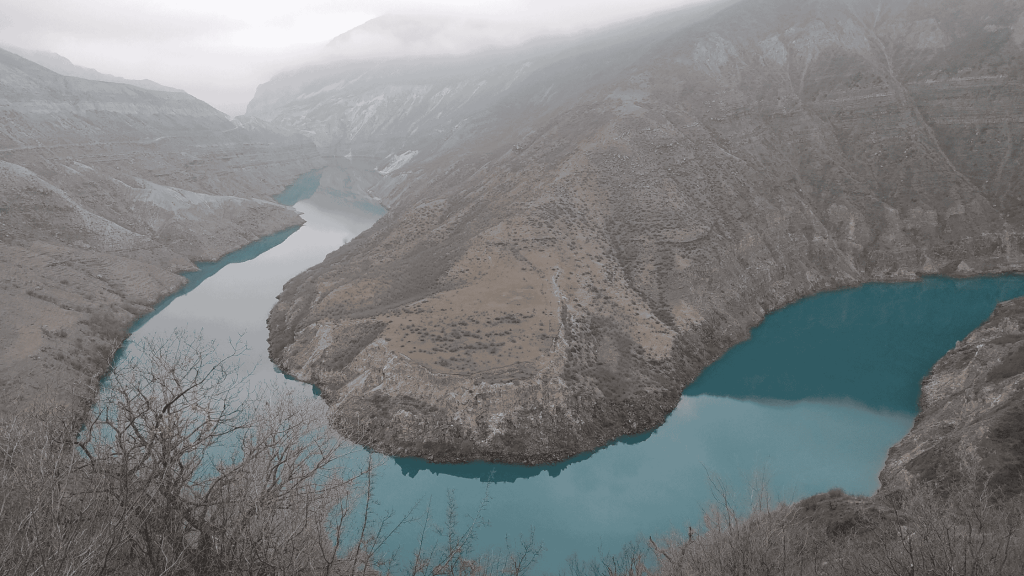 Sulaksky Canyon
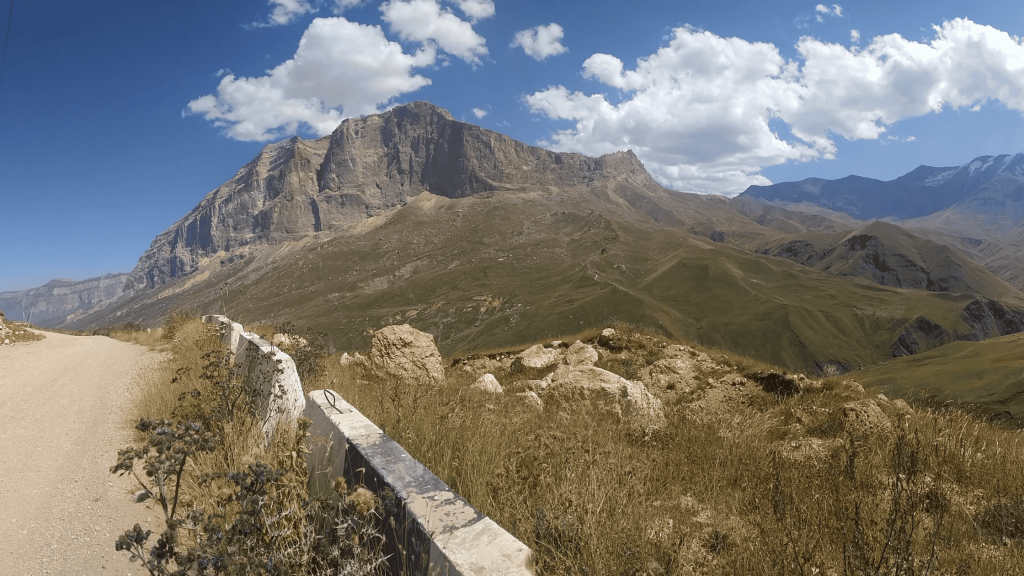 Mount Shalbuzdag
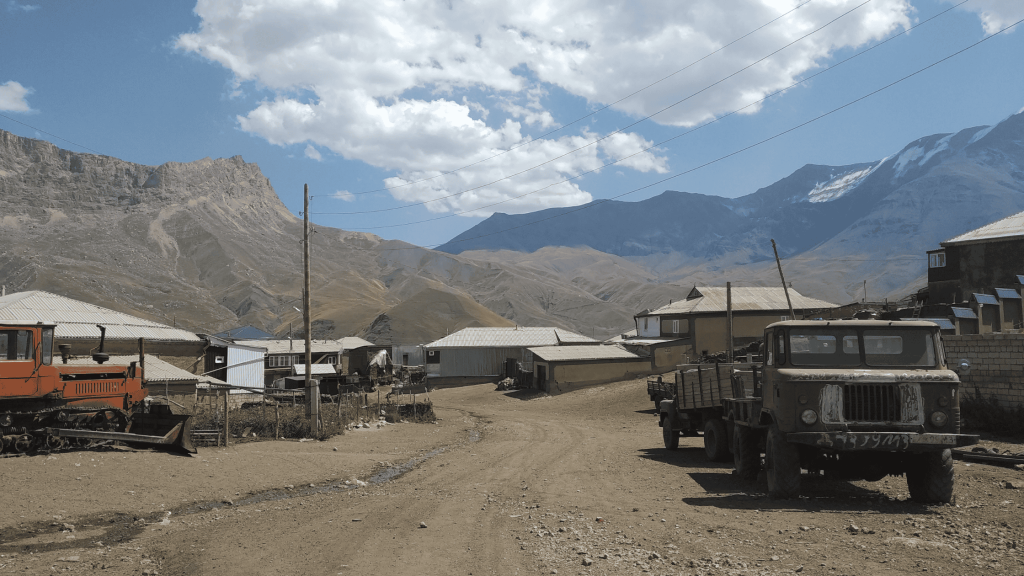 Kurush
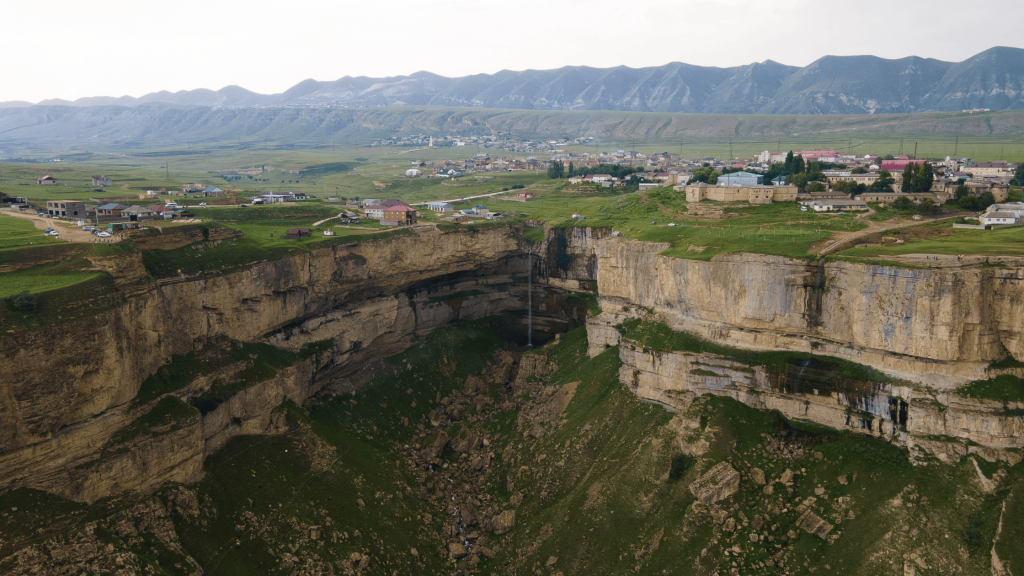 Tobot waterfall in Khunakh
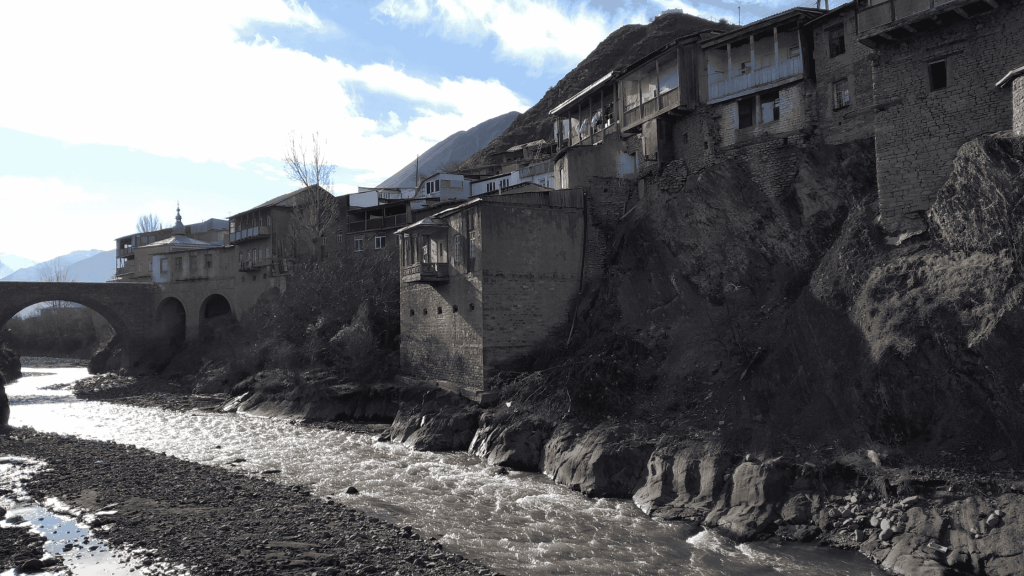 Akhty
Akhty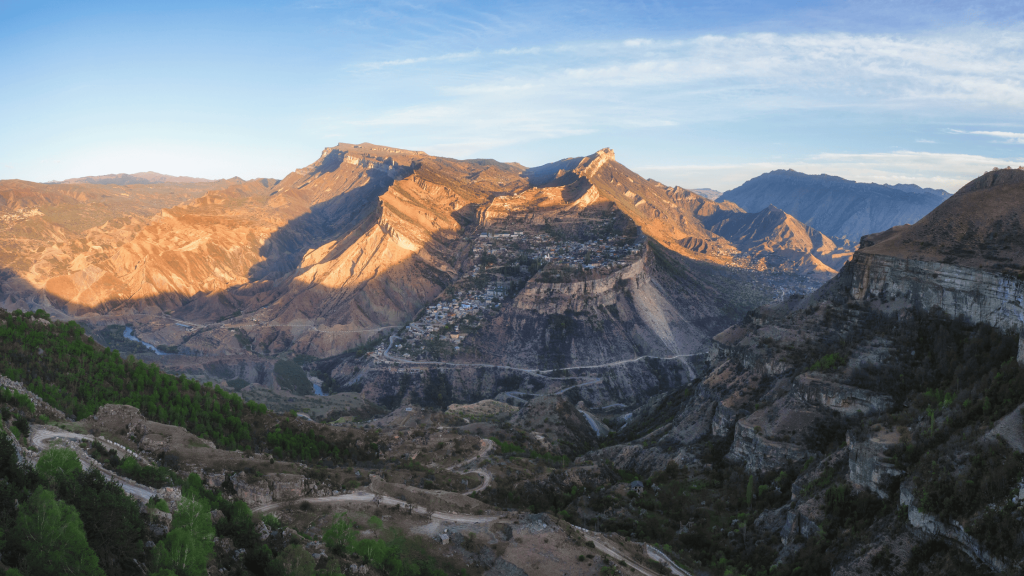 Gunib
Gunib
Hospitality in Dagestan: a beautiful tradition, but don’t take advantage
Dagestan has become one of the most-read destinations on this blog, and while I don’t pretend to be an influencer, I do feel a responsibility toward those who welcomed me with open arms.
The people of Dagestan show a level of hospitality that can feel almost disarming. I was offered tea and full meals without a word exchanged. Hotel owners refused payment simply because I was a foreign guest. Women said to me: “Stay for a week, stay for a month, you’re at home here.”
It’s heartfelt. It’s generous. But it’s also important to remember that Dagestan is one of the poorest regions in Russia. This makes it all the more essential not to take advantage of this hospitality, even unintentionally.
This generosity isn’t for show, it’s part of an ancient code of honor. In traditional Dagestani culture, anyone who knocks on your door seeking refuge becomes your responsibility as a host, even if they’re your enemy (yes). It’s a concept that might feel unimaginable to many of us in the West.
So by all means, accept the kindness, but do so with respect, gratitude, and a willingness to give back, even in small, symbolic ways.
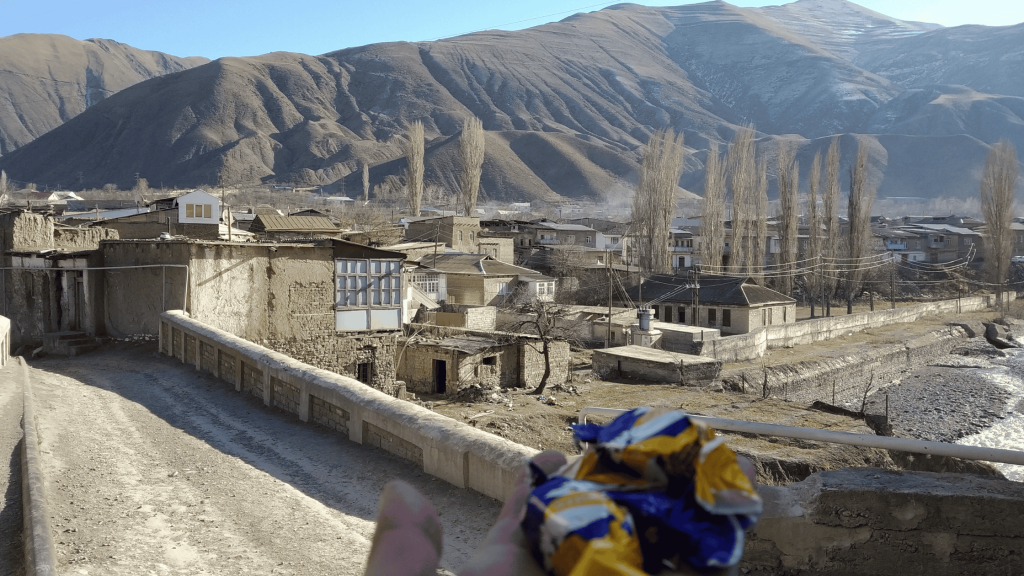 Sweets gifted by Lezgin babushkas
FAQ – Traveling to Dagestan in 2026
Recommended reading & resources
• Hadji Murat by Leon Tolstoy
• The moutain & the wall & Bride and groom by Alisa Ganieva, an Avar woman who received litterature prices and the first Dagestani writter ever translated into English
• Caucasus : Mountain men & holy wars by Nicholas Griffin
• Veiled and unveiled in Chechnya & Dagestan by Iwona Kaliszewska & Maciej Falkowski
• Famous Youtuber Bald and bankrupt has a few videos of Dagestan
• British photographer Luke Duggleby has also been there
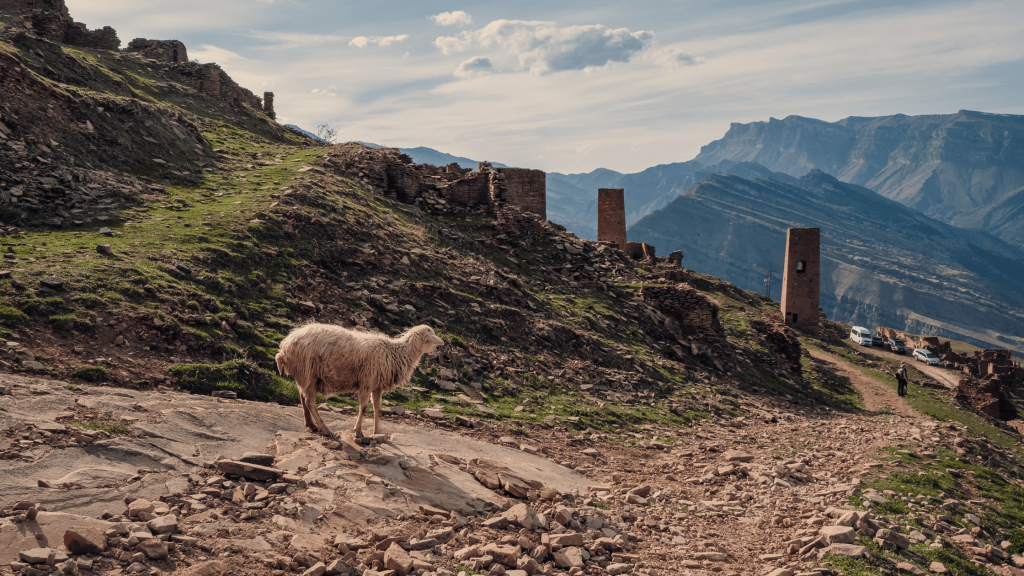 Goor
Goor
Dagestan is a world in itself. A patchwork of peoples, languages, and remote valleys where every village feels different. It’s one of the last places in Eurasia where you can still feel what travel used to mean: getting lost, being invited in, hearing stories no book has ever told.
Dagestan reminded me of Gorno-Badakhshan in the Tajik Pamir: raw and deeply endearing.
In short, it’s my favorite region in Russia.
Wishing you a beautiful journey to the land of mountains (Dag = mountain, Stan = land) !
What if you joined me in the North Caucasus?
I’m considering organizing a small-group trip (6 to 8 people, max 10) to discover the North Caucasus, between historic villages, mountain landscapes, and the culture and local cuisine of the region’s different republics.
If this project interests you, I’ve prepared a short, non-binding form to assess interest in this idea (and there are already a few people interested!).
Discover the project
Local guides or partners interested in collaborating are welcome to get in touch.
📌 Also worth reading about Dagestan
• 15 must-visit places in Dagestan
• Dagestan travel itinerary: Best places to visit across the republic
• How to cross the Russia – Azerbaijan border