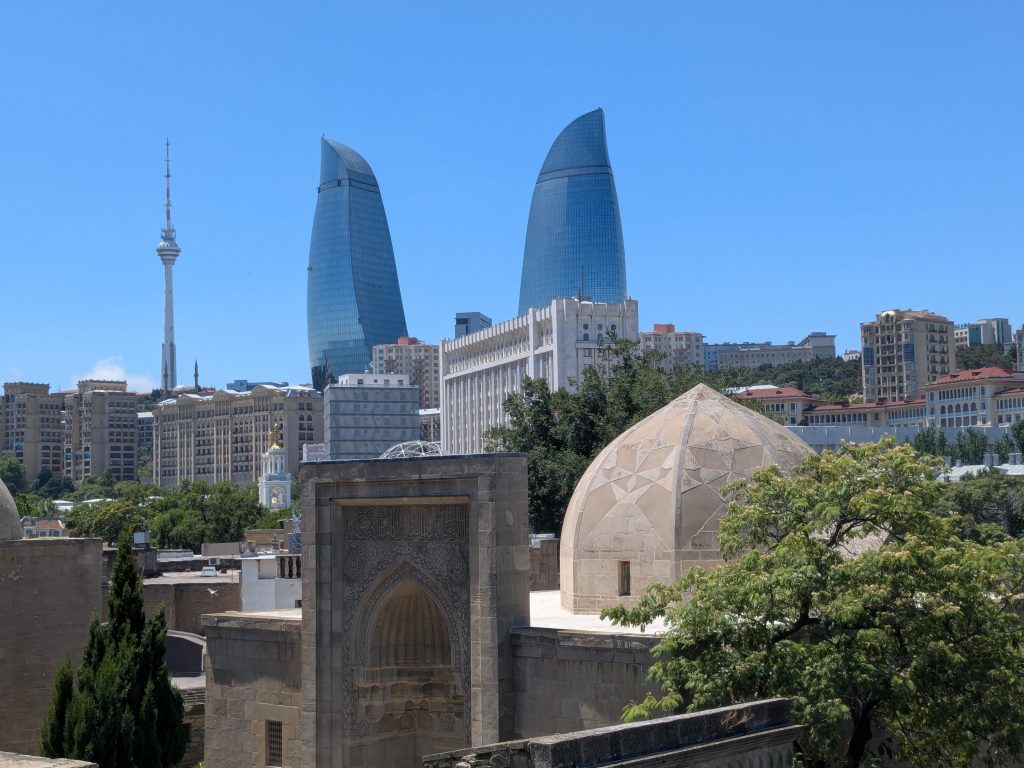
Baku wasn’t originally part of my plans for this trip. I was supposed to head straight to Nakhchivan, Azerbaijan’s isolated exclave between Armenia, Iran and Turkey, but I found myself unable to book a last-minute flight (my own fault, really). So I decided to take the opportunity to rediscover a city I had already visited several times before the pandemic, drink çay from an armudu glass and eat delicious pomidor yumurta, sitting in the shady streets of Icherisheher.
Often reduced to its futuristic skyline and its Flame Towers, Baku is a city of contrasts: oil-boom mansions stand alongside a UNESCO-listed Old City, centuries-old traditions coexist with modern developments, and beyond the well-known landmarks lie museums, neighbourhoods and local food experiences that many visitors overlook.
During this short stay, I explored Baku independently, used public transport, tested different accommodations (again because of last-minute plans), revisited familiar places and discovered new addresses.
In this guide, I’ll share how to spend three days in Baku, including what to see, where to stay, what and where to eat, how to get around and the places that made the strongest impression on me.
Azerbaijan – the land of fire and black gold – is by far my favourite country in the South Caucasus. Its cuisine carries Persian influences, yet its soul feels deeply Caucasian. This love for the country is precisely why I wanted to share a detailed guide to its capital. I found many existing posts on Baku surprisingly shallow, and I hope this one helps you plan your own journey to this still little-known destination.
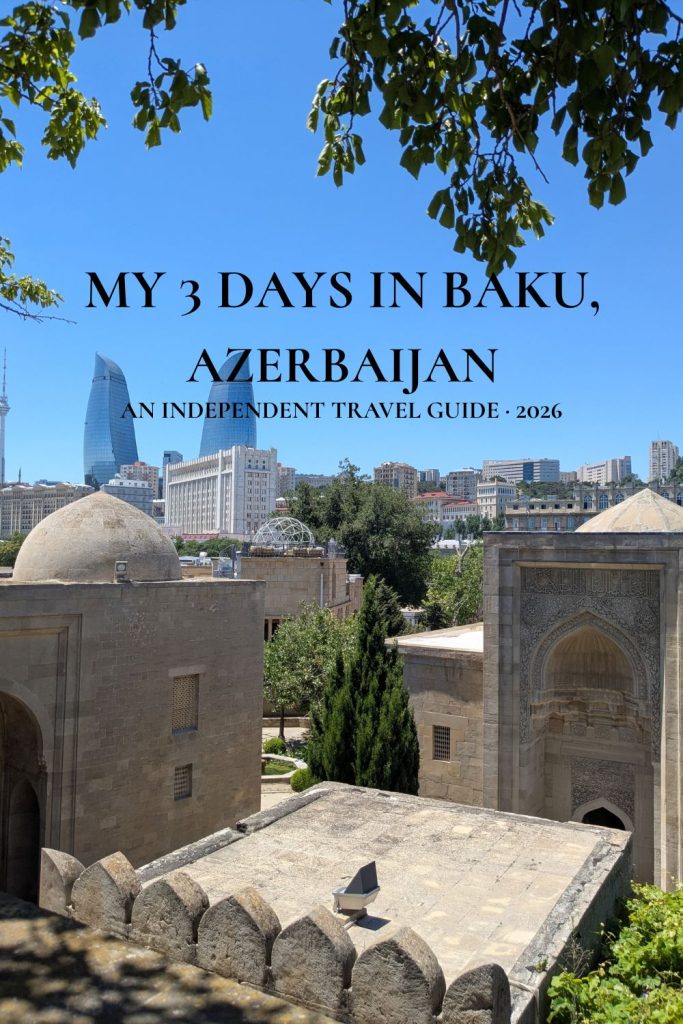
Is Baku worth visiting in 2026?
Absolutely, and not just as a quick stopover on the way to somewhere else.
Despite being the largest city in the South Caucasus, Baku is still often overlooked in favour of better-known destinations like Tbilisi and Yerevan. For some, Azerbaijan simply isn’t on their radar, others spend only a night or two before continuing across the Caspian Sea towards Kazakhstan and Central Asia.
I think that’s a shame. Every time I return, I find another reason to stay a little longer.
Having visited Baku several times over the years, I’ve come to appreciate just how much the city has to offer beyond its most famous landmarks. One moment you’re eating one of the best breakfasts in the Caucasus on one of the lively pedestrian streets just off Nizami Street, the next you’re wandering through the narrow alleys of Icherisheher, before joining locals along the Caspian waterfront at sunset.
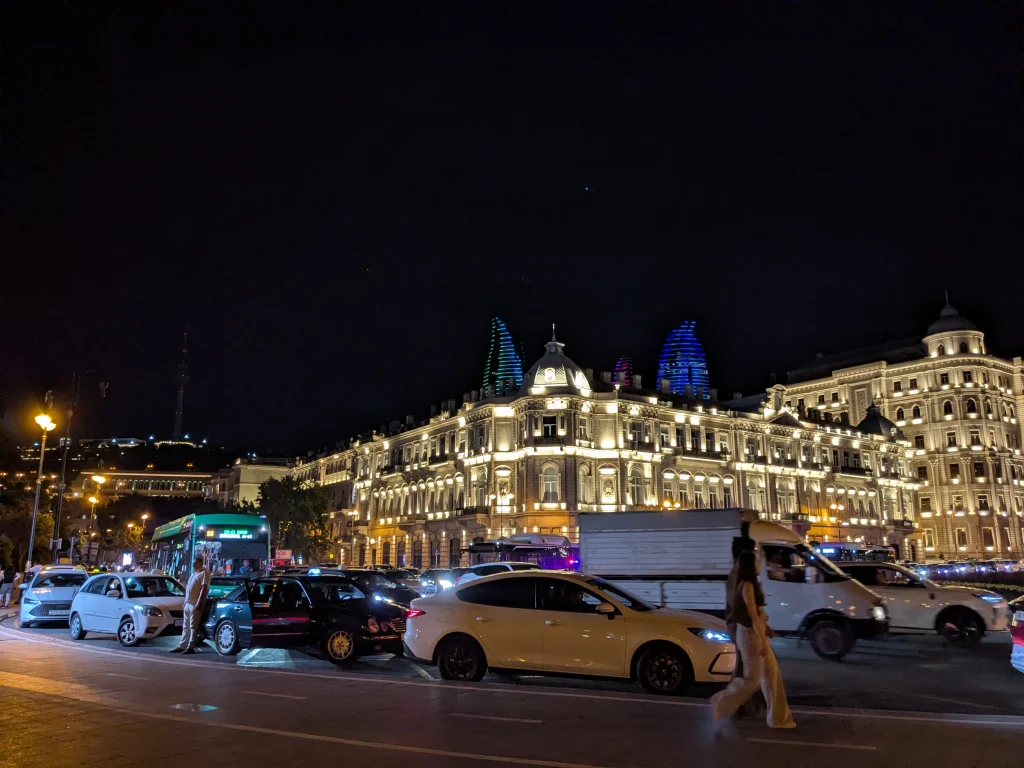
Baku is also a remarkably easy city to explore independently. Public transport is inexpensive and efficient, many of the main sights are within walking distance of one another, and I found it to be one of the safest capitals I’ve travelled to. It’s also one of the cleanest cities I’ve visited, with well-maintained parks and wide pedestrian streets.
While you could tick off the main attractions in a day or two, I think Baku deserves at least three days. That gives you enough time to explore at a slower pace, visit some of its museums, discover its food scene, venture out to places like the Atashgah Fire Temple, and simply enjoy the atmosphere of a city that feels unlike anywhere else in the region.
If you’re planning a trip to Azerbaijan, don’t make the mistake of treating Baku as nothing more than a gateway. Give it the time it deserves, and I suspect you’ll leave wondering why more people don’t talk about it.
Baku at a glance
If you’re short on time, here’s what you need to know before visiting Baku.
|
Quick facts |
|
|
Time needed |
At least 3 days |
|
Best time to visit |
Late spring (May-June) and early autumn (September-October) |
|
Currency |
Azerbaijani manat (AZN) 1€ = 1,96₼ |
|
Language |
Azerbaijani (English and Russian are also widely understood) |
|
Cards |
Visa and Mastercard are widely accepted |
|
Safety |
One of the safest capitals I’ve travelled to |
|
Solo travel |
Excellent (except for some dishes in restaurants meant for multiple people), including for solo female travellers |
|
Getting around |
Metro, buses and Bolt taxis are inexpensive and easy to use |
How to get around Baku using public transport
Getting around Baku is surprisingly easy and inexpensive. During my stay, I relied entirely on public transport and walking. Whether you’re exploring the Old City, heading to the airport or visiting the Atashgah Fire Temple, you can reach most places without joining a tour.
Baku Metro
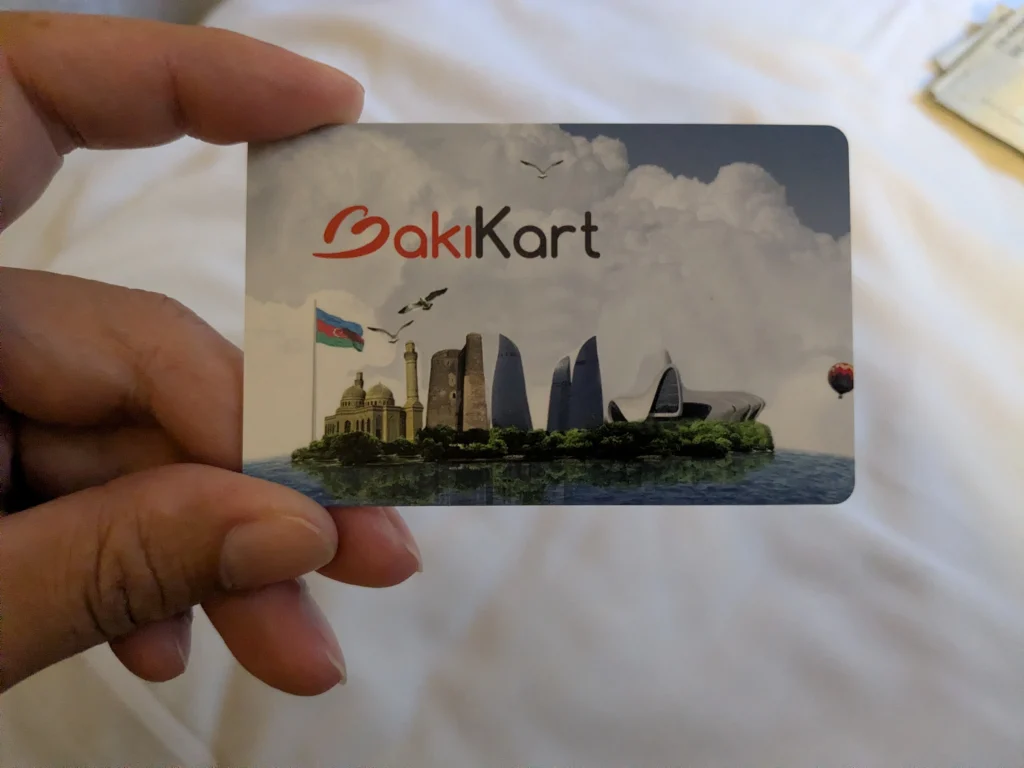
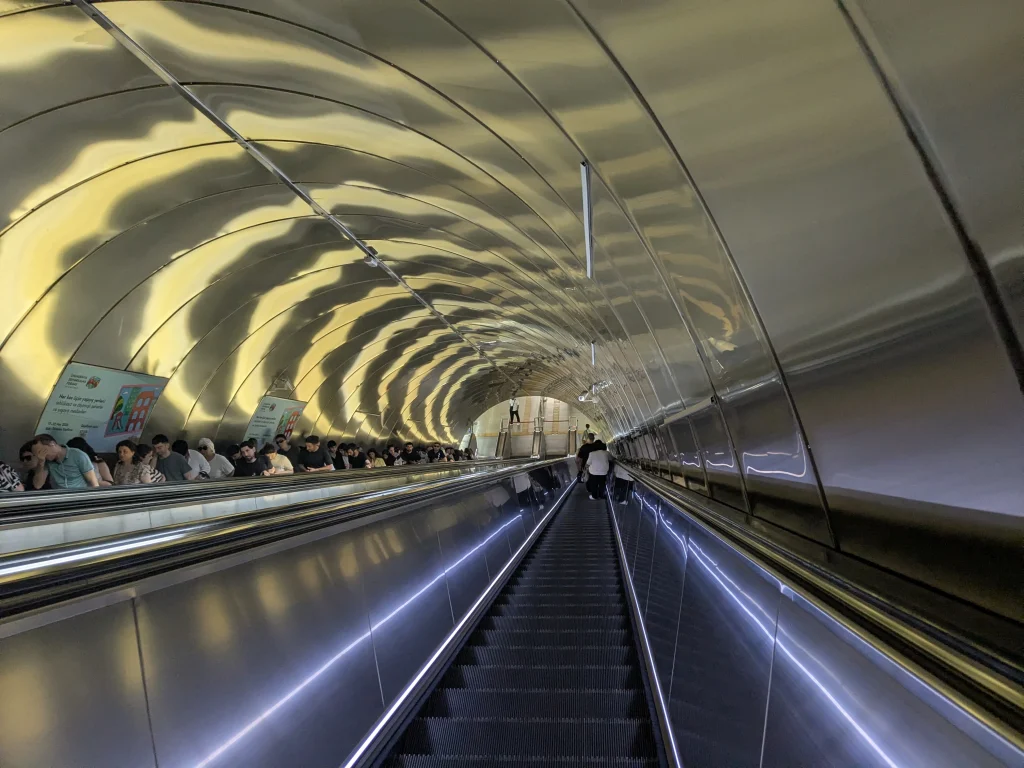
Baku’s metro is clean, efficient and one of the easiest ways to get around the city. Trains run frequently, stations are easy to navigate and announcements are made in both Azerbaijani and English. To use the metro, you’ll need a BakıKart, which costs 3 AZN. A single journey costs 0.50 AZN, making it one of the cheapest ways to travel around the capital.
Buses
Baku’s bus network complements the metro and reaches many places that trains don’t, including Bibi-Heybat Mosque or places on the Absheron Peninsula. Most journeys within the city cost between 0.50 and 0.90 AZN, depending on the route, and the same BakıKart can be used on both buses and the metro.
I found Yandex Maps to be the most reliable app for planning journeys, with accurate routes, bus numbers and departure times.
Airport bus
If you’re arriving at or departing from Heydar Aliyev International Airport, the Aero Express bus is an inexpensive, reliable and the only public transport option reaching the city. There’s no train or metro to/from Baku airport.
It runs 24/7 between the airport and the city centre throughout the day and night (every 20 minutes during the day, every 45 minutes overnight), stopping next to the main railway station at 28 May and leaving from bus Stop D opposite Baku Railway Station. The ride takes about 30 minutes if there’s no traffic, and it costs just 1.30 AZN. You can buy a BakıKart inside the airport, the bus driver doesn’t accept cash.
One thing worth mentioning for female travellers: My flight to Nakhchivan left very early in the morning, so I caught the airport bus at around 3:45 AM. I walked about 20 minutes from my hotel to the bus stop at 3:30 AM. and felt perfectly safe. The main streets were well lit, I passed several security guards, and although there were very few people around, I never felt uncomfortable.
Taxis & Bolt
If public transport doesn’t suit your plans, you can use taxis. The default taxi App in Azerbaijan is Bolt. Fares are generally inexpensive, the App is easy to use and it’s a convenient option for journeys outside the city centre.
Is Baku safe for solo female travellers?
In my experience, Baku is one of the safest capitals I’ve travelled to as a solo female tourist. I walked around alone during the day, returned late in the evening, used public transport, and never felt uncomfortable.
It’s also a city where you can walk around with your phone in the back pocket of your jeans, or leave your handbag on the table at a restaurant while you use the bathroom without worrying about it.
Of course, normal precautions apply anywhere, but overall, I consider Baku an excellent destination for women travelling alone. It is easy to navigate, welcoming and a place where independent travellers can explore comfortably.
Note: Azerbaijan being a former Soviet country and a secular one, you could encounter some drunk men, and as anywhere else in the world, they can overstep the line. Feel free to ask the men around to help you get rid of them, 100% sure they will help.
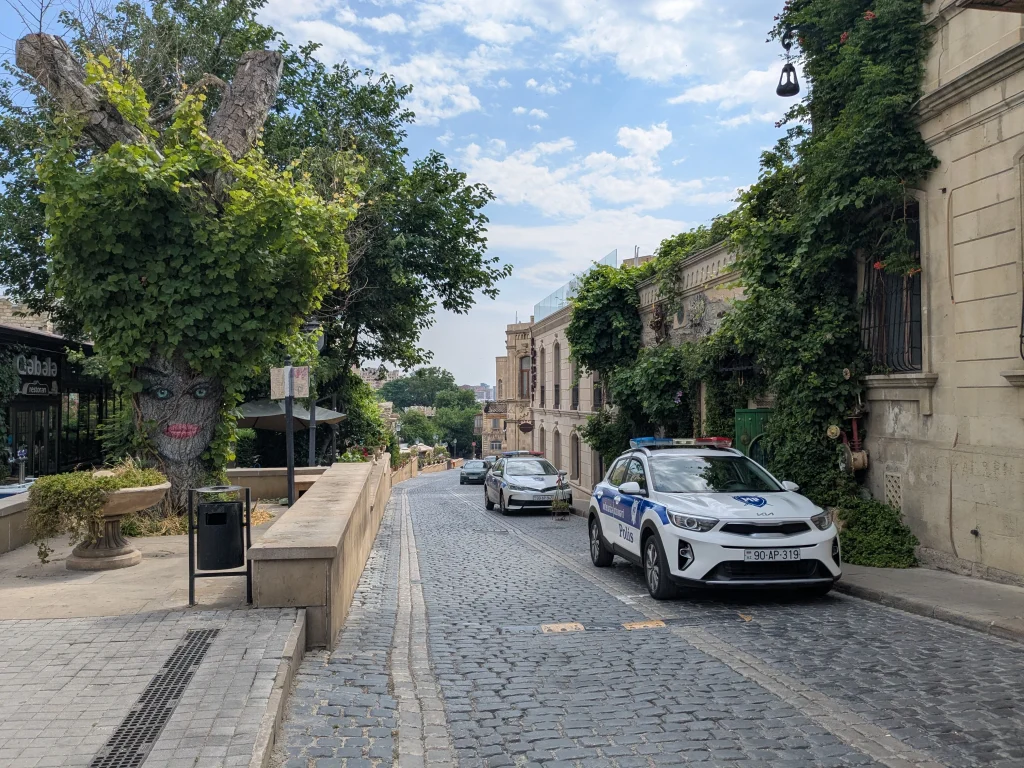
Where to stay in Baku: honest reviews after testing 4 accommodations
During this trip, I tested four different accommodations in Baku, from a budget hostel to a more comfortable hotel in the Old City. Each one suited a different type of traveller, so here are my honest impressions.
Best value for service: Dastan / Qala Old City Hotel
(Note: the hotel is currently changing its name, so check the current listing.)
This was the accommodation that surprised me the most during my stay in Baku. Located right inside the Old City, the Dastan / Qala Old City Hotel is perfectly positioned for exploring Icherisheher on foot, with many restaurants, cafés and major sights just minutes away.
I initially booked it last-minute because my first accommodation was simply awful. The experience quickly turned into one of the highlights of my stay. I arrived early with my bag and the manager, Edwin, who was exceptionally welcoming, offered me breakfast, coffee and even a glass of pomegranate wine.
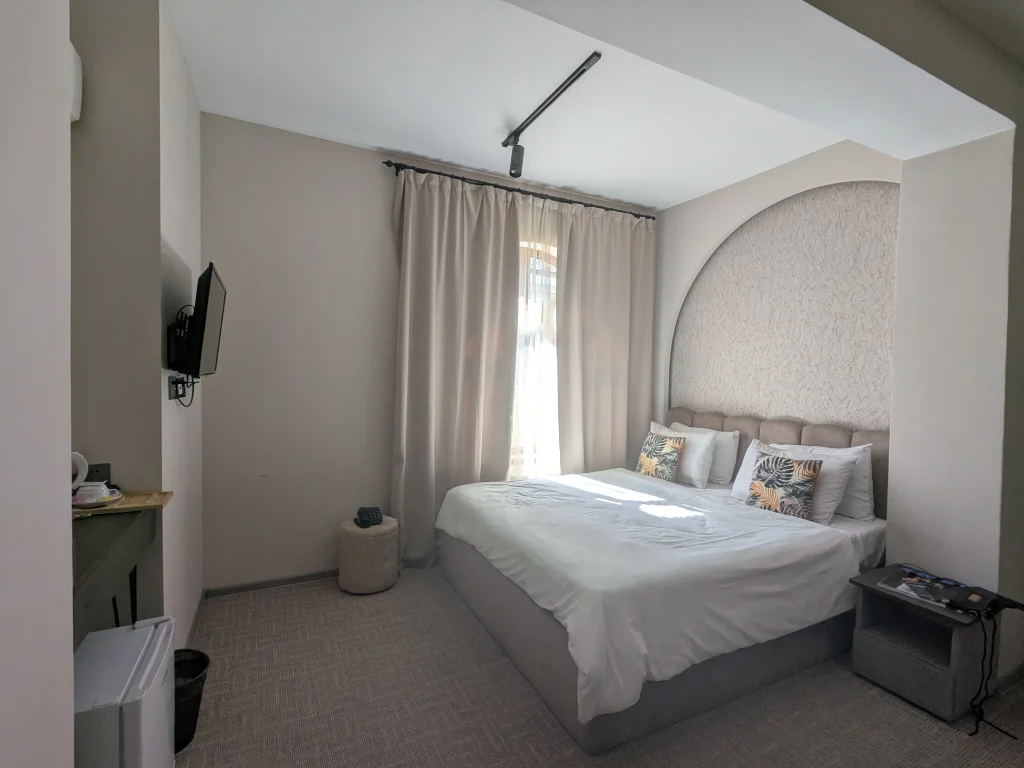
Small personal touches like this make a huge difference when travelling, and this is exactly the kind of hospitality I highly appreciate.
I paid 57 AZN thanks to an online discount, which made it excellent value for the location and service. If you are looking for a comfortable, well-located place in Baku’s historic centre without spending a fortune, Dastan / Qala Old City Hotel is my top recommendation.
Great location near Nizami Street: Eleven Hotel
If you’re looking for a comfortable and well-located hotel in central Baku, Eleven Hotel is a great option. Located close to Nizami Street, it puts you within walking distance of many cafés, restaurants and some of the city’s liveliest pedestrian streets.
I stayed in an economy room, which cost 70 AZN including breakfast. The room was very clean, comfortable and perfectly suited for a solo traveller or a short city break.
Also, the staff was lovely. The receptionist, Ali, was very friendly, and the lady serving breakfast was too. She even spoke some English. For travellers who want a great value for service in a very convenient location in my opinion, Eleven Hotel is a solid choice.
Best budget option: Travel Inn Hostel
If you’re travelling to Baku on a budget, Travel Inn Hostel is a great option. I stayed in a female dorm and paid 31 AZN for two nights with an online discount.
The hostel is very centrally located, within walking distance of many of Baku’s main attractions and 2 minutes’ walk from Sahil metro station. The facilities were also well thought out for a hostel: the male and female bathrooms are separate, which is something I particularly appreciated and the dorm itself was quiet. I had a comfortable stay.
For budget travellers, backpackers or anyone who simply needs a clean and well-located place to sleep while exploring Baku, Travel Inn Hostel is an excellent choice.
Note: watch out while booking hostels in Baku, some organise pub crawls and these places are usually far from quiet.
Accommodation near the train station: my experience
Because of my last-minute plans, I ended up spending one night in a budget accommodation near Baku Railway Station. While the location is undeniably convenient if you’re arriving very late from the airport, as I did, it’s not the area I would choose for a first visit to Baku, or any visit, really.
Several locals I spoke to were surprised that I had stayed there and recommended avoiding hotels in that area at all costs. After experiencing it myself, I understand why.
I won’t name the place, because the staff was welcoming. However, the facilities were very basic, to say the least and lacked the level of comfort I was looking for to say it nicely (let’s be honnest, I’m just getting old and can’t stand dirty and uncomfortable places anymore).
Instead, I’d recommend staying around Nizami Street. The atmosphere is much more pleasant, you’ll be within walking distance of many of Baku’s main attractions, and it’s only about a 20-minute walk to the railway station if, like me, you arrive late or need to catch the airport bus in the middle of the night and don’t want to pay for a taxi.
I share the behind the scenes of my travels (real-time stories, messy bits etc) on Telegram

How to spend 3 days in Baku: my independent itinerary
Day 1: Exploring Icherisheher and Baku’s historic centre
• Have a traditional Azerbaijani breakfast
Start your first day with breakfast. Unless your hotel provides it, you can easily find restaurants and cafés in the Old Town opening from 9 AM. I highly recommend pomidor yumurta, with fresh tandoor bread and a glass of Azerbaijani çay. It’s a simple but effective breakfast, and one of my favourite ways to start a day in Azerbaijan.
• Walk through Icherisheher: Baku’s UNESCO-listed Old City
From there, spend an hour or two walking around Icherisheher, the historic heart of Baku and, in my opinion, the city’s most charming area.
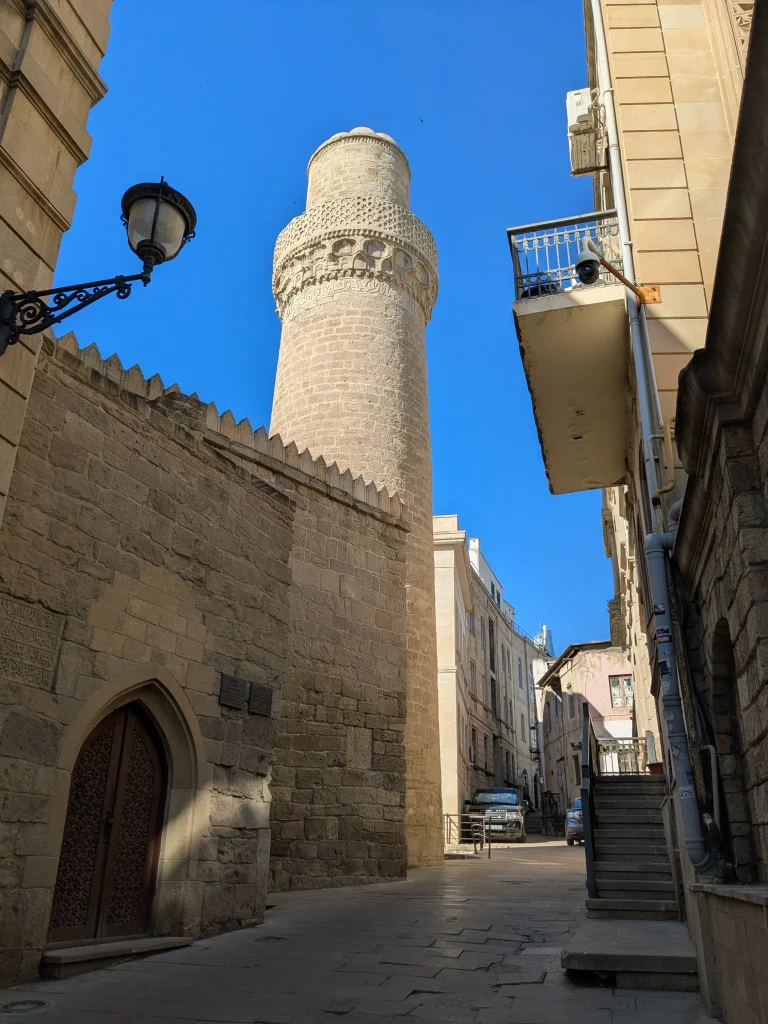
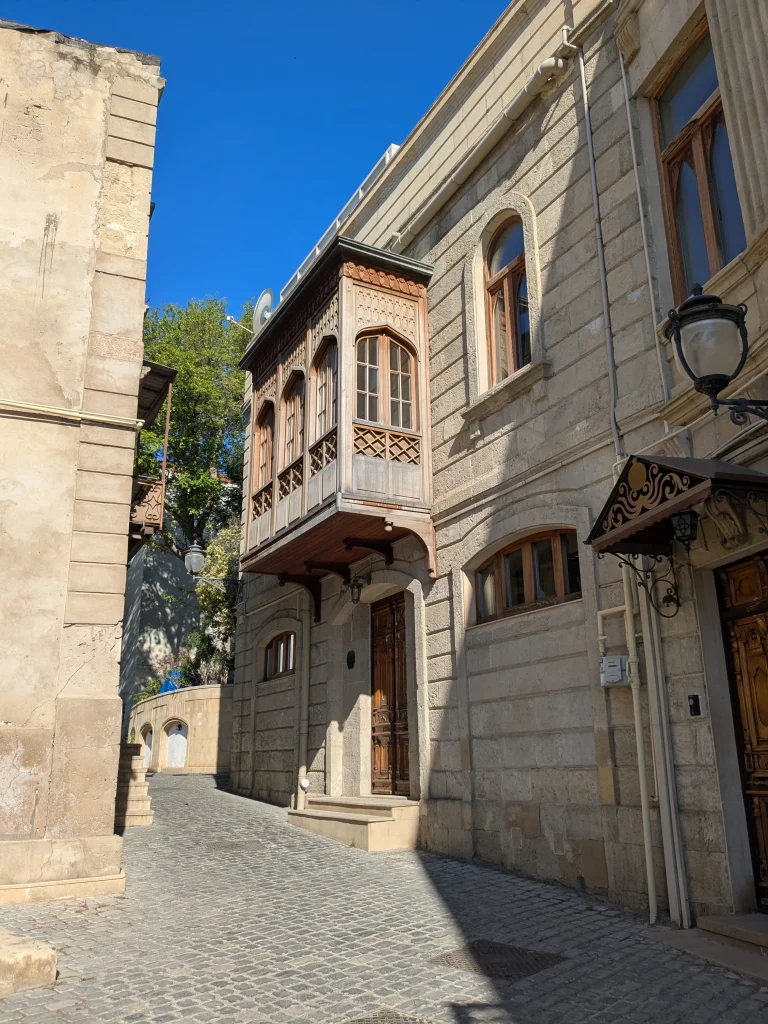
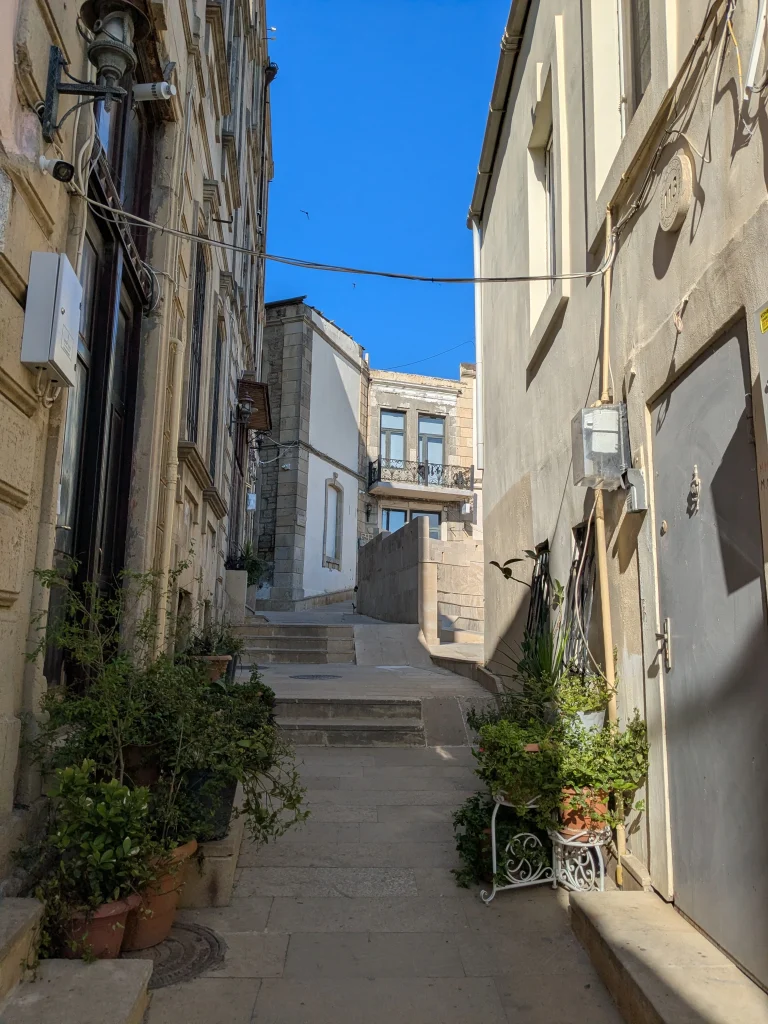
The Old City is compact enough to explore entirely on foot, so I wouldn’t try to rush through it by following a strict list of sights. Take your time wandering through the narrow streets, looking beyond the main tourist routes and into the smaller alleys. You’ll find traditional houses, carpet shops, local craftsmen, old mosques and historic hamams.
I particularly enjoyed getting away from the busiest streets and simply wandering without a destination. I’ve pinned a walking route bellow, following the main sights around Icherisheher.
Start at the Maiden Tower. From there, continue towards the Bukhara and Multan Caravanserais, which stand almost directly opposite one another. Just to the right of the entrance to Bukhara Caravanserai, look out for a small historic bulaq, or spring. There’s a stone pedal on the ground that you can press to make water flow from the spring.
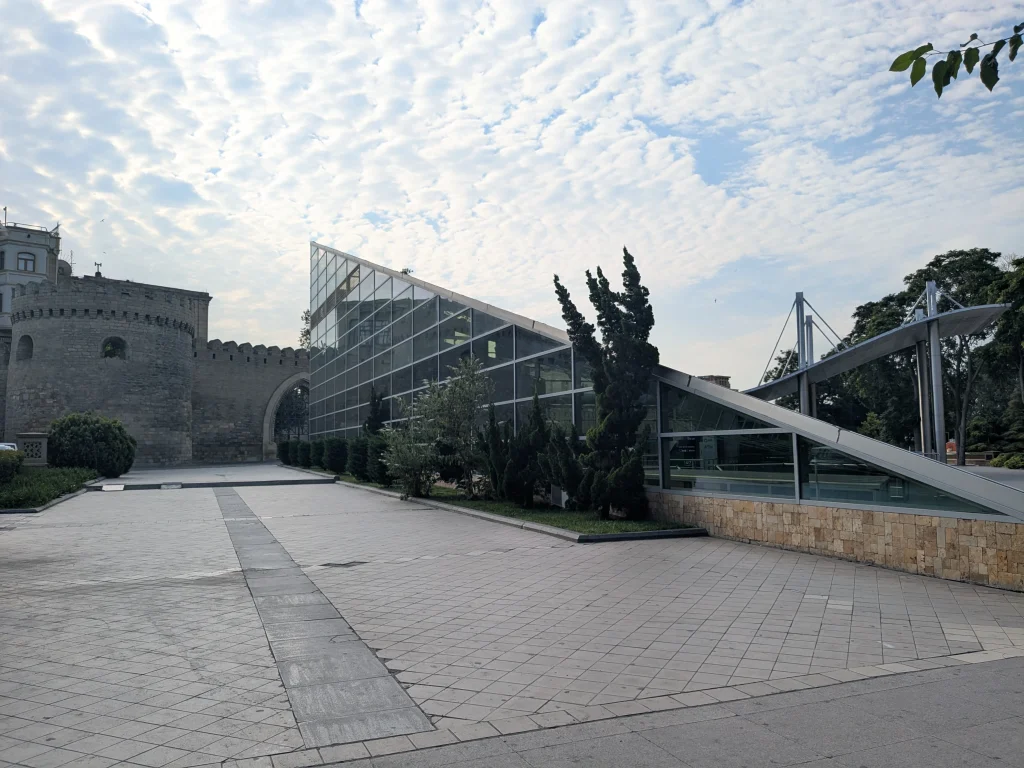
At the junction, take a look at the Khan’s Palace and garden, then continue towards the Double Gates. Turn left here and follow the renovated city walls until you reach the giant statue of Aliagha Vahid, one of Azerbaijan’s best-known poets, standing in front of Tekqala Qapısı Gate.
From here, take the small street uphill towards the Italian Embassy. You’ll pass the Miniature Book Museum before reaching the Palace of the Shirvanshahs.
Continue towards the Beyler Mosque. If it is open, have a look inside; it is no longer used as a regular place of prayer, so it isn’t always open to visitors.
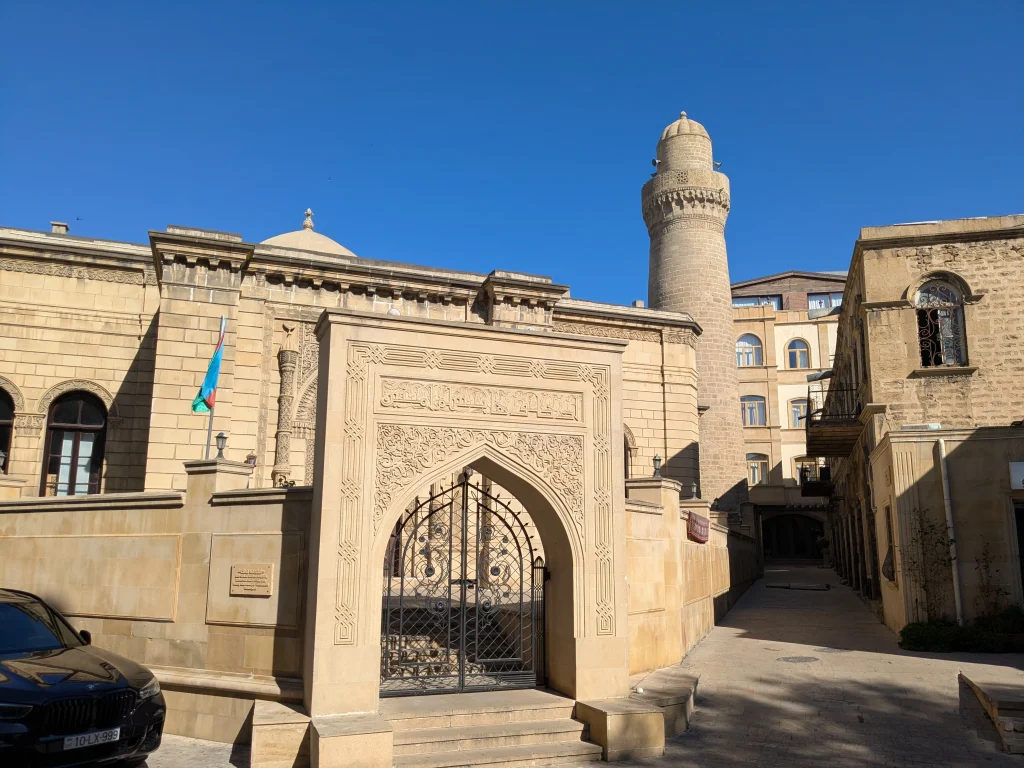
Continue along the main street and turn right at the junction towards the beautiful Muhammad Mosque, which dates back to the 11th century. A little further on you’ll find Juma Mosque.
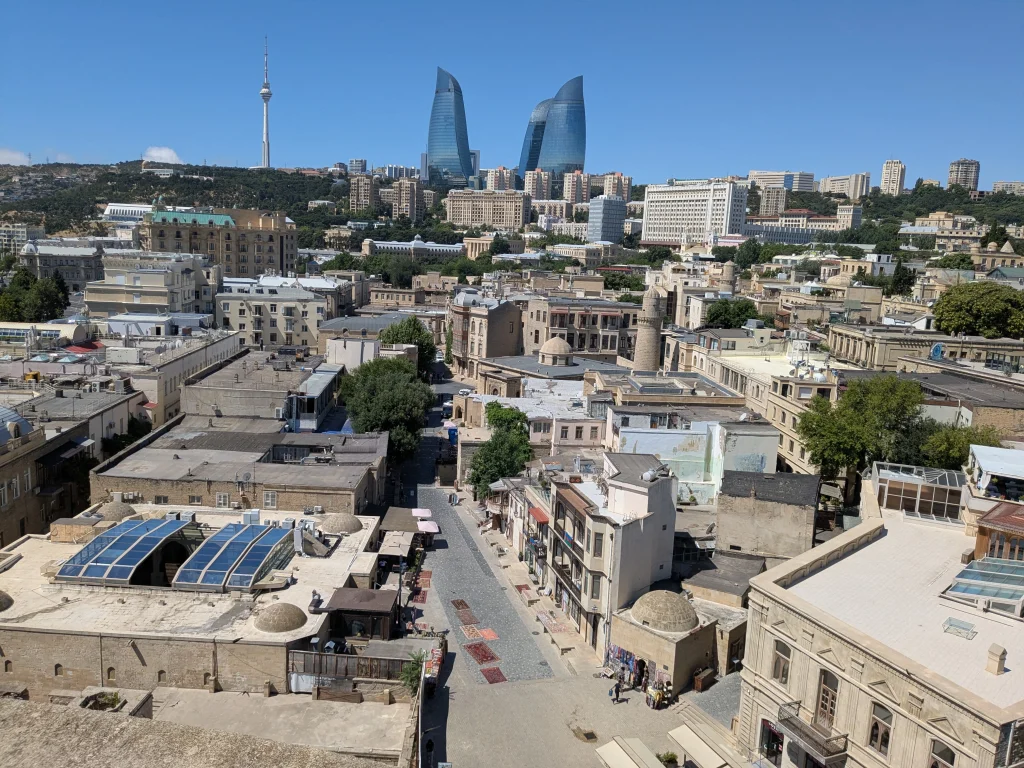
From here, you can either keep wandering through Icherisheher’s tiny streets or make your way back towards the Maiden Tower and Tea Garden 145, where you can stop for a çay and sit among the domes of the historic Banu Baths.
Of course, there are plenty of other places to visit beyond the main sights included in this route, such as the Ali Shamsi Workshop, Agha Mikayil Hammam, the Two-story Caravanserai etc.
A note on accessibility: while the historic streets of Icherisheher are paved and relatively easy to navigate, some are narrow, uneven, cobblestone-paved and full of steps. They are not particularly accessible for wheelchair users or people with reduced mobility.
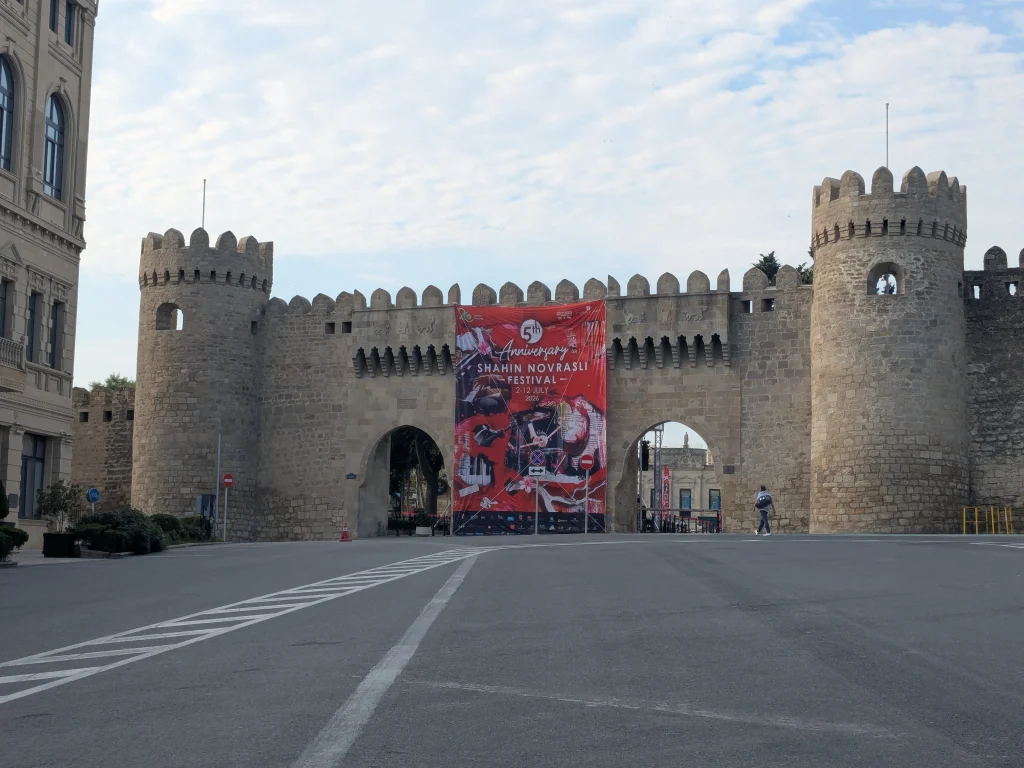
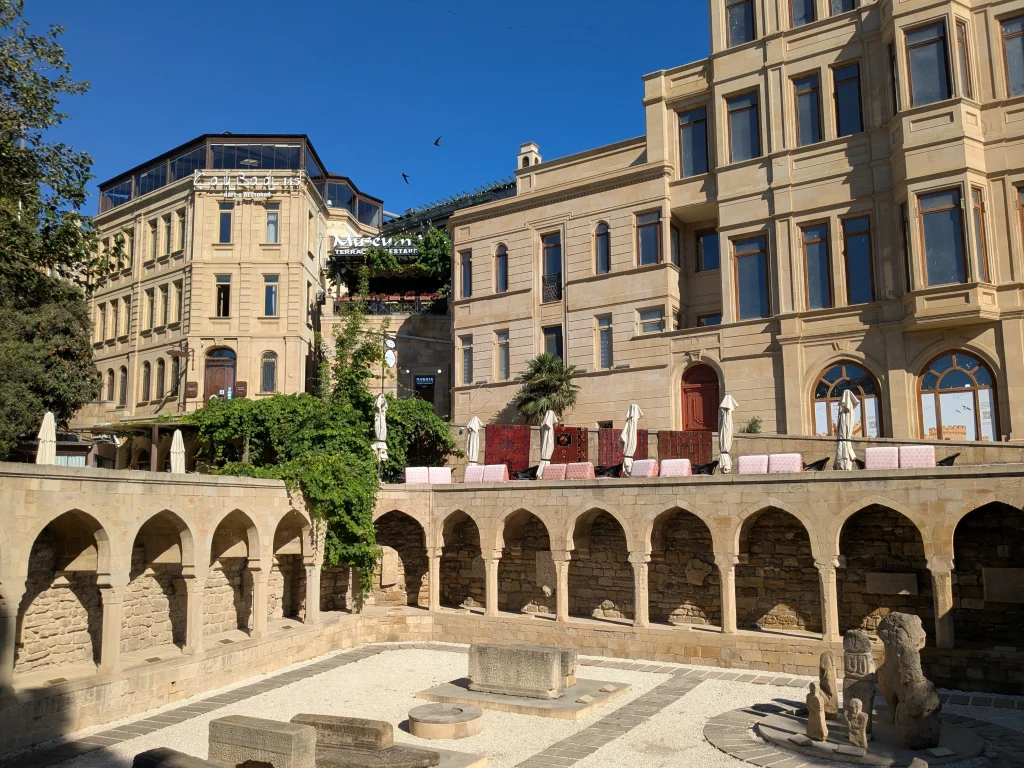
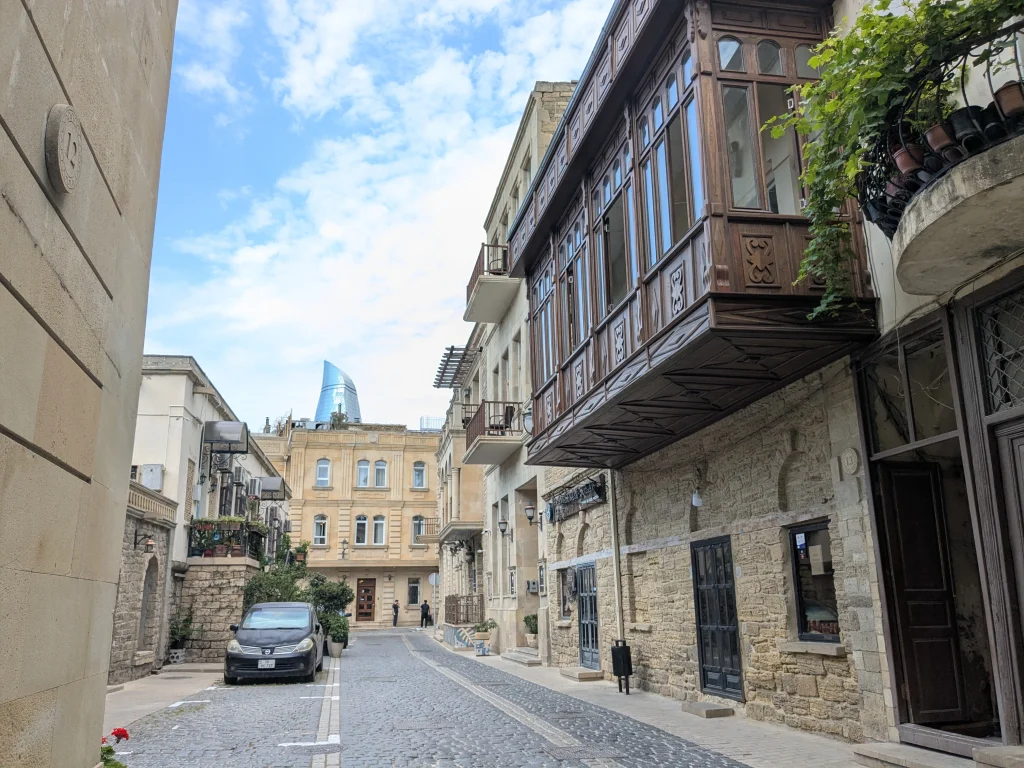
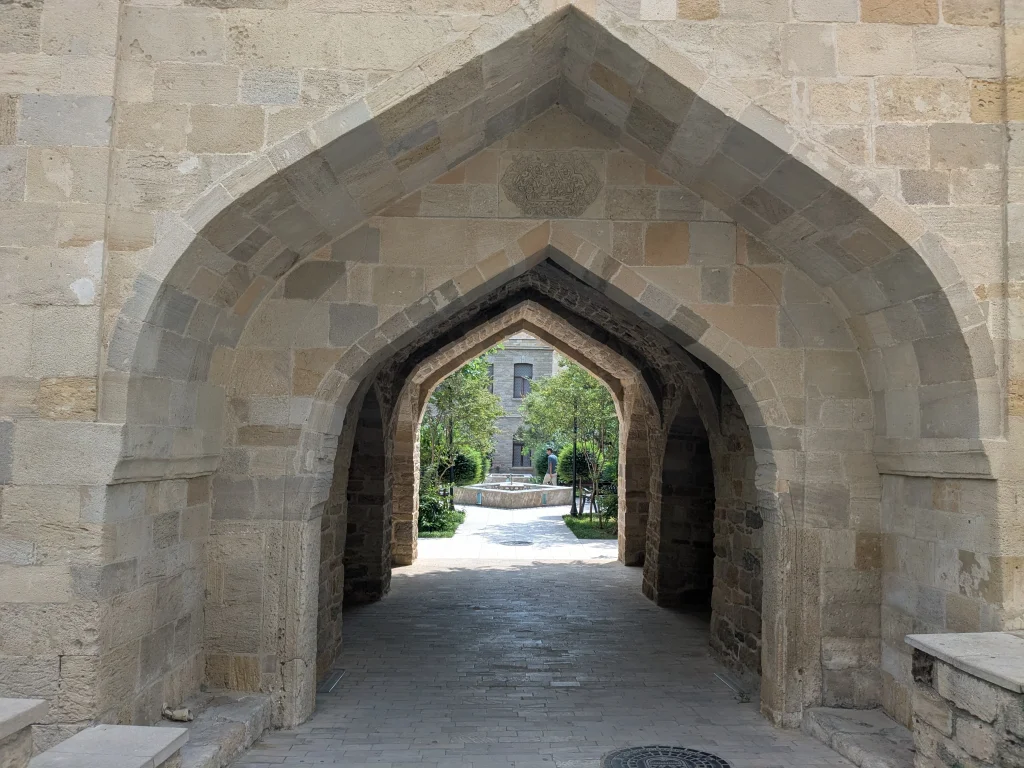
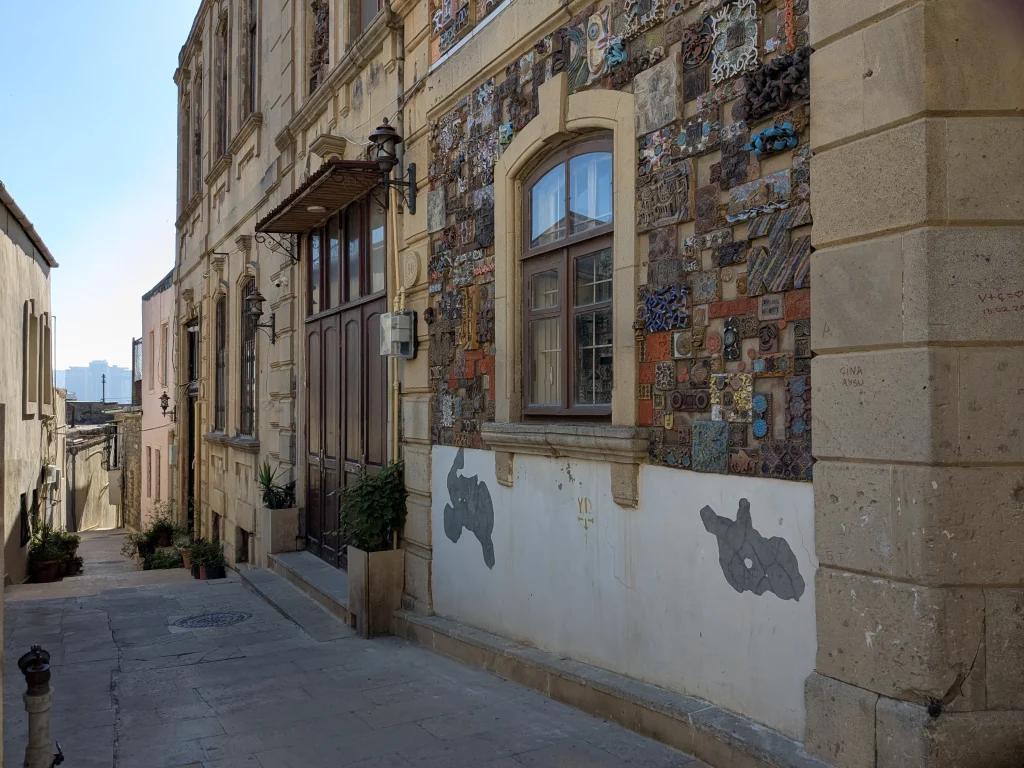
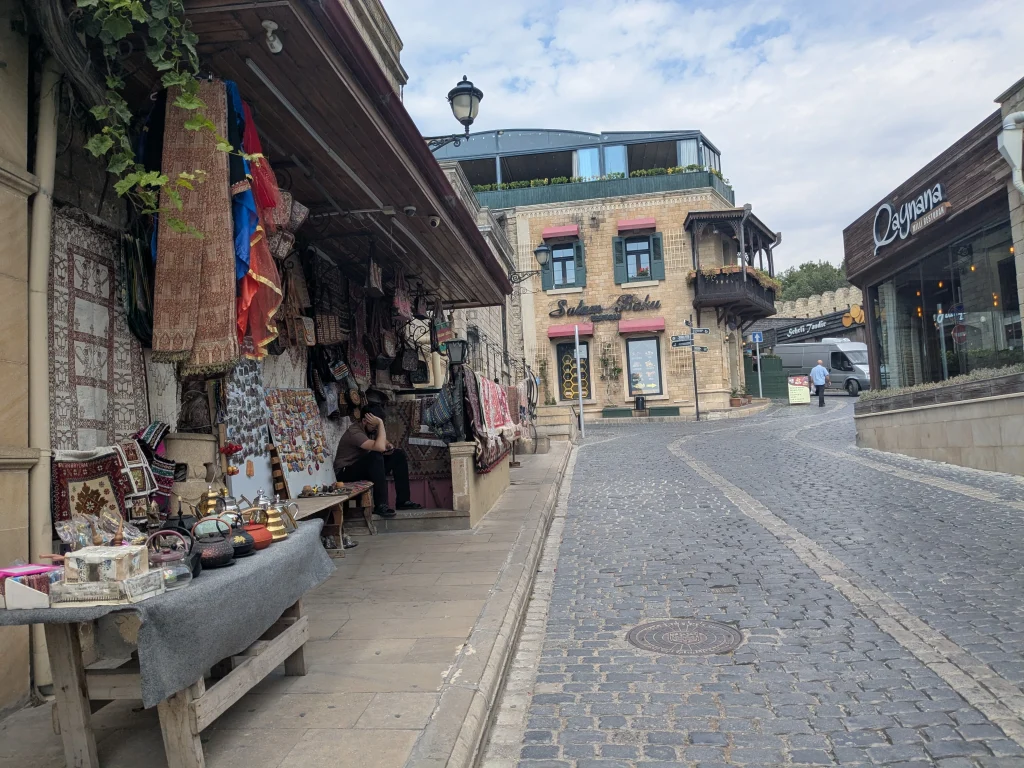
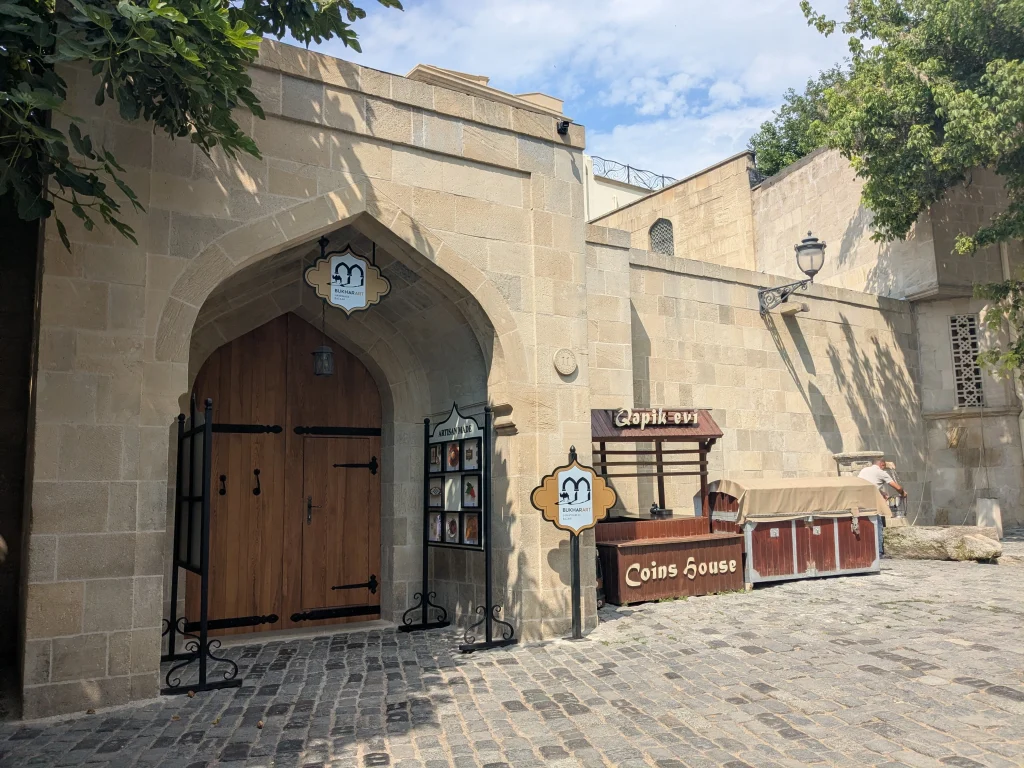
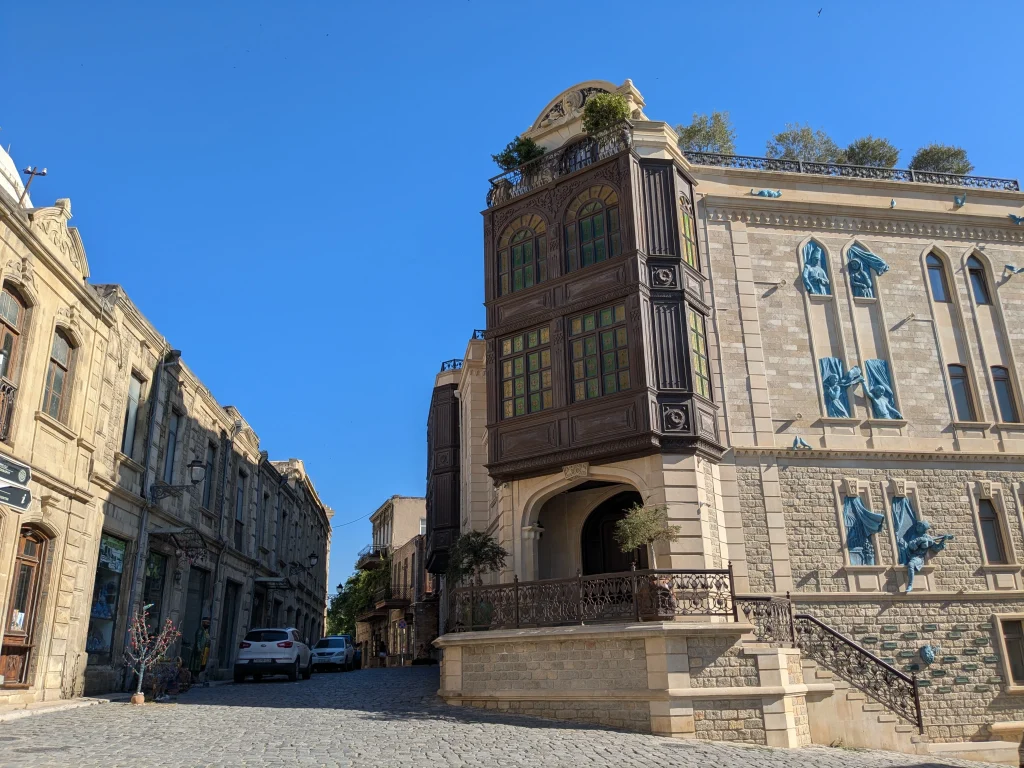
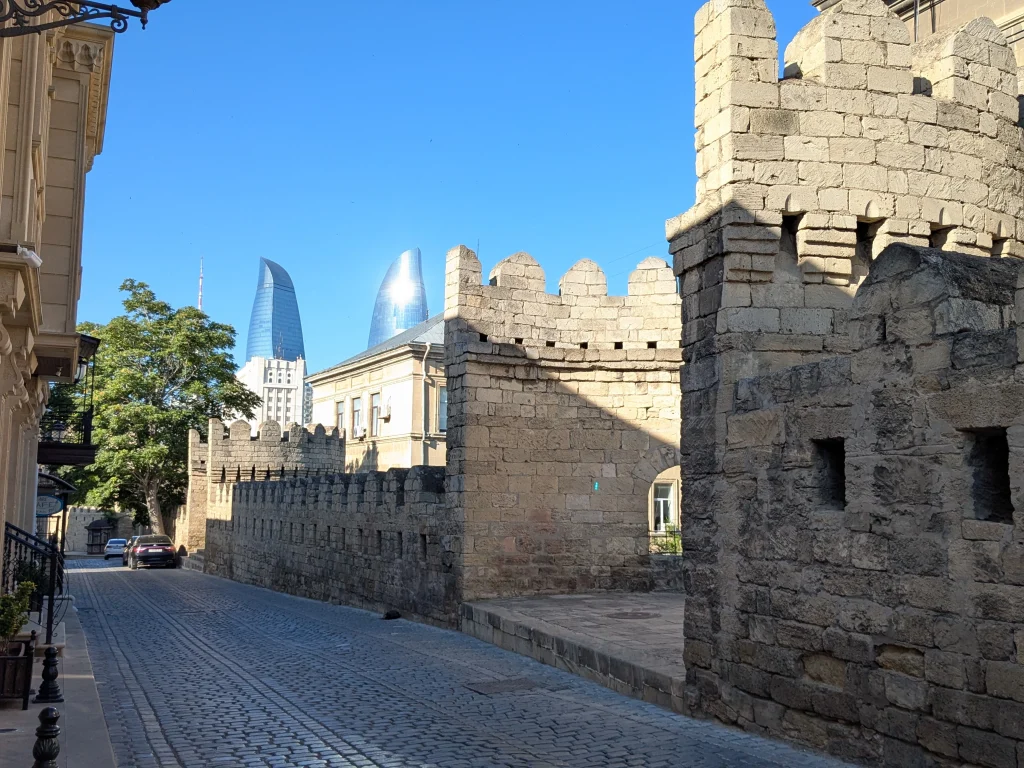
• Visit the Maiden Tower and Shirvanshah Palace
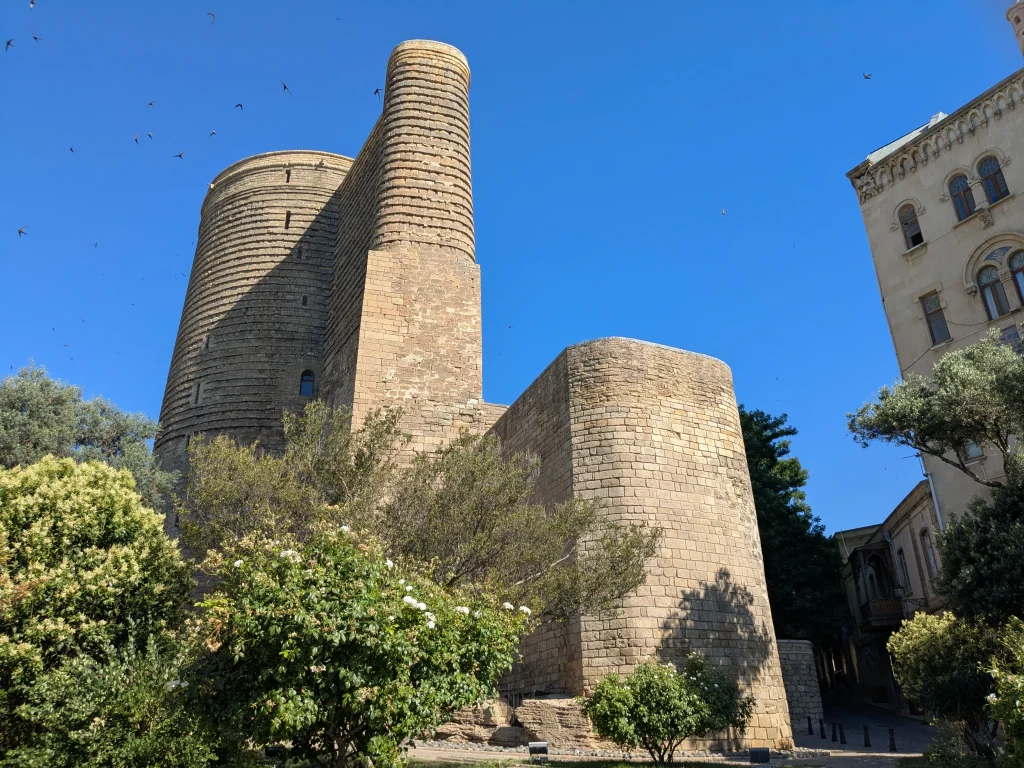
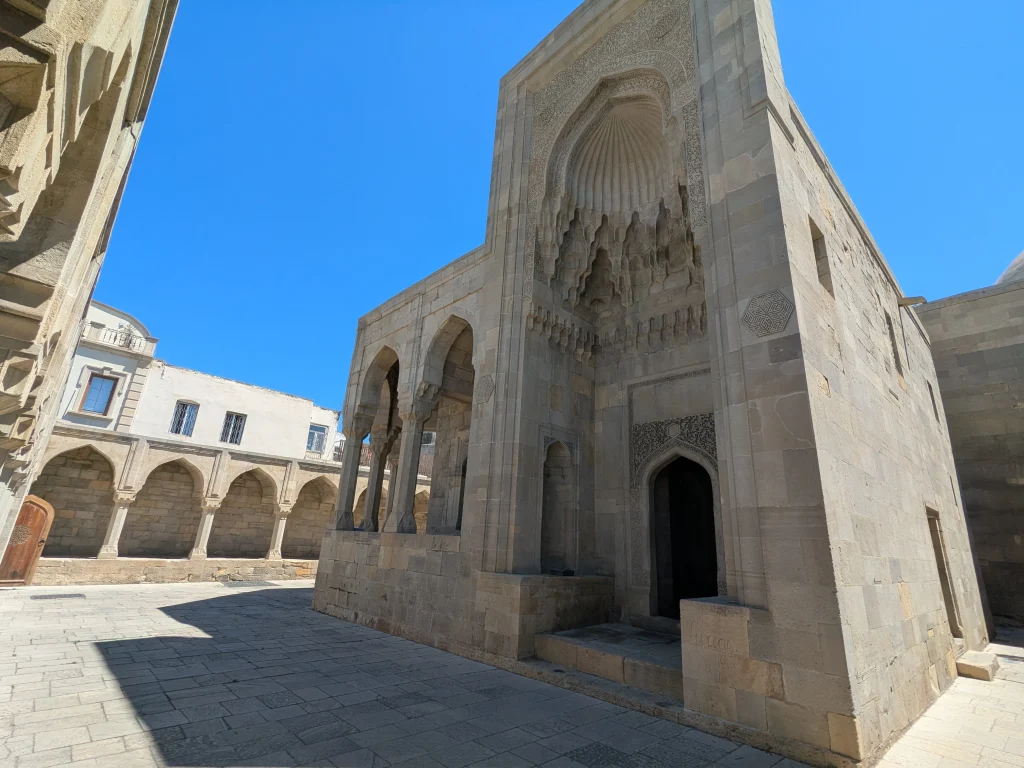
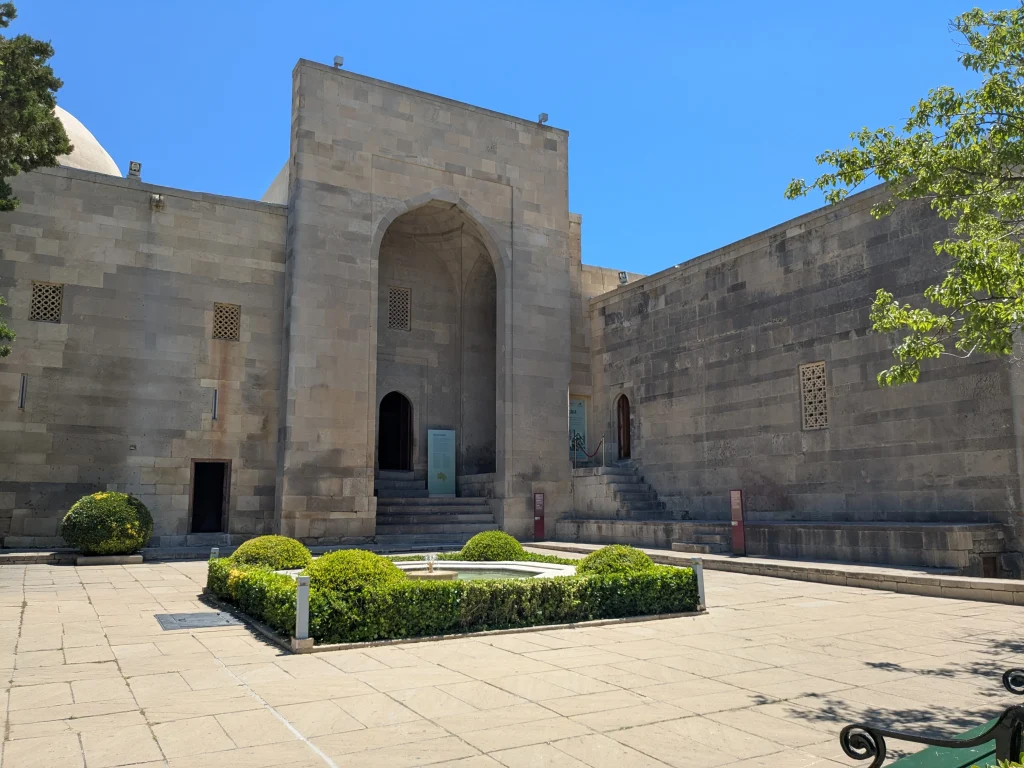
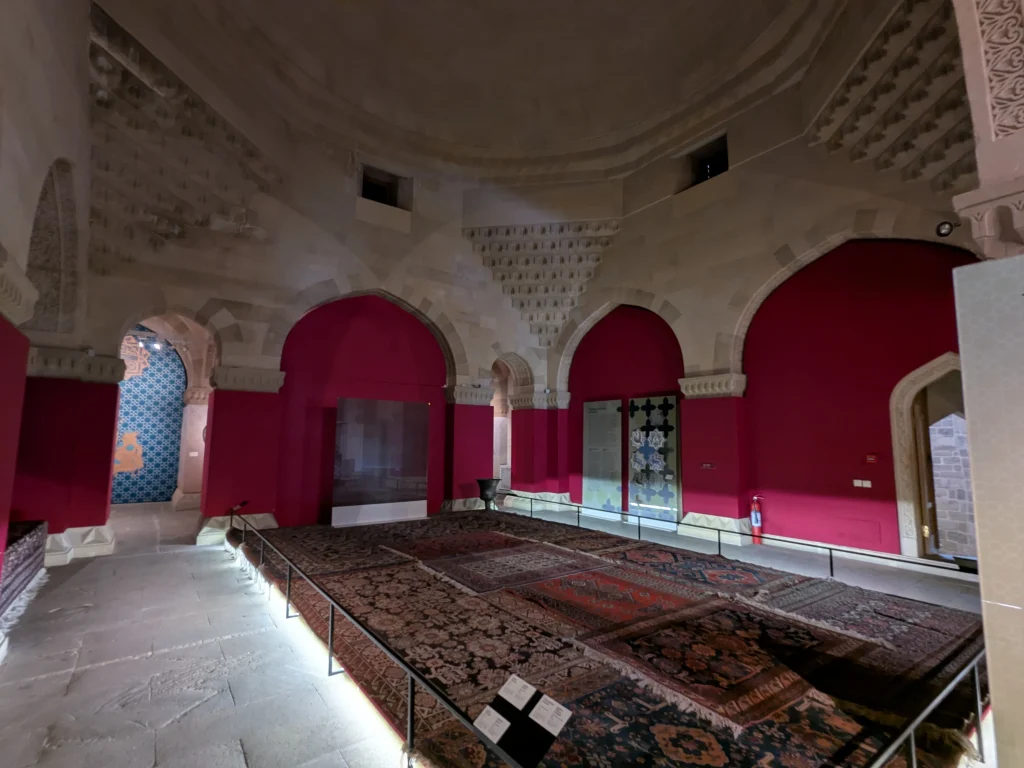
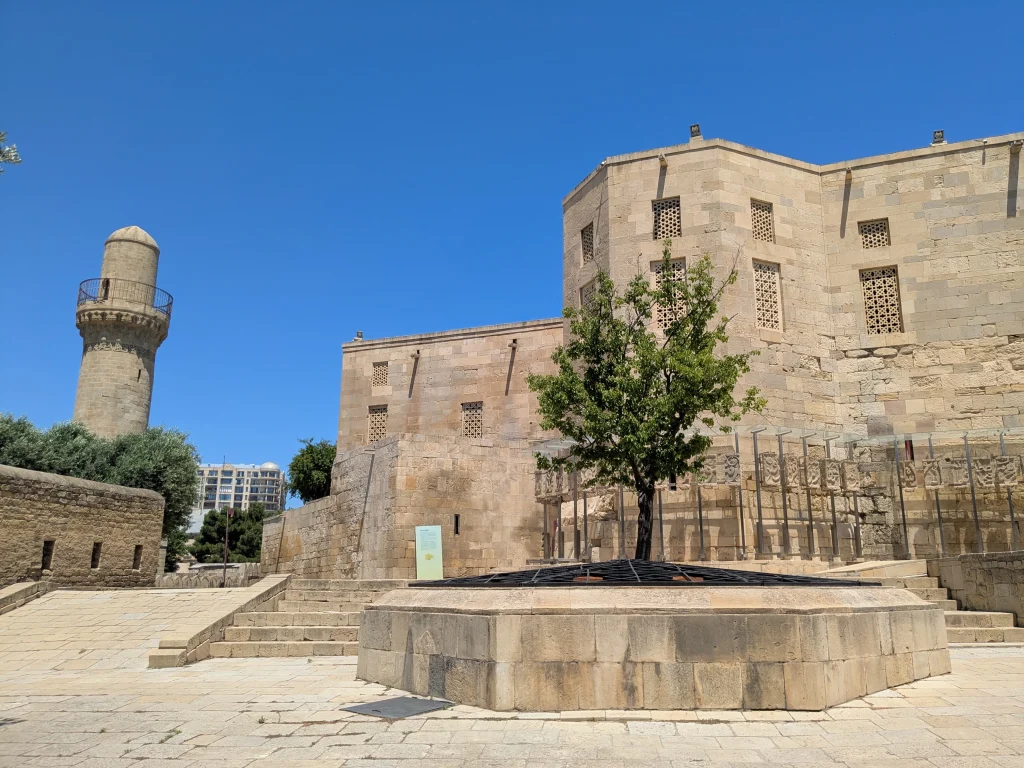
The walking route above takes you past two of Icherisheher’s main landmarks, the Maiden Tower and the Palace of the Shirvanshahs, both of which I recommend visiting rather than simply photographing from outside. There are exhibitions inside both sites.
I highly recommend getting an Icherisheher Pass if you plan to visit several of the museums and historical sites inside the Old City. When I visited in July 2026, I bought the Heritage Core pass for 48 AZN, which includes the Maiden Tower, the Palace of the Shirvanshahs and the Yeraltı Hamam. It is valid for 24 hours.
You can buy the passes at tourist information points around the Old City. I spotted three: one next to the Maiden Tower, one next to the Palace and another at the Double Gates. I’ve pinned them on the map above.
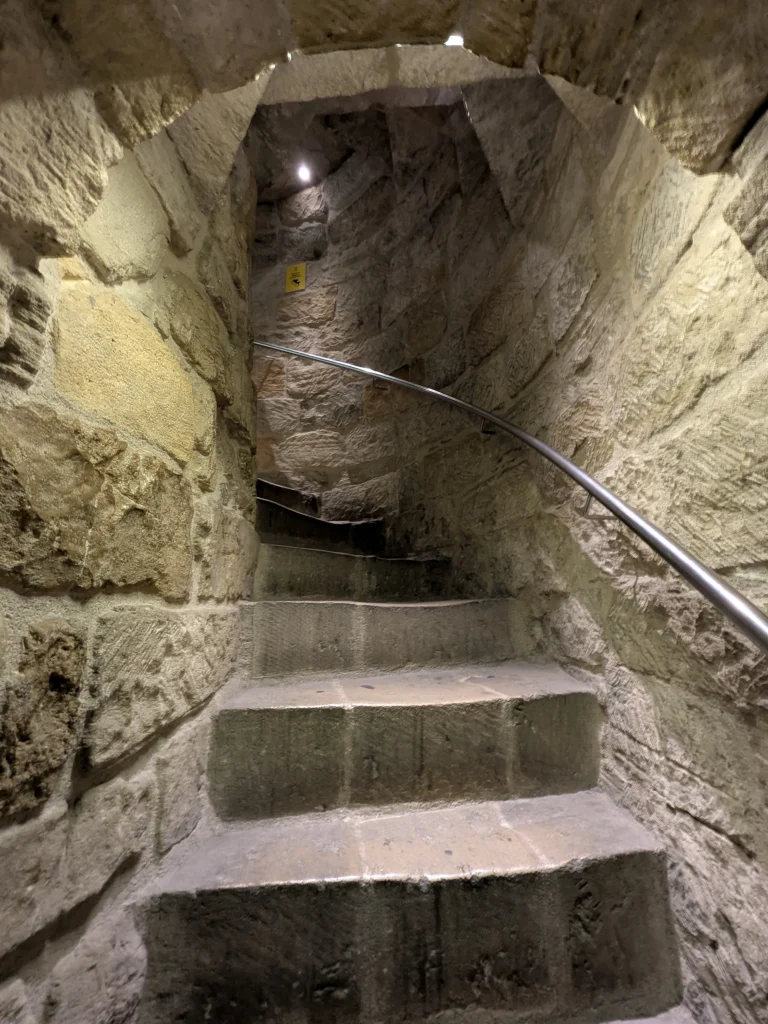
The Maiden Tower is one of Baku’s best-known landmarks and one of the places I would definitely include on a first visit. Its exact origins are still debated, although the tower as we know it today dates from the medieval period.
One small disappointment when I visited was the protective plastic panel installed around the top of the tower. I assume it is there to prevent people from falling or dropping their phones onto visitors below, but if you’re short like me, it makes taking photos of the surrounding views surprisingly difficult. Even standing on my tiptoes was barely enough, so I eventually asked a taller tourist to take my photos.
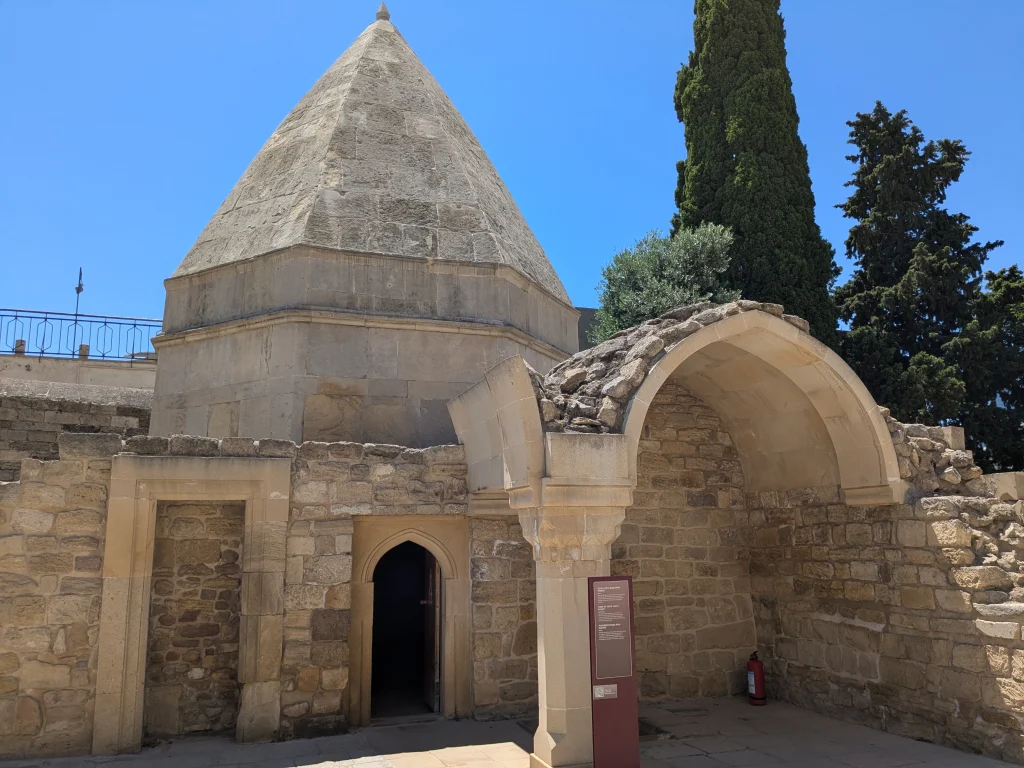
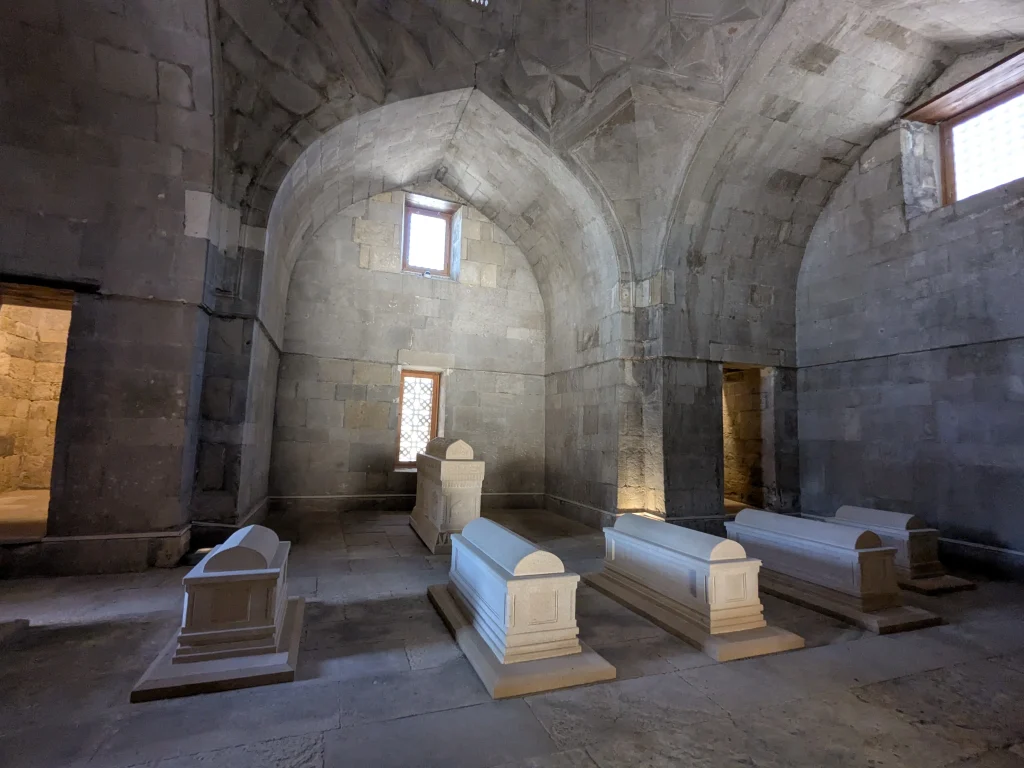
The Shirvanshah Palace is a much larger medieval complex with several courtyards and historic buildings. Dating mainly from the 15th century, when Baku was the capital of the Shirvan state, the complex includes the former throne room, a mosque and other historic structures.
If you have some extra time, you can also visit the Miniature Book Museum, located just a minute or so from the palace. It claims a rather unusual distinction: it’s dedicated entirely to miniature books. Entry is free, although you can leave a small donation.
• End the day at Bibi-Heybat Mosque
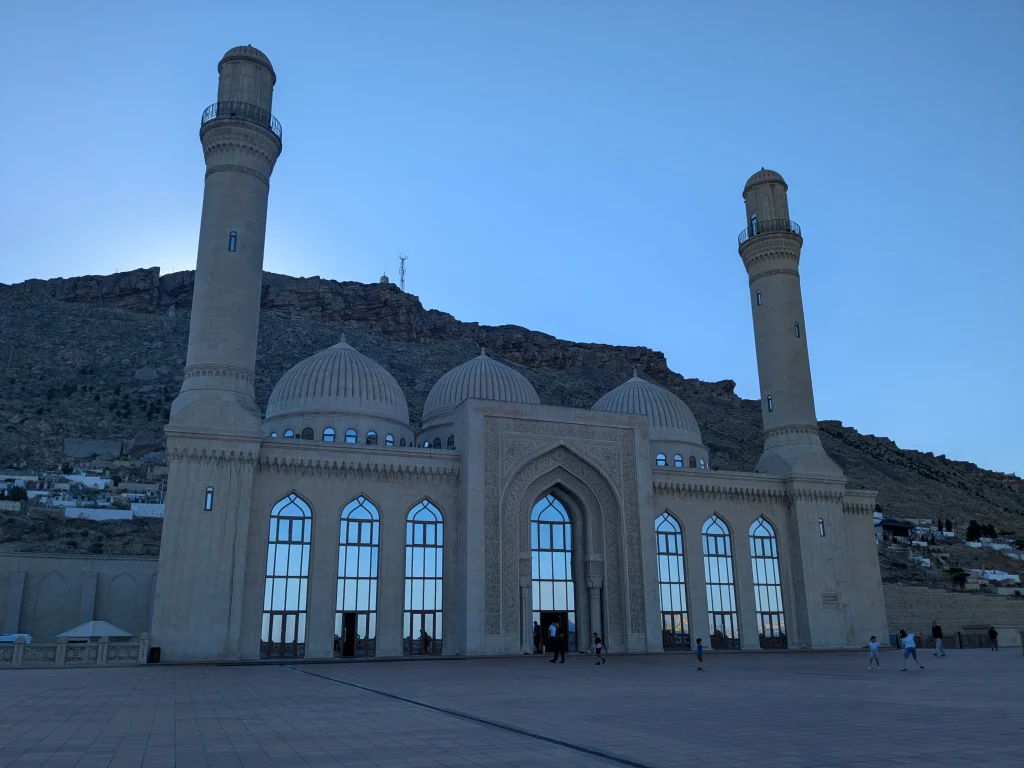
For the end of your first day, head south to Bibi-Heybat Mosque around sunset. From central Baku, you can take bus 145 or 129 from near the Four Seasons Hotel and Azneft Square; the journey takes around 20-25 minutes.
The mosque itself is beautiful, although the surrounding landscape won’t necessarily appeal to everyone. What I found particularly interesting was the setting: from here, you can see the Caspian Sea as well as some of the oil fields around Baku.
It’s a fitting place to end your first day, considering how closely Baku’s history and modern identity are tied to oil.
If you’re staying at Dastan Hotel, you can then finish the evening on its rooftop terrace, watching the sunset with a glass of local pomegranate wine or a beer.
Day 2: Oil wealth, museum and modern Baku
Baku’s identity is deeply connected to oil. The city’s transformation during the first oil boom left behind lavish mansions and grand public buildings, while more recent oil wealth has helped shape the modern skyline you see today.
Day two is a chance to see both sides of Baku, from an oil baron’s former mansion to the Flame Towers overlooking the city.
• Visit the National Museum of History of Azerbaijan: a hidden gem inside an oil baron’s mansion
For some reason, the National Museum of History of Azerbaijan barely gets a mention on travel blogs, but it ended up being one of my favourite museums in Baku.
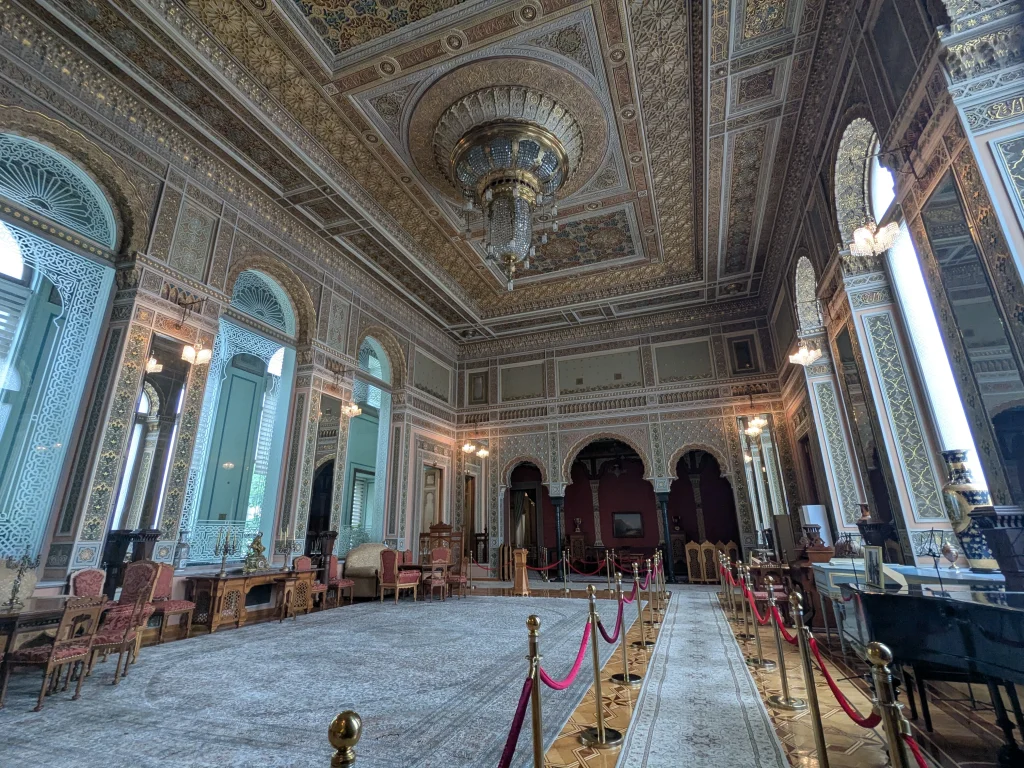
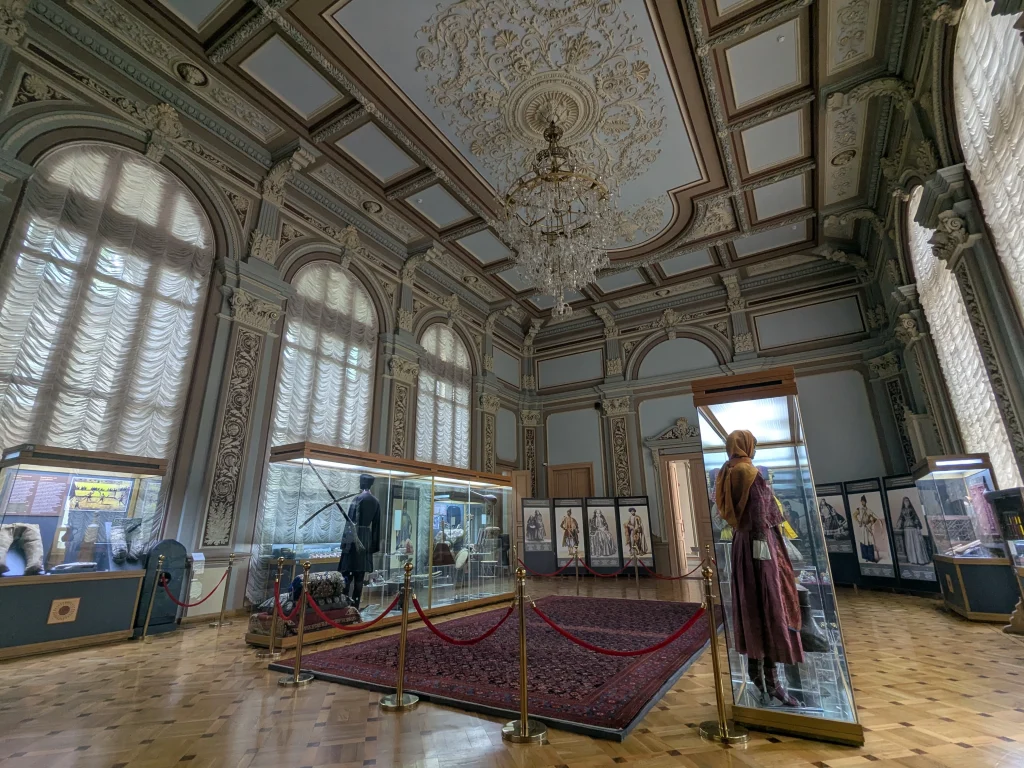
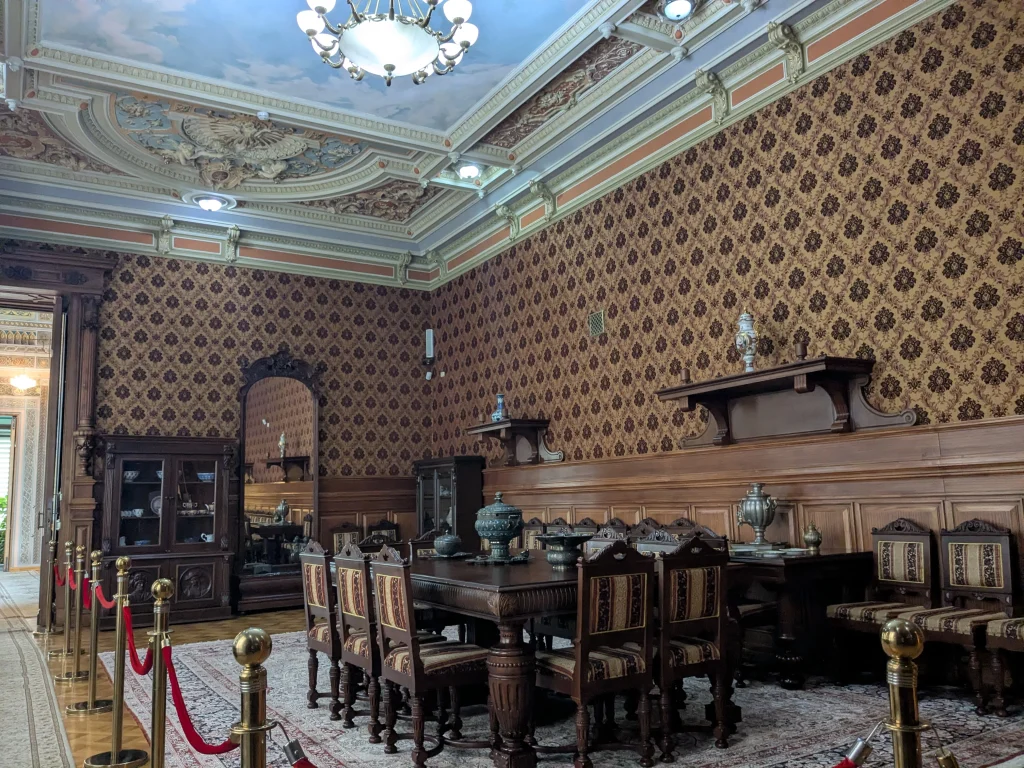
Located right in the city centre inside the former mansion of oil magnate Haji Zeynalabdin Taghiyev, the massive house occupies an entire street block. It was built between 1895 and 1901, and the building alone is worth visiting for its grand rooms and elaborate interiors.
The museum’s collections cover thousands of years of history in the territory of Azerbaijan, from prehistoric cultures and the Neolithic period through Caucasian Albania, the Arab Caliphate and Mongol invasions, the Safavid period and the khanates that emerged after the death of Nadir Shah.
The museum also includes a memorial section dedicated to Taghiyev himself, allowing you to see some of the rooms of his former home and get a better idea of the lifestyle of one of Baku’s most prominent oil magnates.
In one word: fancy!
If you’re interested in Baku’s history beyond the Flame Towers, I would definitely make time for this museum. And don’t miss the small exhibition about the Azerbaijani language and other Turkic languages at the very end.
• Take a short break at Khagani Garden, or Molokan Garden
Before heading towards Khagani Garden, take a look at the historic bank building just across the street from Taghiyev mansion. It was built between 1903 and 1905 and was originally home to the Baku branch of the Northern Bank.
Then walk towards Khagani Garden, one of the oldest parks in central Baku. Locals mostly know it as Molokan Garden, which is actually the name I find more interesting. The garden was created on the site of a former Molokan settlement in the 1870s.
Molokans, a Russian spiritual-Christian religious movement (different from Old Believers), had settled in Baku in the 19th century, and their settlement eventually found itself surrounded by the rapidly expanding city. In 1872, the settlement was relocated and a garden was established on the site but Baku residents have continued to call it Molokan Garden.
It’s a small stop rather than a major attraction, but I think it’s worth knowing about as you walk through central Baku. The city’s history is much more diverse than its famous oil-boom architecture alone might suggest.
Side note: I highly recommend visiting Ivanovka, a Molokan village in Azerbaijan and home to the country’s last remaining collective farm (one of the best pork sausages I’ve ever had).
• Walk along Nizami Street and central Baku
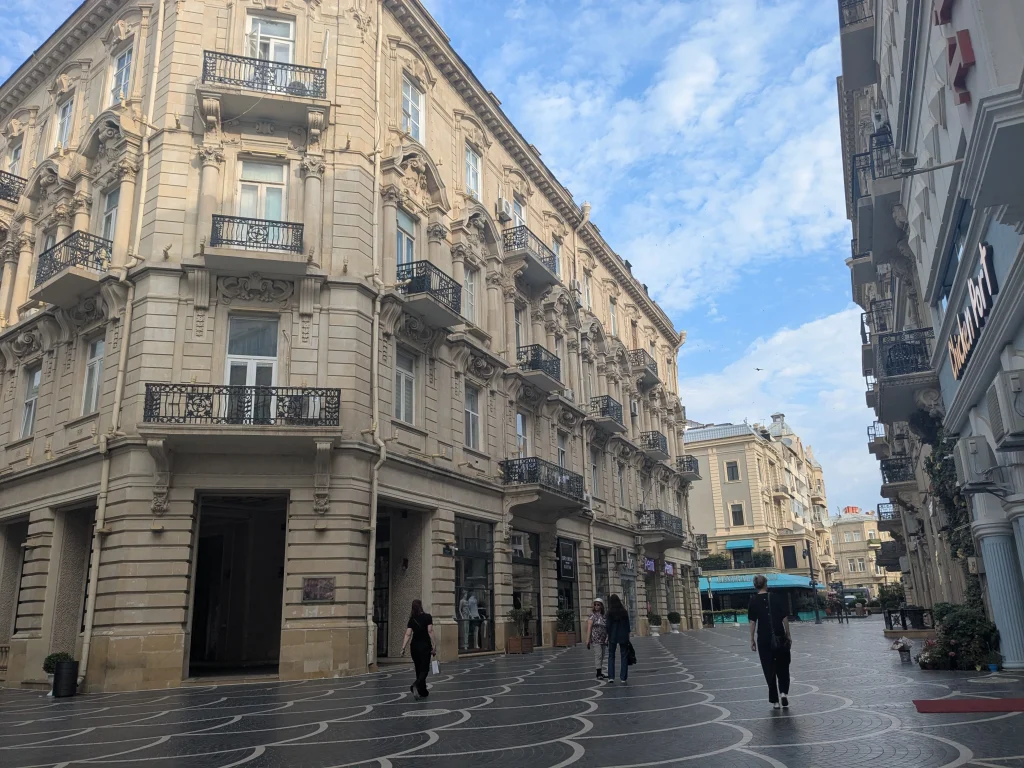
From Khagani Garden, continue towards Nizami Street, Baku’s famous pedestrian shopping street, and explore some of the surrounding pedestrian streets.
Named after Nizami Ganjavi, the famous 12th-century Persian poet from Ganja, it is lined with shops, restaurants and grand Paris-style buildings.
You may also notice the name Nasimi around Baku. Imadeddin Nasimi was a 14th-century Azerbaijani mystical poet, and the Nasimi District, where Nizami Street is located, is named after him. Two poets, two very similar names, and a small source of confusion when navigating Baku!
If you’d like to hear Nasimi’s poetry in a modern setting, listen to Sami Yusuf’s Nasimi, which uses verses by the poet and Mugham, traditional Azerbaijani music.
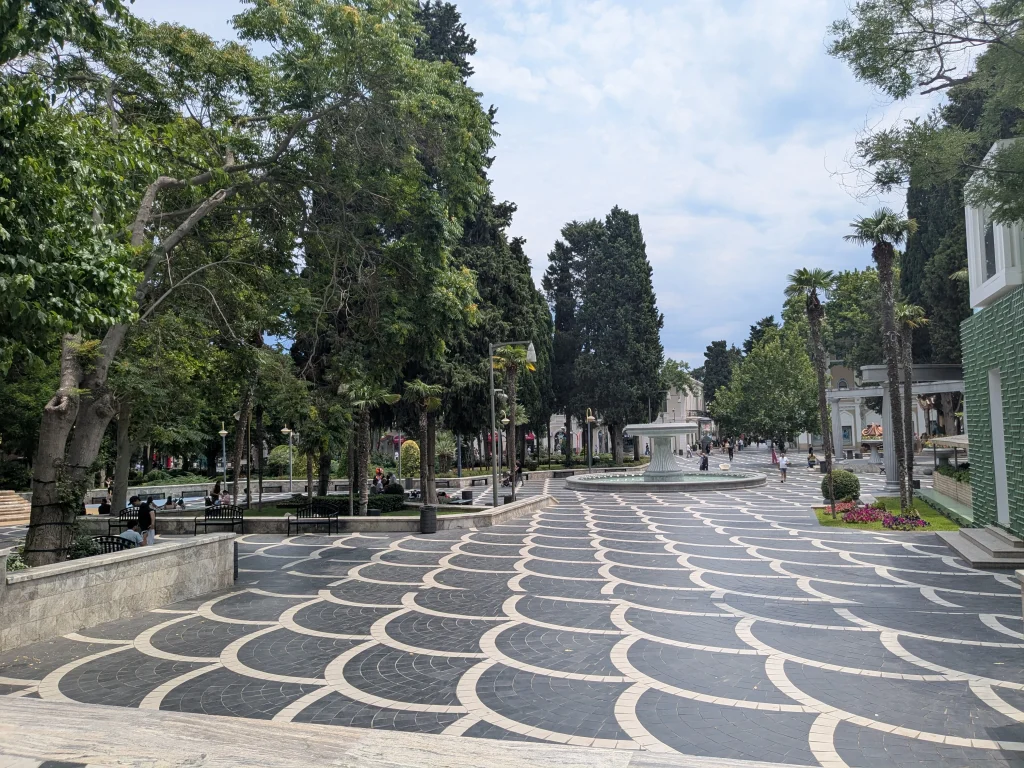
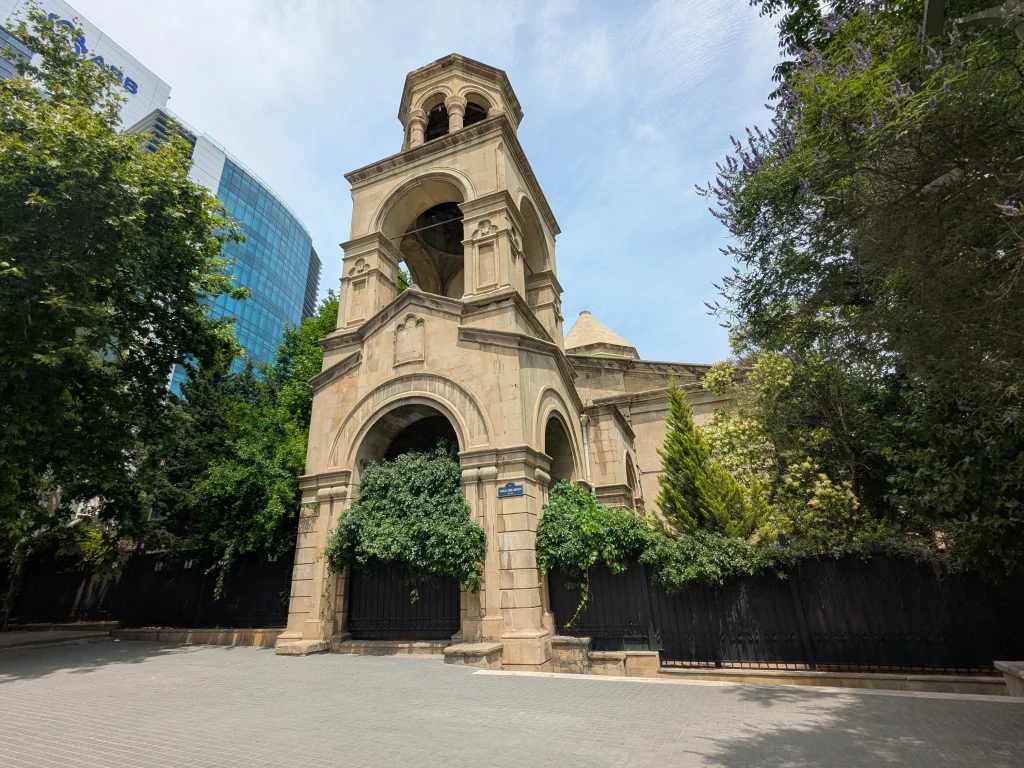
Continue through Fountain Square and Nizami Park, two of the liveliest areas in central Baku. Just off Fountain Square, look out for Saint Gregory the Illuminator Church, the only surviving Armenian church in Baku. It’s closed to the public and all fenced up but still standing.
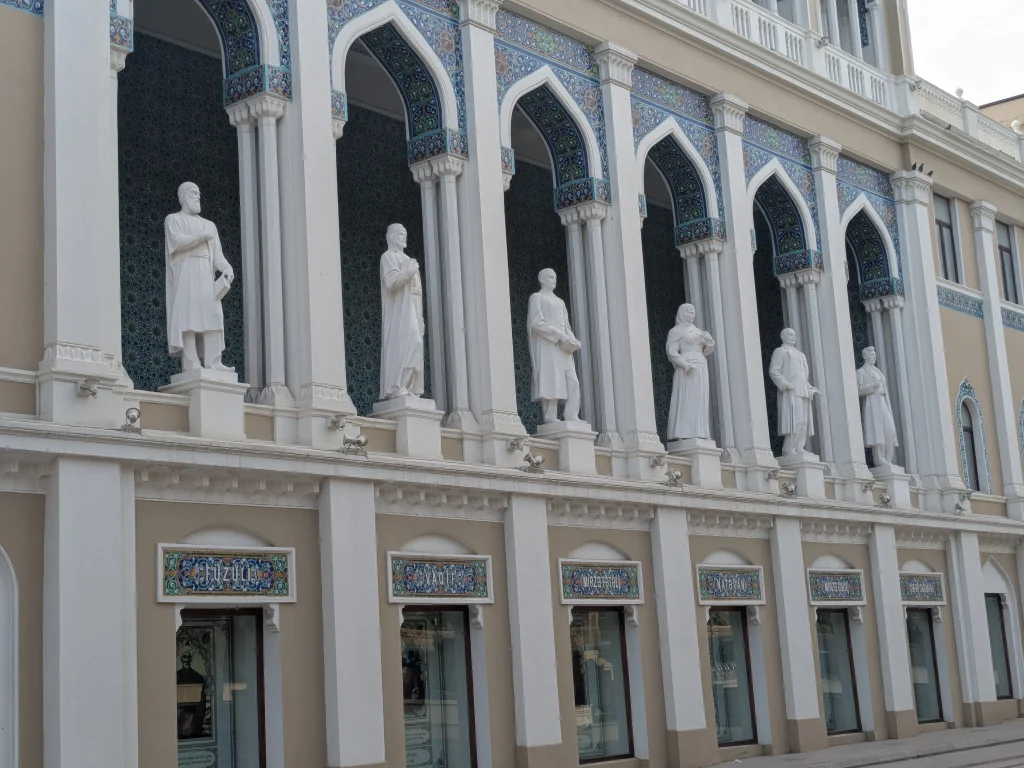
Look out too for the National Museum of Azerbaijani Literature, with its imposing façade and statues of six famous Azerbaijani literary figures, including Khurshidbanu Natavan, one of Azerbaijan’s best-known female poets. Born in Shusha, Karabakh, she was also a member of the ruling Khan family of the Karabakh Khanate. Even if you don’t go inside, it’s an interesting building to see while walking through this part of the city.
This is also a good part of the day to simply wander. After the historical density of Icherisheher on day one, central Baku gives you a completely different impression of the city: grand European-style buildings, busy pedestrian streets, shops, cafés and the architecture left behind by Baku’s rapid growth.
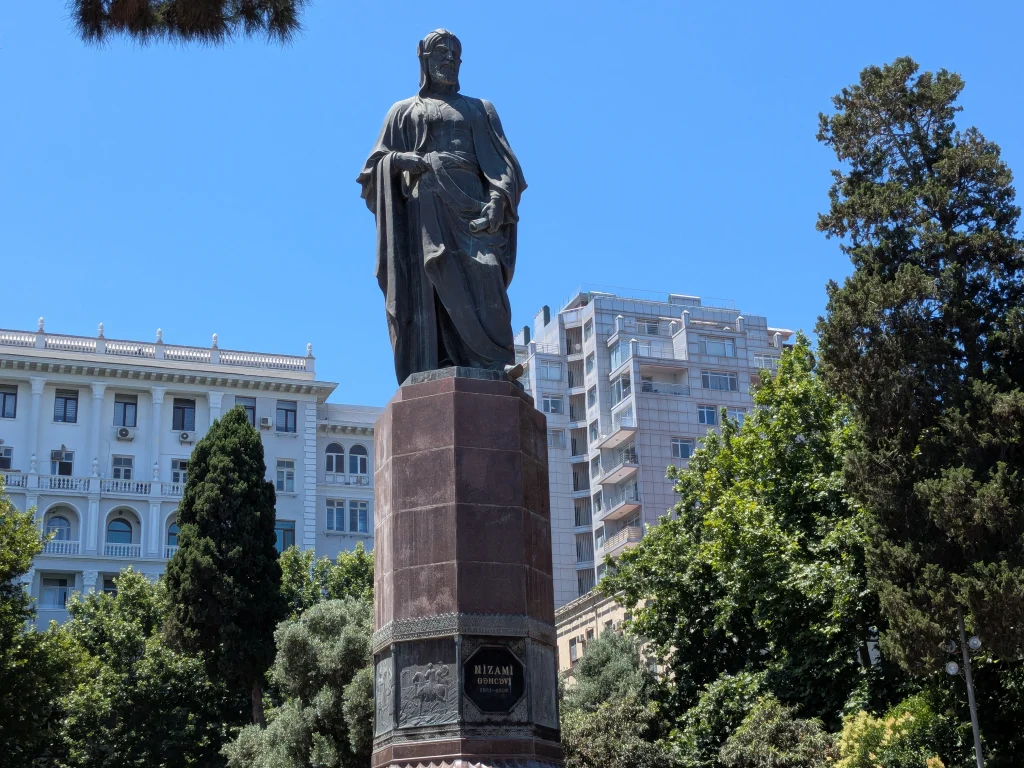
• Head up to Highland Park and the Flame Towers
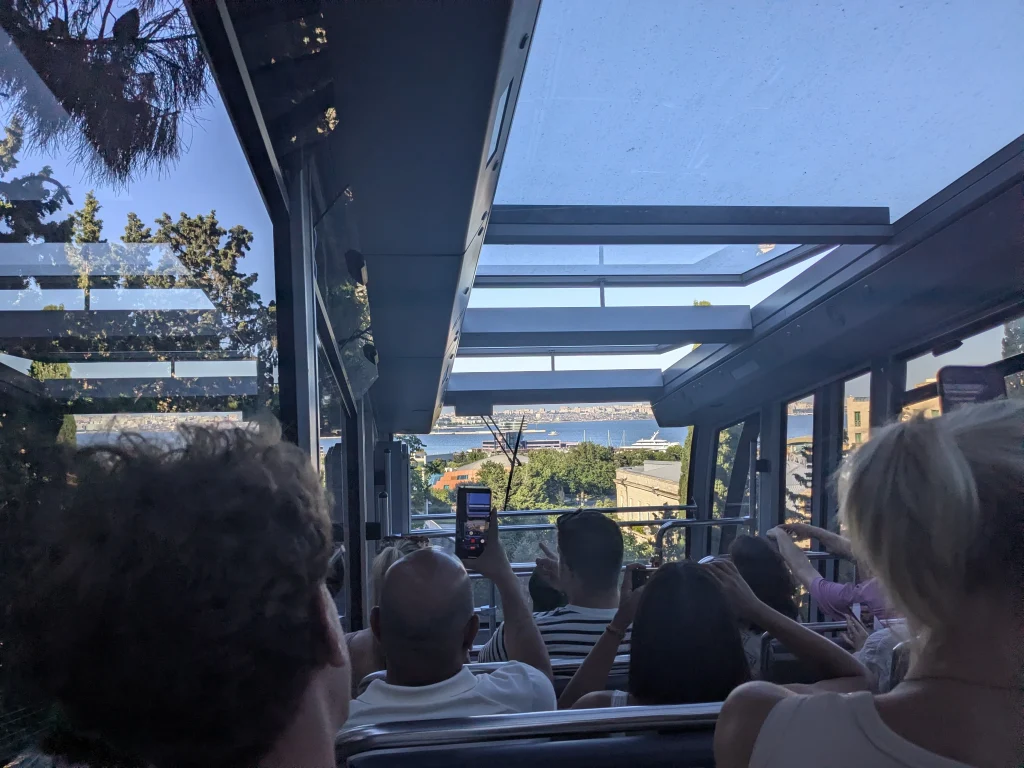
In the late afternoon, make your way towards Highland Park for some of the best views over Baku. You can either climb the long staircase yourself or take the Baku Funicular.
The funicular journey takes barely three minutes and cost 1 AZN per person per ride. However, don’t assume that taking the funicular will necessarily save you time: when I visited in early July, I waited more than 20 minutes in the queue. If you don’t mind the climb, there are more than 600 steps leading up to the park.
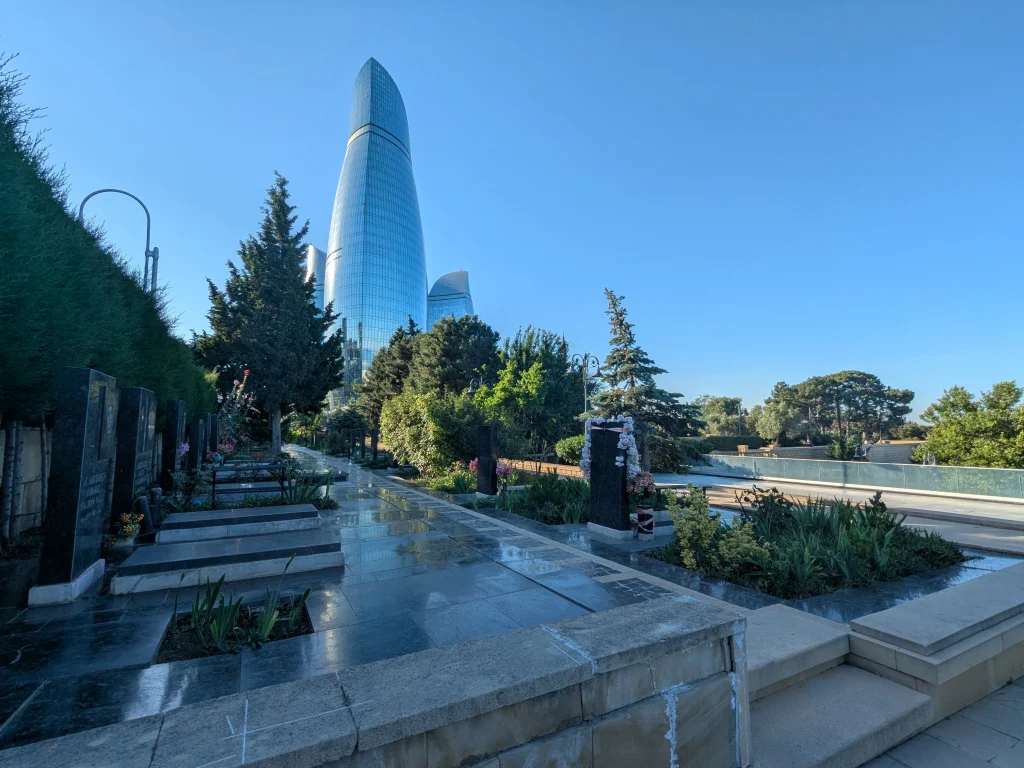
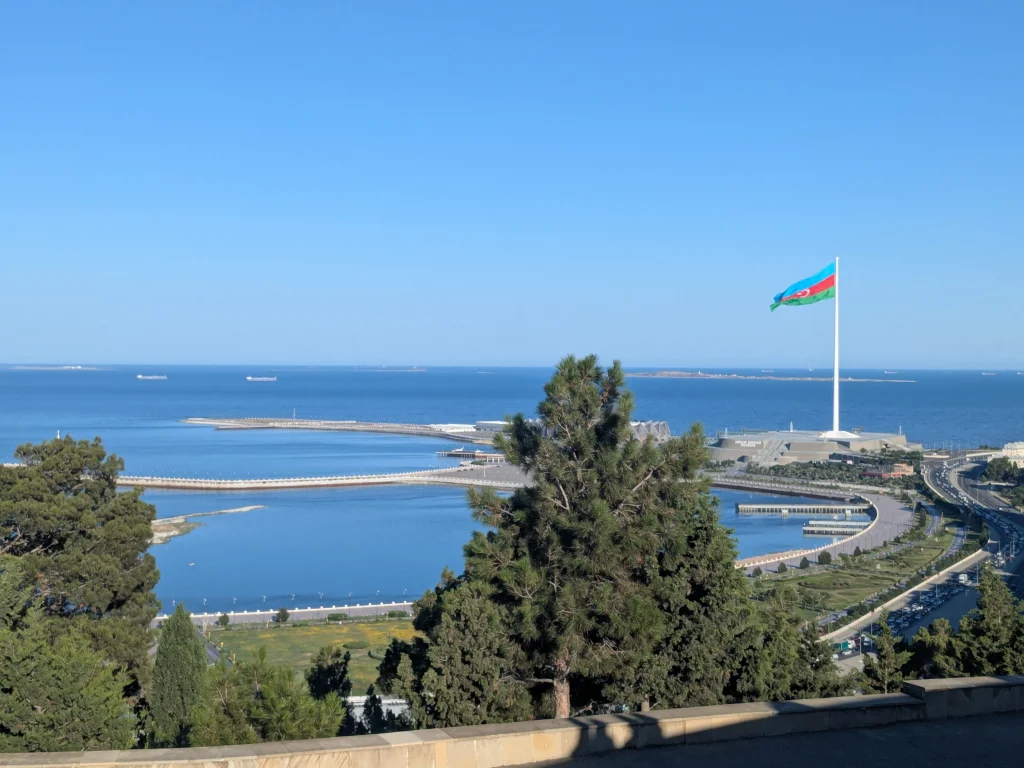
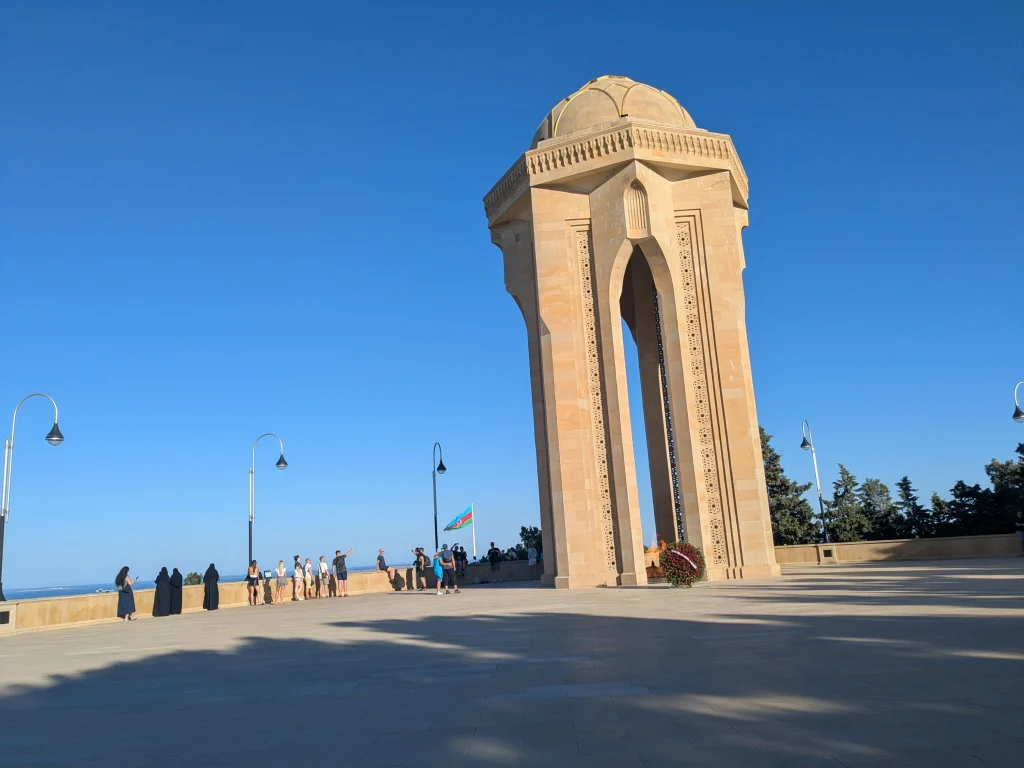
Once at the top, walk through Highland Park towards the Alley of Martyrs, a memorial cemetery overlooking Baku Bay. The site commemorates those killed during the First Karabakh War.
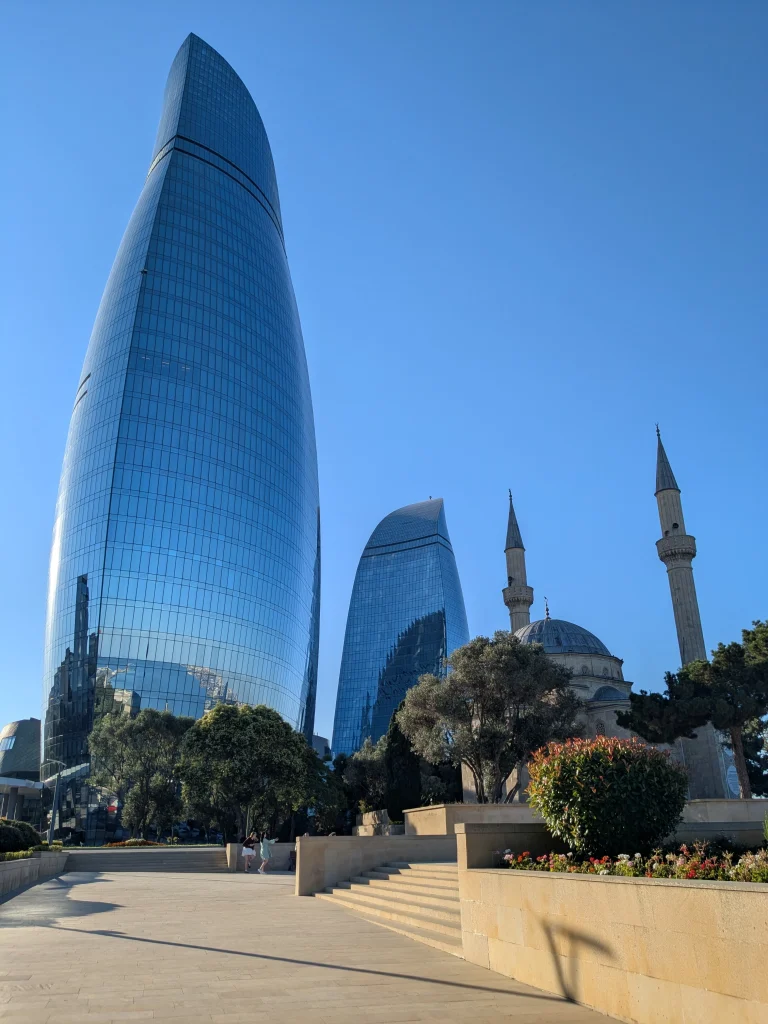
Continue towards the Flame Towers, Baku’s unmistakable modern landmark. You can also see the mosque located just below the towers. The views from Highland Park are particularly good towards sunset, when you can see Baku stretching from the historic centre towards the Caspian Sea and the newer parts of the city.
• Finish with the view
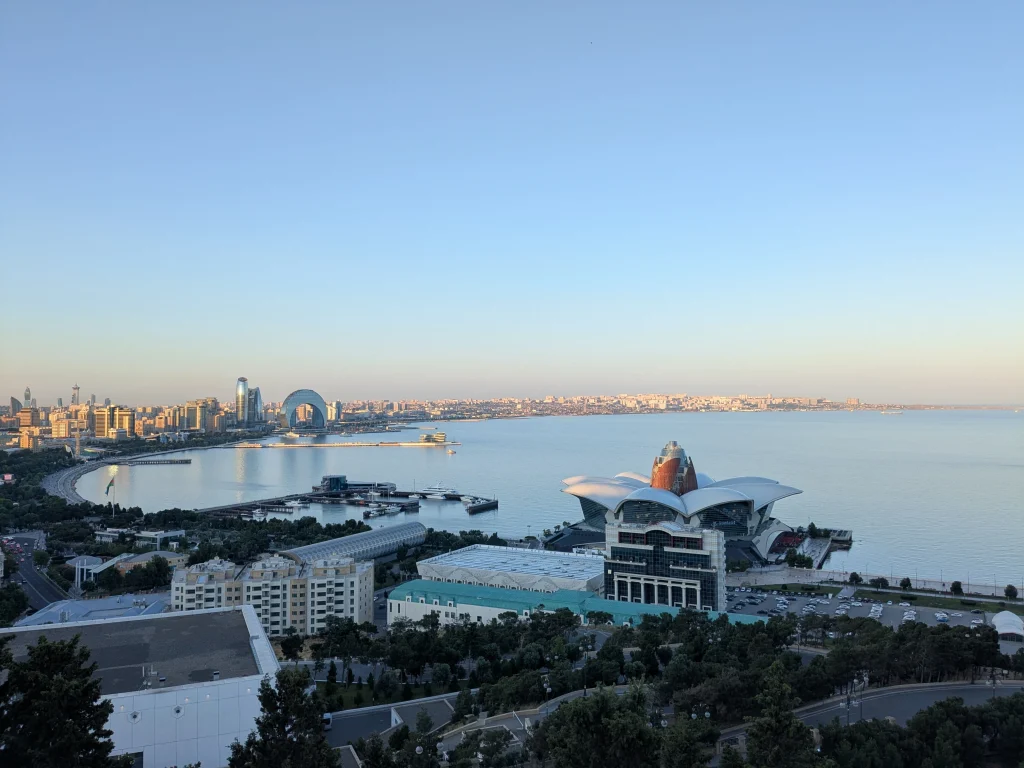
If the weather is clear, I’d stay around Highland Park until after sunset. From up here, you get one of the clearest visual reminders of the different layers of Baku: the historic Old City, the grand buildings of the oil-boom era, the modern waterfront and the Flame Towers all within the same panorama.
Day 3: Visiting Baku’s surroundings independently
One of the things I appreciate most about Baku is that you don’t need to join a tour to explore beyond the city centre. Some places around the Absheron Peninsula can be visited independently using public transport, making it a good option if you have a third day in Baku.
• Visit the Atashgah Fire Temple
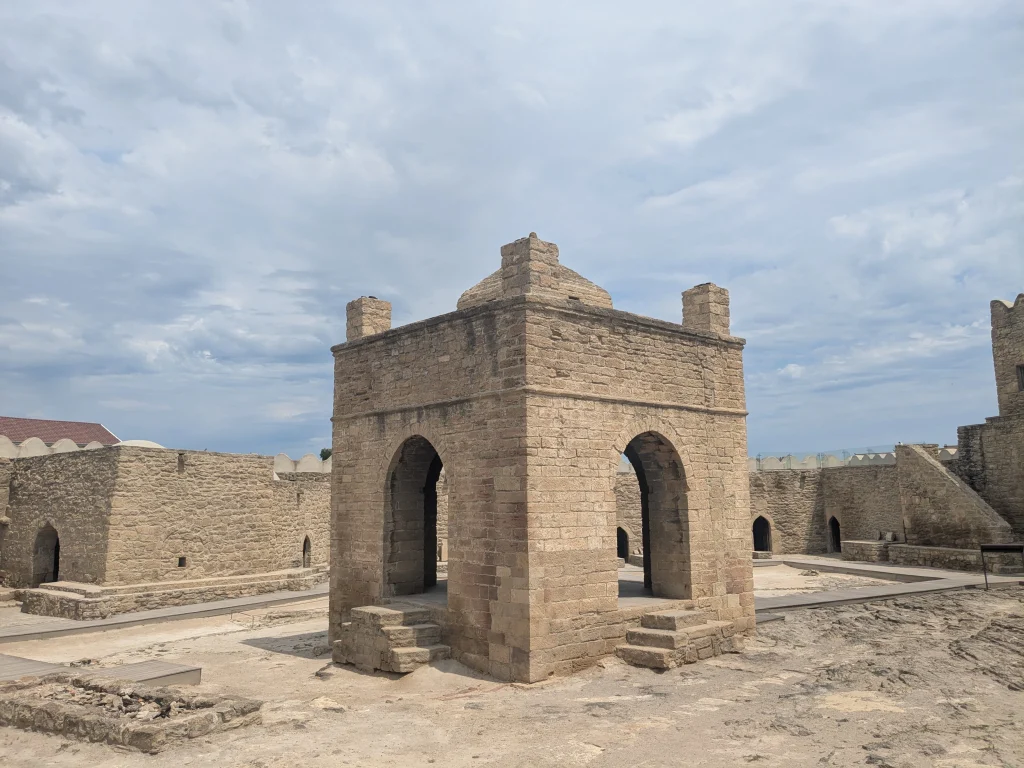
The Atashgah Fire Temple was the main excursion I chose for my third day. I left central Baku at around 9 AM and was back in the city early enough for lunch.
I took the metro to Koroğlu to reach the bus station, then continued by bus 184, followed by around a 10-minute walk to the temple. Check Yandex Maps before setting off, as bus routes and timetables can change.
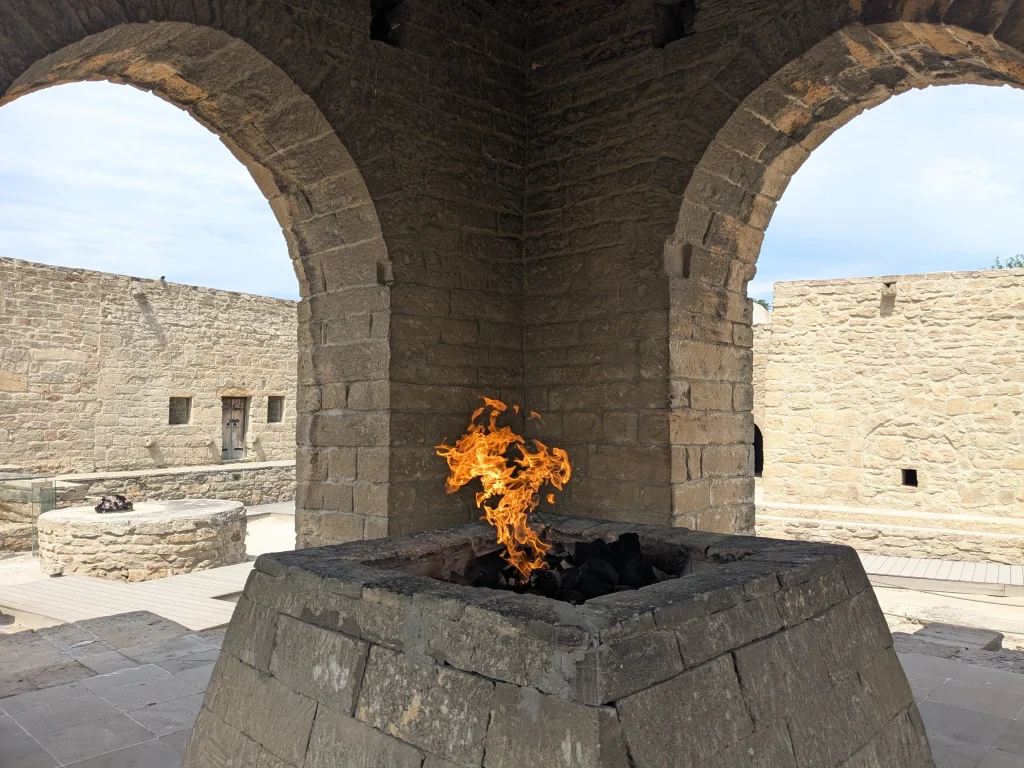
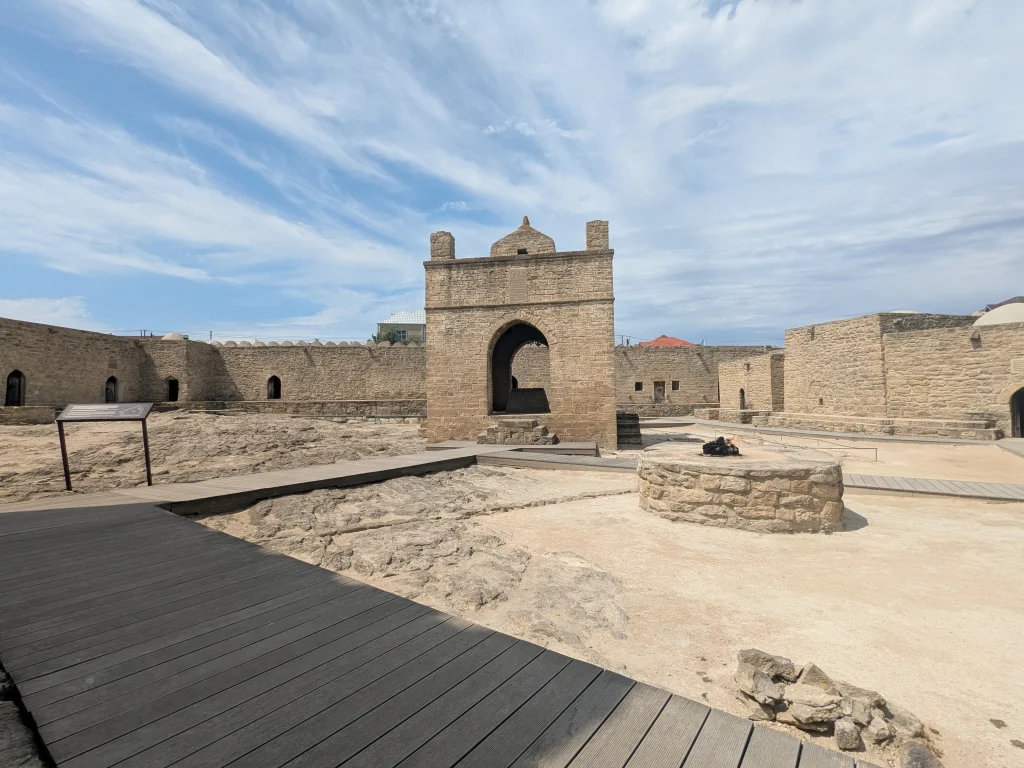
Atashgah is one of the places that explains where Azerbaijan’s famous association with fire comes from. The current temple complex dates mainly from the 17th-18th centuries and was built around a site where natural gas flames had long been associated with fire worship. It later became an important pilgrimage site for Zoroastrians, and the complex you see today reflects this Zoroastrian history.
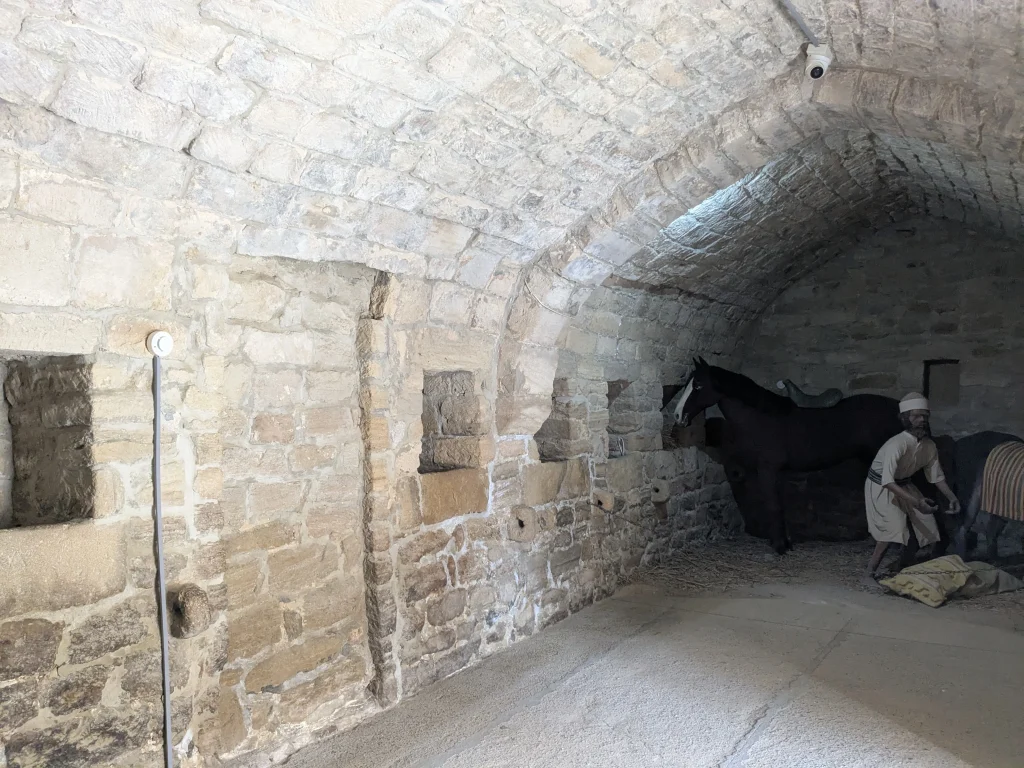
I found the museum inside the complex genuinely interesting, particularly because it gives some context to the different traditions associated with the site rather than simply presenting it as a pretty old temple.
One small tip: once inside, I’d recommend following the exhibits clockwise, starting on the left, rather than wandering randomly around the complex. The information panels are arranged in a way that makes much more sense when followed in that order, but for some reason there’s no actual sign saying “start this way”.
There are craft shops selling souvenirs, as well as tea houses and restaurants on site. The people working there are lovely. Entry is 15 AZN, but there are also combo tickets covering several Absheron attractions, including Yanar Dag, the famous “Burning Mountain”.
• Yanar Dag, the Burning Mountain
You can combine Atashgah with Yanar Dag, and there are buses connecting the two areas. I didn’t revisit Yanar Dag this time because I’d already been there on a previous trip to Azerbaijan in 2017, but if it’s your first visit, combining the two sites makes sense.
The natural gas flames of Yanar Dag are one of the other reasons Azerbaijan became associated with eternal fire. The site is now a museum and protected area around the continuously burning hillside.
• Return to Baku and walk along the Caspian Sea
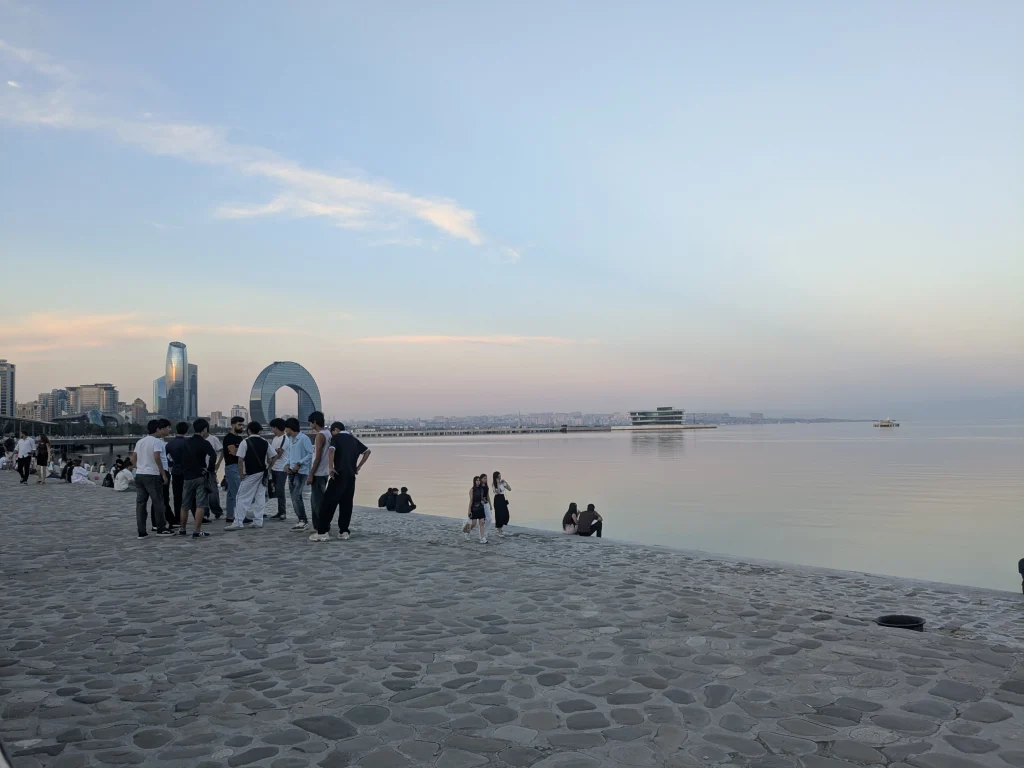
Once you’re back in central Baku, spend the rest of the afternoon along Baku Boulevard, the long waterfront promenade stretching along the Caspian Sea.
This is a completely different side of Baku from the historic centre. You can buy an ice cream, do some people-watching, sit by the sometimes very oily-looking Caspian Sea, or even watch Azerbaijani hijabi babushkas at the fairground shooting gallery with enormous, rather war-like guns.
You can also see Little Venice, a small canal complex along the boulevard, where you can take a gondola ride if you’re travelling with your partner and feel like embracing the romance of miniature Venice in Baku.
Continue along the waterfront towards the National Carpet Museum and the enormous Azerbaijani flag at the other end of the boulevard. I haven’t visited the Carpet Museum myself, so I won’t pretend to recommend it, but the building is hard to miss.
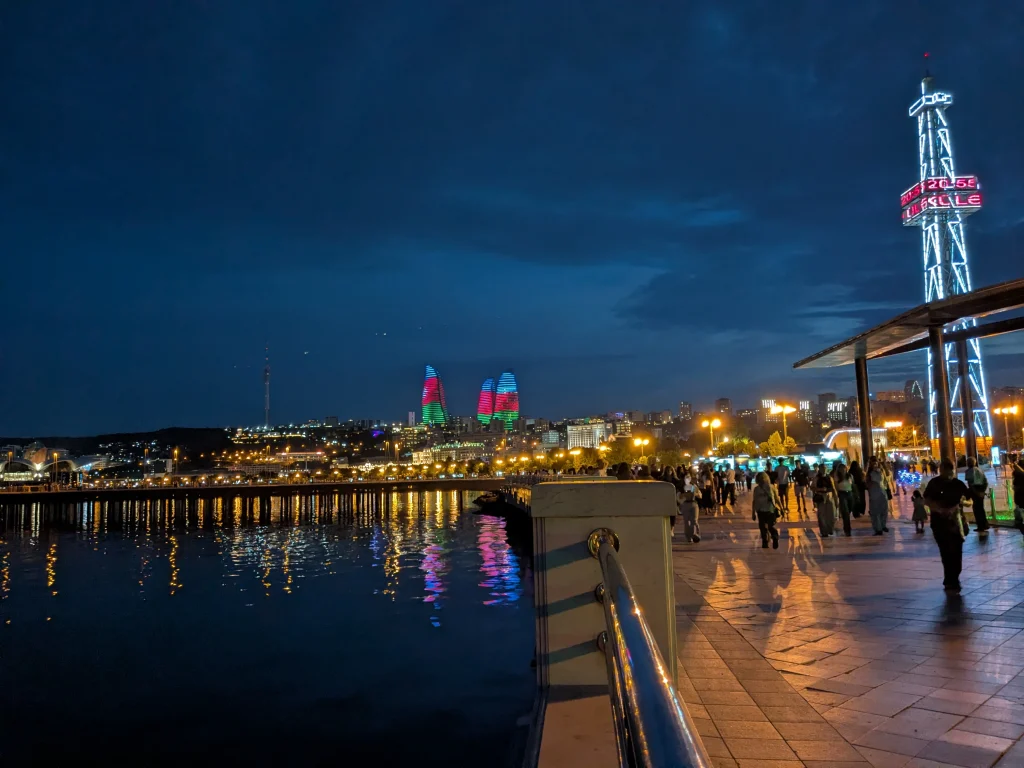
If you stay until sunset, look back towards the city as the Flame Towers light up, sometimes displaying flames and sometimes the Azerbaijani flag. It’s one of those moments when Baku’s strange combination of oil wealth, modern architecture and Caspian waterfront really comes together.
Where to eat in Baku: Azerbaijani food you should try
One of the reasons I keep coming back to Azerbaijan is the food. I first discovered Azerbaijani cuisine during my trip in 2017, and every time I return, it’s one of the things I look forward to the most. Sitting at the crossroads of the Caucasus, Iran, Turkey and Central Asia, Azerbaijani cuisine borrows influences from all of them while remaining distinctly its own.
Fresh herbs are everywhere, tomatoes actually taste like tomatoes, bread is served with almost every meal (watch out they charge for it even if you don’t touch it), and no meal feels complete without a glass of complementary çay.
What is Azerbaijani food like?
Azerbaijani food generally relies more heavily on herbs, rice, grilled meats and Persian-inspired flavours.
Some dishes I highly recommend trying include:
• Pomidor yumurta – scrambled eggs cooked with fresh tomatoes, one of my favourite Azerbaijani breakfasts.
• Şor – a kind of cottage cheese flavoured with nigelle seeds (which I’m obsessed with).
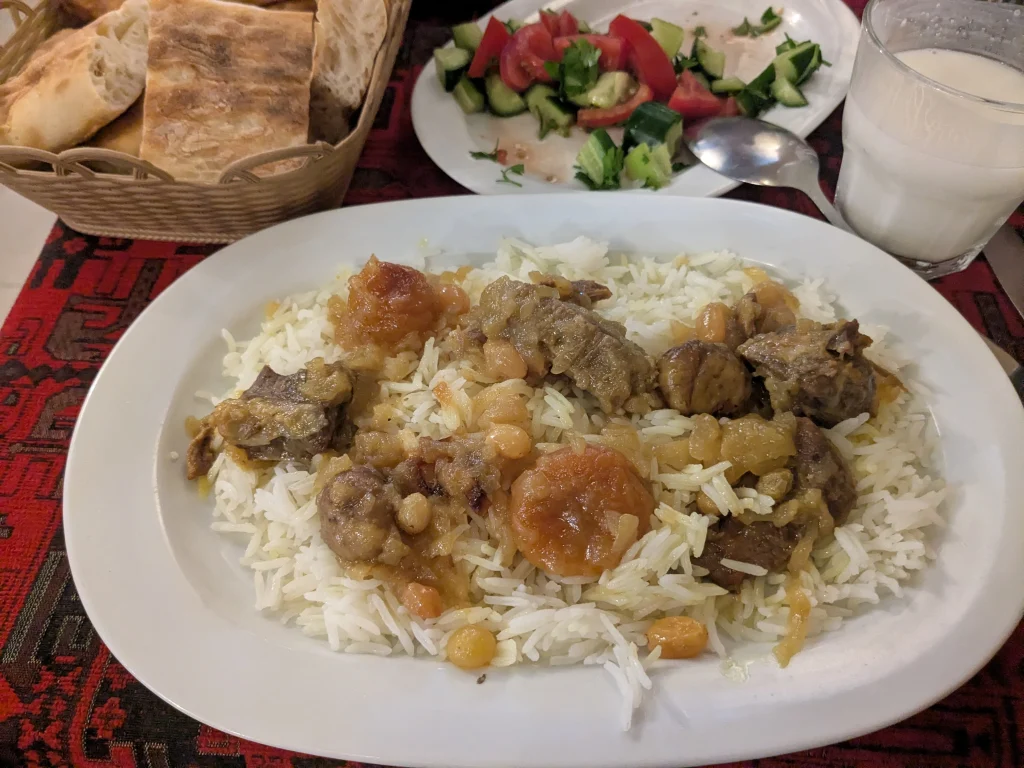
• Plov – Azerbaijan’s famous rice dish, served with a wide variety of toppings. The best one in my opinion is Shah Plov with apricots and chestnuts, but I’ve had delicious Finsincan plov (if you’ve been to Iran it should ring a bell) and also plov As Qara for example.
• Qutab – thin stuffed flatbreads filled with herbs (my favourite version), cheese, meat or pumpkin.
• Şakarbura – a delicate pastry filled with almonds, traditionally prepared for Novruz but available in many bakeries throughout the year.
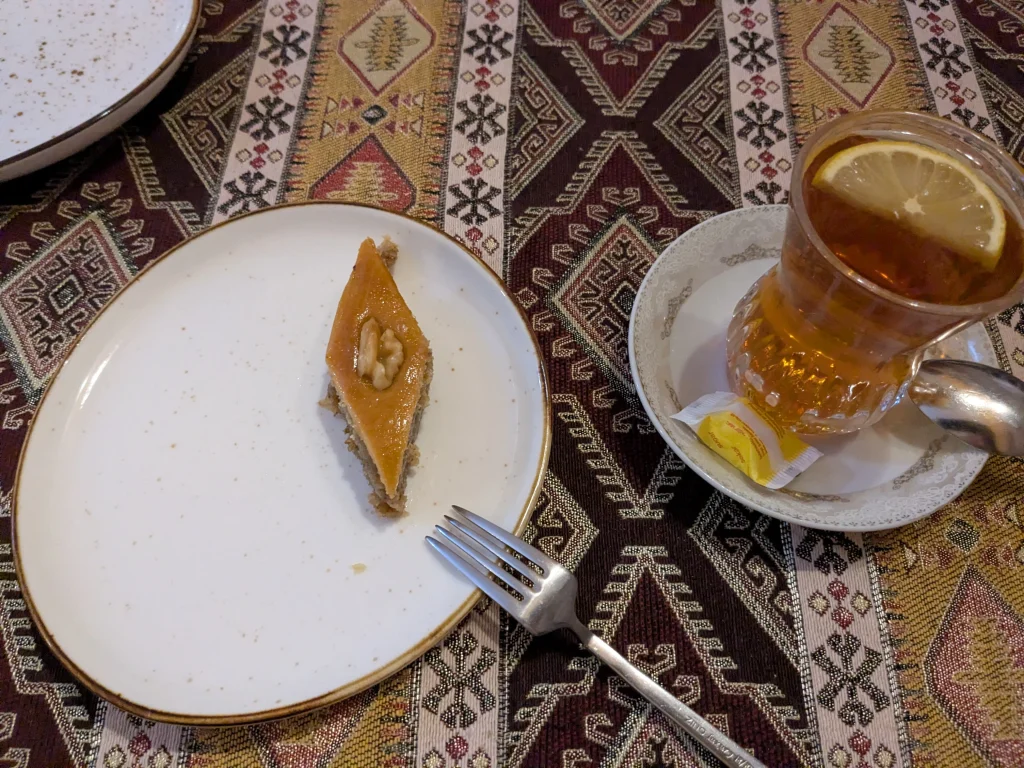
• Bakhlava – the azeri version is made with walnuts, which is my favourite.
• Ayran – a refreshing yoghurt drink often that pairs perfectly with rich meals. I love the one that has mint in it.
• Kebab/shashliks – grilled meat served with onions, a pinch of sumac and lavash bread.
• There are other famous Azerbaijani dishes with lamb but I do not like/eat that kind of meat, however if that’s your thing definitely try : Lamb dolma, Piti, Basdirmasi kebab, Saj (can also be found with chicken).
Corat qutab: a local specialty worth searching for
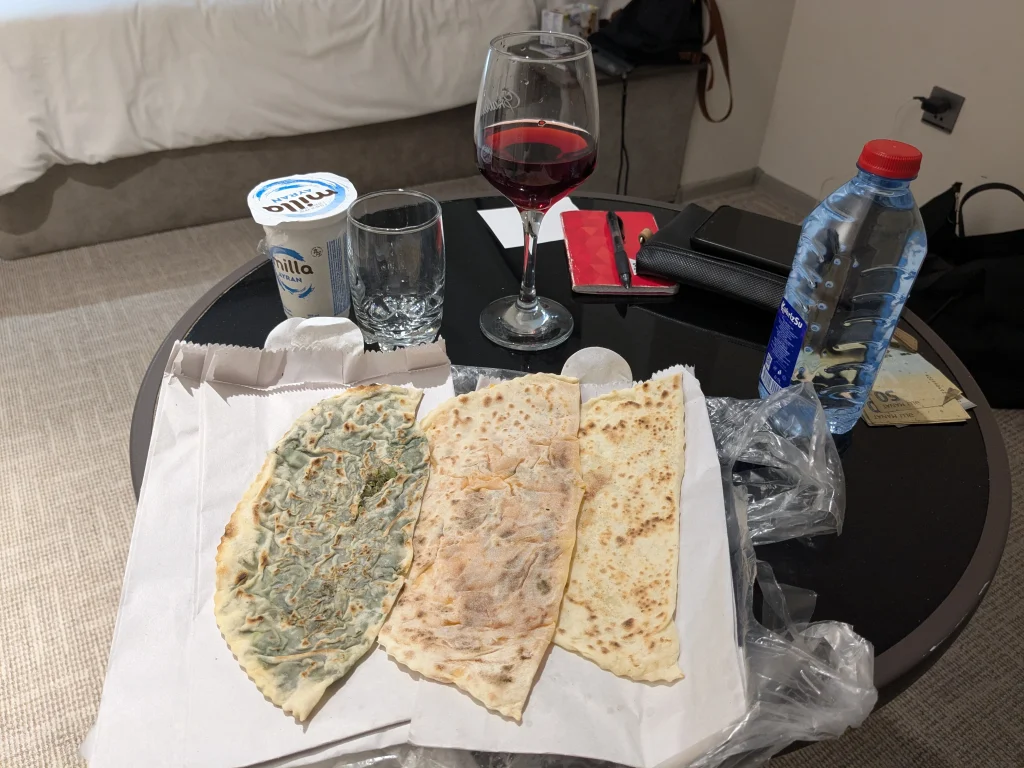
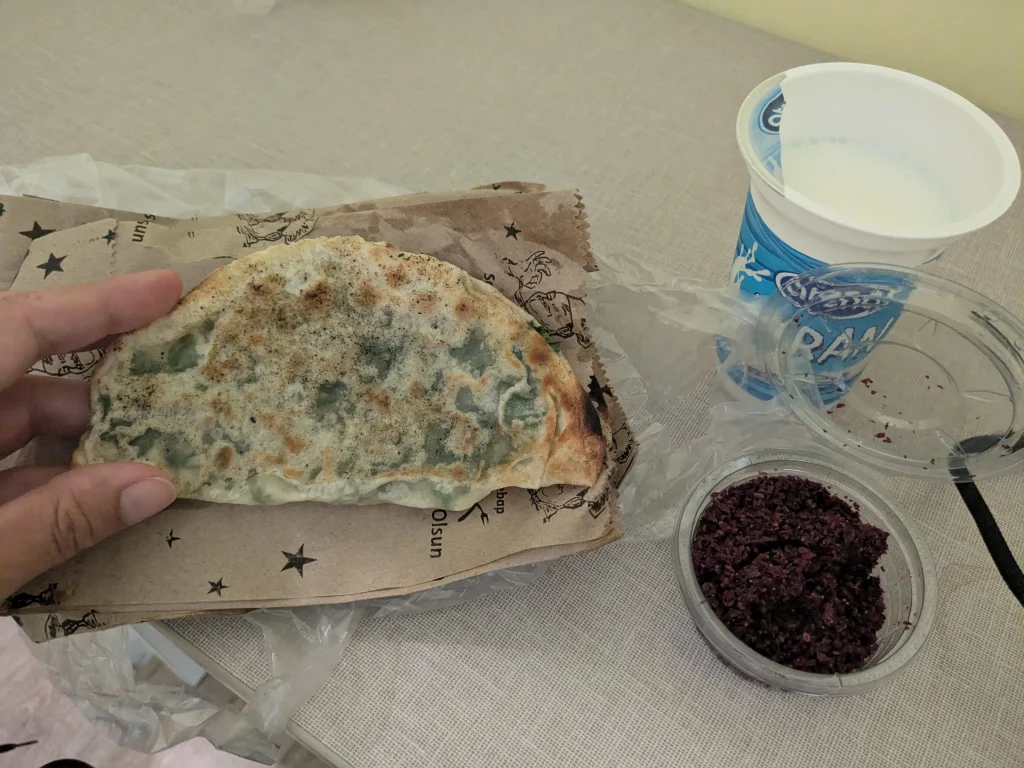
Originally from the village of Corat, near Sumqayıt in the north of the Absheron Peninsula, these qutabs are noticeably smaller than the ones you’ll usually find elsewhere in Azerbaijan. They’re traditionally cooked in a wood-fired oven rather than on a flat griddle, giving them a slightly crispier texture while remaining wonderfully soft inside. If there’s one dish I’d encourage you to go out of your way to try, it’s Corat qutab.
I tried them at Bakı Qutabı, I ordered several with different fillings, including herbs and walnuts, and they quickly became one of my favourite discoveries in Baku. Surprisingly, I almost never see them mentioned in travel guides, even though they’re well worth seeking out.
3 favourite cafés/restaurants in Baku
I tried quite a few places to eat during my stay in Baku, but these three stood out for different reasons. None are meant to be a definitive list of the best restaurants in the city, they’re simply places I enjoyed and would happily return to.
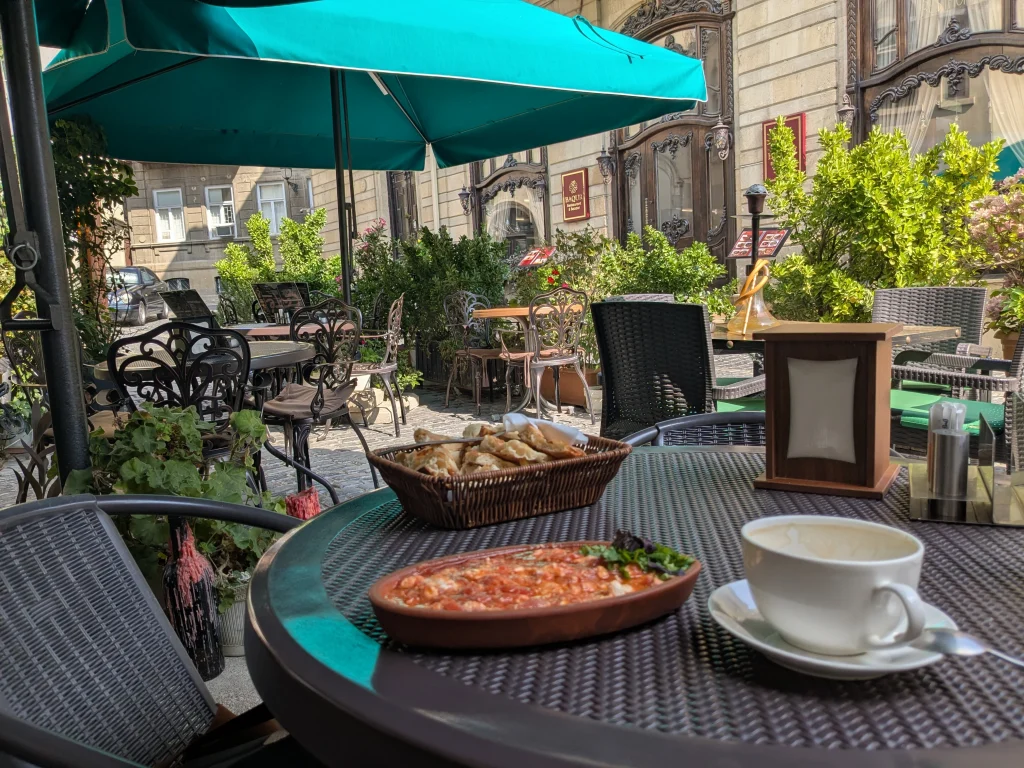
• Karavan café for breakfast: Located inside Icherisheher, it has a lovely street terrace, with kittens wandering between the tables and the Sheikh Ibrahim Mosque just across the street. The woman working there was friendly and spoke both English and Russian, sometimes both in the same sentence, which I did too, and we understood each other perfectly.
I had pomidor yumurta, with fresh tandoor bread sprinkled with nigella seeds, and it was delicious. The one thing I wouldn’t recommend is the coffee. A full Azerbaijani breakfast was around 20 AZN and I paid 15AZN for mine. Come here for the breakfast and atmosphere rather than the cappuccino.
• Xezer Restaurant for a traditional lunch
If I had to recommend just one traditional restaurant in Baku, it would probably be Xezer Restaurant. Located right next to Nizami Park, it’s primarily a place where locals come to eat. The atmosphere is relaxed, prices are very reasonable, and the menu is available in both English and Azerbaijani, with photographs of the dishes.
I ordered qara plov, ayran and a şakarbura for dessert, followed, as always in Azerbaijan, by a complimentary glass of çay. The whole meal came to 15 AZN. If you’re a woman travelling alone, don’t be put off if the room is mostly filled with local men. I felt perfectly comfortable there, the service was excellent, and I’d happily return.
• Nergiz Restauran for dinner
For something a little more refined without spending a fortune, I also enjoyed Nergiz Restaurant, beneath Fountain Square. The interior is beautiful, the menu has English translations and photographs, and the staff were extremely welcoming.
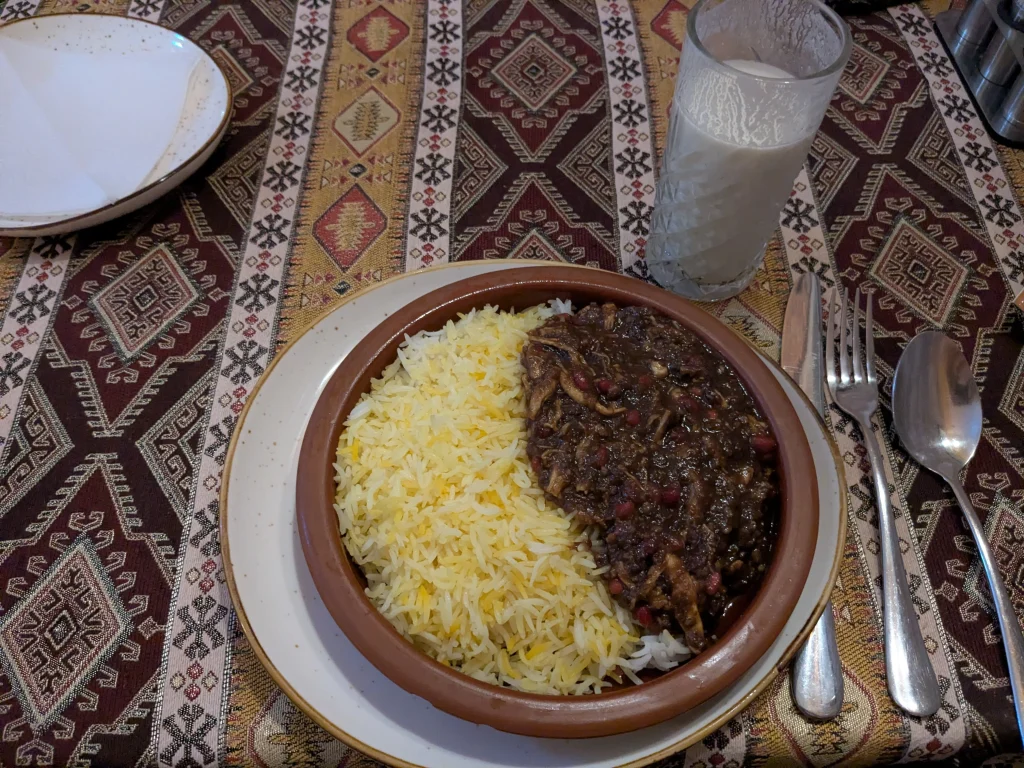
My waiter, Elsad, spoke Russian, which made ordering particularly easy. I had fisinjan plov, baklava and a mint ayran, which came to 25 AZN. The restaurant seemed popular with both local families and visitors, and I thought it was a good option if you want to try traditional Azerbaijani food in central Baku.
Some practical Baku travel tips
Do I need cash?
The currency used in Azerbaijan is the Azerbaijani manat (AZN, ₼). Visa and Mastercard are widely accepted in Baku, although it’s still worth carrying some cash for small purchases or local cafés where cash is obviously preferred. As a rough guide, 1€ is usually worth around 2 Azerbaijani manat, making prices fairly easy to estimate in your head.
ATMs are easy to find in banks, underground pedestrian passages and shopping malls.
If you have a Russian MIR bank card, you can withdraw cash at VTB Bank ATMs. There are quite a few of them around Baku, but they don’t always work. I found VTB ATMs near Aliyev Park, inside the funicular building, and in the underground passage between Nizami and Park Bulvar.
WhatsApp is essential
One thing that surprised me during this trip was just how WhatsApp is used in Azerbaijan. It’s much more than a messaging App, it’s often the main way businesses communicate with their customers.
Hotel receptionists asked for my WhatsApp number to let me know when my room was ready, the tourist information centre offered to send me additional information there, and even tour agencies preferred chatting on WhatsApp rather than by email.
If you’re travelling to Azerbaijan, I’d recommend making sure you have WhatsApp installed and working before you arrive. There’s a good chance you’ll end up using it several times during your trip.
Practical tips and things to watch out for in Baku
Baku is an easy and enjoyable city to explore independently, but there are a few small things worth knowing before your visit. None of these are major problems, but being aware of them will help you avoid surprises when paying the bill or booking activities.
• Bread charges in restaurants
Bread is an important part of Azerbaijani cuisine, it’s often brought to your table automatically and may be charged separately, so check your bill if you don’t want it.
• Service charges in “touristy“ restaurants
In some restaurants aimed at visitors (all of them in the Old Town), you may find an additional service charge added to your bill, often 10%. This is not something I encountered everywhere, especially in more local restaurants, but it’s worth checking your bill before paying so you’re not surprised.
• Tours don’t include everything
If you decide to join an organised tour around Baku, the Absheron Peninsula or elsewhere in Azerbaijan, always check what is included in the advertised price, as entrance fees to sites and meals may be charged separately.
Staying connected in Azerbaijan: Ovosim eSIM
During this trip and also in Nakhchivan, I tested OVOSIM eSIM. It connects to Azercell, Azerbaijan’s largest mobile operator, which offers broad coverage across the country.
In Baku and around the Absheron Peninsula, I had a reliable 4G connection everywhere I went. I relied on it for navigation, checking routes with Yandex Maps, and staying connected during my travels, and it worked flawlessly throughout my stay.
Frequently asked questions about Baku
Baku is, by far, my favourite capital in the South Caucasus. I first discovered Azerbaijan in 2017, and every time I return, I find another reason to stay longer. Its mix of history, modern architecture, very welcoming people and incredible food keeps drawing me back.
But if you have more time in Azerbaijan, don’t stop at Baku. The country has so much more to offer, from the windswept Absheron Peninsula to the remote Lezgin mountain villages near the Dagestan border, and the fascinating exclave of Nakhchivan, one of the most overlooked destinations in the Caucasus.
I hope this guide inspires you to look beyond the city’s famous skyline and discover an Azerbaijan that is every bit as diverse, welcoming and fascinating as its capital.